Contents
- Start with the ride you actually take
- Keep clothes away from the drivetrain and wheels
- Test your full range of motion in the complete outfit
- Carry your work clothes without getting in the way of your ride
- Plan a quick change at the office
- Keep a realistic backup outfit on hand
- Frequently asked questions
- Sources and references
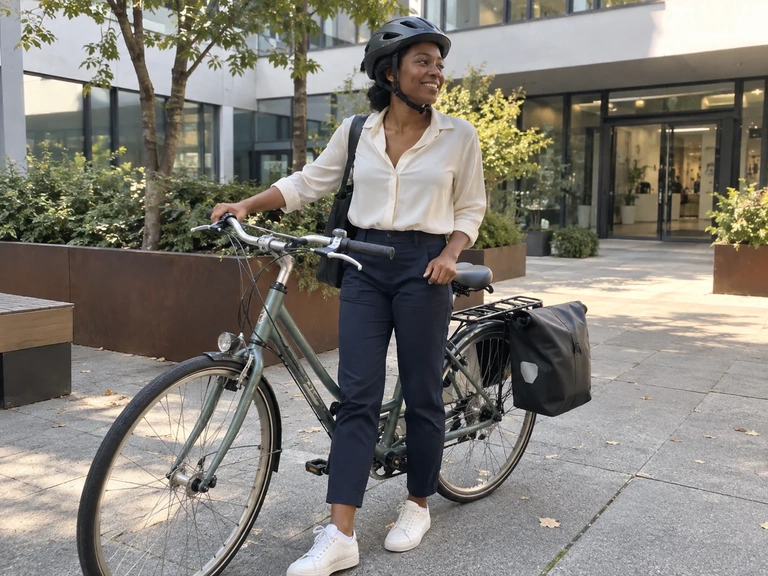
Biking to the office doesn’t necessarily mean planning two complete outfits. For a typical city commute, some everyday pieces can work both on the ride and when you arrive. The useful question is less “Is this sporty enough?” and more “Can I pedal, look around, and walk into the office without my clothes getting in the way?”
A bike-to-office outfit starts with clothes that won’t get caught in moving parts, plenty of freedom to move, and belongings carried securely. Then you can keep the base outfit or change a few pieces when you arrive, depending on the length of your ride, the weather, and your workplace norms.
Start with the ride you actually take
A short, easy ride and a long route with hills call for different preparation. Consider the distance, parking options, weather, and what’s waiting for you at the office. If the route is new, try it without a time-sensitive appointment when you arrive so you can find out what to expect.
Also think about where you’ll leave your things and how you’ll change if needed. A locker room, a shower, or just a coat hook each offer different options. If you don’t have a convenient place for a full change, a comfortable base outfit with one spare top may be more practical than carrying a whole suit every day.
Style tips don’t replace traffic rules or proper bike equipment. In France, check the Service Public page on required equipment. It explains, among other things, when a high-visibility vest is required outside built-up areas, as well as lighting requirements. Check the rules in the country where you ride, too.
Keep clothes away from the drivetrain and wheels
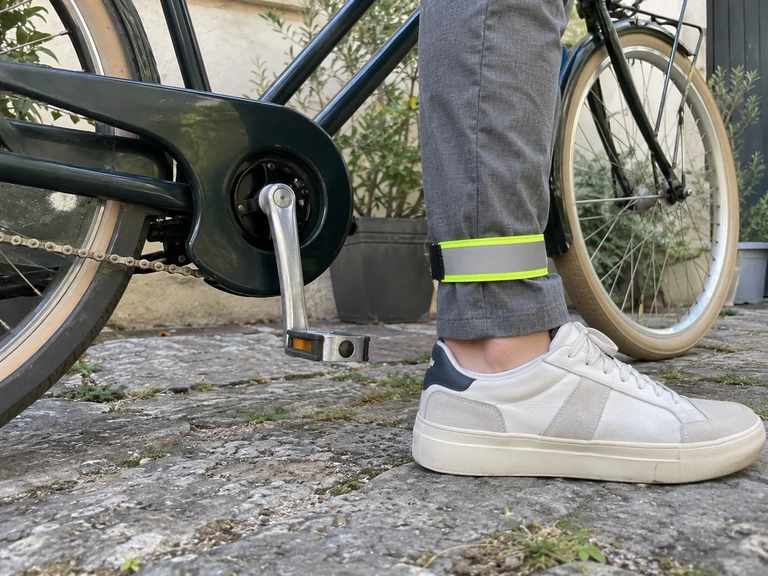
Start with your bottoms. Sit on the bike while it’s stationary in a safe place, and check where the hems fall in relation to the chain, crankset, and wheels. An ankle-length tapered pant can be an easy choice, but a garment that fits close enough and is secured with an accessory designed for that purpose can work, too.
Don’t rely on a cuff that stays put only for a few seconds in front of the mirror. Tie your laces securely, with no loops or ends that could get caught. Check your jacket drawstrings and bag straps, too. Anything dangling deserves a look before you set off.
For a skirt, dress, or long coat, don’t assume the length alone settles the question. The cut, the bike, and its guards all affect the situation. If you can’t be sure the fabric will stay clear of the wheels and drivetrain, choose another outfit for the ride and save that piece for when you arrive.
Test your full range of motion in the complete outfit
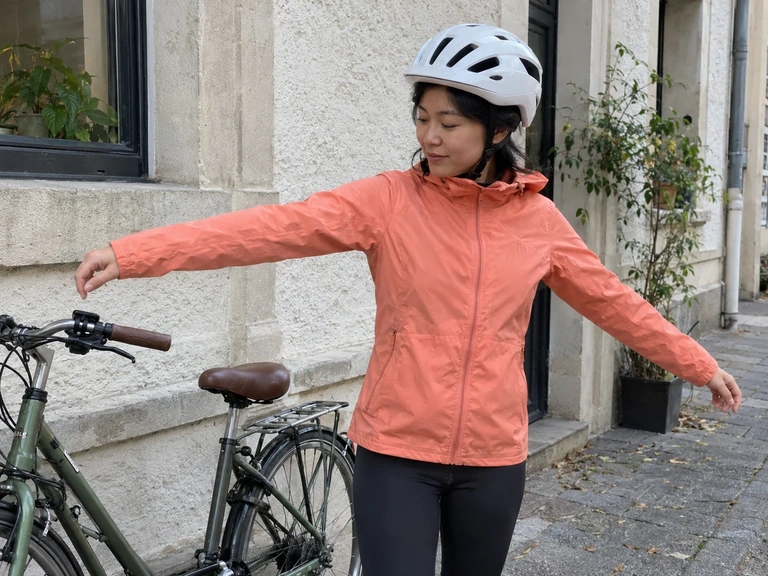
A jacket can feel comfortable standing up and pull across your back when you reach for the handlebars. Try that position while the bike is stationary, then turn your head from side to side. You should be able to look around without the collar, hood, or an accessory getting in your way.
Then test your pants with your knee raised. If the waistband restricts your breathing or the fabric limits your movement, a flattering silhouette isn’t enough. Another cut already in your wardrobe will probably serve you better. Your shoes should also stay stable on the pedals and work with your gear.
Adjust your layers to your riding experience. Weather, exertion, and personal comfort all play a part; there’s no one-size-fits-all outfit. In heavy rain or strong winds, also consider your travel conditions. Switching to another way to get around may be more suitable than trying to find the perfect outfit at all costs.
Carry your work clothes without getting in the way of your ride
A pannier designed for cycling and securely attached to your bike can take weight off your back and shoulders. A backpack may work if it stays stable and its straps don’t get in the way. Follow the manufacturer’s instructions for your rack and accessories, especially for attaching and loading them.
Avoid bags hanging loose from the handlebars. Before setting off, check the attachments and straps, and make sure nothing can touch the wheels. Try everything with the items you’ll actually carry, since an empty pannier won’t show you how well it works for a day at the office.
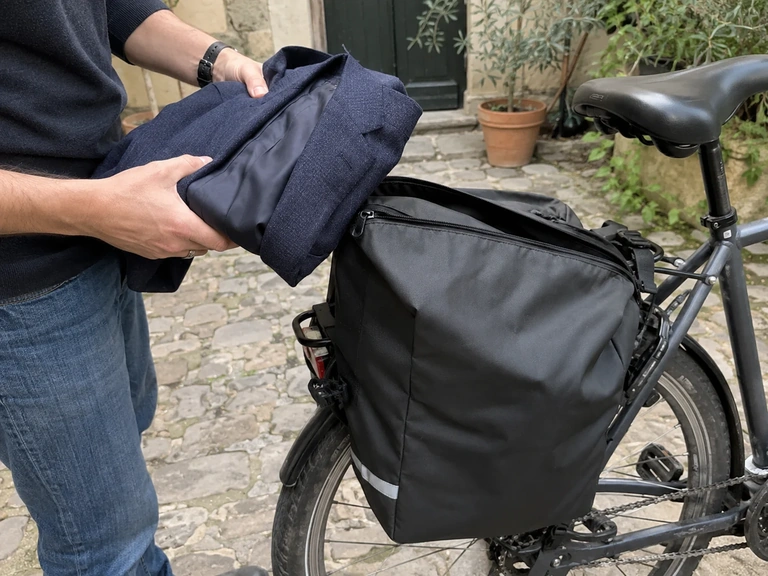
If you’re bringing a jacket, fold it to fit the available space instead of compressing it at the bottom of your bag. Keep the items you’ll need first when you arrive within easy reach. For a simple professional wardrobe base, the examples from business casual outfits can be a good starting point.
 Read alsoCasual chic: the simple formula for looking polished every day
Plan a quick change at the office
When you arrive, start by putting away your bike and accessories. Give yourself a little time before an important meeting. Depending on your commute, you can keep your pants and shoes on, then change your top or add a jacket. The idea is to address a need you’ve noticed, not to require a second wardrobe every time.
One option is comfortable ankle-length pants, a simple top, and a layer suited to the commute. At the office, add a soft blazer if the setting calls for it. Another option is to ride in dedicated cycling clothes and change completely, when the facilities and commute length make that worthwhile.
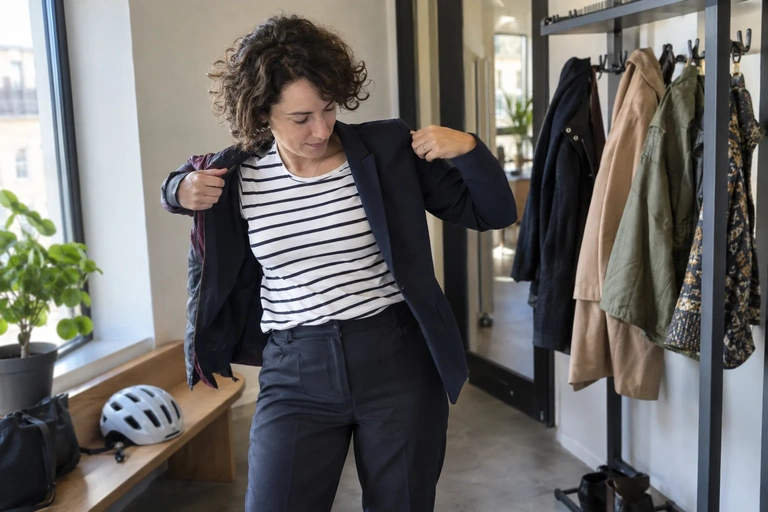
Our guide to wearing a blazer suggests destination pairings. To find your combinations again, add your pieces to Vestly, build looks around the pants that work for cycling, and save the looks you’ve approved. Then use the planner to prepare your office outfit. Trying things on is still essential to check your range of motion and safety.
Keep a realistic backup outfit on hand
Leaving a layer at the office, if the space allows, can make changing weather easier to handle. You may not need a complete change of clothes. Instead, notice which item you actually miss after a few commutes: a top, a pair of socks, or a jacket for your destination.
For very formal meetings, prepare the whole outfit the night before. That way, you won’t arrive and discover that the item you brought doesn’t work with what you’re wearing. The method for planning your outfits for the week helps you plan for those special days without complicating the rest.
Check off
My outfit and belongings are ready for the bike ride
0 / 6
The preparation checklist is complete. Check your bike and the conditions once more before setting off.
Watch a practical example
A visual example from Bicycle 2 Work to compare with the steps in this guide.
Video in English
Frequently asked questions
Can you bike to the office in jeans?
Yes, if your jeans let you pedal comfortably and the hem stays clear of the drivetrain. The garment name alone doesn’t tell you enough: test the fit, waist and hems on your stationary bike.
Do you need to change shoes when you arrive?
Only if your riding shoes don’t suit your office or your comfort. Changing should meet a specific need. Plan a suitable way to store them if you’re bringing a second pair.
Can an app approve an outfit for cycling?
Virtual try-on lets you compare how an outfit looks. It can’t check the distance between a hem and the chain, whether a bag stays secure, or how freely you can move. You’ll need to check those things with your actual gear.
Sources and references
- Service Public, required cycling equipment, accessed September 30, 2026.
- Vestly, how the app works, accessed September 30, 2026.