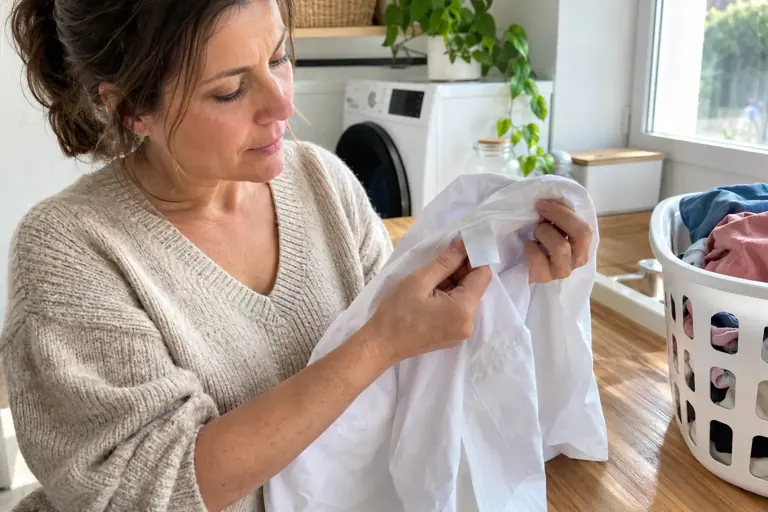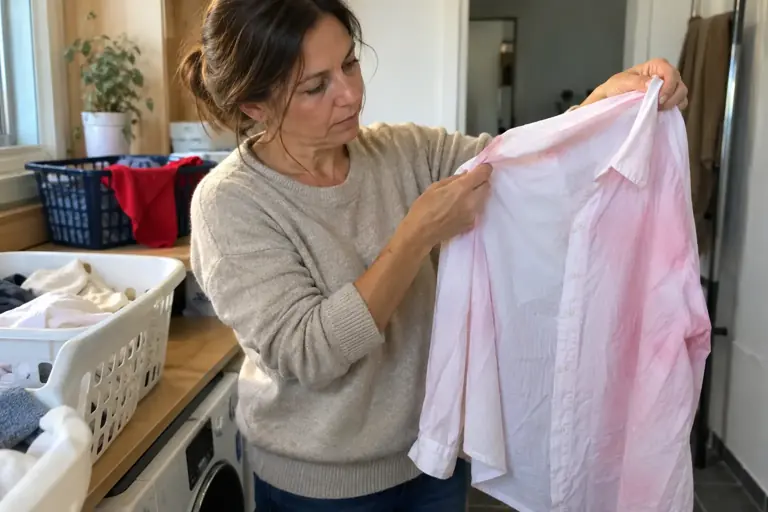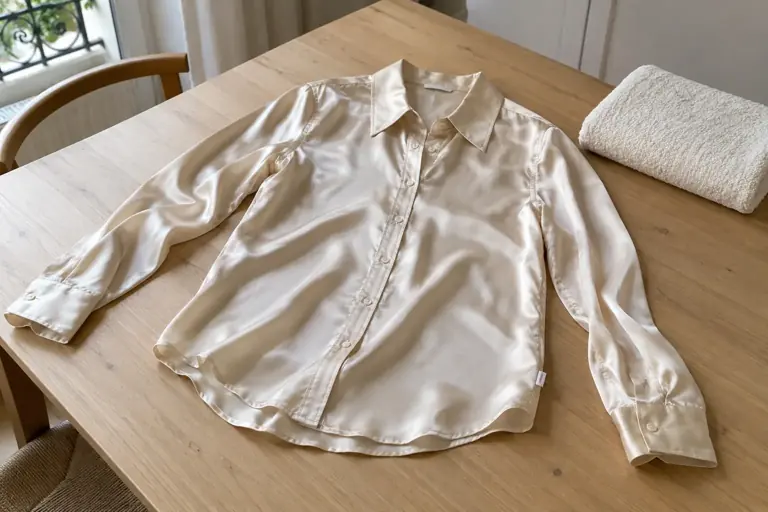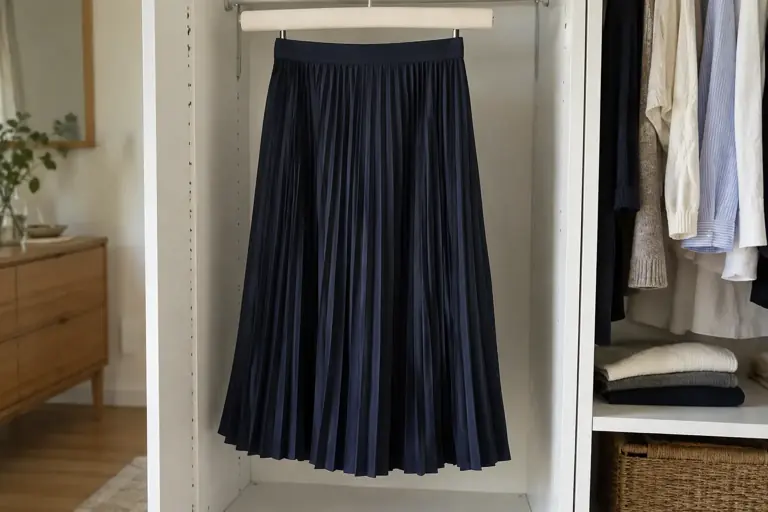
Clothing labels: understanding fabric content and care
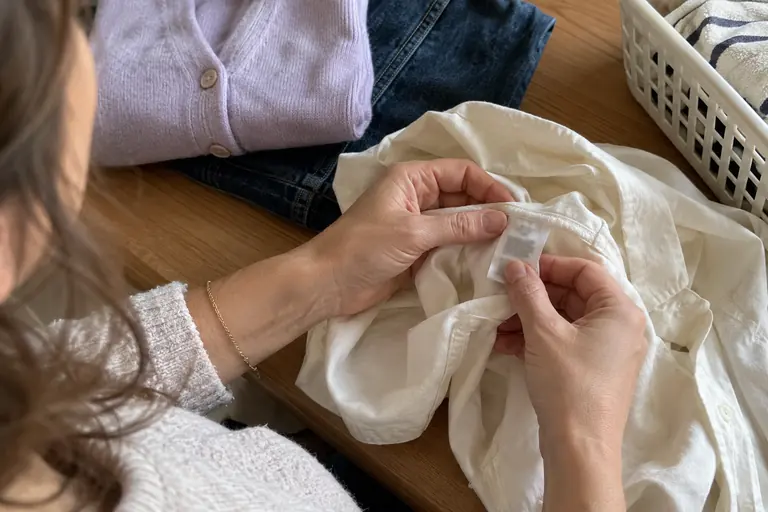
Fabric content alone isn’t enough to choose a wash cycle. Learn how to read the different labels and find the guidance you need before laundry day.
The Vestly Journal
Wash, repair, buy better: care for your clothes so you can wear them longer and shop differently.
25 articles in this topic
Where to start
A well-cared-for garment keeps its shape, color, and softness. A well-chosen garment gets worn often. This section brings the two together: care habits that prevent mishaps and tips for buying less but better.
Start by calculating cost per wear: it changes how you see a price. Then our care and secondhand guides round out a more sustainable approach, without giving anything up.
Find quality pieces secondhand: our guide to buying secondhand clothes. Before you buy, a wardrobe declutter often shows you what you’re really missing.
Fabric content alone isn’t enough to choose a wash cycle. Learn how to read the different labels and find the guidance you need before laundry day.
A €250 coat can cost less than a €15 top. Cost per wear puts prices in perspective: here’s how to calculate and use it.
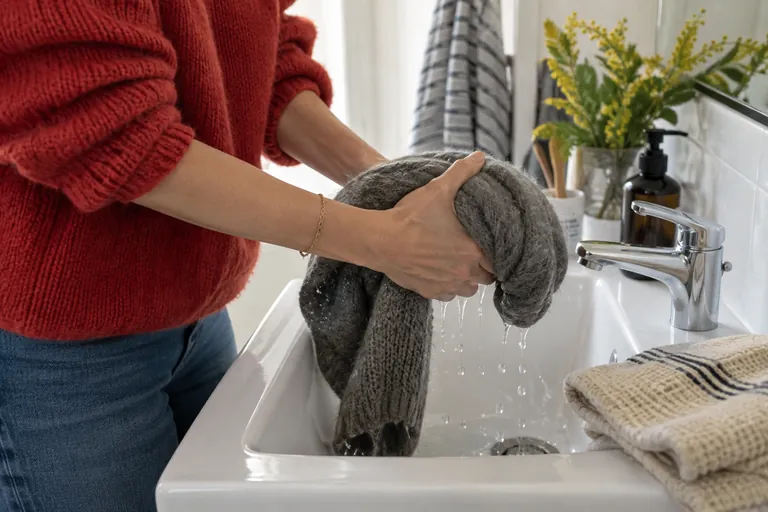
Moisture and friction can cause wool to felt. Start with the care label: hand washing, an approved machine cycle, or professional cleaning depends on the garment.
Sustainable fashion doesn’t require perfection or austerity. A few simple habits can already change the way you buy and wear your clothes.
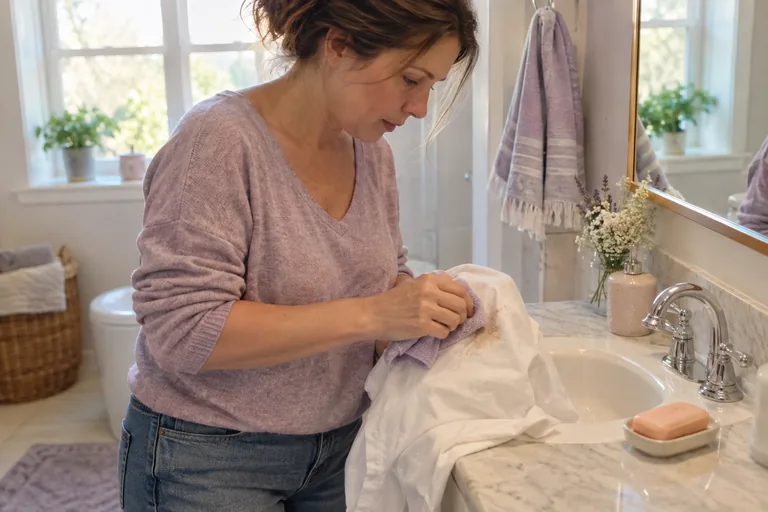
To remove a clothing stain, identify the mark and the permitted care before choosing water, a product and a method. Suitable treatment helps limit damage to the garment.
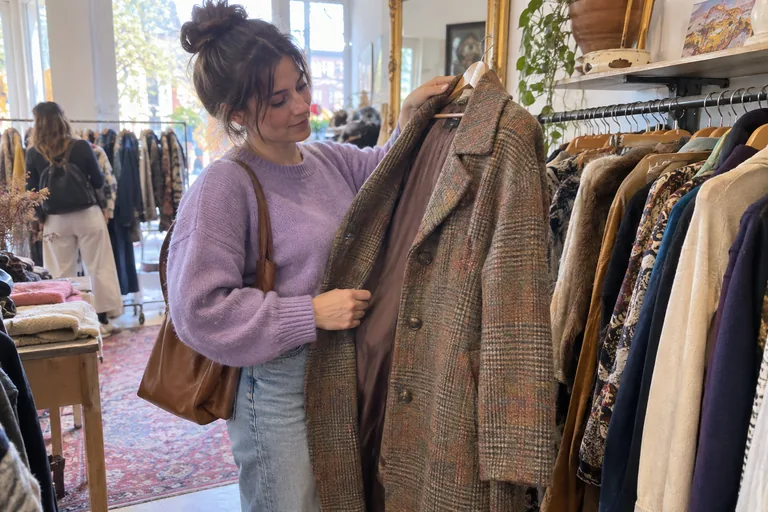
Secondhand shopping lets you buy better, spend less, and make more sustainable choices. Where to look, how to check a piece, and how to add it to your closet.
Keep linen feeling comfortable and looking polished by distinguishing natural wrinkles from genuine care needs.
A careful approach while the garment is wet helps preserve the drape of fluid blouses and dresses.
Build a denim care routine around your jeans and how you wear them, without requiring washing or heat.
Get a smoother-looking surface with gentle movements and a better understanding of where friction occurs.
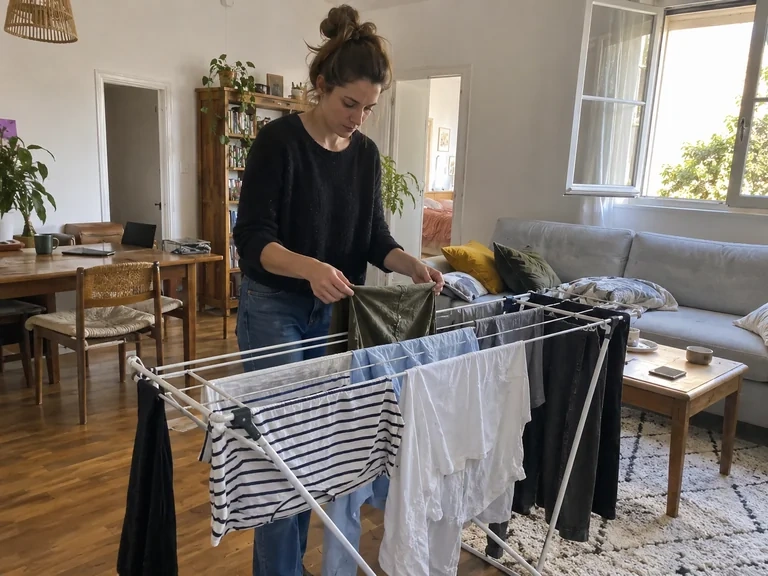
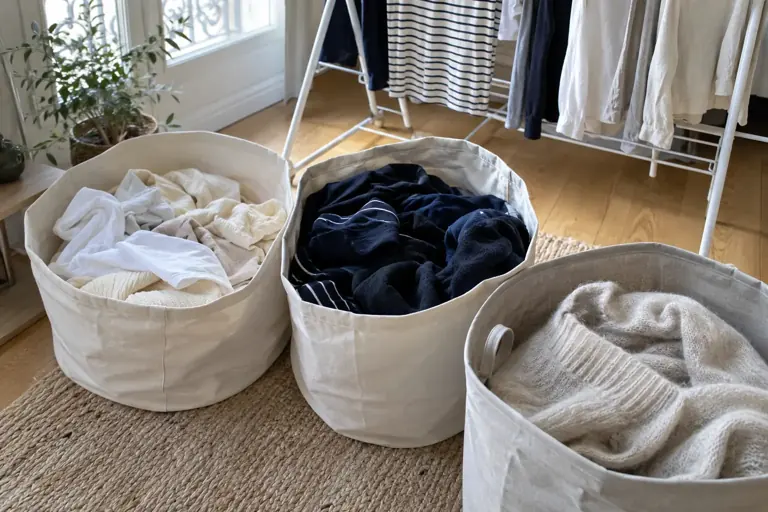
Make room for your laundry, choose a drying rack, and ensure airflow before starting the washer.
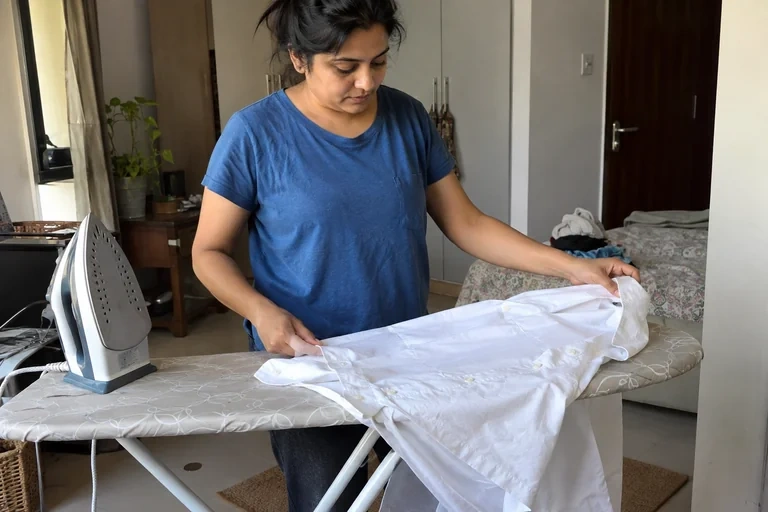
Work through one area at a time and check the result to avoid accidental creases and marks.
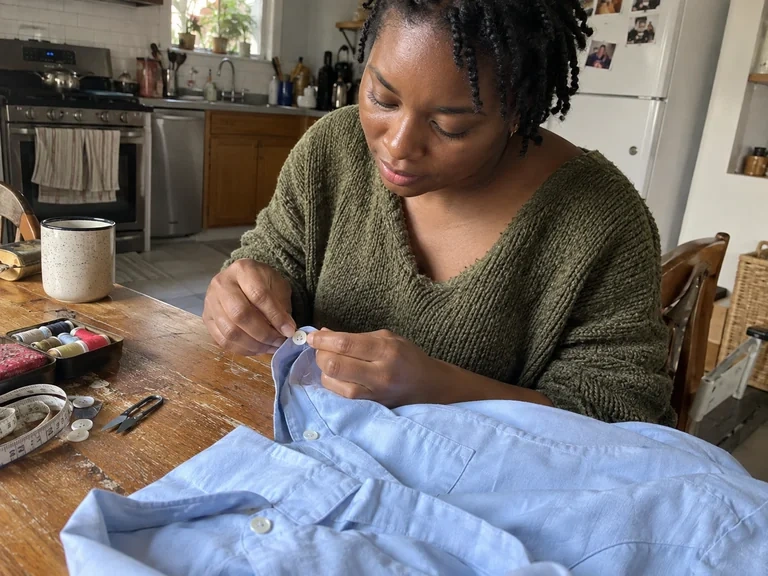
A small, well-prepared repair gets a shirt or sleeve back in service.
A practical inspection to look beyond price, brand, and fabric content alone.
Keep your stretch garments in use with a care routine suited to the whole garment.
A few steps when you get home can help preserve your coat’s shape and show you when it’s time to see a professional.
A well-defined repair queue keeps clothes from being forgotten at the bottom of a basket.
Start with the care instructions for the whole garment, then sort it appropriately.
Before looking for a fix, identify the garments involved and their care limits.
Composition alone isn’t enough: the right method also depends on the garment’s construction and care instructions.
Not all pleated garments need the same care: start with the specific style and protect its shape.
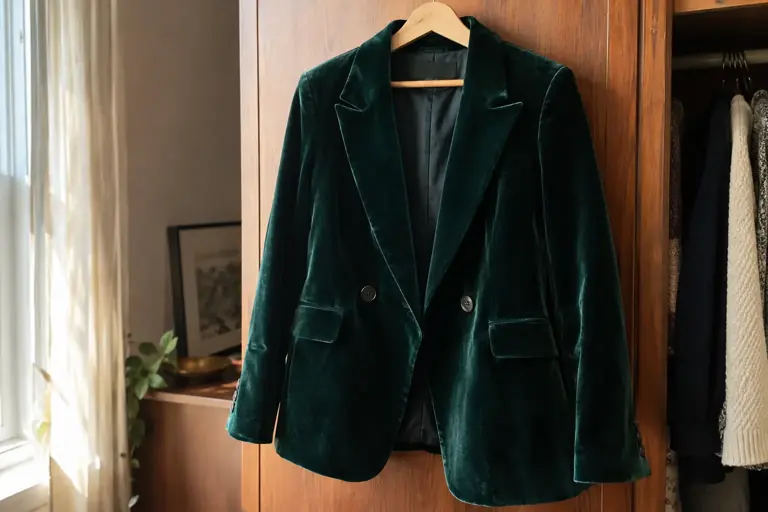
A velvety appearance alone isn’t enough to choose a wash. Here’s how to decide for each garment.
A successful hand-wash starts before the basin and ends at the drying rack.
Color is just one factor: each load should also contain items with compatible care instructions.
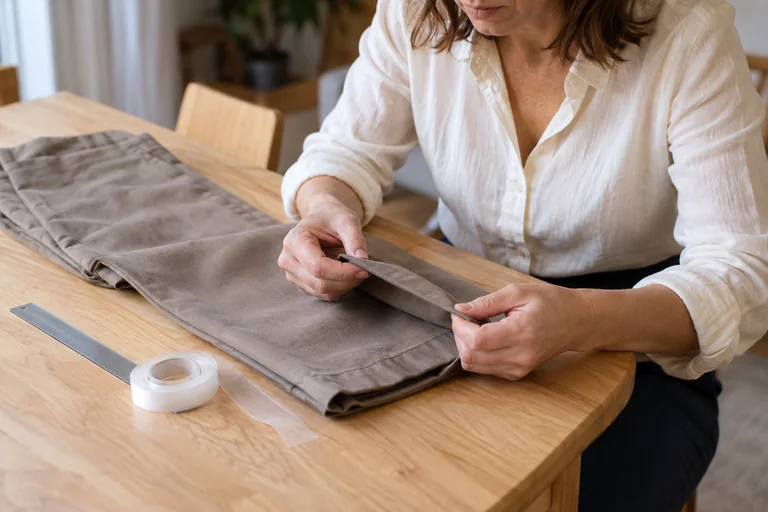
Iron-on hem tape joins two fabric layers with heat-activated adhesive. Use it only when tape and garment care instructions agree. Set the length first, try a hidden area and keep a sewn option if heat or clean removal is an issue.
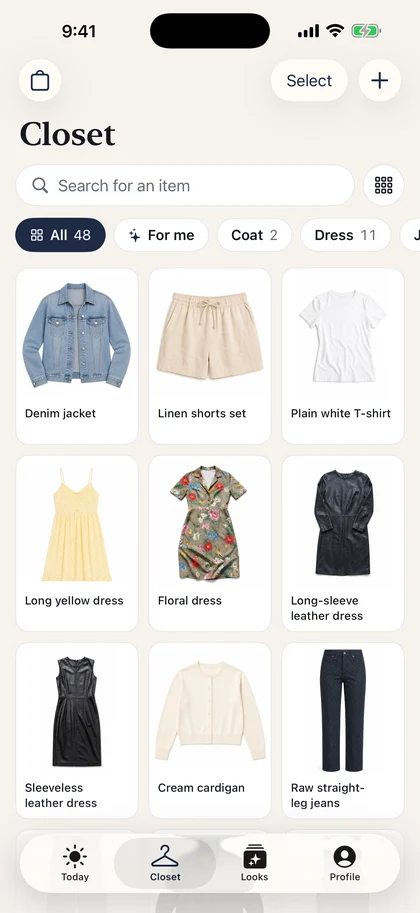
The Vestly app
Mark a piece “in the wash”: Vestly leaves it out of suggestions for a few days, then automatically adds it back to your wardrobe.