Contents
- Notice which step is slowing you down
- Bring the back within reach
- Give each row a different purpose
- Measure before choosing containers
- Choose a folding method that works with the container
- Try it for a week before rolling it out
- Connect your physical closet to your outfits
- Frequently asked questions
- Sources and references
A deep closet looks like it offers plenty of space. In practice, you grab clothes from the front row and forget what’s waiting behind them. To reach a sweater, you have to move a stack; to put away a T-shirt, you push everything else farther back. The problem isn’t necessarily how many clothes you own, but how hard it is to access the full depth.
To organize a deep wardrobe, make the back accessible: use containers you can pull out, keep the front stacks low, and give each row a clear purpose. Start with one shelf. A good result means you can take out and put away a garment without disturbing everything else.
Notice which step is slowing you down
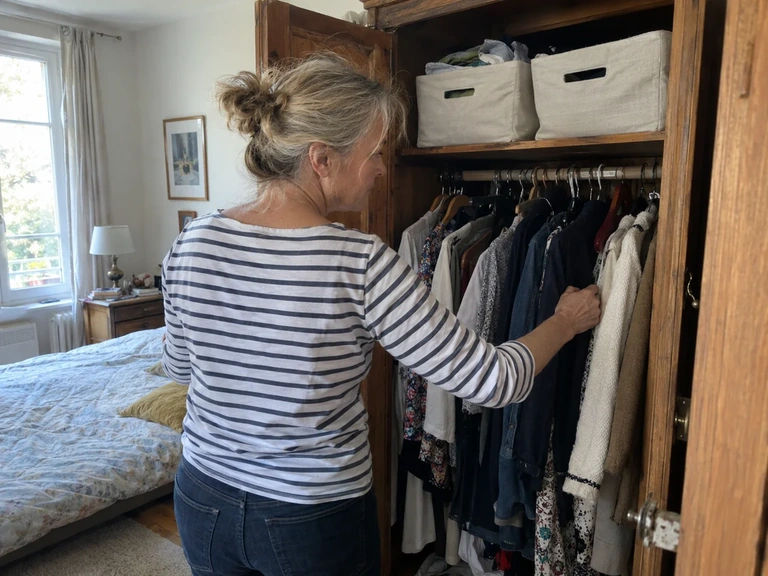
Open the wardrobe and take out a garment stored at the back. How many things do you have to move? Can you see it before you start looking? Do you have a surface where you can set down the front row while you do this? This simple test reveals the real challenge more clearly than a photo of a perfectly organized wardrobe.
Repeat the motion to put the garment back. A system can be easy to empty and tedious to refill. If you have to rebuild three stacks to put away one clean item, you’ll probably leave it somewhere else. Your setup should make both motions easy.
The guide to organizing your closet covers the general principles. Here, you don’t necessarily need to start the whole sorting process over: choose the shelf whose depth is most inconvenient and make it easier to access.
Bring the back within reach
An open, removable bin lets you pull out several garments at once, then choose the one you want. It can replace a deep stack that’s hard to keep tidy. Choose a container you can comfortably carry or pull once it’s full; a large, heavy bin may shift the problem instead of solving it.
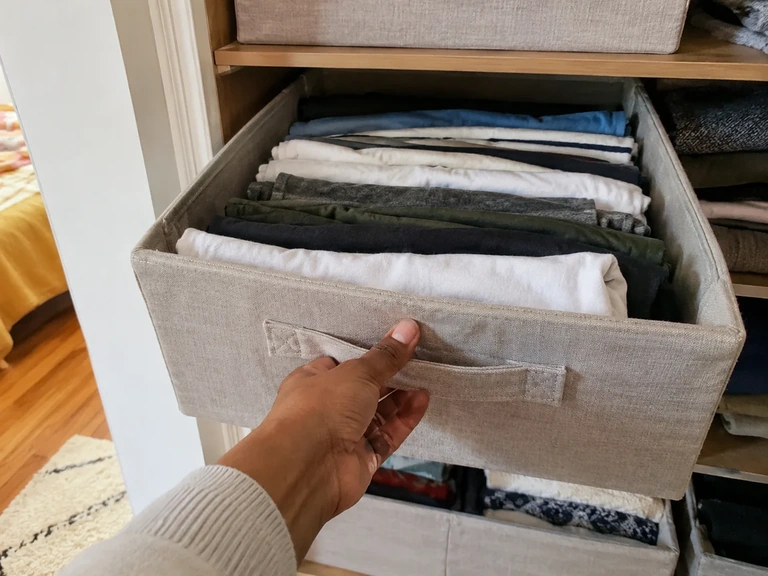
Try a clean box you already have first. Check the measurements and how it moves before buying a set of baskets. The sides shouldn’t snag fabrics or completely hide what’s inside. An easy-to-reach handle can help, as long as it doesn’t block the door from closing.
If you use a sliding basket or a fixed accessory, follow the instructions for both the furniture and the device. Don’t overload the shelves or modify the structure without a plan. A lightweight, freestanding, reversible option often lets you test how it works before making a bigger installation.
Give each row a different purpose
Two rows can work if you know what’s in each and how to reach the one in back. For example, keep the tops you wear this week in front and less frequently worn pieces grouped in a bin behind them. The distinction should fit your life, not just the clothes’ colors.
If your wardrobe allows it, a pull-out drawer under a shelf can also separate two groups of clothes. The movable container brings its contents closer without requiring you to move what’s still on the shelf.

Avoid making the back a place for “everything else.” That category quickly becomes impossible to remember. Choose a clearly defined group instead: workout clothes you rarely wear, knitwear from another season, or occasional accessories. If a category overflows, rethink where it belongs instead of quietly adding a third row.
You can put a simple label on the container if that helps. The name should match what’s actually inside and be easy to change. A detailed label no one updates becomes less useful than storage that’s clear at a glance.
Measure before choosing containers
Measure the usable width, depth, and height inside the closet. Then check the opening: a hinge, sliding door, or ledge can reduce the available width when you pull out the bin. Note these obstacles instead of assuming that anything that fits on the shelf can be taken out.
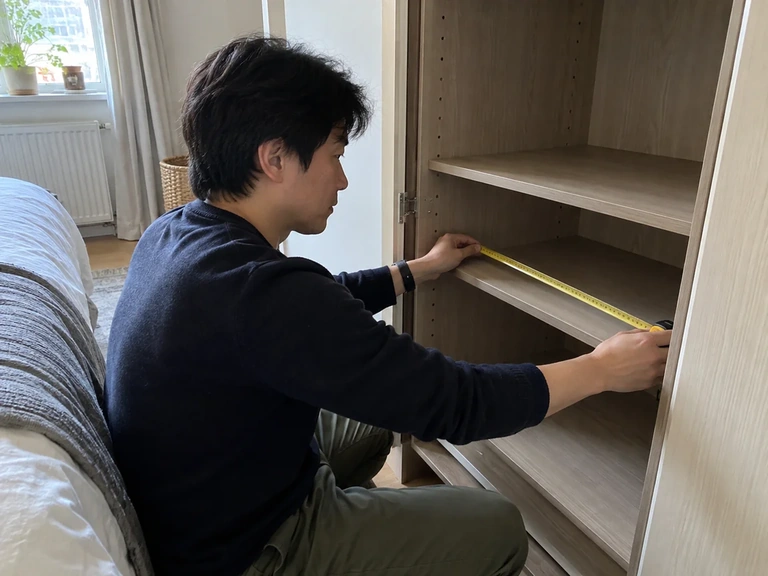
Leave room for your hands, too. A container that fills the entire height may be hard to grip. Make sure it doesn’t rub against the underside of the shelf above when it’s holding your clothes. Test it with a realistic load, without exceeding the furniture maker’s stated limits.
For a high shelf, choose lightweight items you can reach without an awkward or risky move. Don’t set up storage that requires you to climb on a chair or pull a heavy object down from above your head. If it’s still hard to reach, use that space for something else or ask for a suitable adjustment.
 Read alsoWomen’s capsule wardrobe: a list of essentials and how to choose yours
Choose a folding method that works with the container
Vertical folding can make it easier to see several clothes in a bin pulled out of the closet. It only helps if you can recognize the pieces and put them back easily. Try it with a few T-shirts before changing all your habits. Adjust the fold width to your container and the thickness of the garment.
A visual example from The Organized Soprano to compare with the steps in this guide.
Video in English
Don’t pack items in so tightly that they’re hard to take out. Storage that looks very full in a photo may stop working as soon as you remove a garment. Leave enough room to pick up, recognize, and put items back without forcing them.
Try it for a week before rolling it out
Set up one shelf and use it for several days. Notice what stays in place and what ends up back on a chair. If you never pull out the bin, it may be too heavy, too high, or poorly placed. If the clothes at the back stay forgotten, their category may not be clear enough.
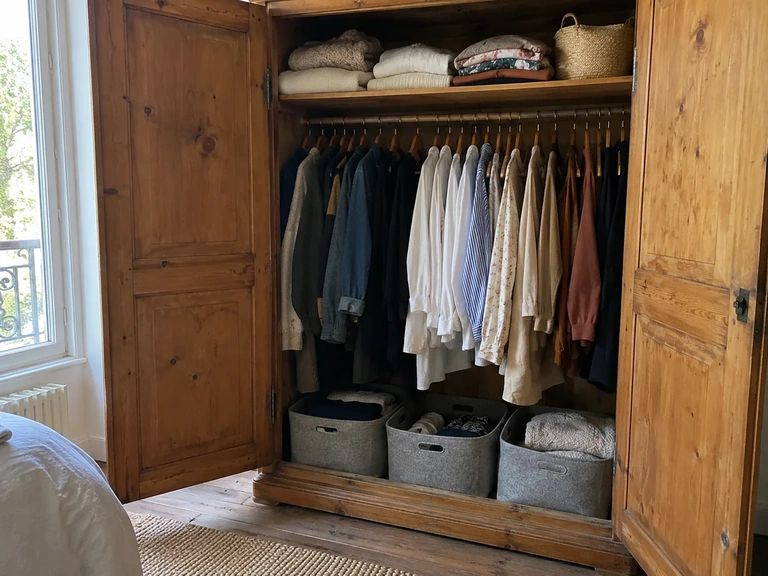
Change one thing at a time: reduce what’s inside, move the bin, or switch the two rows. That way, you’ll know which change makes it easier to use. You can use different methods on different shelves if their contents vary.
Check off
My deep closet test
0 / 6
Your test shelf is ready. After a few days, repeat the take it out–put it back test to check that access is still easy.
Connect your physical closet to your outfits
Once access is easier, look at the clothes you rediscover. Some may complete a familiar look without an extra purchase. You can put together a combination with a piece from the back, then return it to its place after wearing it. The goal is to make storage work for the way you get dressed.
In Vestly, photograph the pieces you want to find in your digital wardrobe and build looks around them. Saved looks can remind you that a garment exists even when it’s not in the front row. The app doesn’t replace physical access: the bin and shelf should stay easy to use. The guide to planning your outfits then helps you turn rediscovered pieces into concrete choices.
Frequently asked questions
Should you get rid of the second row?
Not necessarily. It can hold less frequently worn clothes in an easy-to-reach container. Remove it if you can’t see or take things out without disturbing the entire first row.
Are clear boxes essential?
No. An open bin, a box with a clear label, or storage organized by category can all work. Focus on the container’s weight, accessibility, and suitability for your clothes.
How can you keep your wardrobe from becoming deep and confusing again?
Regularly test one piece: take it out, then put it back. If that becomes difficult, adjust the area in question before adding more containers. The system should reflect how you really use it.
Sources and references
- KonMari, official folding guide, accessed September 30, 2026.
- Vestly, digital wardrobe and styling, accessed September 30, 2026.
- The storage suggestions are editorial; follow your furniture’s limits and instructions.