Contents
- 1. Sort before you organize
- 2. Organize by category
- 3. Then by color
- 4. Try vertical folding
- 5. Choose matching hangers
- 6. Fold or hang?
- 7. Organize by height
- 8. Rotate clothes with the seasons
- 9. Set aside a “looks for the week” area
- Organize shoes and accessories
- Your digital closet: a companion to organizing
- Keep your closet organized
- Frequently asked questions
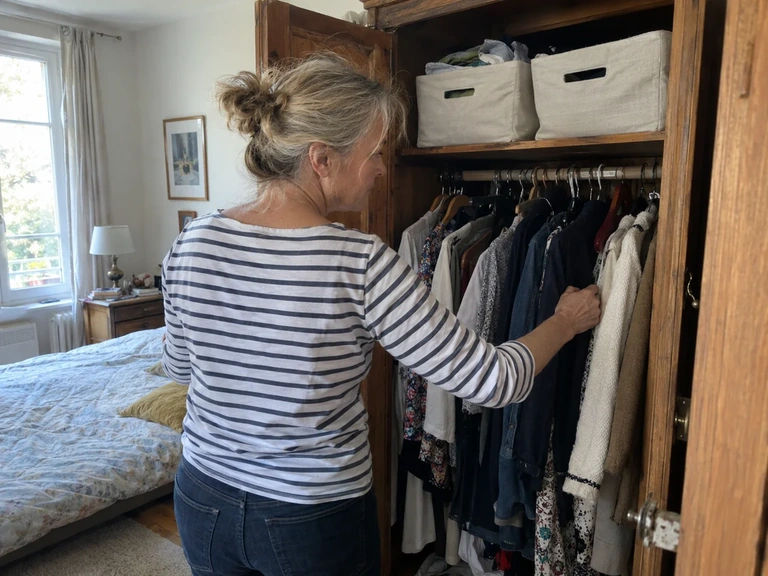
You only wear what you can see. In a poorly organized closet, clothes at the back, at the bottom of piles, or in dark corners end up forgotten, while you keep reaching for the same pieces on top. Organizing your closet isn’t just about keeping things tidy: it’s about making your entire wardrobe accessible again.
Whether you have a large walk-in closet or a simple wardrobe, the principles are the same: visibility, a clear system, and easy access. Here are nine practical ideas to help you get there.
1. Sort before you organize
Organizing an overstuffed closet just moves the problem around. Start by sorting, and keep only what you wear and love. Our method for sorting your wardrobe in four piles is a good place to start.
2. Organize by category
Group clothes by type: tops, shirts, sweaters, pants, skirts, dresses, and jackets. Give each category its own spot. That way, you’ll know exactly where to look and how many pieces of each type you own.
3. Then by color
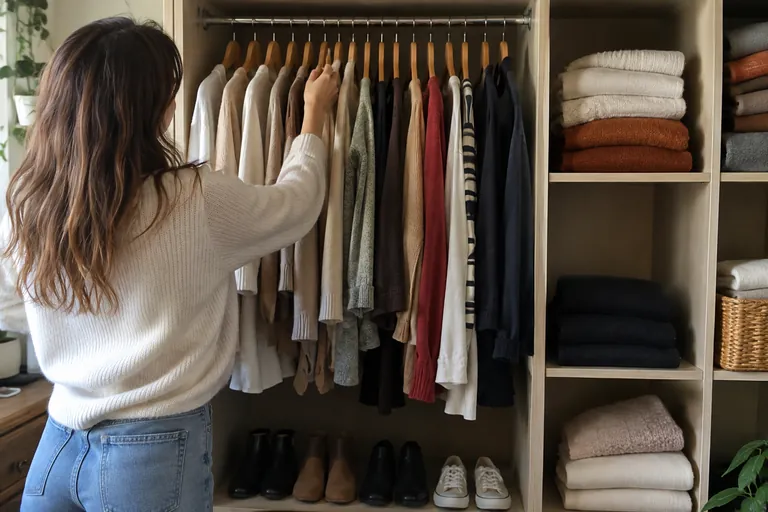
Within each category, organize by color, from lightest to darkest or in rainbow order. It’s easier on the eyes, and you can quickly spot duplicates and gaps. It’s also a great tool for pair colors your outfits.
4. Try vertical folding
For T-shirts, lightweight sweaters, and pants in drawers, vertical folding means folding clothes into rectangles that stand upright, side by side like books. You can see everything at a glance, and taking one piece out won’t topple the pile.
 Read alsoLabel seasonal clothing boxes to find the right piece
5. Choose matching hangers
Hangers in the same style and color create a neat, easy-to-scan line. Slim, nonslip hangers save space and keep clothes from slipping. Save thick hangers for jackets and coats, to help preserve their shoulder shape.
6. Fold or hang?
- Hang : shirts, blouses, dresses, jackets, coats, dress pants, skirts.
- Fold : knit sweaters, which can stretch on hangers, T-shirts, jeans, activewear.
- Store in boxes : accessories, scarves, belts, underwear.
7. Organize by height
Keep everyday clothes between eye and hip level, where they’re easiest to reach. Up high: pieces for another season and special-occasion outfits. Down low: shoes and bags. This setup means less reaching and less mess.
8. Rotate clothes with the seasons
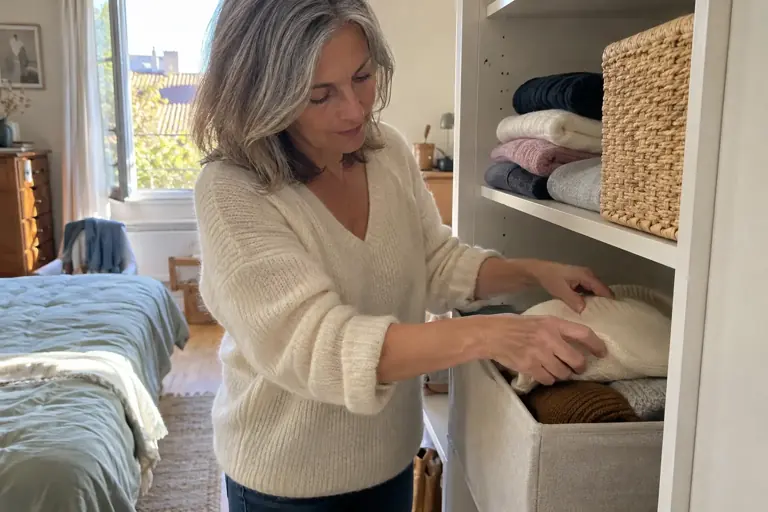
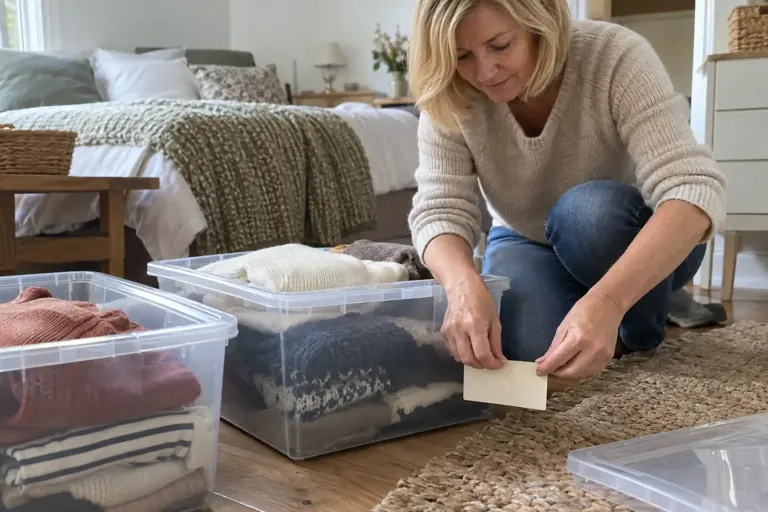
If space is limited, store out-of-season clothes in boxes or vacuum bags up high or under the bed. When the season changes, take the opportunity to do a quick sort. Then your wardrobe holds only what you can actually wear, just like in a capsule wardrobe.
9. Set aside a “looks for the week” area
Set aside a few hangers or a small garment rack for outfits you’ve planned for the days ahead. It’s the perfect way to planning your outfits for the week and save time in the morning.
Organize shoes and accessories
Ideally, store shoes in pairs, with toes alternating or one shoe turned around, on angled shelves or in clear boxes. Use boot shapers or a roll of cardboard to help boots keep their shape. Keep in-season shoes within easy reach; store the rest up high.
For accessories, drawer dividers keep everything from getting tangled: roll belts, fold scarves into squares, and store jewelry in compartments. Store bags upright, stuffed with paper to help them keep their shape, on a shelf instead of stacked. Seeing your accessories at a glance makes it easier to use them to finish an outfit.
Your digital closet: a companion to organizing
Photographing your clothes and organizing them in an app lets you see your whole wardrobe, even when some pieces are stored away for the season. You can put together outfits without opening every drawer and spot forgotten pieces more easily. Our guide to virtual try-on explains how to get started. That’s what Vestly, the virtual wardrobe app, with a preview of your outfits on you.
Keep your closet organized
Organization can quickly fall apart without a few habits: hang clothes back up as soon as you take them off, don’t let a “clothes chair” pile up, and put things back in place every Sunday. The “one in, one out” rule keeps your closet from filling up again.
Watch a practical example
A visual example from The Organized Soprano to compare with the steps in this guide.
Video in English
Frequently asked questions
How do you organize a small closet?
Make the most of the height with extra shelves, use slim hangers, fold clothes vertically, and rotate seasonal items. Start by decluttering.
Should you organize clothes by color or by category?
Both: first by category, then by color within each category. It’s the easiest system to scan.
How do you keep sweaters from stretching out?
Fold them instead of hanging them. If you’re short on space, drape them folded in half over the hanger bar, not by the shoulders.
How do you organize clothes without a wardrobe?
A freestanding wardrobe, a dresser, and a few under-bed boxes are all you need. Reserve the wardrobe for pieces that wrinkle, fold everything else vertically in drawers, and store out-of-season clothes in garment bags or closed boxes. Wall hooks can hold bags and tomorrow’s outfit.
Should you use vacuum bags?
For bulky out-of-season clothes, like puffer jackets, they save a lot of space. Avoid using them for wool and cashmere for long periods, though: compression crushes the fibers. Breathable fabric boxes are better for knits.