Contents
- Look at your route with practicality in mind
- Start with a pair you know
- Choose a base that works for real movement
- Plan a layer you can take off
- Make your bag a tool, not a burden
- Choose an outfit formula based on your plans
- Leave some room for the trip back
- Frequently asked questions
- Sources and references
A day of sightseeing often starts with “let’s wander around a bit” and ends with a museum, several neighborhoods, stairs, and an impromptu dinner. The outfit that looked perfect in your departure photo can become the one you keep adjusting. To enjoy the city, plan for the day’s activities instead of searching for the ideal traveler’s uniform.
For a day of exploring a city on foot, start with shoes you’ve already broken in, add a base that lets you walk, and plan for a layer you can carry. Style is personal: a dress, jeans, or relaxed pants can all work. The difference comes down to trying things on and considering the demands of your route.
Look at your route with practicality in mind
You don’t need to know every street to plan your outfit. A few details are enough: how much walking you’ll do, whether there are hills, how many indoor breaks you’ll take, and how you’ll get back. A day visiting museums connected by tram and a day in a very hilly old town don’t call for exactly the same choices.
Check the rules for the places already on your itinerary. Some have bag size limits, a coat check, or specific dress requirements. You can find this information on their official websites. Knowing ahead of time helps you avoid packing an extra piece for no reason or discovering a restriction at the entrance.
Also check the forecast for the times that matter. The high temperature doesn’t tell you how cool it’ll feel when you set out or while you wait in the evening. For in-between seasons, ideas for dressing for 15 degrees can help you choose a layer that’s easy to take off. Always adjust to how you feel and the actual conditions.
Start with a pair you know
Shoes you’ve already worn for a comparable day give you a practical reference. “Sneakers” doesn’t automatically mean comfortable, and “flats” doesn’t mean they’re right for every route. Check how they fit, the condition of the soles, and how they feel when you walk for a long time.
Try them on with the socks you plan to wear. A thin sock, a seam, or a different upper can change how they feel. The morning of your visit isn’t the best time to discover a brand-new pair. If you buy new shoes, take time to test them before your trip instead of relying on a general promise.
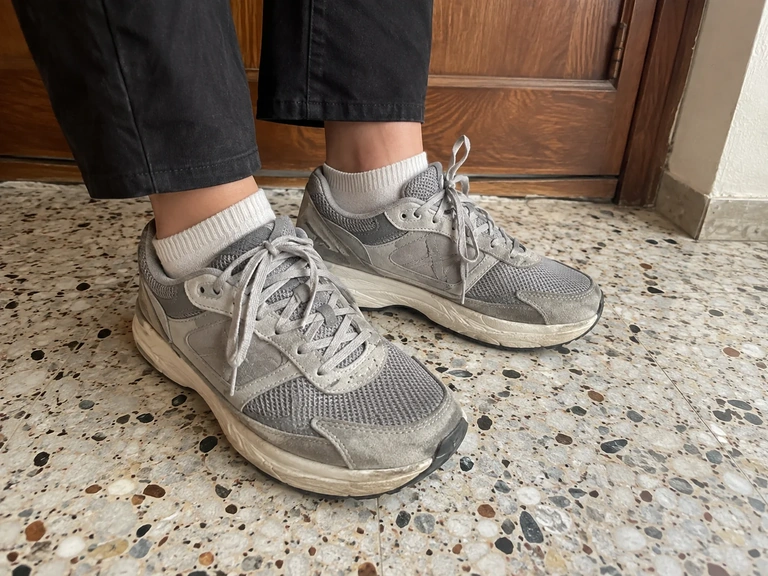
Build your look around that pair. Check that your pants don’t drag on the ground and that your skirt length lets you climb stairs. You can keep your personal style without packing a spare pair of shoes whose weight you won’t want to carry all day.
Choose a base that works for real movement
Walk around at home, sit down, and climb a few stairs if you can. Does the garment stay in place? Does the waistband feel comfortable? Does a crossbody bag catch on the fabric? These are the little details that keep coming up over several hours.
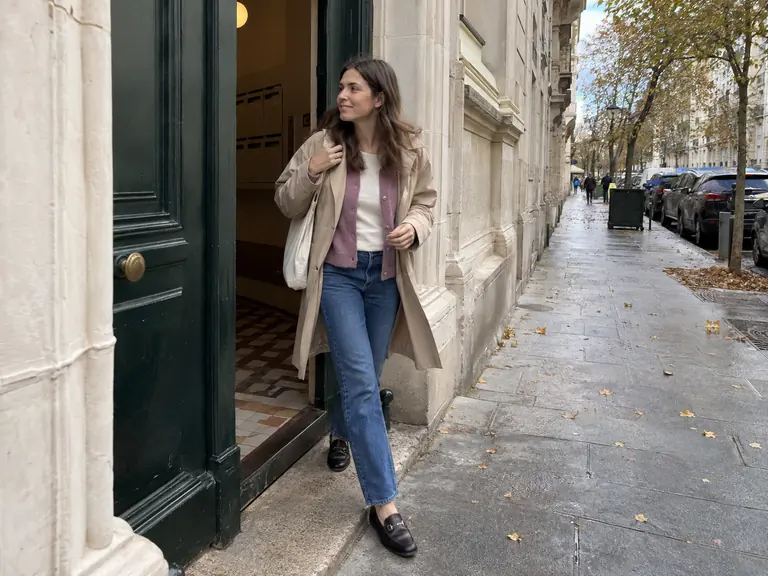
A straight-leg pair of jeans you already find comfortable, soft pants, or an easy-to-wear dress can be a good starting point. Avoid choosing a cut just because it’s presented as a travel essential. If you spend your time pulling up a strap or holding down a hem, another piece in your closet will probably be easier.
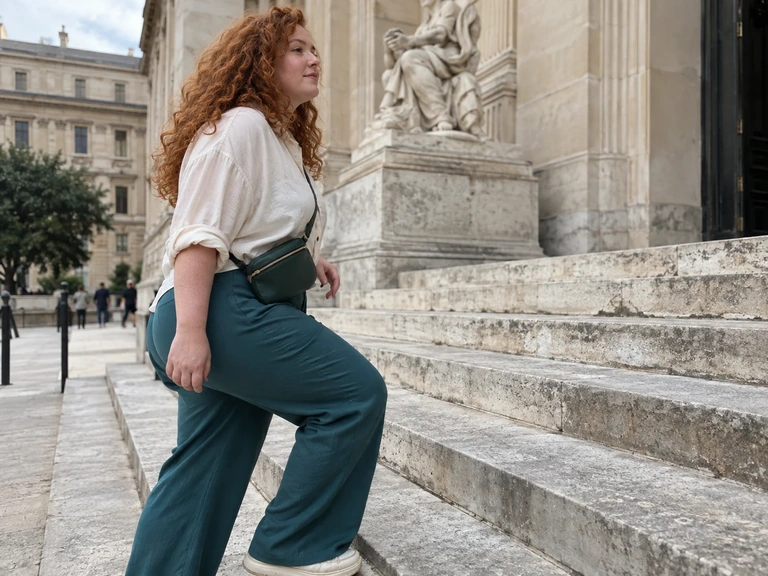
It’s also worth trying tops with your bag. A shoulder seam, a bulky collar, or a very loose sleeve can get in the way under a strap. Try the whole look with your bag on, then take it off to make sure you still like the base. A practical look shouldn’t be designed only to look good from the front while standing still.
Plan a layer you can take off
An overshirt, light jacket, or cardigan can work for changing conditions throughout the day. Choose a piece you know goes with your base, then decide where it’ll go once you take it off. If it doesn’t fit in your bag, will you be comfortable carrying it over your arm on a long walk?
Being able to take off a layer matters as much as wearing it at the start. Too many layers can feel cumbersome in a museum or café. On the other hand, a very light base with no option for the trip back leaves you with fewer choices. Look for a flexible combination instead of an outfit forecast that has to be perfect.
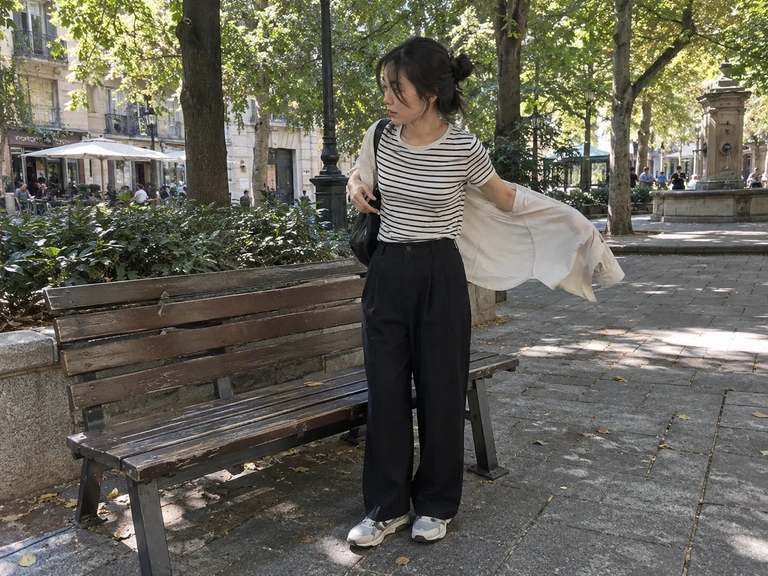
If rain is in the forecast, check how water-resistant your outer layer and shoes are. A garment’s name doesn’t prove it can withstand water. In difficult conditions, adjust your route and activities too: clothing isn’t the only thing you can change.
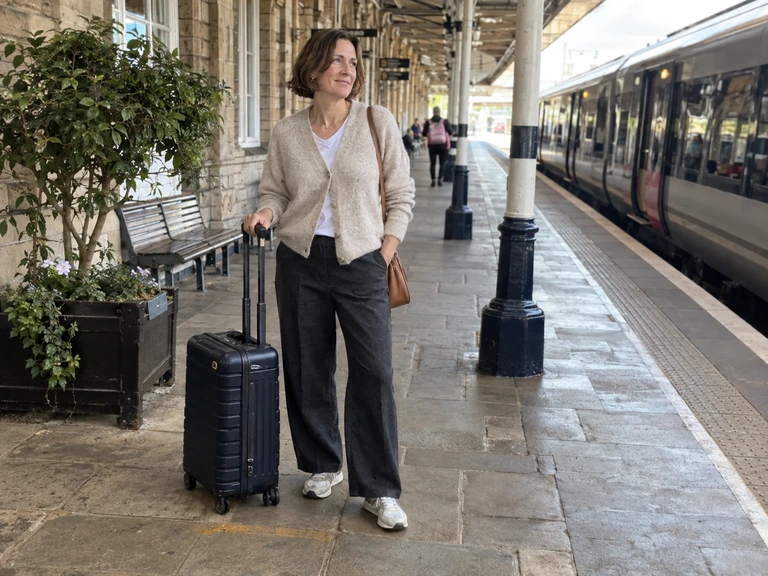 Read alsoAn outfit for a long train ride: comfortable all the way to your destination
Make your bag a tool, not a burden
Choose a bag that fits what you actually need to carry and the rules of the places you’ll visit. A practical closure, a secure fit and a weight you can handle matter more than a large theoretical capacity. Pack it, carry it for a few minutes, then remove anything without a clear purpose.
Avoid automatically adding a second outfit, another pair of shoes and several layers “just in case.” If you have dinner after your visit, a coordinated base may be enough. A lightweight accessory can change up your look without turning the day into a luggage haul.
To plan the other days of your trip, you can then check the guide to capsule suitcase. The goal here is still to enjoy a successful day of walking with what you’re actually wearing and carrying.
Choose an outfit formula based on your plans
The selector below offers starting points based on everyday clothes. Choose the type of day that’s closest to yours, then swap in pieces you own. No formula can replace trying on your shoes and testing how you move.
Outfit ideas
A starting point for my day of sightseeing
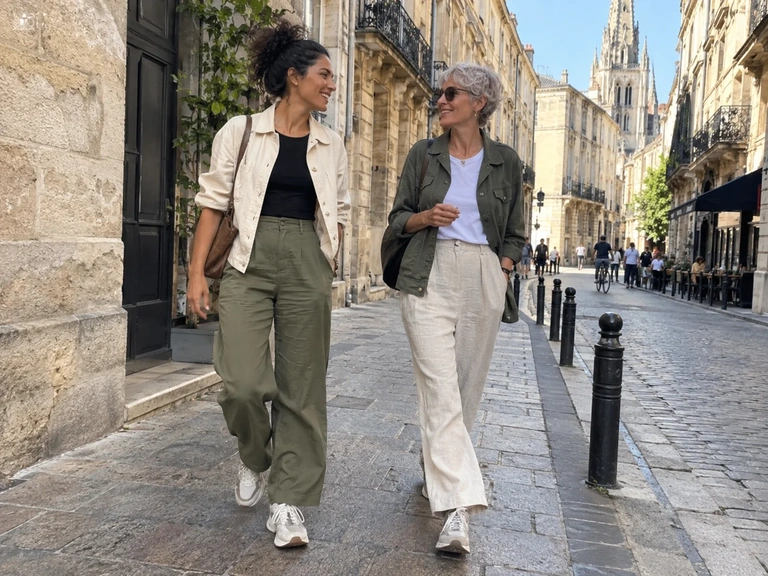
Comfortable straight-leg pants, a simple top, an easy-to-remove cardigan and shoes you’ve already worn. Check the bag rules at the museums you plan to visit.
See all ideas
Museums and cafés
- Comfortable straight-leg pants, a simple top, an easy-to-remove cardigan and shoes you’ve already worn. Check the bag rules at the museums you plan to visit.
- A dress you know well, a lightweight jacket and a tried-and-true pair of flats. Test how it feels sitting down and plan where to put your jacket.
Streets and stairs
- Soft jeans at the right length, a comfortable shirt and shoes that feel steady on your route. Keep your bag light enough for climbing stairs.
- Ankle-length pants, a T-shirt and an overshirt. Try on your bag when it’s packed and check that nothing makes you hold your clothes in place.
Sightseeing, then dinner
- Comfortable dark pants, a simple blouse and a soft jacket. The same familiar pair of shoes can work for both parts of the day if the dinner venue allows.
- A dress that’s easy to walk in, a cardigan and shoes you’ve already tested. Add a light detail to shift into evening style instead of changing your whole outfit.
Leave some room for the trip back
The end of the day deserves its own planning. Check the forecast, how long you’ll walk to your transportation and how much room you have for an evening layer. If your plans change, a simple outfit gives you more options than one built around a single activity.
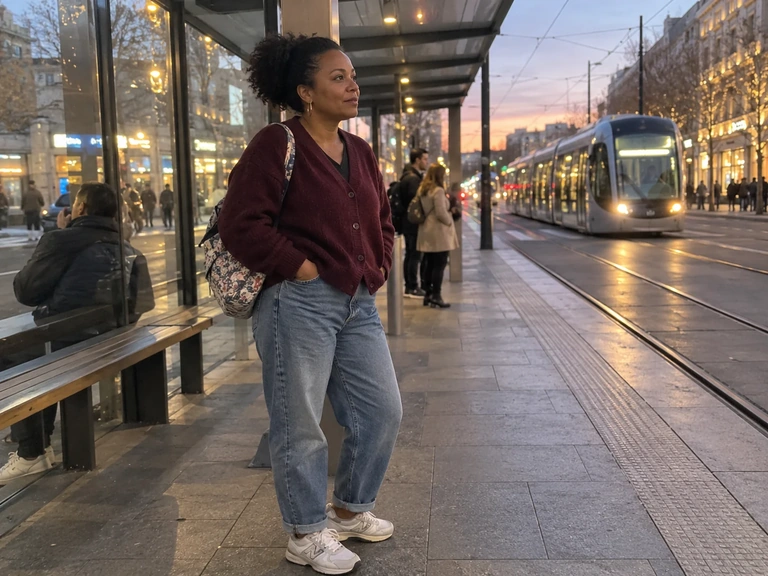
In Vestly, start with your go-to shoes using “Build Around,” compare the combinations and save the looks you like. Your planner can bring together outfits for your travel days. That way, you can revisit a combination you’ve already put together, then check it with your actual clothes before you leave. The ideas from casual chic style also help you look polished with a simple base.
Watch a practical example
A visual example from Emma Hill to compare with the steps in this guide.
Video in English
Frequently asked questions
Is a dress a good choice for a lot of walking?
Yes, if you feel comfortable in it, it lets you move, and its length works for your route. Try it on with the shoes and bag you plan to wear. A piece that lets you get on with your day is more useful than a one-size-fits-all rule about dresses when traveling.
Do you have to bring a backpack?
No. A small crossbody bag may work for a light load; a backpack may be better for carrying other things. Check how comfortable it feels when loaded and the rules at the places you plan to enter.
How can I look polished in photos?
Stick with pieces and colors you already enjoy wearing. An outfit that lets you move easily helps you enjoy the day. You don’t need to add a restrictive piece just to make your visit more photogenic.
Sources and references
- Météo-France, consulted on September 30, 2026, to plan for conditions along the route.
- Vestly, app overview, accessed September 30, 2026.
These combinations are editorial suggestions to adapt to your itinerary.