Contents
- At 15°C, start by looking at your actual day
- The starting formula: a base layer, a knit, a jacket
- Choose an idea based on your situation
- Six looks for 15°C using everyday pieces
- Adjust your layers without adding bulk
- Plan your look with your digital wardrobe
- The check before you head out
- Frequently asked questions
- Sources
Fifteen degrees on your phone, sunshine outside the window, and a route that starts in the shade: do you need a coat, a jacket, or just a sweater? The challenge of in-between weather has less to do with the number on the screen than with how conditions change throughout the day. An outfit that feels good for a twenty-minute walk might feel light while you wait on a platform, then too warm on public transit.
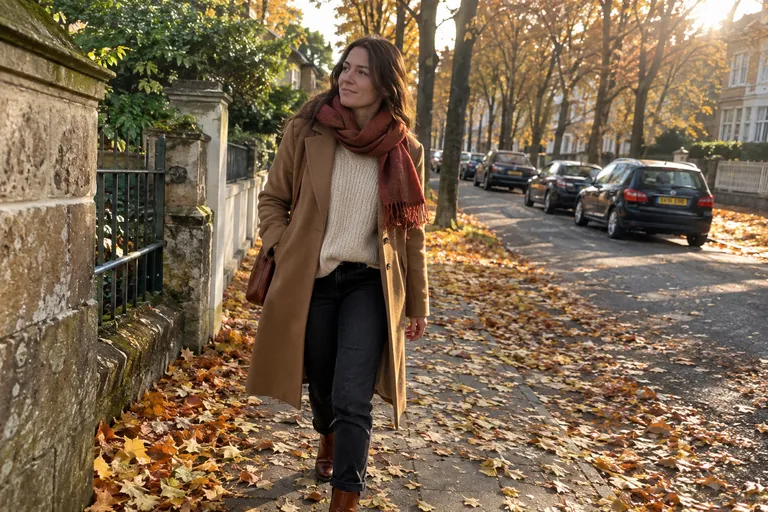
To dress for 15°C, start with a comfortable base and add a layer you can easily open or take off. A top, a lightweight knit, and a light jacket make a practical starting point, which you can simplify or build on depending on how you feel. It isn’t a required uniform: some people will need less, others more.
This guide offers combinations using everyday pieces, an outfit picker, and a quick check before you head out. The goal is to help you put together looks with your wardrobe, not create a new shopping list.
At 15°C, start by looking at your actual day
There is no universal match between a temperature and a number of garments. Météo-France explains that how the weather feels depends in particular on wind, sunshine, humidity, activity, and clothing. Its wind chill index is presented under certain cold-weather conditions; don’t invent an “exact feels-like temperature” at 15 °C based on a style rule. Météo-France’s explanations help distinguish the weather measurement from personal comfort.
Before opening your closet, answer three very practical questions:
- How long will you be outside? Crossing a parking lot is different from waiting for a bus or having lunch on a patio.
- What will you do between trips? A day spent sitting, a brisk walk, and a very heated indoor space call for different adjustments.
- How will you get home? An outfit chosen for mid-afternoon may need to take you through the evening.
Check the forecast for the hours that matter, including the chance of rain. If an alert applies to your area, follow official guidance over these outfit ideas. This guide covers everyday outings, not sports gear, hiking, or extreme conditions.
The starting formula: a base layer, a knit, a jacket
Think in terms of three roles, not three layers every time. Base layer should feel comfortable on its own. The middle layer adds warmth you can take off. The outer layer works for your commute and, depending on its actual features, protects you from wind or rain.
| Role | Pieces to try | What to check |
|---|---|---|
| Base layer | T-shirt, shirt, blouse, long-sleeve top | Are you comfortable if you take off your jacket? |
| The adjustable layer | Light cardigan, soft sweater, shirt jacket | Can you open it, take it off, and put it away? |
| The outer layer | Light trench coat, short jacket, suitable windbreaker | Will it work for your commute and the forecast? |
| Bottoms and shoes | Jeans, pants, skirt, or dress with whatever pairing works for you | Can you walk, sit, and spend time outside comfortably? |
A trench coat isn’t automatically waterproof, just as a thick jacket isn’t necessarily comfortable to wear for long. Check the manufacturer’s details and what you’ve found from wearing it. To understand those labels, our guide to clothing labels helps you tell fabric content from care instructions.
The simplest test: put on all the layers together, zip up your jacket, raise your arms, and sit down. If the sleeves pull or the cardigan bunches at the shoulders, swap out a piece instead of putting up with discomfort all day.
Choose an idea based on your situation
The selector below offers editorial outfit pairings. It doesn’t check your weather, calculate how the temperature feels, or infer anything about your body. Choose the situation closest to your day, then adapt the suggestion to your clothes and comfort. You can browse all the ideas in the summary panel.
Outfit ideas
An outfit to adapt to your day
Ecru T-shirt, straight-leg jeans, open shirt jacket, and comfortable sneakers. Keep the shirt jacket handy for shady stretches; take it off if you get too warm.
See all ideas
Sunny and walking
- Ecru T-shirt, straight-leg jeans, open shirt jacket, and comfortable sneakers. Keep the shirt jacket handy for shady stretches; take it off if you get too warm.
- Soft shirt, straight-leg pants, and a light jacket carried over your arm. You should like the outfit without the jacket too: try both versions before you leave.
Rain in the forecast
- Long-sleeve top, fine-knit layer, and a jacket with confirmed rain protection. Choose shoes suited to your commute and bottoms that don’t drag on the ground.
- Comfortable pants, shirt, and outer layer suited to a downpour. Make room for an umbrella and keep wet items separate on your way back.
Wind and waiting
- Comfortable top, light cardigan, and a jacket that fastens properly. Check the collar and cuffs, and make sure you’re comfortable standing still; then adjust based on how you feel.
- Fine-knit sweater, straight-leg pants, and an outer layer suited to the wind. A light scarf can complete the outfit if you’ll really use it; there’s no need to add accessories just for the sake of it.
Office and transit
- Shirt, relaxed pants, cardigan, and comfortable shoes. Take off the cardigan in heated spaces and keep your jacket handy for the commute.
- Solid-color top, dark jeans, blazer, and a bag roomy enough for a fine-knit layer. Check that this combination fits your workplace dress code.
Heading home in the evening
- A dress you love, a light jacket, and shoes you’ve already tried out. Add a layer or tights that work for you, keeping the trip home in mind rather than just your arrival.
- Dark pants, a simple top, and a cardigan under a jacket. A piece of jewelry or a bag can change the look without making you change the whole outfit.
 Read alsoBusiness Casual: Put Together a Chic, Comfortable Work Outfit
Six looks for 15°C using everyday pieces
1. Jeans, a simple top, and a vest
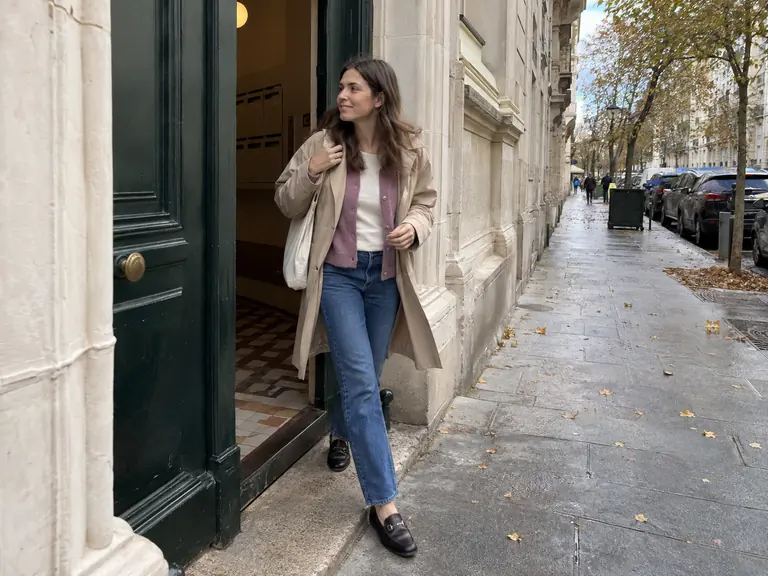
This is the easiest formula to adjust. Choose jeans you can move comfortably in, then a top that works on its own. The vest gives you another option: wear it open for walking, button it up while you wait, or tuck it away when you no longer need it. Add a jacket if your commute calls for one.
To avoid looking too bundled up, check the lengths in the mirror: one visible hem beneath the vest may be enough. You don’t need every layer to peek out. The casual chic offers more tips for mixing casual pieces with polished details.
2. A shirt and pants for the office
A relaxed-fit shirt and pants you can sit in make a simple base. Add a fine-knit layer or a blazer depending on the workplace and how comfortable it is. The key is not to rely on a buttoned-up jacket to feel properly dressed indoors.
Try the outfit with your actual bag: a strap that keeps slipping or a jacket that feels too tight under a backpack can quickly turn a good idea into a bad day. For dressier options, check out our business casual outfits.
3. A dress with a short or long layer
You can wear a dress at 15 degrees if the combination feels right to you. The useful question is whether the whole outfit feels comfortable: bare legs or tights, open-toe or closed-toe shoes, a light jacket or an extra knit layer. No single number dictates any of these choices.
Compare two versions with the same dress. A short jacket can let the dress take center stage; a long layer creates a different line. Choose the one you can wear while sitting and walking, not just the one that looks good in a still photo.
4. A skirt and a lightweight sweater
A skirt with a lightweight sweater lets you create a different silhouette without buying clothes just for in-between seasons. Check how the sweater fits under your jacket and how the skirt moves when you walk. If you keep adjusting the hem or waistband, try a different combination.
Shoes matter especially here: wear a pair you know is comfortable for your commute. A pretty outfit doesn’t benefit from shoes that keep you from walking as you normally do.
5. Comfortable pants and a rain jacket
In damp weather, start with the practical needs of your commute: pant length, suitable protection, and room for an umbrella. Then build your look around those pieces. A solid top and a color repeated in your bag and shoes can be enough to make everything feel cohesive.
Don’t mistake a shiny finish or technical-looking fabric for verified protection. The garment’s details and your own experience are more useful than its appearance. Also plan where you’ll let your outer layer dry when you arrive.
6. The daytime look that lasts into the evening
Keep the same base and bring the extra layer you’ll actually need. A compact cardigan, a jacket better suited to the trip home, or an accessory can change the look without requiring a whole second outfit. Avoid filling your bag with several nearly identical options.
For an evening with lots of time outdoors, plan around that part of the day. If you’ll mostly be indoors, make sure the look works once you take off your outer layer.
Adjust your layers without adding bulk
Layering gets easier when each garment has a clear purpose. Start with your base and outer layer, then add knitwear only if you need it. Trying things on this way keeps you from automatically heading out in three thick layers.
Try packing it away, too. Does your vest fit in your bag without crushing what you’re carrying? Is the jacket easy to carry over your arm? A layer that’s technically removable but impossible to pack will stay on you even when you no longer want it.
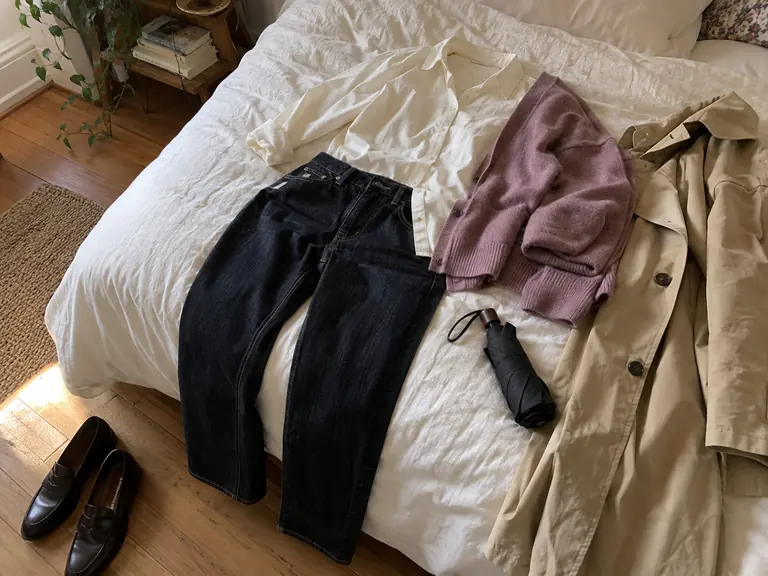
When it comes to color, two main tones and one complementary shade are a simple suggestion, not a rule. For example: blue jeans, an ecru top, and a mauve cardigan. If you prefer a more colorful look, just keep a connection between two pieces. Our guide to pairing clothing colors lets you explore these combinations in more detail.
Plan your look with your digital wardrobe
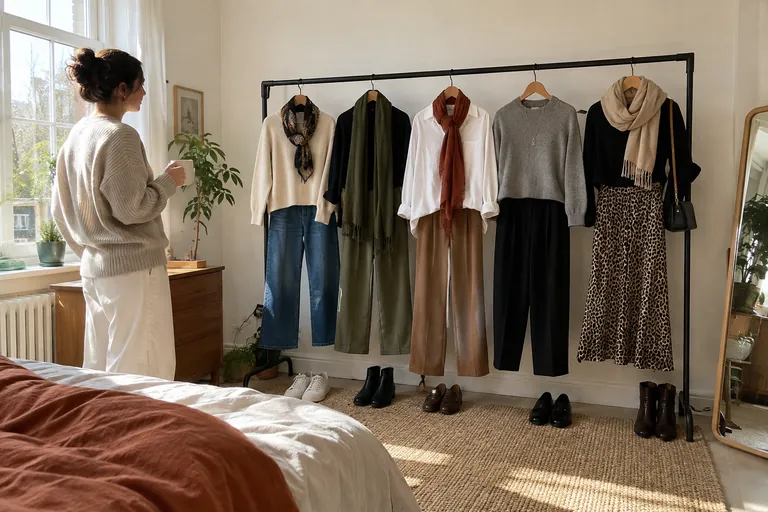
You can save two or three combinations on your phone that work for mild days, with one variation for damp commutes and another for a late trip home. Give them clear names: “office with cardigan,” “walk and light jacket,” “dress with evening layer.” They’re personal reference points, not strict weather categories.
In Vestly, the digital closet and outfit ideas help you start with the clothes you own. You can explore a combination, try it on virtually with your photos, then save it to your planner. The generated result helps you compare the look; it doesn’t measure warmth, water resistance, or garment comfort. Check those things with the actual pieces.
Start with one outfit, wear it, then make a mental note of what you’d change. You’ll have a more useful starting point for the next day than a long list of supposed essentials that work for everyone. To make this a habit, follow our guide to plan your outfits for the week.
The check before you head out
Check off
My midseason outfit is ready
0 / 6
Your outfit is ready to try on in real life. Adjust it if your comfort changes throughout the day.
Watch a practical example
A visual example from Audrey Coyne to compare with the steps in this guide.
Video in English
Frequently asked questions
Do you need a coat at 15 degrees?
Not necessarily. A light jacket may work on some days, while someone else may prefer a more covering layer. Wind, how long you’ll be outside, your activity, and your sensitivity to the cold all matter. Choose a versatile option and check the forecast for the times you’ll be traveling.
Can you wear a T-shirt at 15 degrees?
Yes, if you’re comfortable in the conditions that day. Keeping a layer within reach lets you change your mind in the shade, while waiting, or on your way back. A T-shirt alone is neither a must nor proof that you’re dressed for the whole day.
Jeans or a dress: which works better?
Either can work. Compare the full outfit, including shoes, any tights, and your outer layer. The choice depends on your preferences and your day, not on a universal ranking of clothes.
Does the outfit still work if the temperature goes from 10 to 20 degrees?
That range calls for checking the morning, midday, and trip back separately. Layers can help, but an outfit designed for 15°C doesn’t guarantee comfort across the whole range. Prepare a layer you can actually carry and adjust based on your experience.
Does Vestly choose an outfit that guarantees thermal comfort?
No. Outfit ideas can factor in the weather and your plans for the day, but an app can’t know exactly how you feel, the properties of each fabric, or all the conditions along your route. Use the suggestions as a starting point, then decide what works for you.
Sources
- Météo-France — What does “feels like” temperature mean?, published on August 27, 2024, accessed on September 30, 2026. Source for guidance on how the temperature feels; clothing pairings are Vestly editorial suggestions.
- Vestly — App overview, accessed on September 30, 2026, for features related to the wardrobe, outfit ideas, and planner.
The photos in this article are AI-generated illustrations. They do not show a product test, a guaranteed try-on result, or people sharing testimonials about the app.