
Contents
Your commute is in the sun, your first meeting is in a cool room, and lunch is on a terrace: a summer office outfit often needs to work in several settings. Simply looking for the lightest garment doesn't always solve the problem. You also need to be able to sit, move around, remove a layer, and fit in with your workplace norms.
In hot weather, a practical office outfit starts with a comfortable base you can wear on its own, a cut that lets you move, and a light layer on hand for indoors. The exact rules depend on your job and workplace. Uniforms, protective gear, and explicit dress codes take priority over style ideas.
Read the workplace before choosing your outfit
On some teams, a loose dress and sandals are perfectly standard. On others, closed-toe shoes and covered shoulders fit the setting or the job requirements. Pay attention to what people actually wear, the internal rules, and your scheduled appointments. If the dress code isn’t clear, asking a specific question can save you from wondering all day whether your outfit is appropriate.
Separate formality from clothing weight. Straight-leg pants, a simple blouse, and polished shoes can look professional without needing a heavy jacket. On the other hand, adding a blazer automatically can complicate an outfit that already works. The guide to women’s business casual helps you understand the context.
Also think about your activities. A day at a computer, a site visit, and a standing workshop all come with different constraints. Safety instructions still come first, even if another option looks more comfortable. The goal is to find an outfit that works for your actual day.
Build a base that works without a jacket
Choose a top you’re comfortable wearing on its own in every situation you expect to encounter. Check how sheer it is in natural light, how long it is when you raise your arms, and whether the buttons gap when you sit down. These quick checks tell you more than a “summer outfit” label.
A loose shirt, a cropped blouse with comfortable sleeves, or a T-shirt with enough structure can work, depending on your office. Your pants or skirt should let you walk and sit without needing constant adjustment. A simple dress can mean fewer pieces to coordinate, as long as the cut works for you in your workday positions.
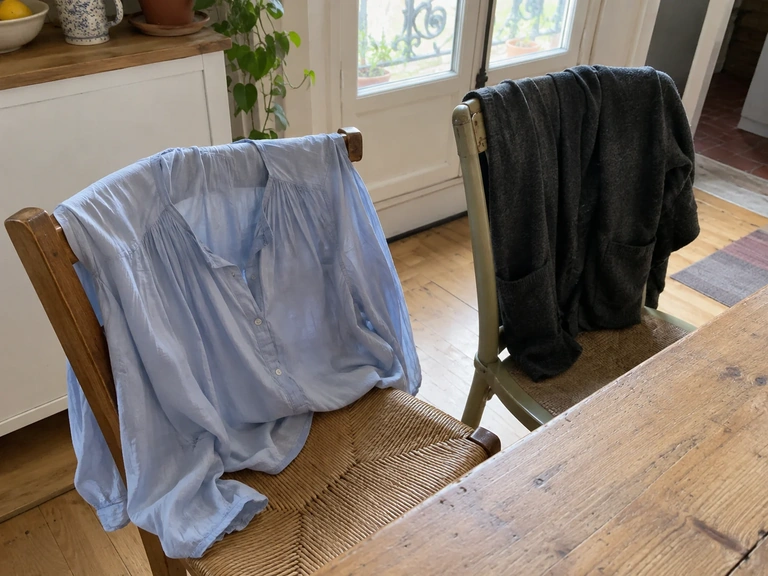
Don’t choose a fabric based on its name alone. Its weight, lining, cut, and how it feels to you all shape the experience. Look at the whole garment and try it on. If you’re looking for combinations with a piece you already own, our guide to wearing a white shirt offers ideas you can adapt.
Try the chair test
Sit for a few minutes in a position similar to how you sit at work. Does the waistband press into you? Does the skirt ride up enough to bother you? Does the top stay comfortable when you reach toward a keyboard? You don’t have to put up with constant discomfort to look polished.
Then test the opposite movements: standing up, reaching for a bag, climbing a few steps. A very loose cut can feel comfortable, but check the hem length; a fitted cut can work if it truly lets you move. No single silhouette guarantees comfort.

This test helps you spot simple fixes. You can loosen a belt, change your top, or pick different pants before you leave home. It’s easier to fix a specific issue than to conclude that all workwear is uncomfortable.
Bring a layer for cool rooms
A fine knit, overshirt, or soft jacket can stay within reach without being worn for the whole commute. Choose a piece that works with your base and that you can put on without changing the whole look. If it’s meant to stay at the office, check the storage options and the workplace’s usual practices.
How much extra warmth you need depends on how you feel. You don’t need to turn your bag into a mobile wardrobe to cover every possibility. One well-chosen layer is often better than several options that don’t go with your outfit. In a meeting, you should be able to open it or take it off easily.

If a room is regularly uncomfortable, clothing shouldn’t be the only solution. Talk to the people responsible for the space about working conditions. During periods of extreme heat, refer to INRS prevention guidance and your employer’s instructions: clothing is only one part of the situation.
 Read alsoPlan your outfits for the week: save time every morning
Three combinations using everyday clothes
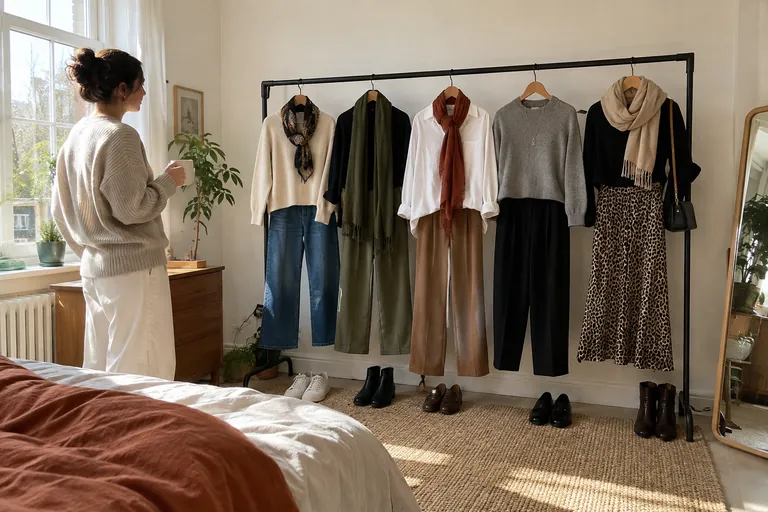
For a casual office, try straight-leg soft trousers, a plain T-shirt you like wearing on its own, and shoes that are allowed at your workplace. You can keep an overshirt in your bag. The look comes together through balanced proportions and well-kept pieces, without needing a complicated outfit.
For a more formal meeting, start with comfortable tailored trousers and a simple top. Add a lightweight jacket if the setting calls for it, then make sure the outfit still works when you take it off. The a can be useful, but it isn’t a universal requirement.
For a day when you’d rather wear a dress, choose a length and neckline that let you sit comfortably. A soft jacket and shoes you’ve already tested are enough to give the look a different feel. Don’t add a tight belt just because the dress looks dressier in a photo.
Plan for your commute without carrying the whole office
Pack your bag with what you actually carry. A laptop, water bottle, and extra layer can already take up quite a bit of space. If you’re bringing another pair of shoes or a top, ask yourself whether you really need the change and whether there’s a convenient place to do it.
Also plan for how you’ll carry your jacket when you take it off. Holding it over your arm may work for a few minutes, but gets less practical when you’re using your phone or carrying folders. A successful outfit is one where you can manage every piece, even when you’re not wearing it.

In Vestly, the ideas for the day take the weather and your plans into account. Add your office pieces, build a look around the trousers or dress you love, then save the combinations that work. The planner helps you prepare for meeting days and more casual days with your own clothes. Then try on the actual pieces to check the comfort.
Check off
My office outfit for a hot day
0 / 6
Your outfit is ready for the different parts of the day. Adjust it to how you feel and the actual conditions.
Watch a practical example
A visual example from The Chic City Girl to compare with the steps in this guide.
Video in English
Frequently asked questions
Are sandals appropriate for the office?
It depends on the rules and the activity. Check the context before building your whole outfit around this pair. Safety requirements may call for different shoes.
Should you choose only light colors?
No. For an office look, start with clothes whose fit and function work for you. You can keep wearing the colors you love without following one style rule for every hot day.
How can you avoid buying a whole new summer wardrobe?
Try your existing basics without their usual layers. Photograph two or three combinations that feel truly comfortable, then identify any specific gap. This is more useful than buying a list of essentials before trying them on.
Sources and references
- INRS, working in the heat, accessed September 30, 2026, to distinguish clothing from workplace risk prevention.
- Vestly, app overview, accessed September 30, 2026.