
Contents
- Compare both settings without stereotyping them
- Build on a base you already love
- Choose one change with a clear purpose
- Decide early whether you’ll change shoes
- Plan your bag and the transition
- Three simple combinations to adapt
- Check your trip home, then keep the combination that works
- Frequently asked questions
- Sources and references
You have dinner plans after work and won’t be stopping by home. Should you bring a second outfit, change shoes somewhere on the fly, or stay in your work clothes? Often, the simplest solution is to choose a base that works for both occasions, then plan one specific change instead of a complete transformation.
For an evening out after work, start with a comfortable base that suits both places, then switch up one or two easy-to-manage pieces. A jacket, an accessory, or your top can change the feel of a look. The right change is one you can actually make with the time, bag, and space you have.
Compare both settings without stereotyping them
Dinner with friends, an art opening, and a work reception each come with different expectations. And not every office calls for formal attire. Start by naming the exact plan instead of automatically treating daytime as serious and evening as showstopping.
Check the venue’s guidelines if it has any. Also think about what you’ll be doing: will you be sitting for a long time, standing, outside, or traveling between several places? Then look for what the two occasions have in common. That’s often where you’ll find your base look.
If the settings are truly incompatible, a full change may be the best choice. You’ll need a suitable place, enough time, and a plan for storing your clothes. The goal isn’t to make one outfit work for everything just for the sake of it, but to get ready in a way you can count on.
Build on a base you already love
Straight-leg pants with a simple top, a comfortable dress, or a skirt with a fine-knit sweater can make a great base. Choose pieces you’ve already worn for a full day. Your evening look shouldn’t depend on a garment whose quirks you only discover after eight hours at work.
Try the base outfit without the jacket. Does it still work for the office? For your evening plans? Check the proportions, length, and comfort when sitting. If you need to keep a layer on the whole time to feel good, find another pairing before planning the accessories.
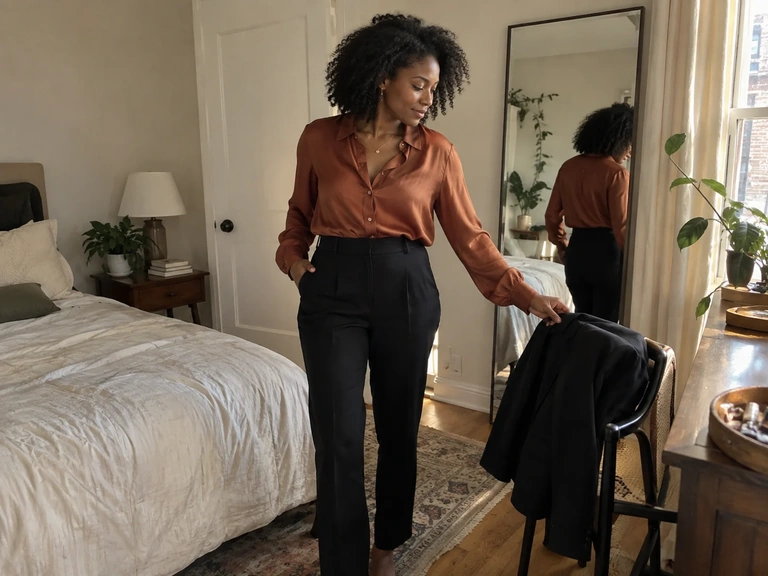
A shirt can work for both parts of your day without any special styling. Depending on the cut and the setting, you can simply change how you wear the jacket or add a piece of jewelry. The guide to wearing a white shirt offers several pairings built around one everyday piece.
Choose one change with a clear purpose
Think about what the change adds. Taking off the jacket can make an outfit feel lighter. Adding a scarf can bring in a pop of color. Switching tops can suit a dressier setting. The change doesn’t have to be dramatic to be useful.
Pack the piece in a pouch or suitable organizer. Small accessories should be easy to find and put away again. If you’re planning several delicate pieces of jewelry, a scarf, a belt, and an extra bag, make sure getting ready won’t be more complicated than the evening itself.
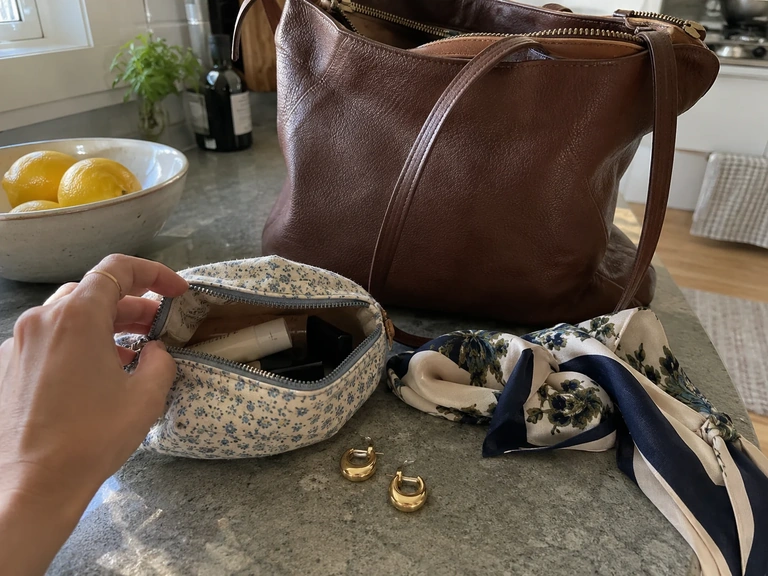
A visual example from Alyssa Beltempo to compare with the steps in this guide.
Video in English
Decide early whether you’ll change shoes
Shoes can change the look, but they also take up room in your bag. Before packing a second pair, think about your morning walk, your evening plans, and the trip home. A pair that already works for both settings is often the simplest solution.
If you change shoes, try both pairs with the bottoms you’ve chosen. The pants may fall just right with one pair and drag with the other. Also check how you’ll store the pair you take off and where you’ll be able to change. A plan that depends on finding space at the last minute isn’t really a plan.
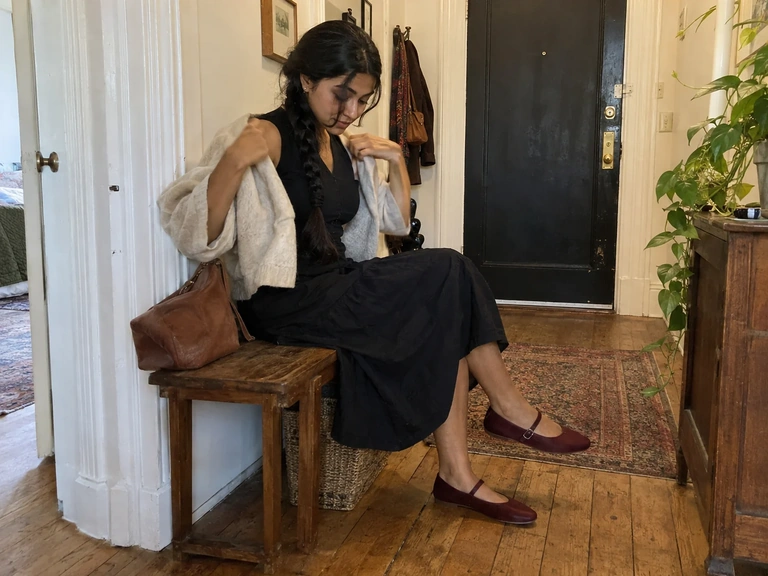
Don’t keep an uncomfortable pair just because it feels more festive. You can enjoy an evening in flats too, depending on the venue and your preferences. The style of an outfit comes from its proportions, fabrics, and details, not from any obligation to wear heels.
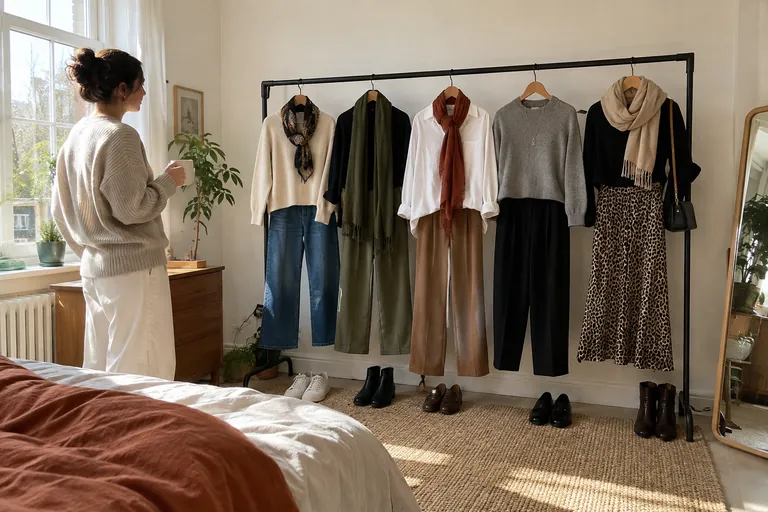 Read alsoPlan your outfits for the week: save time every morning
Plan your bag and the transition
Try everything with the usual contents of your work bag. Your laptop, charger, documents, and layer for the trip home already take up space. If you bring an extra piece, decide what could stay at the office only if that’s possible and appropriate for your situation.
Plan a calm moment for the change: before leaving the office or somewhere you can actually use. A few minutes to check your outfit are better than a rushed change in an entryway. If you don’t have a suitable space, choose a base outfit in the morning that needs very few adjustments.
The clothes you take off need a place, too. A jacket can wrinkle or become bulky if you simply roll it up with your other things. Consider what the garment needs and plan realistic storage. The most elegant solution is often the one that leaves your hands free.
Three simple combinations to adapt
For a casual office day followed by dinner at a restaurant, try comfortable dark pants, a blouse, and a soft jacket. When you leave work, keep or remove the jacket depending on the venue; a piece of jewelry already tucked into a small pouch may be all you need. smart casual looks offer more starting points in this style.
For a more formal day followed by an exhibition, a simple dress with a blazer may work. Try the dress on by itself and with the extra layer so you like both versions. Our article on the a helps you choose pairings without limiting this piece to the office.
If you’d rather wear jeans that day, first check that they work for both places. A comfortable fit, a polished top, and a suitable jacket can carry you through the transition. If the evening really calls for a more formal look, it’s better to know before deciding that jeans will work everywhere.
Check your trip home, then keep the combination that works
Your plans may run late, and the weather may change. Bring the layer you’ll need to get home, even if it isn’t part of the outfit shown in the photo. Also make sure your bag is still easy to carry after you’ve changed clothes.

In Vestly, compare the base outfit with several jackets or accessories in your wardrobe. Virtual try-on helps you see how everything looks before choosing, and saved looks make it easy to find the combination again. The planner can help you get ready for days when you already know you have plans. That way, you have a combination you can wear again instead of starting from scratch for every invitation.
Check off
My work-to-evening transition is realistic
0 / 6
Your transition from the office to the evening is planned. Each change has a place, a time, and a purpose.
Frequently asked questions
Is one accessory really enough?
Often, if the base outfit already works for both places. An accessory doesn’t have to fix an outfit that doesn’t suit the setting; it’s there to change one detail of the look.
Should I bring a small evening bag?
Only if you can manage your work bag and the rest of your things. In many situations, one understated, practical bag makes heading out easier. Check what the venue requires before bringing a second bag.
How can I avoid buying new clothes for these days?
Keep one or two tried-and-true combinations and note what works. Rewearing a reliable base with small changes is easier than buying a whole outfit for every after-work plan.
Sources and references
- Daphné Moreau, scarf and neckerchief tying tutorial, published January 31, 2019, accessed September 30, 2026.
- Vestly, app overview, accessed September 30, 2026.