Contents
- How do you choose a comfortable base for several hours?
- Which layers should stay accessible in the cabin?
- Which shoes make the trip easier?
- How can you prepare for security without too many accessories?
- Do you need to change on arrival?
- How can you move while following cabin instructions?
- A layered outfit example
- Frequently asked questions
- Sources and references
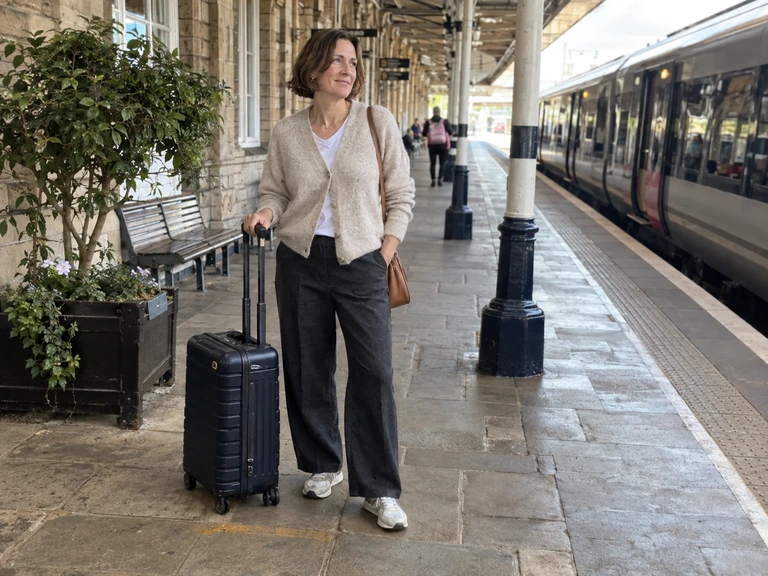
For a long-haul flight, choose an outfit that feels comfortable when seated, shoes you have already worn and a layer you can reach. Try your usual movements with your bag. The best combination adapts from security to arrival without requiring a special wardrobe.
How do you choose a comfortable base for several hours?
Start with a piece you know. Soft pants, jeans that do not pinch, a skirt or a dress can all work: none guarantees comfort on its own. Sit in a chair, lean toward your bag and stand again. Notice the waistband, seams and how the fabric moves under your arms.
If a belt presses or the fabric bothers you after a few minutes, change one piece and try again. Keep the shoes you will actually wear. This comparison is more useful than a front-facing photo: it checks the outfit in a position you will use.
| Situation | First check | Possible adjustment |
|---|---|---|
| Seated | The waistband feels comfortable | Try another cut or remove a belt |
| Standing with your bag | The top stays in place | Try a top that is easier to adjust |
| Security | Items are easy to reach | Use a pocket or a small closed pouch |
| Arrival | The base outfit suits your plans | Add a jacket or pack a spare top |
Which layers should stay accessible in the cabin?
A removable layer lets you adapt when you feel warmer or colder. Choose a top that is comfortable on its own, then a cardigan, soft shirt or light jacket you can put on or remove without disturbing your neighbor. A scarf can help if you already use one; it does not replace safety instructions.
Put that layer in the bag your airline permits you to keep nearby. The FAA notes that baggage must be stowed at the specified times, including taxi, takeoff and landing. Keep aisles clear and always follow the crew’s instructions.
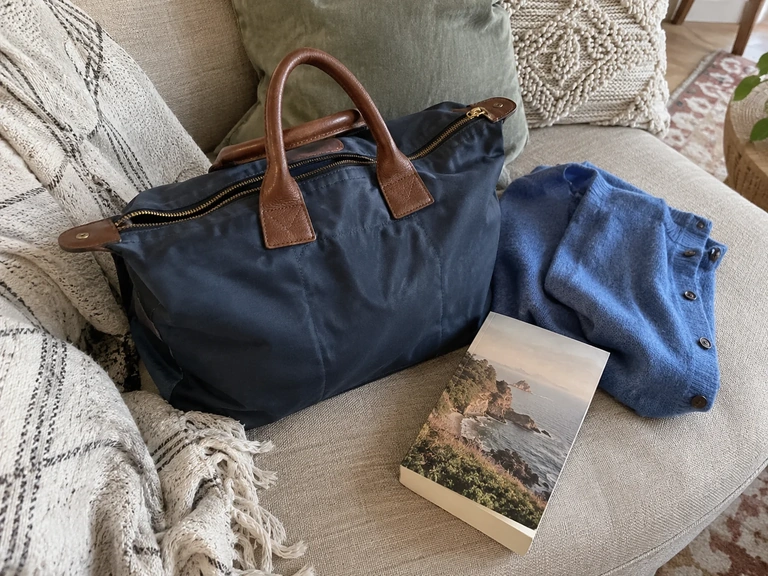
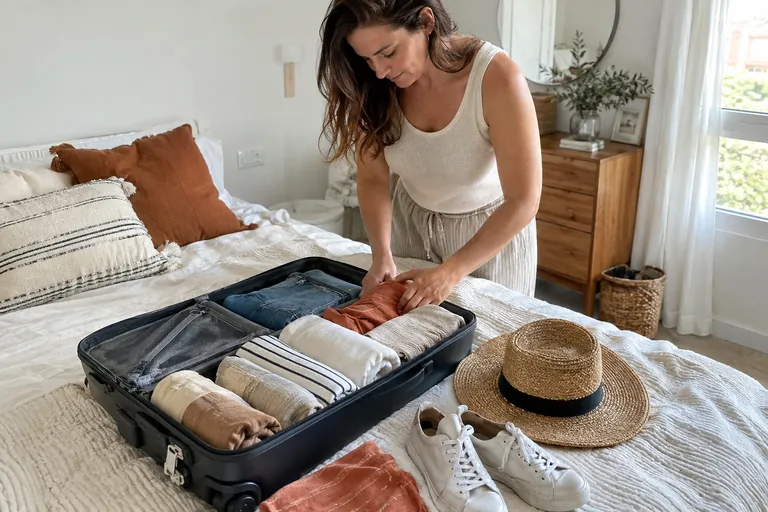
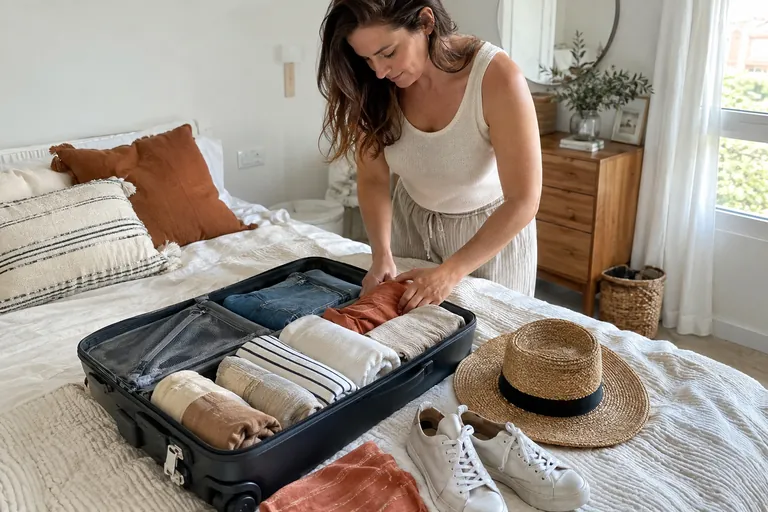
Color is a personal choice. A dark shade can hide some marks; a light outfit can work too if you like it. To coordinate clothes for your stay, the travel capsule suitcase focuses on what goes in the bag rather than the flight outfit.
Which shoes make the trip easier?
Choose a pair you have worn before, stable for walking and easy to adjust. Try them with your planned socks and check that your heels stay secure. Sneakers, loafers or other closed shoes can work depending on your feet and route; a new pair is not required.
Screening procedures vary. The US TSA recommends shoes that are easy to remove and put back on, but requests depend on the place and situation. Listen to the officer rather than assuming another airport’s rule applies everywhere. Keep your belongings together so you can collect them calmly.
How can you prepare for security without too many accessories?
Before joining the line, decide where to put items from your pockets and any belt. A small closed pouch keeps them together, subject to the instructions you receive. Choose accessories you can handle calmly, including a jacket you are comfortable removing if asked.
Rules for liquids, devices and baggage dimensions can vary by route. Check your airline and the relevant airport authorities before departure. This clothing guide does not replace their permitted-items list or specify a universal allowance.
Quiz
A choice you can adapt
You feel warm at security and cold once seated. Which choice helps in both situations?
See the answer
Wear a comfortable top and keep a removable layer within reach. A layer you can remove or put back on helps in both situations without assuming a particular temperature.
 Read alsoHow to put together a harmonious outfit with what you have
Do you need to change on arrival?
Not necessarily. First consider what you will do after landing: reach your lodging, walk to transportation or go straight to a meeting. A light jacket can change the look of a comfortable base; a spare top can help if you know where and when to change.
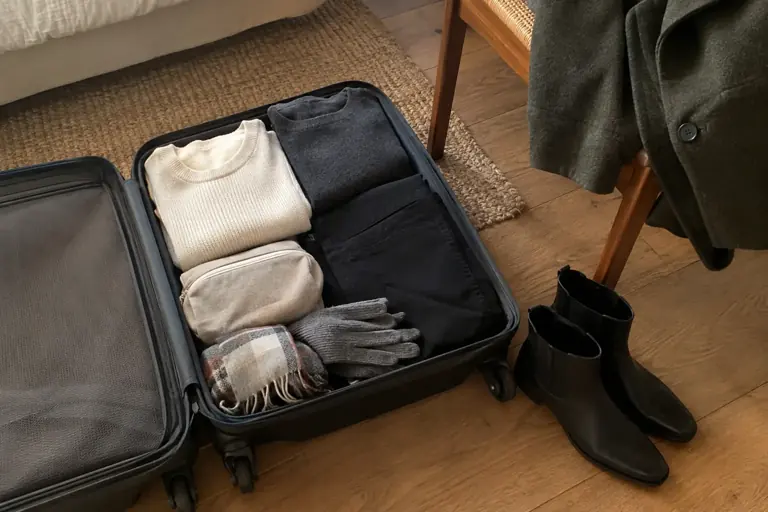
Try the outfit with the bag you will carry. If a garment catches on a handle or pant legs drag, adjust it before leaving. Avoid a plan that depends on a changing area whose availability you do not know. If you connect by train, adapt your choices to the train journey.
How can you move while following cabin instructions?
Breaks and movement depend on the flight and what is permitted at the time. The CDC recommends moving your legs regularly on long trips and speaking with a healthcare professional before departure if you are at increased risk of blood clots. An outfit is neither guaranteed medical prevention nor a diagnosis.
When the seat belt sign is on, stay buckled and follow the crew. Do not stand just to meet a goal from an app or generic advice. Cabin safety comes before a comfort routine.
A layered outfit example
The English video below compares travel layers and outfit choices. The creator promotes her own clothing line; her preferences are examples, not rules. Follow your own comfort and your airline’s instructions.
A visual example from Anna Bey to compare with the steps in this guide.
Video in English
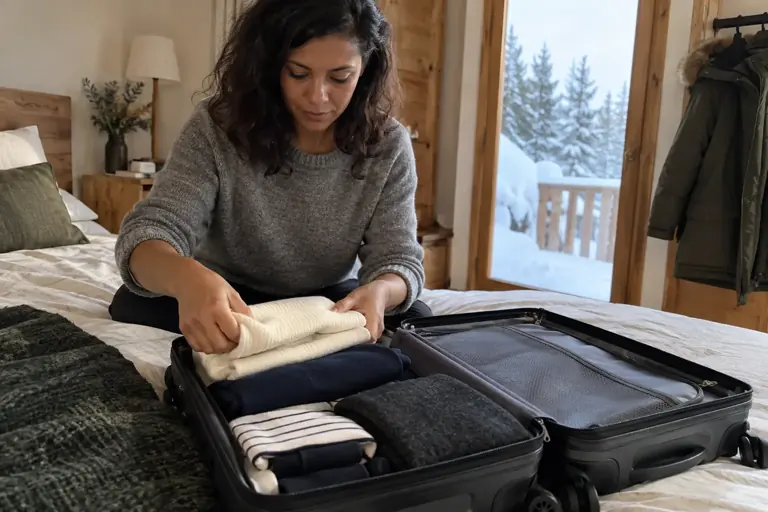
In Vestly, save clothes you own and compare two combinations before departure. An image helps you visualize the outfit; it cannot show whether the waistband bothers you while seated. Try the actual clothes. If you are traveling somewhere cold, the winter carry-on suitcase helps organize the other layers for your stay.
Check off
Before you leave
0 / 5
Your checklist is ready: adapt it to your trip and the instructions on site.
Frequently asked questions
Can you wear jeans on a long flight?
Yes, if they are comfortable while you sit and move normally. Familiar, flexible jeans can work; a pressing belt or seam is a reason to choose another pair.
Do you need to buy an outfit just for flying?
No. Try clothes you already own first. A familiar base and a removable layer may be enough, depending on your trip and comfort.
Can you wear a dress?
It can be. Check that it feels comfortable when seated and is easy to manage with a bag and in the spaces along your route. Keep an extra layer if you need one.
Where should you put your jacket during the flight?
Follow the crew’s instructions and your airline’s rules. Stow baggage when asked; do not let a jacket or bag block the aisle.
Does everyone need compression socks?
The need depends on your circumstances. If you have an increased risk or a medical question, ask a healthcare professional before traveling instead of relying on a general recommendation.
What should you wear if you need to look polished on arrival?
Choose a base outfit that works during the flight, then add a jacket or plan a realistic change. Test it with your bag and the time you actually have.
Sources and references
- FAA, seat belts and baggage storage, accessed October 27, 2026.
- TSA, security screening tips, accessed October 27, 2026; US practices can change.
- CDC, travel and blood clot risk, accessed October 27, 2026.