Contents
- Choose a starting piece
- Play with proportions without following a formula
- Tie together colors and textures
- Finish with shoes and one useful detail
- Create three variations before putting everything away
- Adapt the same base for three different plans
- Check for comfort before you head out
- When an outfit doesn’t work
- Mistakes that make everything harder
- Frequently asked questions
To put together an outfit with what you have, start with a piece you love, then build around it by balancing proportions and colors. A great outfit doesn’t have to be complicated: here’s a five-step method you can use with any wardrobe, from weekend jeans to an office suit.
Standing in front of a full closet, it’s easy to feel like you have “nothing to wear.” The problem is almost never a lack of clothes; it’s not knowing how to put them together. Once you know where to start, combinations come naturally, and you rediscover pieces you’d forgotten about.
Choose a starting piece
To avoid pulling everything out of your closet, start with a piece you feel like wearing: pants, a shirt, a dress, or a jacket. It sets the tone and immediately narrows your options. If you’ve lost track of what you own, a wardrobe inventory can help you spot forgotten pieces. In Vestly, “Build around it” works the same way: choose a starting piece and compare combinations from your wardrobe.
Ask yourself where you’re going, how long you’ll be out, and how you want to feel. Your answers guide the level of comfort, layers, and shoes. A workday followed by dinner calls for a different starting point than a Saturday at the market. That’s exactly what to consider before a first date.
Play with proportions without following a formula
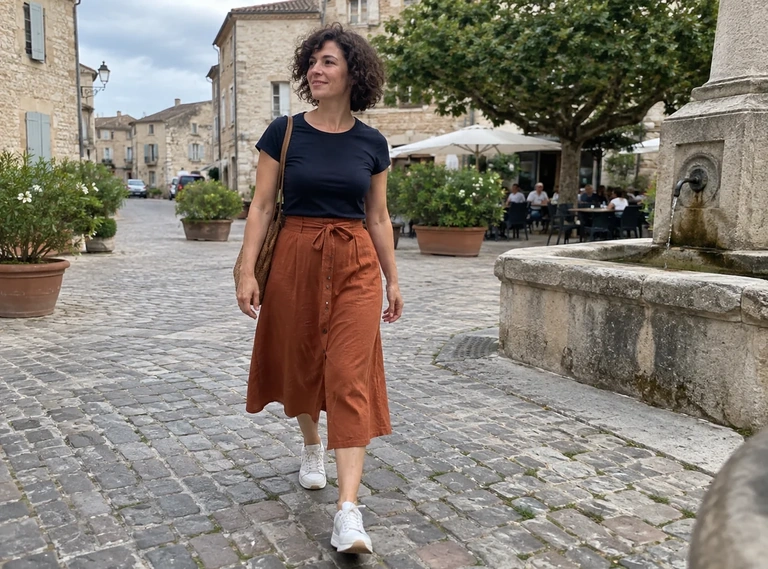
An outfit feels cohesive when the pieces work together. A soft top can go with a more structured bottom; a cropped jacket can balance a full skirt. These are ideas, not rules: try different proportions and keep the ones you like.
The simplest rule: one volume at a time. Wide-leg pants pair well with a more fitted or tucked-in top; an oversized sweater works with a fitted bottom. Defining your waist by tucking in a top or adding a belt instantly gives an outfit structure. To layer without competing lengths, the guide on layering clothes offers tips for trying things on. If you want to take it further based on your body shape, our guide to find your body shape offers detailed tips.
Look at your outfit from a distance or take a photo from the front and side. Sometimes it’s easier to spot a hem, length, or layer that could use an adjustment.
Tie together colors and textures
Repeating a color in two places, for example in a top and an accessory, can create a visual thread. A monochrome outfit works too if you vary the textures: knit, denim, cotton, or leather.
If a piece already draws the eye with its pattern or color, give it room to shine. Simpler pieces around it bring it out and make the overall look feel balanced. For color combinations that always work, check out our guide to pairing colors in your clothes.
Finish with shoes and one useful detail
Shoes change the feel of an outfit and how comfortable it is. Choose them based on your commute, the weather, and your plans, then check that your pants or skirt length works with them. Pants that are too long over flat sneakers, or a hem that hits your ankle at an awkward spot, can easily throw off your proportions.
Often, one detail is all you need: a belt, earrings, a scarf, or a bag. To choose a belt width, see the guide choosing the right belt width. If you’re unsure, take off one accessory and compare. The best version is the one you wear without a second thought.
 Read alsoGraduation outfit: getting ready for the ceremony, photos, and what comes after
Create three variations before putting everything away
When you find a combination that works, try another layer, change your shoes, or swap the top. You’ll get several ideas from the same starting piece, without spending more.
Photographing your favorite combinations or saving them in a digital wardrobe helps on rushed mornings. Over time, you’ll recognize your own style vocabulary and put looks together faster. It’s also the foundation for planning your outfits for the week stress-free.
Adapt the same base for three different plans
One starting outfit can work for several occasions if you change the pieces that set the scene. Let’s take dark straight-leg pants and a fine-knit sweater and see what changes with your plans:
- For the office : white shirt under the sweater, structured jacket, understated closed-toe shoes.
- For lunch in town : T-shirt under the sweater, a softer jacket or cardigan, clean sneakers or loafers.
- For dinner : sweater draped over your shoulders or swapped for a more polished top, subtle jewelry, ankle boots or heels depending on the venue.
The bottom stays the same. What changes is the top under your knit, the outer layer, and the shoes. This method saves you from buying another outfit for every occasion. To go from the office to an evening out without adding more pieces, the guide from the office to an evening out offers some additional pointers.
Check for comfort before you head out
Before you leave home, try three simple moves. Sit down and stay that way for a few moments: the waistband, hem, and sleeves should remain comfortable. Raise your arms as if reaching for something overhead: your top shouldn’t ride up or pull at the seams. Walk a few steps to check that your bottoms don’t catch under your feet.
If any of these tests feels uncomfortable, the outfit won’t feel good by the end of the day, even if you like how it looks in the mirror. You’ll wear a comfortable outfit more often, and that’s what makes the difference between a combination that stays in your closet and one you reach for again.
When an outfit doesn’t work
An outfit that feels off often has a simple cause. Before changing clothes, try just one adjustment:
- Take one piece off : too many colors, patterns, or proportions can compete; the outfit feels more open when you remove the boldest element.
- Change your shoes : a well-balanced bottom can look heavy with a chunky pair or too dressed up with sneakers.
- Adjust the length : a hem that cuts across your silhouette at the wrong spot is often enough to throw off the whole look.
- Add or remove a belt : it can define your waist or, on the other hand, lighten a silhouette that already has structure.
If none of these adjustments works, the starting piece may not be right for that day. Save it for another occasion instead of forcing the combination.
Mistakes that make everything harder
- Trying to highlight everything : one statement piece per outfit is enough; let the rest complement it.
- Ignoring comfort : you’ll never wear an outfit again if you spend all day adjusting it.
- Following a rule that doesn’t feel right : style advice offers ideas, not laws. To find your own guidelines, see how to find your personal style.
- Forgetting the weather and the occasion : a beautiful outfit that doesn’t suit the situation is still the wrong outfit.
A roomy shape can also be a personal choice: here is how to try a poncho in a complete outfitwithout an imposed silhouette rule.
Watch a practical example
A visual example from beepworld to compare with the steps in this guide.
Video in English
Frequently asked questions
How can you tell if an outfit works?
If you feel comfortable, the pieces work well together, and you don’t feel like changing after an hour, it’s a successful outfit. A full-length photo can help you take a step back and assess the whole look.
How many colors should you wear in an outfit?
Three main colors, including neutrals, are an easy guideline. You can use more, but balancing them gets trickier.
Should you always define your waist?
No. Defining your waist adds structure to a silhouette, but a straight, flowing outfit can work just as well. It all depends on the effect you want and your comfort.
How can you put together an outfit when you don’t have many clothes?
Start with the piece you reach for most often, then try more combinations instead of adding more pieces. A few neutral basics, a jacket, and a few layers are often enough to create several different outfits. Try each combination before deciding you’re missing something.
Should you buy a piece to complete an outfit?
Not necessarily. First, check what’s really missing: adjusting a hem, adding a belt, or choosing another pair of shoes may solve the problem. If you still need to buy something, choose a piece that goes with several items you already own.