
Contents
- Notice where your skirt actually falls
- Try a flat shoe without looking for extra height
- See how the skirt meets your ankle boots
- Let your boots sit under the hem
- Try sitting, taking the stairs, and walking your route
- Put together a lighter version with sandals
- Save the combinations that work for you
- Frequently asked questions
- Sources and references
A midi skirt may look great on the hanger and leave you unsure about which shoes to choose. Sneakers, ankle boots, tall boots, sandals: each pair changes how the hem meets your foot. Instead of looking for one shoe that works with every midi skirt, start with your skirt, its fabric, and what you have planned for the day.
With a midi skirt, first choose shoes that suit what you’ll be doing, then check the gap or overlap between the hem and the top of the shoe. Walk and sit down to make sure both pieces move freely. You can choose flats or heels; neither is required for this length.
Notice where your skirt actually falls
Put on the skirt with the top you have in mind and wear it at your usual waist position. Midi describes a range of lengths, but it doesn’t say exactly where the hem falls on you. A straight skirt, a full skirt, and a pleated skirt also take up space in different ways.
Look at the hem while standing, then take a few steps. Is it even, asymmetrical, longer in back? Does it move a lot? These observations can help you choose a shoe that allows the movement you want. You don’t need to measure your body or fit yourself into a category to try this.
If the skirt is new, start with a top you know well. That way, you won’t have to work through several uncertainties at once. The guide to putting together an outfit that reflects your personal style can help you keep it simple: one starting piece, then useful choices around it.
Try a flat shoe without looking for extra height
Sneakers, loafers, or flats can all work with a midi skirt. Choose a comfortable pair whose feel on your usual route you already know. Then compare the color, shape, and volume with the skirt: a chunky sneaker makes a different statement from a slim shoe, but neither is automatically better.
For your first try, keep on the pair you wear most often. Look at the full outfit, then change only the shoes. If you prefer the other version, note what you like: stronger contrast, a different texture, or a softer feel as you walk.
You can let your socks show if you like that detail. Just check that they’re comfortable and stay in place as you walk. They shouldn’t require constant adjustment. A successful pairing lets you focus on your day.
See how the skirt meets your ankle boots
An ankle boot can stop clearly below the skirt, leaving a visible gap, or come closer to the hem. Try the two pieces together and look at where they meet. If the skirt’s hem falls right against a stiff boot top, the fabric may sometimes catch as you move.
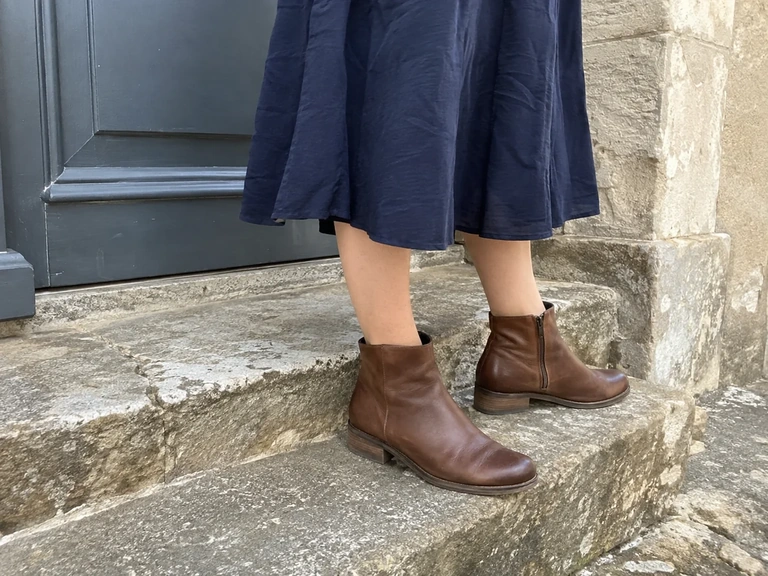
Take a few steps, then sit down. If the hem catches, try another pair, a softer boot shaft, or a skirt with a different length. This isn’t about hiding your ankle or creating a required proportion. You’re looking for a visual and practical pairing that works for you.
The shoe’s zippers, buckles, and raised details can also catch on delicate fabric. Check for contact before wearing the outfit for a full day. A shoe that feels great with pants may behave differently next to a flowy skirt.
Let your boots sit under the hem
A boot can extend the look underneath the skirt. Check that the hem is wide enough to let you walk comfortably and that the fabric slides over the boot shaft. A full skirt generally moves differently from a narrow skirt with a small slit, so try this with the exact style you own.
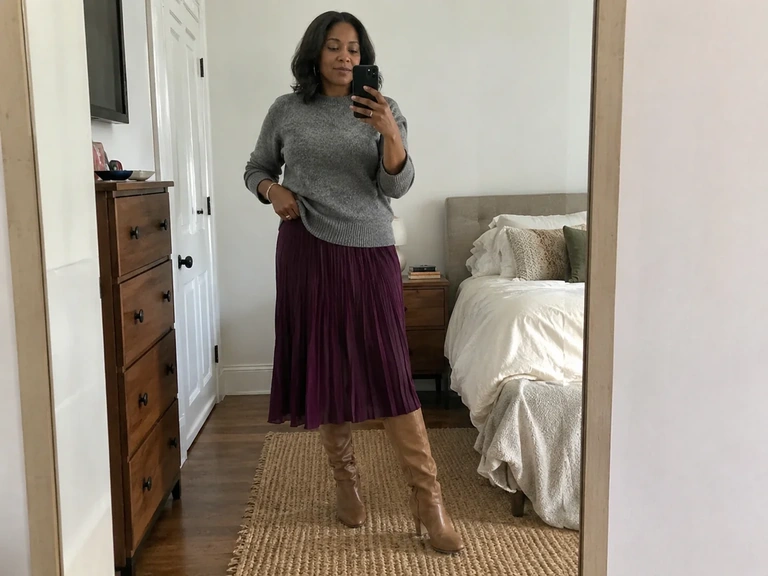
Look at the outfit standing and sitting. When the skirt rides up a little, you may see more of the boot. That change is normal; just ask yourself whether you like the look and how it feels. Also check that the top of the boot doesn’t bother you behind the knee or anywhere else.
If the boots are new, don’t wait until the day of a long outing to find out how comfortable they are. A short trial will tell you more than a pose in front of the mirror. Choosing an outfit doesn’t replace finding shoes that fit your feet.
 Read alsoBusiness Casual: Put Together a Chic, Comfortable Work Outfit
Try sitting, taking the stairs, and walking your route
Sit in an ordinary chair. Does the waistband still feel comfortable? Does the skirt let you position your legs the way you want? Do your shoes rest comfortably on the floor? Stand up and see whether everything falls back into place without much adjusting.

If you’ll be taking stairs, think about the movement it takes to climb a step. A skirt that’s quite long or voluminous may need more attention. Choose a length and fullness that let you move with ease, rather than an outfit you have to hold back with every step.
For a day with lots of walking, start with your shoes and build the skirt around them. If you’ll mostly be sitting for a meal, keep the trip there in mind too. Your actual plans are a more useful guide than a strict distinction between dressy and casual shoes.
Put together a lighter version with sandals
Flat or heeled sandals can work with a midi skirt when conditions are right. Check that your foot feels secure and that the shoes suit the ground. A pair you love but that slips or makes you shorten your stride isn’t the best choice for a long walk.

Next, look at the skirt’s fabric. A cotton skirt, a satin piece, or a pleated style can all work with sandals, each creating a different impression. You might prefer contrast or a more cohesive look. Try a simple top to see how the two work together without adding more decisions.
Outfit ideas
An idea based on the shoes you have
Flowy midi skirt, solid-color top, and sneakers you’ve already tried out. Check how the hem moves as you walk and whether the waistband feels comfortable when you sit.
See all ideas
Flats
- Flowy midi skirt, solid-color top, and sneakers you’ve already tried out. Check how the hem moves as you walk and whether the waistband feels comfortable when you sit.
- Straight midi skirt with a comfortable slit, relaxed shirt, and loafers. Try them on a step before you head out.
Ankle boots or boots
- Full midi skirt and ankle boots with some space between them and the hem. Check that the fabric moves freely when you change direction.
- Midi skirt and boots that reach beneath the hem. Sit down and stand back up to check that the skirt falls smoothly.
Sandals
- Cotton skirt, familiar top, and flat sandals that keep your foot secure. Save this option for a route that works with the pair.
- Pleated skirt, fine knit, and sandals you know well. Compare how the skirt moves without looking for a prescribed heel height.
Save the combinations that work for you
Keep two useful versions in mind: one for easy walking and another for a situation you encounter often. You don’t need to buy more. A skirt already in your wardrobe may feel fresh again with a pair of shoes you hadn’t tried with it before.
In Vestly, save these looks and find them again in your schedule. You can explore combinations built around the skirt, then check the style and comfort with the actual pieces. Ideas for casual chic can round out your search if you’re looking for a simple, polished outfit.
Watch a practical example
A visual example from Ellena Hue to compare with the steps in this guide.
Video in English
Frequently asked questions
Can you wear a midi skirt without heels?
Yes. Sneakers, loafers, flat boots, or sandals can work depending on the skirt and what you’ll be doing. Try on the full outfit and choose the pair you feel good in.
Should the boot be covered by the skirt?
Not necessarily. You can leave a gap or create an overlap. Most important, check that the boot shaft and hem don’t catch on each other and that the skirt can move freely.
What if I don’t like the outfit?
Change just one thing: the shoes, the socks, or how you wear the top. You’ll get a better sense of what changes your impression than if you start the whole outfit over.
Sources and references
- Vestly, outfit creation and schedule, accessed September 30, 2026.
- Editorial styling tips, with no rules based on size or body shape.