Contents
- Talk through your needs together
- Assign clearly marked personal zones
- Set heights for the person who uses each area
- Decide what’s truly shared
- Keep clothes waiting to be put away separate from clean, stored clothes
- Get ready in the morning without expecting the same routine
- Revisit the setup after trying it out
- Frequently asked questions
- Sources and references
Sharing a closet isn’t just about drawing a line down the middle. One person hangs almost everything while the other folds their clothes; one gets dressed early while the other gets home late; some pieces are long while others need drawers. So a perfectly equal split can still be impractical if it doesn’t reflect how you use the space.
To share a closet as a couple, start with each person’s needs, assign easy-to-reach personal zones, and define a few specific shared spaces. Try out the arrangement before buying accessories. The goal is for each person to find and put away their clothes without moving the other person’s things or having to ask where they were put.
Talk through your needs together
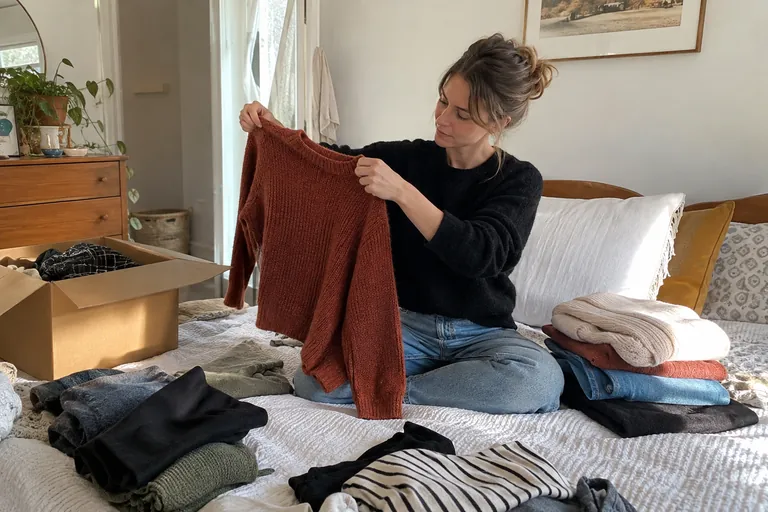
Set aside a moment when no one is in a rush to get dressed. Each person can point out the clothes they wear most, the ones that need to be hung, and the categories that are hard to reach. This isn’t about justifying every item they own or comparing who takes up too much space. Describe practical needs: long dresses, work clothes, folded sweaters, or sports gear.
Pay attention to schedules and habits, too. Does one person lay out their clothes the night before? Do they look for clothes in the dark to avoid waking the other person? Is the laundry basket blocking a drawer from opening? These details can change how you divide the space without changing the total amount of clothing.
If you want to sort through your clothes, each of you decides what to keep. The guide for sorting your wardrobe can be useful on your own. Don’t use shared closet organizing as a chance to get rid of the other person’s clothes without their consent.
Assign clearly marked personal zones
One option is to give each person a section of hanging space and a group of shelves. Another is to divide the space according to your needs: more height for long pieces, more drawers for folded clothes. The best option is one you both understand without having to explain it again.
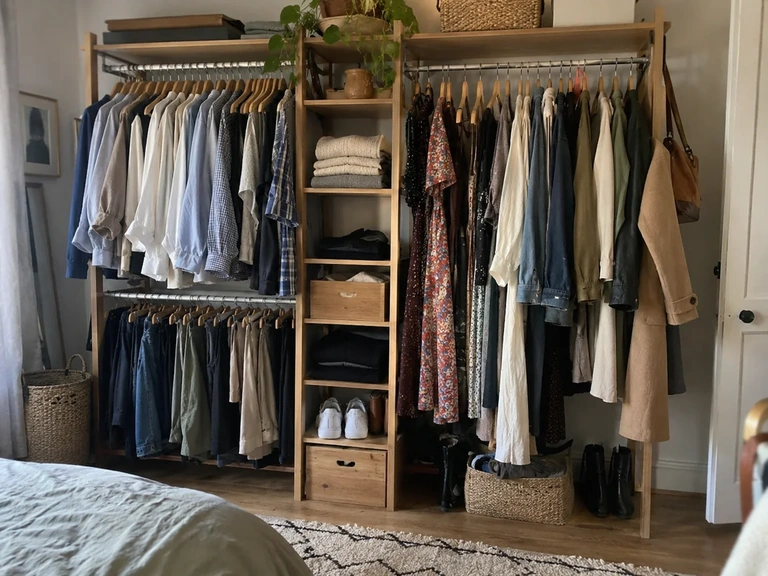
You can each keep your own way of organizing within these zones. If one person prefers categories and the other prefers colors, you don’t need a single method as long as your things don’t get mixed together. A perfectly uniform look isn’t the only measure of an organized space that works.
Avoid unspoken boundaries. If someone is temporarily using an extra shelf, say so and agree on when you’ll revisit that arrangement. A silent expansion can cause tension well before the closet is actually full.
Set heights for the person who uses each area
Access should feel comfortable for both of you. A rod that’s convenient for one person may be too high for the other. Consider each person’s actual reach, how easily they can bend down, and how much room they need to move in front of the closet. These things matter more than visual symmetry.

Keep everyday clothes in the easiest-to-reach spots. Harder-to-reach areas can hold lightweight items you rarely use, as long as you can retrieve them safely. Don’t set up a system that requires climbing on a chair or regularly pulling a heavy box down from overhead.
If you’re thinking about adding or moving a clothing rod, follow the instructions and the closet’s limits. For a specific accessibility need, a suitable modification is better than an improvised fix. You can try the new arrangement with the existing fixtures before deciding to buy anything.
Decide what’s truly shared
Garment bags, clothing care supplies, or some suitcases may have a shared area. Clothes borrowed now and then, though, don’t automatically become shared belongings. Be clear about what can be taken freely and what requires asking first.
For shoes, you can assign separate shelves or keep a small spot near the entrance for pairs you’re currently wearing. Choose based on your space and habits. A pair left to dry after an outing shouldn’t block the pair the other person needs in the morning.

Also decide where clothes go when they’re waiting for a repair, a return, or special care. Without a designated spot, they can drift from one personal zone to another. A small labeled container is often enough, as long as you check what’s inside and don’t let it become permanent storage.
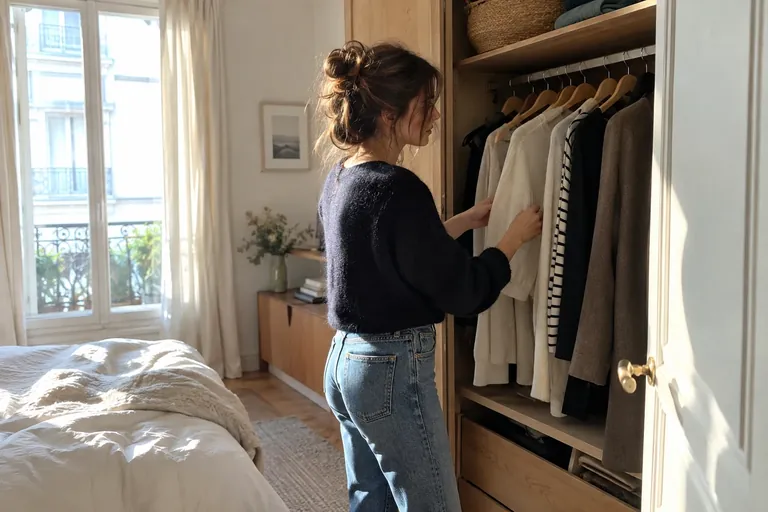 Read alsoWomen’s capsule wardrobe: a list of essentials and how to choose yours
Keep clothes waiting to be put away separate from clean, stored clothes
Clothes you’ve worn but plan to wear again need a clear place to go. Give them a few dedicated hangers or a suitable rack, separate from clean laundry. This keeps you from guessing whether a shirt on a chair needs washing, putting away, or wearing tomorrow.
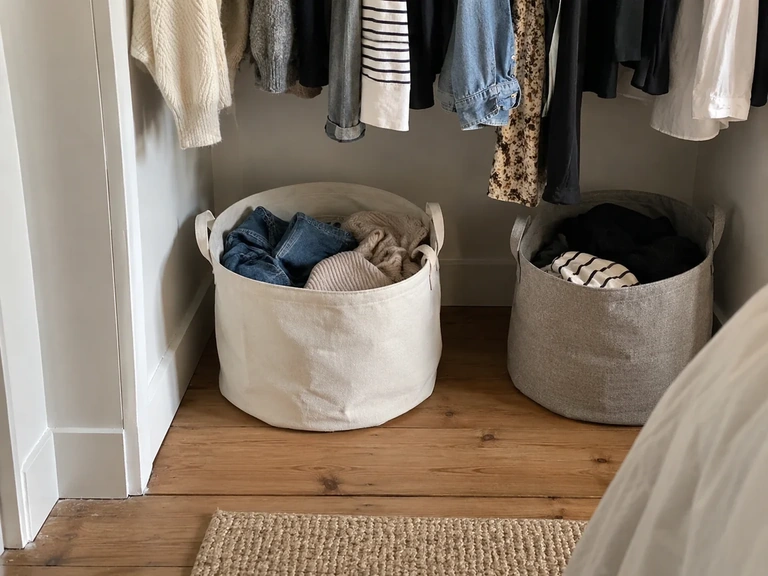
Choose a place based on the clothes. Dry, foldable pieces can wait in an open container; a shirt that wrinkles easily will often be more practical on a suitable hanger. Don’t pack damp clothing into a closed basket. Laundry that needs washing follows your usual routine.
You can agree on a space limit instead of an arbitrary number of days. When the area is full, each person picks up their clothes and decides what to do next. This practical rule keeps the other person from becoming responsible for sorting your clothes for you.
Get ready in the morning without expecting the same routine
If your schedules differ, put tomorrow’s clothes somewhere that won’t disturb sleep or block the way. One outfit set out ahead of time may be enough. You don’t need to plan the whole week the same way to enjoy a more peaceful shared closet.
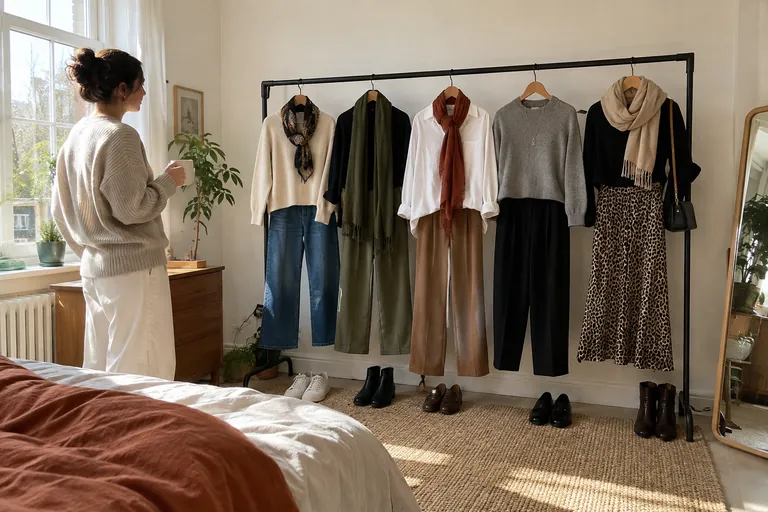
The guide to planning your outfits for the week This can help the person who likes to plan ahead. The person who prefers to choose in the morning can keep their routine, with clothes within easy reach and lighting that works for the space. The agreement is about using shared space, not adopting one way of getting dressed.
In Vestly, each person can use their digital wardrobe to find their clothes and plan looks. That way, everyone can put together combinations from their own pieces, then revisit saved looks and their outfit calendar.
Check off
Our shared closet trial
0 / 6
Your trial arrangement is set. At your next check-in, start with what each person actually moved or had trouble finding.
Revisit the setup after trying it out
After a few days, ask three simple questions: What did you find easily? What did you move? What still doesn’t have a place? Start with these observations instead of judging who’s better at putting things away. A poorly placed shelf may explain recurring clutter better than a lack of effort.
Change one area at a time. Moving a category, clearing out a basket, or bringing a hanger closer may be enough. If you buy an accessory, check its dimensions and how you’ll use it together before outfitting the whole piece of furniture. Closet organization is a way to make your days easier, not a project you need to get perfect in one go.
Watch a practical example
A visual example from Adrianne Gatson to compare with the steps in this guide.
Video in English
Frequently asked questions
Should you split the closet into two equal halves?
Not necessarily. Aim for a fair setup based on clothes, access needs, and available space. Both people should understand and agree to the arrangement, and be able to revisit it.
How do you handle different organizing methods?
Keep personal zones where each person can choose their own method, then agree on a few shared areas. The main thing is knowing where those areas begin and end.
Who should put away the other person’s clothes?
That’s something to agree on, not an unspoken obligation. If you put things away for the other person, use the agreed spots without moving their belongings to new areas or deciding what happens to them.
Sources and references
- Vestly, personal wardrobe features, accessed September 30, 2026.
- These organizational suggestions are editorial and should be adjusted together to suit your home.