Contents
A light rain can turn a simple outfit into a string of small frustrations: a dragging hem, a bag you can’t close, a bulky jacket once you’re on the subway. The best solution isn’t necessarily to wear more layers. Choose clothes that suit the length of your commute, then plan for what happens when you get somewhere dry.
When getting dressed for rain, start with your shoes and the length of your bottoms, choose suitable outerwear, then make sure your outfit works without it. That way, you can stick with your usual style without spending the day dealing with a damp sleeve or pants dragging on the sidewalk.
Start with your commute, not an idealized look
Check the forecast for the times you’ll be outside. A ten-minute walk to the tram is different from a long wait followed by a walk. Also consider what you’ll need to carry: a laptop, grocery bag, or fragile item can limit how easily you can hold an umbrella. If wind is in the forecast, an umbrella may be less practical.
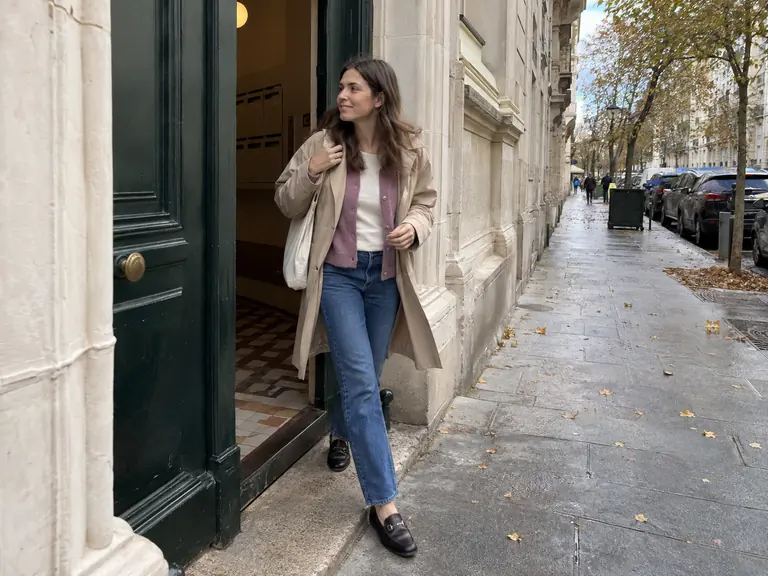
Next, plan what you’ll wear at your destination. At the office, in a classroom, or at someone’s home, you’ll probably take off your rain protection. So it helps to start with an outfit you like, then add layers for the trip. That way, you won’t end up with a gorgeous coat hiding an improvised outfit you don’t feel comfortable in.
If there’s a weather alert, check the official guidance and adjust the trip itself. An everyday outfit doesn’t make an exposed route safe. For days that are simply cool and changeable, our guide to dressing for 15 degrees rounds out this approach without requiring a set number of layers.
Keep hemlines clear of splashes
Try on the pants with the shoes you plan to wear. A pair that falls perfectly with heels may drag on the ground with flats. Take a few steps, go up one stair, and check the back of the hem. The goal is to keep it off the ground without having to pull it up at every intersection.
Straight-leg pants at the right length, slightly cropped jeans, or a skirt that stays off the sidewalk are easy options. None is a must. If your favorite pants are very long, another bottom already in your wardrobe is often easier than an improvised cuff that comes undone. A dress can work too; check how the hem moves and how much protection your jacket actually provides.
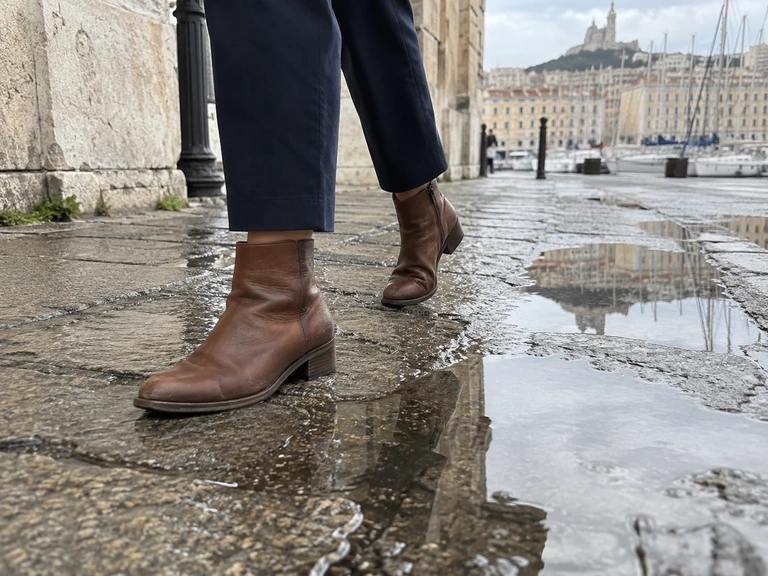
When it comes to shoes, start with what you know: how they fit, the condition of the soles, and how they hold up in ordinary rain. An ankle boot’s appearance doesn’t prove it’s waterproof. Check the manufacturer’s information before counting on it to keep your feet dry. And avoid breaking in a new pair on a day that calls for a lot of walking.
Choose an outer layer you’ll actually wear
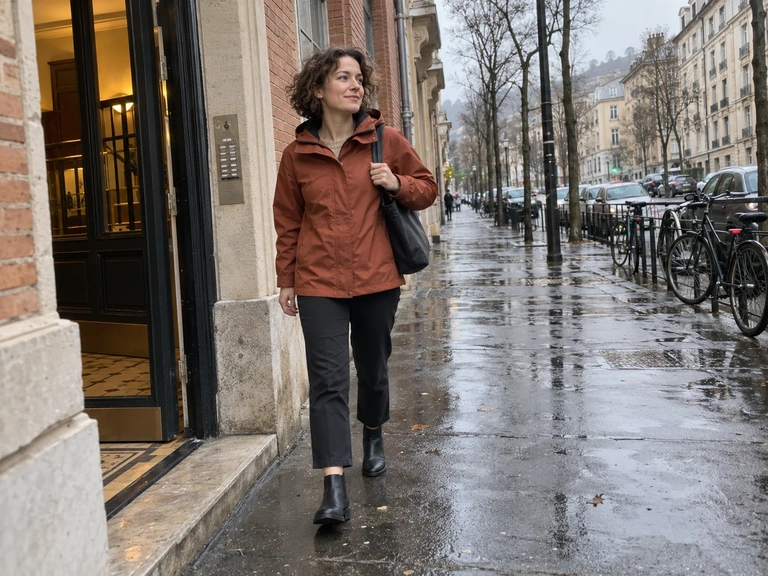
Useful rain protection should fasten without pulling at your shoulders or squeezing the layers underneath. Put it on over your full outfit, then reach out as if grabbing a transit handle. Check the cuffs, collar, hood, and pocket access. A jacket you leave open because it’s too tight can’t do the job it’s meant to do.
Don’t take “water-repellent” as a guarantee for prolonged exposure. Protection depends on the garment, its construction and condition, and the manufacturer’s guidance. A trench coat may work for a short trip in certain conditions; its name and silhouette alone don’t tell you how well it performs.

You should be able to turn your head and look around with the hood on. If it blocks your view or slips over your eyes, adjust it while you’re stopped. An umbrella can come in handy in a light shower, but it’s one more thing to carry. Choose the simplest combination for your own trip instead of piling on accessories.
Plan your bag and quick outfit changes
A bag that closes keeps you from fumbling with your things in the rain. Put frequently used items somewhere easy to reach so you don’t have to rummage around on the sidewalk. Papers, electronics, and items sensitive to moisture may need protection suited to how you use them. A regular zipper doesn’t automatically make a bag waterproof.
Before you head out, check how everything feels when you carry it. A crossbody strap that slides over your jacket or a tote you have to hold in the crook of your arm can get annoying when your other hand is holding an umbrella. Try it with the actual weight of your belongings, not an empty bag.
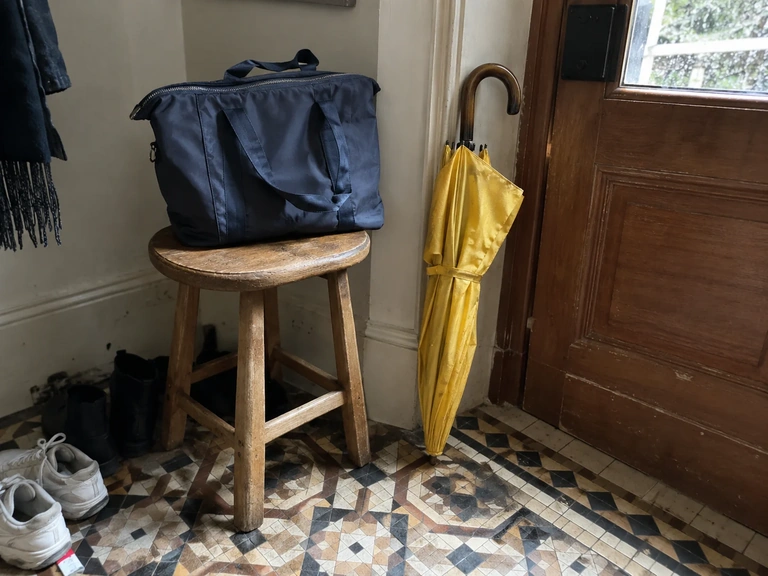
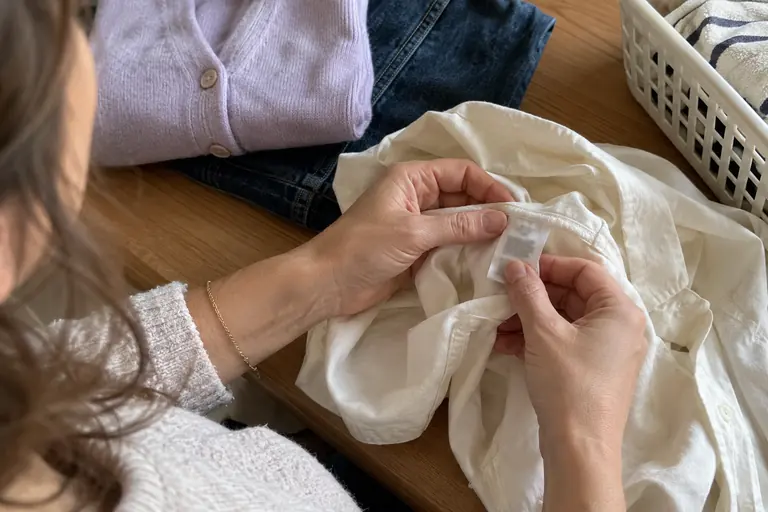
Finally, set aside a place for wet-weather gear. A dripping umbrella shouldn’t go straight next to your computer. At home and at your destination, follow the care instructions for your belongings and let clothes dry properly. The guide to clothing care labels helps you check the symbols before caring for an item.
 Read alsoCasual chic: the simple formula for looking polished every day
Three outfit formulas to adapt
For a fairly casual day at the office, try dark straight-leg pants, a top you like wearing on its own, and a rain jacket with enough room. Familiar shoes and a bag that closes complete the look. You can find more context in our article about business casual.
For errands and several quick stops, jeans in the right length, an easy-to-remove knit, and a compact outer layer mean less fuss. The key here is storage: can you carry the layer you take off without crushing it against your purchases?
For lunch or an outing where you’d rather wear a dress, try the full look with your outer layer zipped up and your walking shoes on. Check that both hems are easy to manage. You don’t need to swap the dress for pants if it works with your movements and travel conditions.
Arrive dry and get back to your outfit
When you arrive, take a moment to remove your outer layer without setting the wet side on your seat. Find somewhere to hang it where it won’t get in the way. If you’ll spend the day in a very warm place, a removable midlayer is easier to adjust than one very warm top.
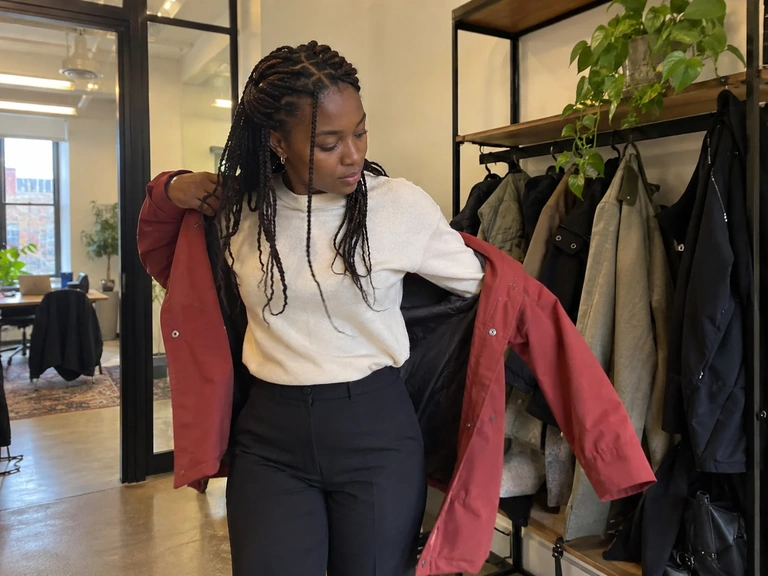
In Vestly, add the pieces you actually wear in the rain. Outfit ideas take the weather and your day’s plans into account. You can also use “Build around” with your usual shoes or jacket, then keep the combinations you like. Virtual try-on helps you compare the overall look; check protection and comfort with the clothes themselves.
Check off
I’m ready to head out in the rain
0 / 6
The main practical details are checked. You’re ready to go in an outfit planned for the whole trip.
Watch a practical example
A visual example from Alyssa Beltempo to compare with the steps in this guide.
Video in English
Frequently asked questions
Do you have to wear rain boots?
No. The right choice depends on how much rain you’ll face and your shoes’ features. A brief city shower and several hours outdoors don’t necessarily call for the same solution. Check the actual pair instead of judging its protection by how it looks.
Can you look elegant in a rain jacket?
Yes. A cohesive base, well-chosen lengths, and a good fit are often all you need. You can keep the pieces that feel like you and treat your rain protection as the practical layer for your commute.
What should you do if the rain stops during the day?
Plan a complete outfit for the morning that works without your outer layer, and bring a way to carry it. That’s more useful than an outfit that only works when it’s fully zipped up.
Sources and references
- Météo-France, forecasts and alerts, accessed September 30, 2026, to check local conditions before traveling.
- Vestly, how it works and the app, accessed September 30, 2026, for the features mentioned.