Contents
- Start with the right pair of shoes
- Check the front, back, and sides
- Take a few steps before you decide
- Plan an alteration without cutting too soon
- Find a realistic compromise across several pairs of shoes
- Check how it looks sitting down and when you stand back up
- Choose the pair that works
- Frequently asked questions
- Sources and references
Wide-leg pants can fall perfectly in the fitting room, then touch the floor with the sneakers you usually wear. On the other hand, a hem set for flats can look very different with taller shoes. So don’t choose the length only in front of a mirror while barefoot or from an outfit photo.
To choose the length of wide-leg pants, try them on at your usual waist height with the shoes you actually plan to wear, then walk and sit down. Check the hem from the front, back, and sides. The goal is a fit you like and a hem that doesn’t go under your foot, without assuming there’s one perfect length for everyone.
Start with the right pair of shoes
Choose the shoes you’ll actually wear, not a pair picked just to make the try-on look more appealing. If you often walk in flat sneakers, they’re a more useful starting point than heels you save for a few nights out. Put on both shoes and fasten them as usual: your foot should sit as it would when you wear them.
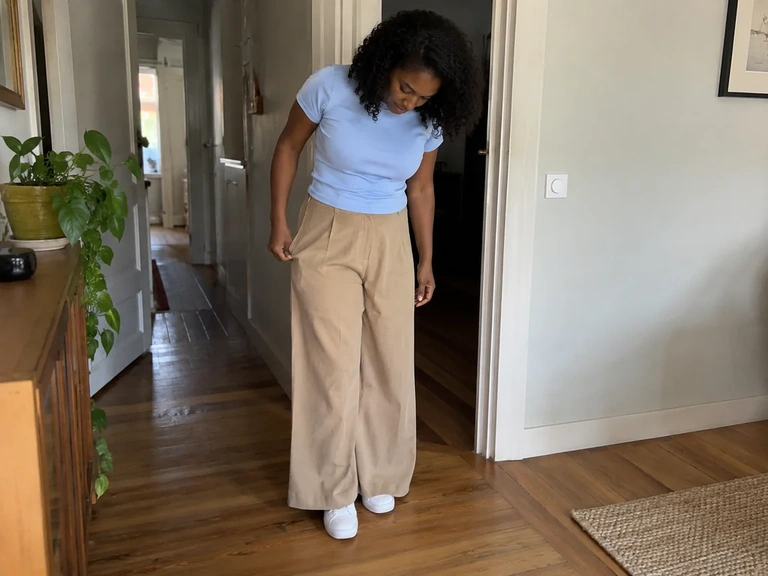
Then put on the pants and place the waistband where you naturally wear it. Don’t pull the waist up just to keep the hem off the floor if the pants slide back down as soon as you move. If the waistband won’t stay in place, sort that out before deciding on the length.
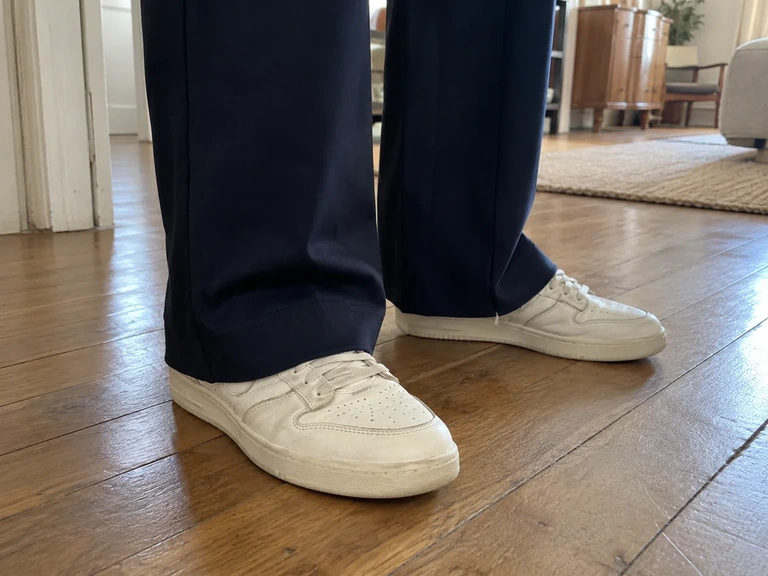
Look at the bottom of each leg. You may like a slight break over the shoe; a pile of fabric tucked under the sole is a different matter. The useful distinction is between an effect you want and a garment you have to keep an eye on.
Check the front, back, and sides
The front view in the mirror doesn’t show everything. The back of the hem may touch the floor even when the front rests on the shoe. Look from the side and back, or ask someone you trust what they see. A photo taken from a reasonable height can help, but it doesn’t replace trying them on while moving.
Avoid bending over repeatedly to check the hem: it changes your posture and sometimes the position of the pants. Stand naturally while someone else takes a look, or use a mirror that lets you see low enough.
The shape of the shoe matters too. A thick sole, a bulky upper, or a slim shoe won’t support the fabric in the same way. So two pairs listed at a similar height may create different folds. Try them on instead of relying on a measurement alone.
Take a few steps before you decide
Walk normally, turn, and stop. See whether the fabric hangs freely or catches under your heel. Very wide-leg pants may move more than a straight cut; that movement is part of their appeal, but it should still work for your commute.
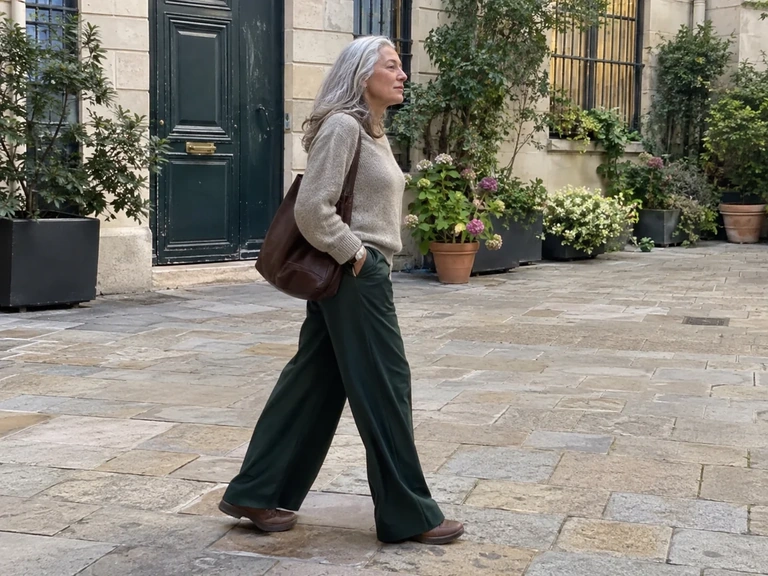
Try a normal walk carefully if that’s part of your routine. Don’t choose a length that makes you pull up your pants every time you move. For a specific activity, safety comes before the look of the hem: loose fabric shouldn’t get caught in moving parts.
If you plan to wear the pants outdoors, think about the surfaces you encounter most: sidewalks, gravel, wet ground, or stairs. There’s no magic number of centimeters that works in every situation. Look for practical clearance for your routine, and have an alteration checked if you’re unsure.
Plan an alteration without cutting too soon
Before any cutting, pin a temporary hem or ask a professional to mark it. Holding a fold by hand for a few seconds doesn’t always give you a good sense of the full length. If you’re trying it on at home, don’t walk around with loose pins that could touch your skin; remove them before any risky movement.
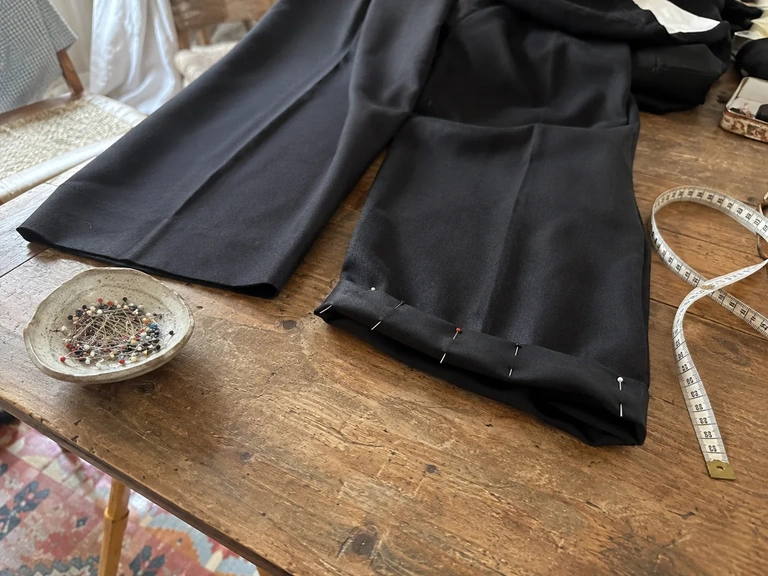
Bring your shoes to your alteration appointment. Also explain where you like the waistband to sit and whether you wear more than one pair of shoes with the trousers. The professional can assess the hem construction, how much fabric is available, and what the style allows. A simple hem, a cuff, and a special finish can’t always be altered the same way.
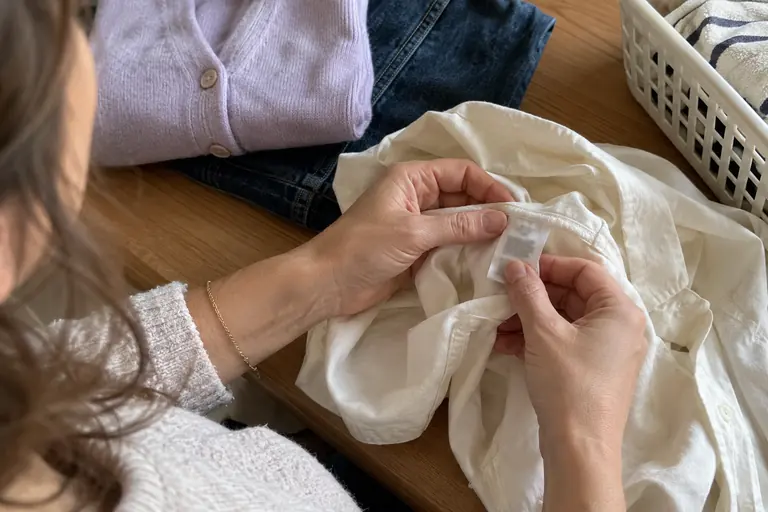
Check the garment’s care instructions before settling on a final length. If the manufacturer recommends pretreatment, or you know the fabric changed after its first wash according to the instructions, mention that. The guide for understanding clothing labels helps you find the care instructions without guessing at a treatment.
 Read alsoWearing low-rise pants: how to choose the fit and build your look
Find a realistic compromise across several pairs of shoes
Would you like to wear the same trousers with flats and a higher pair of shoes? Try them on with both, starting with the flats if you wear them most often. If the hem touches the ground with the lower pair, that length doesn’t work for that use, even if you like how it looks with the other pair.
A slightly shorter cut can give you more flexibility with different shoes. Depending on the style, it may show part of your foot or ankle. This choice isn’t limited to a particular height or body type; it depends on the drape you want, your comfort, and the clothes you love.
If you prefer very long trousers with a particular pair of shoes, you can set them aside for that purpose. Not every garment has to work with every shoe. The key is to know which combination you’ve tried and approved, so you don’t have to improvise on a rushed morning.
Check how it looks sitting down and when you stand back up
Sit on a chair with your feet on the floor, then stand up. The hem naturally rides up when you sit; see if that feels right to you. Pay special attention to the waistband, thighs, and ease of standing up. Trousers can have a great length and still feel uncomfortable elsewhere.

After standing up, see whether the legs fall back into place or catch on your shoes. Soft fabric, socks, or a lining can affect how they move. Do this test with the pieces you actually plan to wear with the outfit.
Check off
Check the length of my wide-leg trousers
0 / 6
You’ve checked how the trousers drape as you move. Keep the approved pair of shoes as a reference when you wear these trousers or get them altered.
Choose the pair that works
Once you’ve finished trying them on, make a mental note or add to your outfit planner which pair goes with these pants. You’ll save time without having to measure the hem every time. If you change shoes or the garment shifts after care, simply check again.
In Vestly, keep the look with the shoes you’ve checked and use your planner to plan the outfit. The virtual try-on can help you explore the style; check the ground clearance and comfort while wearing the garment. For the top, start with a piece you already love and check out ideas for put together a look that feels like you.
Watch a practical example
A visual example from Your Guide To Style to compare with the steps in this guide.
Video in English
Frequently asked questions
How much space should there be between wide-leg pants and the ground?
There’s no one measurement that works for every fabric, shoe, and situation. Check that the hem doesn’t go under your foot or drag as you walk normally. Have the length adjusted if it still gets in the way.
Can you wear wide-leg pants with flat shoes?
Yes. Just try on the pants with the pair you have in mind and choose a length that works. Flat shoes don’t require you to change your silhouette; they just call for a practical check of how the pants fall.
Should you hem pants with or without shoes on?
Wear the pair you plan to use, especially with a long cut. Tell the tailor where you usually wear your waistband, and have both legs checked before the hem is finalized.
Sources and references
- Vestly, looks, and planning, accessed September 30, 2026.
- Editorial try-on tips; alterations depend on the garment’s construction and the work of the professional you choose.