Contents
- Identify your jeans before choosing a care routine
- Find a washing frequency that fits how you wear them
- Prepare your jeans to prevent unwanted contact
- Wash without expecting a dramatic result
- Dry them while keeping the shape you want
- Spot wear before a tear appears
- Don’t confuse care with adjusting the fit
- Frequently asked questions
- Sources and references
Jeans often see you through the most ordinary parts of the day: commuting, working at the office, running errands, or sitting on a bench for lunch. You want them to stay comfortable and keep their color while still being clean. Between advice to wash them after every wear and promises that you should never wash them, there’s a simpler approach: look at the jeans themselves, how you wear them, and their care instructions.
To care for jeans, adjust how often you wash them based on their condition, prepare them before washing, and give drying as much attention as the cycle. Rigid denim, stretch jeans, and raw denim shouldn’t automatically get the same treatment.
Identify your jeans before choosing a care routine
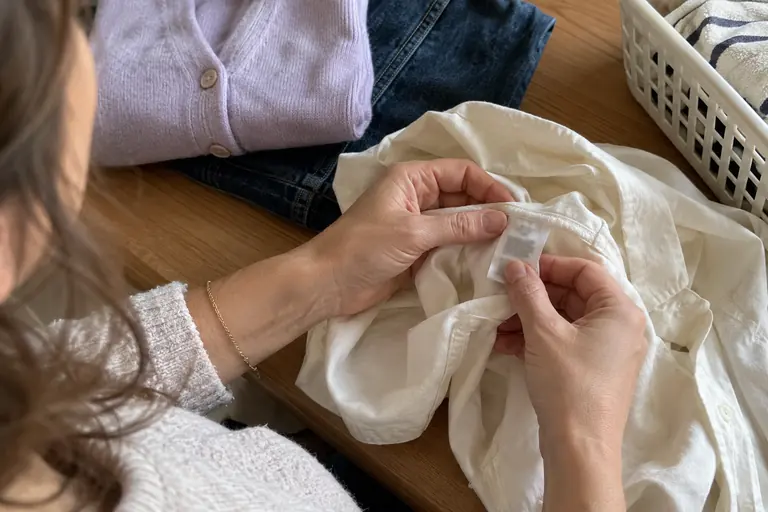
Start by identifying the fabric, construction, and condition. Rigid cotton jeans don’t react exactly like a pair containing elastane. Raw denim may also need special care and may not have undergone the same treatments as prewashed jeans. Terms like “raw,” “stretch,” or “selvedge” don’t replace the brand’s instructions.
Also check the embellishments, leather patches, repairs, and distressed details. An intentionally open area may keep fraying if it catches on other clothes. See our guide to clothing care labels if the symbols are hard to interpret. Follow the most restrictive instruction for the entire garment instead of choosing your usual cycle for cotton towels.
Find a washing frequency that fits how you wear them
After each wear, look at and smell the garment before it becomes noticeably unpleasant. A quiet day at the office and a long outing in hot weather don’t leave the same result. Sweat, stains, and contact with dirty environments call for appropriate cleaning. There’s no benefit to putting off a necessary wash just to reach a number presented as ideal.
By contrast, a clean garment worn briefly can be aired out before you wear it again. Hang it up or lay it out so air can circulate; don’t toss it in a heap in a closed hamper. Levi's recommends spacing out washes based on the condition of your jeans; its guidelines aren’t a universal hygiene requirement. The freezer and fragrances don’t replace removing dirt with appropriate care.
Prepare your jeans to prevent unwanted contact
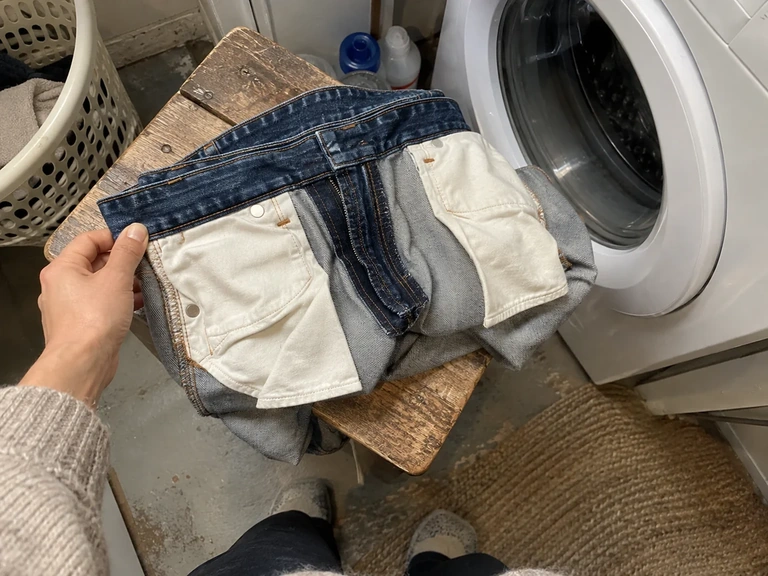
Empty every pocket, including the small front pocket. A forgotten receipt can fall apart in the drum; a hard object can mark the fabric. Zip up, then turn the jeans inside out according to the manufacturer’s instructions. Check the belt loops and pocket edges: a loose thread may signal a small repair worth making.
Next, sort by color and wash cycle compatibility. New dark denim may release dye during the first few washes. Avoid washing it with light-colored pieces and follow the brand’s specific recommendations. A color-catching sheet isn’t enough of a guarantee to wash incompatible clothes together. Also get the drying area ready.
Wash without expecting a dramatic result
Choose permitted settings, a suitable detergent and the dose for the load. Follow the cycle’s capacity. Cramming jeans in with a large load of laundry doesn’t necessarily get them cleaner; they may just come out very wrinkled. Levi's recommendations favor gentle action and cold water for its denim, but your care label tells you what’s right for your pair.
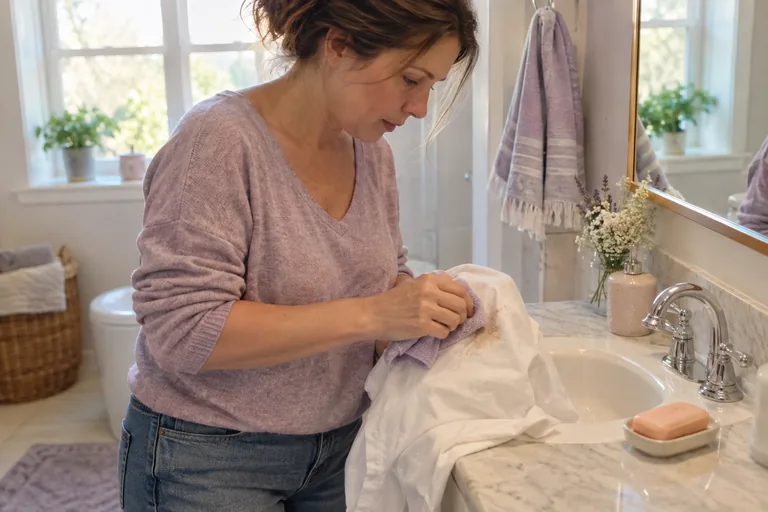
For an isolated mark, identify the stain before rubbing. Vigorous brushing can leave an area lighter than the rest, especially on black or indigo jeans. Check out our guide to remove a stain from clothing and test a compatible method in an inconspicuous spot. Avoid adding random household mixtures to “set” the color.
 Read alsoHow to wash a wool or cashmere sweater without felting it
Dry them while keeping the shape you want
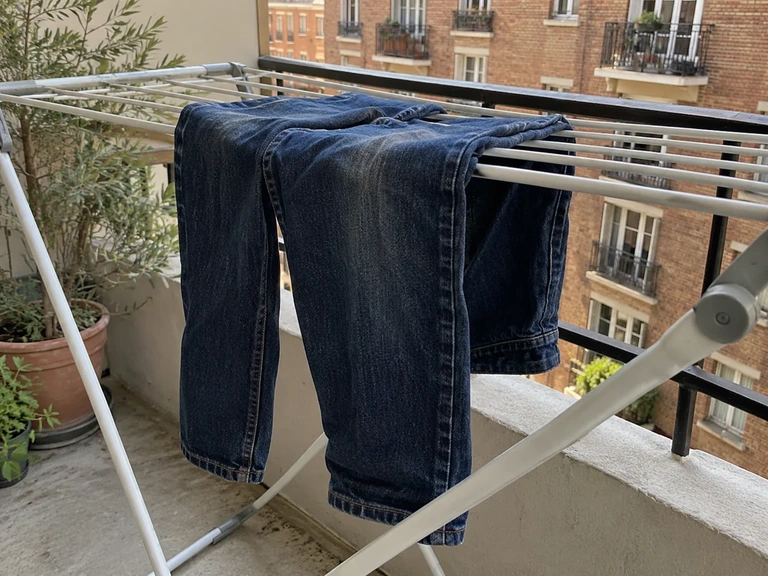
Take the jeans out after the cycle and gently straighten the leg seams. Unfold the pockets to prevent damp fabric from bunching up, without tugging hard on the pocket bags. Spread the weight across a support that’s compatible with the care instructions. If air-drying, leave enough room around the pants and avoid prolonged contact with a dirty or metal surface that could leave a mark.
Check the thick areas before deciding everything is dry. The waistband, pockets and seams can hold moisture even when the legs seem ready. Levi's recommends drying its denim in the shade to help preserve the color. If your jeans can go in the dryer, stay within the stated limits and don’t use it as a risky way to shrink a pair that’s too big.
Spot wear before a tear appears
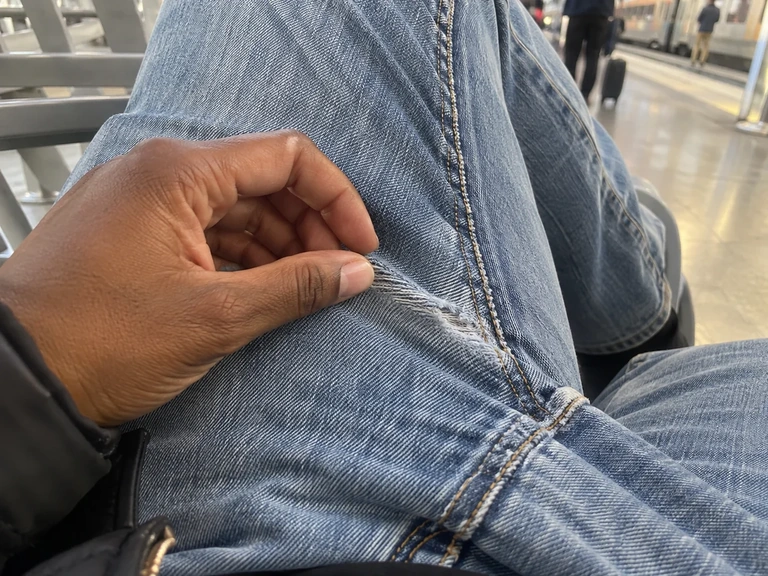
Check the crotch, pocket bottoms, knees and hems. Denim that looks lighter or thinner in an area that gets rubbed deserves a closer look. Repairs may be easier while the threads are still holding together. Don’t cut a structural thread that’s sticking out without knowing where it comes from.
A tailor can reinforce a weak area, repair a pocket, or rehem your jeans. Describe how you wear them and the finish you want: a discreet or visible repair, keeping the original length, or preserving stretch. For jeans with a lot of stretch, ask for a solution that lets the fabric move freely. A very stiff patch in the wrong spot can shift the strain instead of fixing the problem.
Don’t confuse care with adjusting the fit
Jeans that feel tight after washing and then loosen as you wear them don’t necessarily have a cleaning problem. Their construction and fit may explain some of the change. But if you have to consistently overheat or stretch them to wear them, the cut may not suit how you use them.
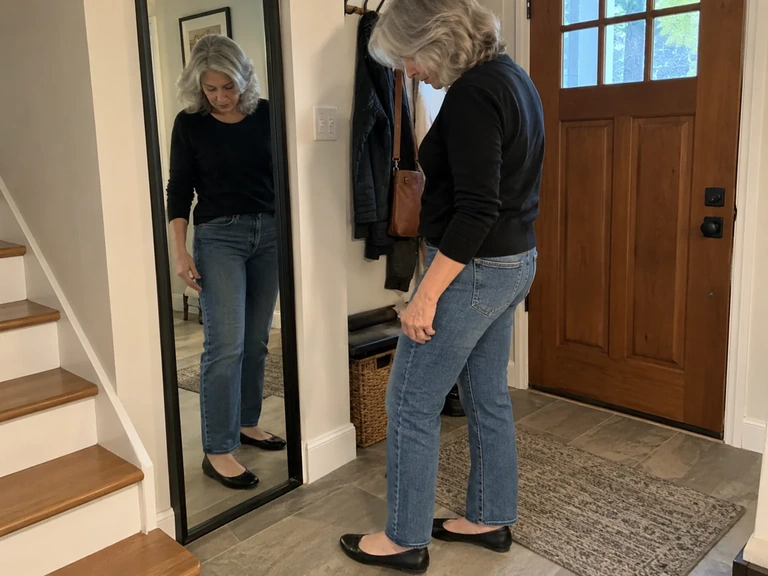
Try them on again when they’re completely dry, with your usual shoes. Sit, walk, and check the waistband without pulling on the belt loops. Our guide to choosing jeans for your body shape can help you think about the fit. In Vestly, build looks around the jeans you already love wearing; outfit ideas can help a familiar piece feel like more than the same old look.
Check off
My jeans are ready for their next care routine
0 / 6
Your jeans can be cared for with a consistent method, from sorting to their next wear.
Watch a practical example
A visual example from 3sixteen to compare with the steps in this guide.
Video in English
Frequently asked questions
Should you wash jeans after every ten wears?
No. This kind of guideline from a brand should be considered in the context of how you actually wear your jeans. Dirty or sweat-soaked jeans may need cleaning sooner; a pair you wore briefly can wait.
Do black jeans need a special detergent?
A product suitable for dark colors may work, depending on its instructions. The amount, sorting, cycle, and drying method also matter. No product can guarantee that the color will stay the same indefinitely.
Can stretchy jeans be repaired?
Often, but the technique depends on the area and the fabric’s condition. Ask for an opinion before the fabric gets too thin, especially in an area that moves a lot.
Sources and references
- Levi's, Denim care and washing, accessed September 30, 2026: the brand’s recommendations for prepping, washing, and drying denim.
- GINETEX, textile care, accessed September 30, 2026.