Contents
Spilled coffee on a white shirt, a drop of sauce on a favorite sweater, foundation on a collar: stains are part of life for any garment. And often, what you do in the next few minutes makes all the difference. The wrong move (scrubbing hard, using hot water, tossing it in the dryer) can set the stain for good.
Start with the care label: the steps below are for washable garments and products compatible with their fabric and colour. Ask a professional before wetting an item labelled dry clean only. The American Cleaning Institute also distinguishes treatments by stain; one recipe does not suit every garment.
The three stain families
Almost all everyday stains belong to one of these three groups, and each needs a different approach.
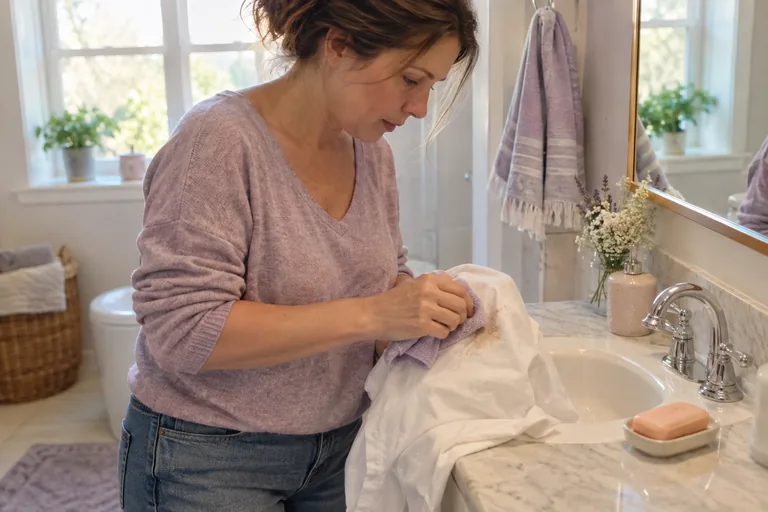
Coffee, tea, wine and juice stains need treatment suited to the textile. On a washable garment, cool water and a compatible pretreatment may help. Vinegar is not a universal solution for these stains or every dye.
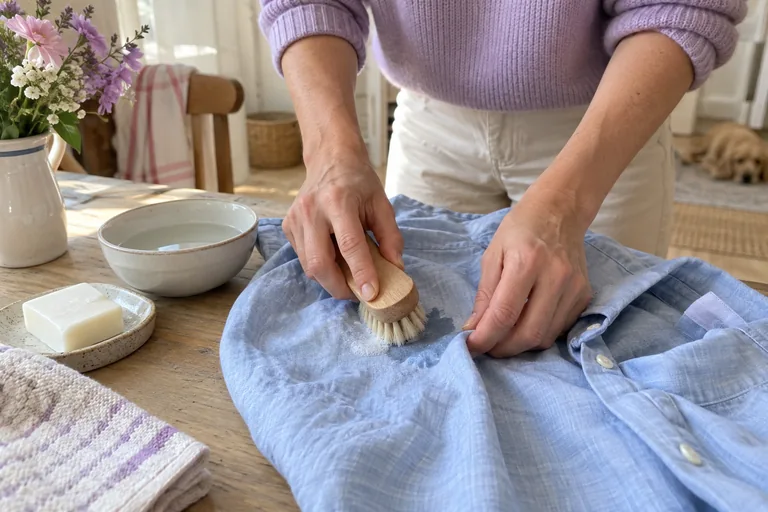
Greasy stains (oil, butter, sauce, makeup, cream) won't come out with water alone. First absorb the grease, then dissolve it with a suitable soap, such as dish soap or Marseille soap.
For fresh blood on washable fabric, start with cold water: heat can set the stain. Egg, milk, an old mark and a yellow perspiration stain do not automatically need the same treatment; follow the product and garment instructions.
The stain-by-stain guide
Flip cards
Flip the card for your stain
Coffee or teaFlip
On a washable garment, flush the area from the back with cool water, then use a compatible pretreatment. Do not add vinegar merely because the fabric is white.
Red wineFlip
Absorb wine without rubbing. If the garment allows it, rinse with cool water and follow a suitable stain remover’s directions; avoid layering home remedies.
Grease (oil, sauce)Flip
Absorb excess grease without spreading it, then pretreat with a product compatible with the garment. Its fabric and finish matter as much as the oily stain.
MakeupFlip
Remove excess without spreading the pigment, then choose a compatible textile-care product. A makeup remover made for skin can leave another mark.
BloodFlip
For fresh blood on washable fabric, use cold water. For a dried mark, follow the manufacturer’s permitted treatment rather than improvising a long soak.
Sweat (yellow rings)Flip
Check the garment and pretreatment instructions. A yellow mark may need more than one attempt; a baking-soda soak does not guarantee removal.
Ballpoint penFlip
Inks and fabrics react differently to solvents. Use only a product stated to be compatible, after a discreet test, or ask a professional.
GrassFlip
Pretreat with a compatible product without scrubbing hard or spreading the mark. Follow the specified contact time and washing instructions.
The right technique, step by step
Check off
Washable garments: checks before stain treatment
0 / 6
If a mark remains, check the directions again before another attempt. Heat can set some residues; do not keep adding products to force a result.
 Read alsoBuying secondhand clothes: a guide to finding great deals
Take care with delicate fabrics
For silk, follow the garment’s care label: some constructions are not washable. A hidden test does not by itself authorise water-based stain removal. Ask a professional if uncertain.
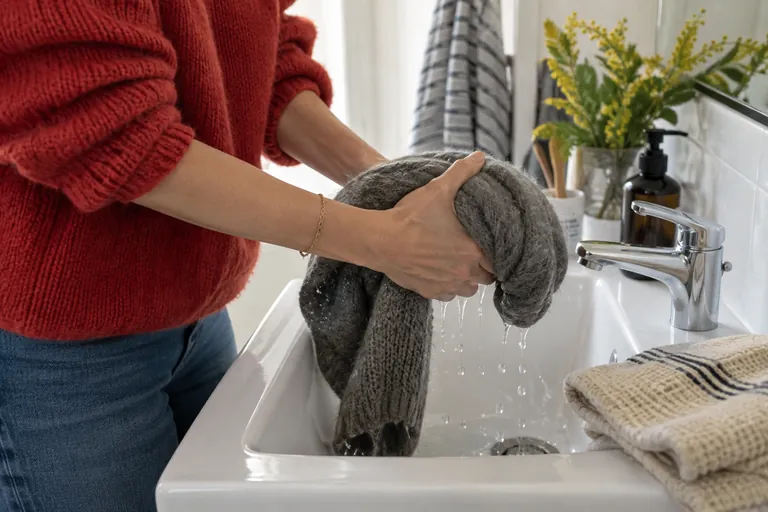
For wool and cashmere, use only the permitted care: hand washing, an approved machine cycle or professional cleaning. Moisture and friction can cause irreversible felting. Our wool-sweater washing guide explains the distinctions.
For leather and suede, suitable products and methods depend on the finish. Do not apply a washable-fabric method without checking the instructions; seek advice for a major stain or an unfamiliar material.
Colored clothes can bleed. Always test your product first, and avoid bleach, which can fade the color.
Mistakes that set the stain
Quiz
Avoid these mistakes
For a fresh blood stain, use…
See the answer
Cold water. Heat makes blood proteins coagulate and bind to the fibers. Cold water is essential.
For a stain, the right move is to…
See the answer
Blot from the outside toward the center. Scrubbing spreads the stain and damages the fibers. Blotting absorbs it without making it bigger.
A stain that’s almost gone after washing can go in the dryer.
See the answer
False. Dryer heat sets the residue. Repeat the treatment before drying.
The mini stain-removal kit
Prepare a clean white cloth and the compatible care product you selected after reading its directions. Keep products in their original containers, away from children, and do not mix stain removers. New Mexico State University recommends the gentlest suitable method, checking the care label and rinsing between successive permitted treatments.
Prevention is better than a cure
A few habits can prevent a lot of stubborn stains: put on light-colored tops after applying makeup, wear an apron in the kitchen, let deodorant dry before getting dressed, and treat stains right away instead of waiting until the next day. Well-cared-for clothes last longer, which lowers their cost per wear and supports a move toward more sustainable fashion.
In Vestly, the “In the wash” feature sets a piece aside while you treat a stain or wash it. It’s left out of outfit suggestions for a few days, then automatically returns to your wardrobe.
Watch a practical example
A visual example from Jeeves NY to compare with the steps in this guide.
Video in English
Frequently asked questions
Does white vinegar remove every kind of stain?
No. Vinegar does not remove every stain and may be incompatible with a dye or finish. Check the garment and product instructions; a hidden test does not make a home remedy universal.
How do you remove an old stain?
For a washable garment, choose a compatible pretreatment and follow its contact time. Do not impose hours of soaking on a delicate or non-washable item. If the mark persists, seek advice before repeated attempts.
When should you take something to the dry cleaner?
For an item labelled dry clean only, a material with unknown care requirements or a major stain on a valuable piece. Explain what was spilled and which treatments you already tried.