Contents
- Choose where the clothes are going before filling the bags
- Tell wearable clothes apart from textiles for collection
- Check pockets, fasteners, and accompanying pieces
- Prepare clothes that are clean and completely dry
- Group shoes together and protect the contents
- Set aside anything that still needs a decision
- Check the location before you head out
- Finish sorting once the clothes are dropped off
- Frequently asked questions
- Practical sources
The clothes are sorted, but several bags are still by the entryway because you’re not sure where to drop them off. The most helpful thing is to choose a destination before packing everything up. Giving clothes to someone, donating ready-to-wear pieces to an organization that redistributes them, and using a textile collection service don’t all work the same way.
To donate your clothes, sort the pieces by condition and intended destination, make sure they’re clean and dry, then check the drop-off location’s guidelines. Make a concrete plan to get the bags out of your home. Sorting is truly finished when the clothes have reached the right place, not just when they’ve been moved out of your closet.
Choose where the clothes are going before filling the bags
If you want to give clothes to someone in particular, ask what they could use and what condition they’d like the pieces to be in. Avoid handing them a big batch they’ll have to sort for you. Offer a few items with their sizes and condition clearly noted, and prepare only what they actually want.
For a charity or reuse center, check what they need and how they accept donations. Some organizations prefer pieces that are ready to wear, specific categories, or donations during certain periods. Textile collection bins follow different sorting guidelines. Choosing the destination early helps you sort the clothes properly and avoid a trip with bags the location can’t accept.
Tell wearable clothes apart from textiles for collection
A clean, complete item in good condition can be offered for someone to wear again. Depending on the guidelines, worn or torn clothing may be suitable for textile collection. Refashion says that textiles and shoes can be collected even when damaged, as long as they meet requirements including being clean and dry.
That doesn’t mean every item you drop off will be redistributed as is, or that it will necessarily stay near you. Where it goes after sorting depends on its condition and the available outlets. If you want to donate directly for a specific use, look for an organization whose needs match. If you use textile collection, follow its rules without presenting everything as ready to wear.
Check pockets, fasteners, and accompanying pieces
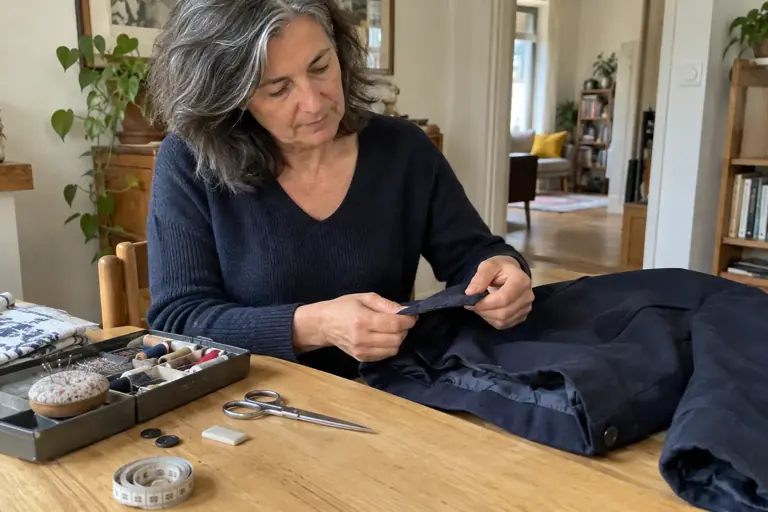
Quickly check each item. Empty the pockets, remove personal belongings, and check belts, hoods, or removable accessories. Clothes donated with their useful pieces are easier to identify and use. Also check zippers and buttons so you can accurately describe their condition.
You don’t need to revisit the emotional side of sorting at this stage. The guide to sorting your wardrobe can help if the decisions are still open. Here, the main goal is to prepare the pieces you’ve already chosen to pass along. If you find a flaw, decide whether it’s worth repairing before donation or whether to change the planned destination, instead of hiding it at the bottom of the bag.
Prepare clothes that are clean and completely dry
Follow the care instructions for any pieces that need them, then wait until they’re completely dry before packing them. A damp garment can affect the rest of the contents while you wait or during transport. Don’t seal a bag expecting the clothes to finish drying inside.
The official Refashion guidelines say that textiles must be clean and dry, and that you don’t need to iron them before dropping them off in a collection bin. Items stained with paint or certain chemicals need a different destination. Check the local guidelines for disposing of this kind of waste instead of mixing it with regular clothing donations.
 Read alsoWomen’s capsule wardrobe: a list of essentials and how to choose yours
Group shoes together and protect the contents
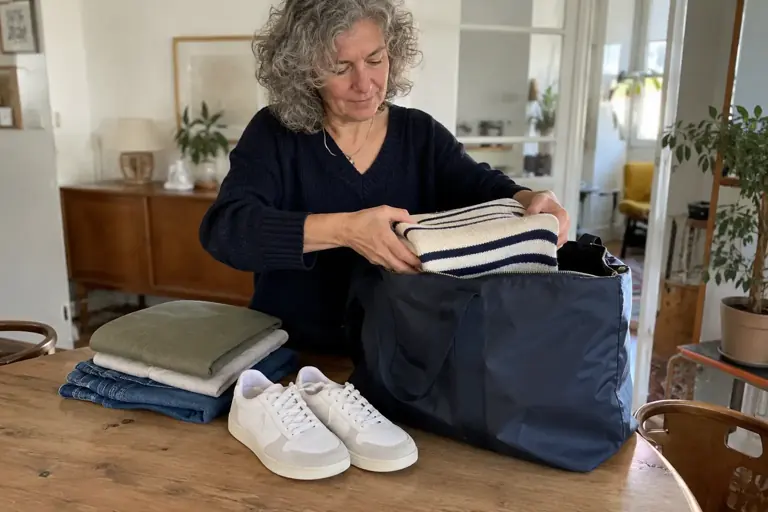
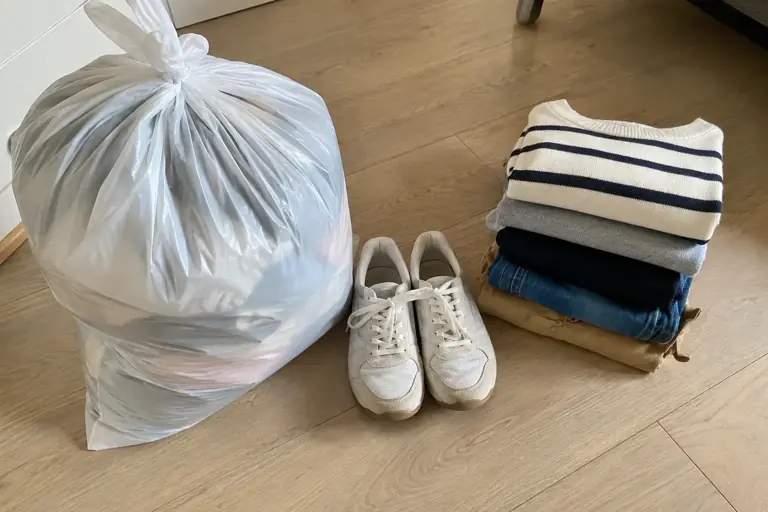
For textile collection, Refashion asks you to tie shoes together in pairs so they stay together during sorting. Check that the two shoes match and that all necessary parts are there. If you’re giving items directly to someone or an organization, mention any known flaws instead of leaving it to the recipient to discover them.
Use clean, sturdy, closed bags that follow the drop-off location’s guidelines. Refashion sets a thirty-liter limit for bags placed in collection bins. This doesn’t replace the rules for other locations. Don’t overfill a bag until it might tear or become hard to carry. Several small, clearly prepared bundles may be more practical than one overly heavy container.
Set aside anything that still needs a decision
A “to donate” pile can end up holding clothes you’re still unsure about keeping, pieces that need repairs, and items someone borrowed from you. Sort these categories before closing the bags. Dropping them off shouldn’t become a last-minute decision made out of exhaustion or take along a piece you never really meant to part with.
For repairs, choose a specific next step and set the pieces aside in a separate area. Our guide to organizing clothing repairs helps you avoid an indefinite wait. You can handle a small batch now and save the other decisions for another session. A batch that’s ready to go should be clearly labeled, with no mix-up with clothes whose status is still uncertain.
Check the location before you head out
Check the hours, address, and accepted categories. A donation to an organization may require an appointment or advance contact. For a collection bin, make sure it belongs to a clearly identified program and can be used when you arrive. The posted instructions still matter, even if you’ve used another collection point before.
If the bin is full, don’t leave bags beside it. Refashion asks you not to leave anything on the public street. Find another drop-off point or come back when you can leave the items. Keep the bags dry in the meantime. Having a backup drop-off option can help, especially if you planned to take the clothes along on a trip you were already making.
Flip cards
Choosing the right next step
Someone wants a few specific piecesFlip
Prepare the agreed batch and describe its condition, without passing along all the remaining sorting.
A charity accepts only certain categoriesFlip
Set aside the matching clothes and find another destination for the rest.
A garment is worn but clean and dryFlip
Check the guidelines for a suitable textile collection point instead of automatically treating it as unusable.
The collection bin is fullFlip
Keep the bags with you and choose another drop-off point; don’t leave them on the sidewalk.
Finish sorting once the clothes are dropped off
Once the clothes have been handed over, remove them from your personal inventory and reorganize the space you’ve freed up. The guide to organizing your closet helps make the pieces you keep more visible. If you use Vestly, keep your selection consistent with the clothes you still have at home, so you don’t plan an outfit around something you’ve already given away.
Finally, take a moment to look at what you’ve let go: poor fit, little-worn purchases, or clothes replaced too quickly. This reflection can help you make future choices without feeling you need to buy something new to fill the space. A well-prepared donation gives the clothes a destination and makes the rest of your wardrobe easier to use. It shouldn’t just move the bags from one room to another.
Check off
My donation batch is ready to drop off
0 / 5
The sorted items have a clear destination and are prepared for the chosen collection channel.
Watch a practical example
A visual example from Vested Interests to compare with the steps in this guide.
Video in English
Frequently asked questions
Can I drop off a torn garment at a textile collection point?
Refashion accepts damaged textiles through its collection system if they meet the guidelines, especially cleanliness and dryness. Check the drop-off point and any applicable exclusions.
Do I need to iron clothes before dropping them off in a collection bin?
Refashion says it isn’t necessary. The clothes mainly need to be clean, dry, and properly packaged. Direct donations may have other requirements, so check with the recipient.
Can I leave a bag outside a charity when it’s closed?
Check its drop-off guidelines and wait for a suitable time. Leaving clothes outside can expose them to damp and make them harder to handle.
Practical sources
- Refashion, items accepted for collection, accessed October 1, 2026.
- Refashion, drop-off guidelines, updated in March 2026, accessed on October 1, 2026.