Contents
- Start with the plans and the setting
- Check the shoes before building your outfit around them
- With pants, adjust the hem for the actual shoes
- With a dress or skirt, check the whole look in motion
- Choose fabrics that create a cohesive finish
- Use color to tie the look together or add emphasis
- Plan your layers and accessories around the shoes
- Try everything on well in advance
- Frequently asked questions
You’ve chosen a dress or pants for an occasion, but the outfit only works in your mind with heels. Before looking for a pair you’ll rarely wear, try starting with flats. They can look polished and dressed up when the lengths and details work together.
To put together a dressed-up look with flats, start with a comfortable, polished pair, then adjust your hem to their actual height. The fit, fabrics, and finish of the whole look matter more than adding heels at the last minute.
Start with the plans and the setting
A standing reception, a seated dinner, and a workday with lots of walking put different demands on your shoes. Consider your route, the type of ground, and how long you’ll wear them. If the invitation lists a dress code, check it before putting your look together instead of guessing what’s expected from the word “dressed up” alone.
Then choose from pairs you already know. A style that still feels good after several hours is a more useful guide than a new pair you’ve tried on for two minutes. Look at the whole outfit, but keep practical needs in mind: a sole suited to your route, an easy closure, and a shoe that fits securely. The goal is to enjoy the occasion without constantly thinking about your shoes.
Check the shoes before building your outfit around them
Clean your shoes according to their care instructions, and check the uppers, soles, and closures. A simple, well-maintained pair often looks more polished than an embellished style with scuffed edges. If a seam or fastening is coming undone, have it checked before the event instead of counting on a last-minute fix.
Next, look at the shape: a rounded or more elongated toe, a high or open vamp, a visible buckle or a very simple line. These details change how the shoe works with your clothes. You don’t need a narrow pointed toe to “look dressed up.” Compare the styles you like and make sure they leave your foot comfortable room. Flats can be stiff or slippery; having no heel doesn’t tell you everything about how they’ll wear.
With pants, adjust the hem for the actual shoes
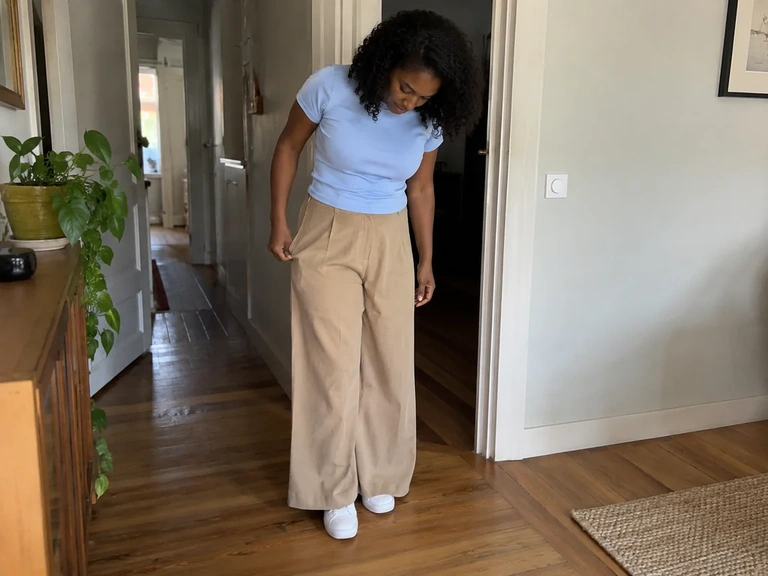
Put on the shoes you plan to wear before judging your pants length. A hem made for heels may touch the ground or catch under the sole when you walk in flats. Check the front, sides, and back, then take a few steps. Your clothes should drape the way you want without becoming difficult to wear.
With wide-leg pants, take extra time to check how your foot moves and how the fabric sits around the shoe. With a shorter cut, look at the space between the hem and the shoe, then try on the socks or tights you plan to wear. Our guide to wide-leg pants length with shoes offers a way to compare before making any alterations.
With a dress or skirt, check the whole look in motion
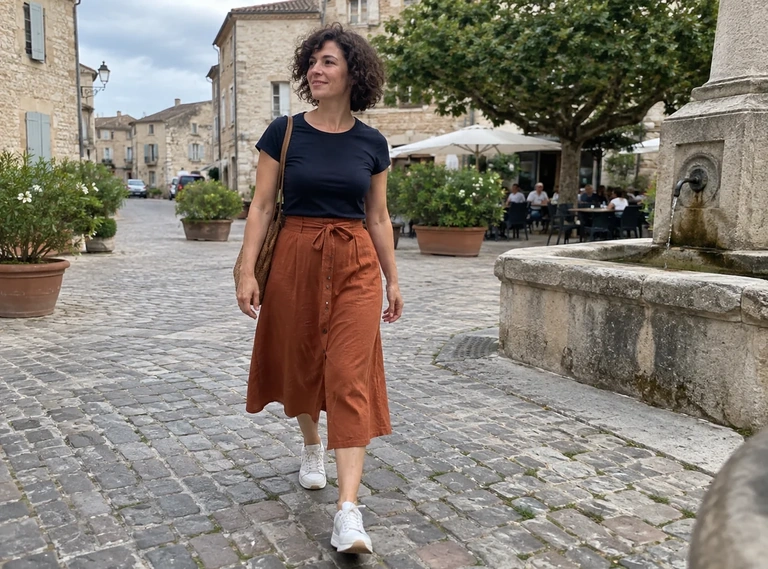
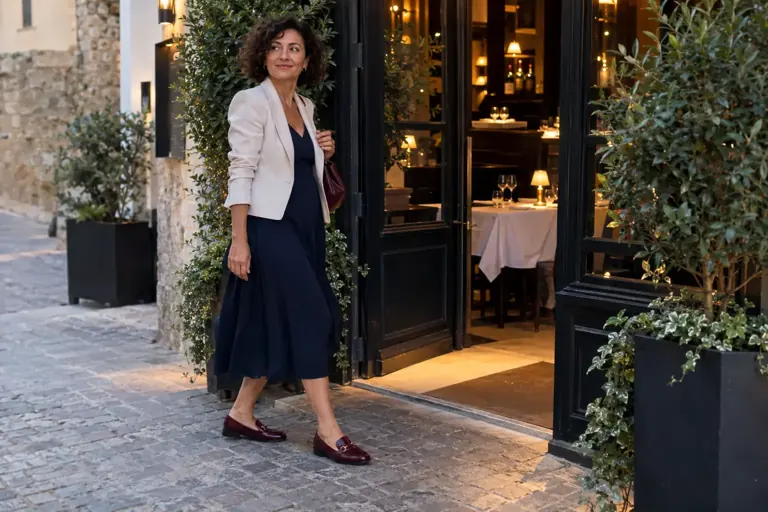
A flat shoe can work with a flowy dress, a more structured dress, or a midi skirt. Try the look from the front and the side, then walk to see how the hem moves. The interplay between the garment’s volume and the shoe’s shape matters as much as their color. A more covered shoe gives a different impression than a more open style.
If you’re unsure, compare two pairs while keeping the dress and accessories the same. See which one lets you walk naturally and gives you the level of dressiness you want. Our article midi skirts and shoes takes a closer look at how lengths work together. Avoid deciding based only on a photo taken from high above: the angle can change the proportions you see.
 Read alsoGraduation outfit: getting ready for the ceremony, photos, and what comes after
Choose fabrics that create a cohesive finish
Smooth leather, satin-like fabric, or a more matte material each creates a different effect. See how they work with your look. With an outfit that’s already very shiny, a simple pair can tone things down. With solid pants and a solid top, a texture or a small crafted detail can draw the eye.
Keep care needs and the weather in mind, too. A delicate material may need protection or a different route, depending on the manufacturer’s instructions. Don’t choose a finish just because it looks elegant in a photo if you know it won’t be practical for the venue. A dressy outfit works best when its pieces suit the occasion and what you can realistically wear.
Use color to tie the look together or add emphasis
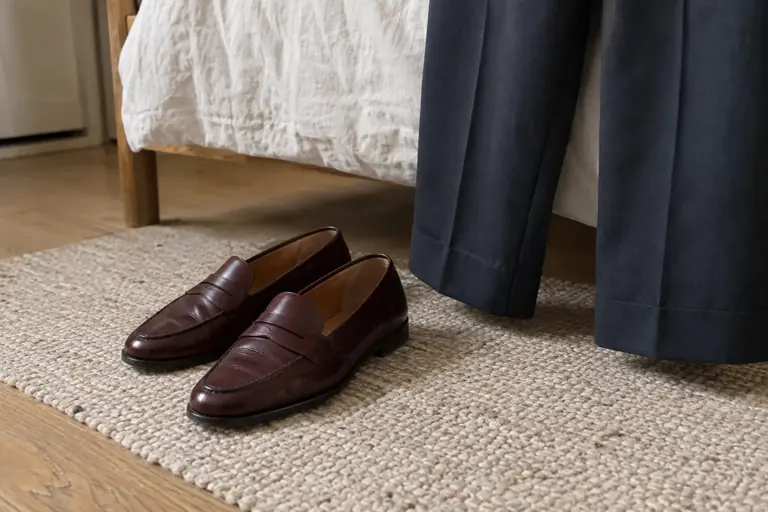
A pair close in color to your bottoms creates a more seamless transition. A contrasting color puts more focus on your shoes. Both options can work; try them based on the role you want the pair to play. Burgundy or deep brown, for example, can add detail without requiring lots of other accessories.
If you repeat that color in your bag or a piece of jewelry, keep the match subtle. Everything doesn’t need to coordinate perfectly. Also look at your socks when they’re visible: their color and thickness are part of the look. The guide to casual chic style can help you create a polished finish with relatively simple pieces.
Plan your layers and accessories around the shoes
A well-chosen jacket, a crisp collar, or a simple bag can make your outfit feel dressier. Add them one at a time to see the effect. If you’re wearing very understated shoes, one statement accessory may be enough. If your shoes already have a prominent buckle or texture, try keeping the rest more understated.
Check the outfit with the coat you plan to wear and the bag with everything you’ll actually carry. You may like the look without a coat, then find that the full silhouette feels too heavy or the bag gets in your way when you walk. Trying everything on ahead of time is especially useful when you’re going to the event by public transit or on foot. The outfit should work from your front door to the venue and back again.
Outfit ideas
Three dressy flat-shoe foundations
Navy pants hemmed to hit at the loafers, a solid blouse, and a relaxed jacket: check the hem as you walk.
See all ideas
Pants
- Navy pants hemmed to hit at the loafers, a solid blouse, and a relaxed jacket: check the hem as you walk.
- Straight-leg pants, fine-knit top, and shoes with a subtle detail: add a piece of jewelry instead of another color everywhere.
Dress
- Midi dress, polished flats, and a simple small bag: let the dress’s cut do most of the work.
- Solid-color dress and contrasting shoes: if you like, echo the shade in just one accessory.
Skirt
- Flowy skirt, crisp top, and more structured shoes: compare how the proportions come together at eye level.
- Structured skirt, relaxed shirt, and open shoes: check your tights or socks with the full outfit.
Try everything on well in advance
Plan your outfit before the occasion. Walk around in a clean space, stand, then sit down. Check that the shoes stay on, nothing pinches, and the hem stays in place. A pair that hurts during the try-on isn’t worth wearing all evening just because it matches the style you had in mind.
Keep a backup you’ve already tried on if conditions might change. In Vestly, saving the outfit with the exact shoes helps you find the right lengths again. Then you can switch up the top or bag without starting your search from scratch. The goal is a polished outfit you can comfortably go about your day in, with shoes that truly suit it.
Check off
My dressy outfit works with flats
0 / 5
You’ve planned a complete outfit, from arrival to the trip home.
Watch a practical example
A visual example from TheChicNatural to compare with the steps in this guide.
Video in English
Frequently asked questions
Can you wear loafers with a dress?
Yes. Compare the shape of the shoes with the dress’s volume and length, then see how the pairing looks as you walk. Coordinated color and materials make the combination easier to put together.
Are ballet flats always dressier than sneakers?
It depends on the style and the setting. Consider their condition, materials, details, and the expectations of the place instead of treating every shoe in a category the same way.
Should you shorten pants made for heels?
Try them on with the flat shoes first. If the hem drags or slips under the sole, an alteration may help. Then choose the shoe height you’ll wear most often with those pants.