Contents
- Understanding what the fabric composition means
- After wearing, don’t leave it forgotten in a damp pile
- Prepare a wash that’s suitable for the whole garment
- Treat stains without rubbing the area until it wears out
- Dry without using heat as a shortcut
- Spot the difference between temporary stretching and wear
- Check the size and fit, too
- Stick to a routine that's easy to repeat
- Frequently asked questions
- Sources and references
A pair of pants that moves with you, leggings that stay in place, or a fitted top all owe some of their comfort to their stretch construction. When they start to sag, slip, or lose their shape, it's tempting to use a hotter wash to “shrink them back.” That instinct can make the problem worse instead of fixing it.
To care for clothes with elastane, follow the instructions for the entire garment, avoid unnecessary heat and pulling, then check the fit once the item is dry. The elastane percentage alone doesn't determine a one-size-fits-all care method.
Understanding what the fabric composition means
Elastane is an elastic fiber generally used with other materials. Spandex refers to the same family of fibers; LYCRA is a brand. A stretch garment may also get some of its elasticity from its knit structure. So there's no need to guess what it's made of by stretching it hard between your hands.
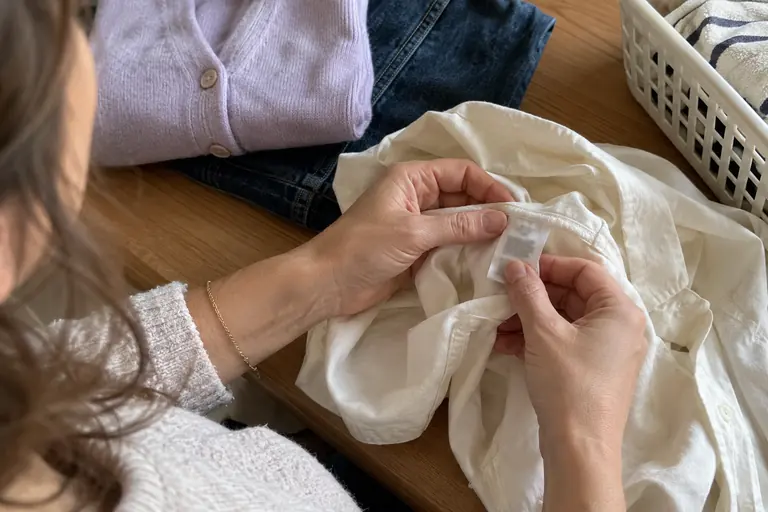
Check the label and the manufacturer's product details instead. Slightly stretchy jeans, leggings for working out, and a fitted blouse don't share the same fabric or finishes. The LYCRA Company recommends following the garment manufacturer's instructions. To decode the symbols, see our guide to clothing care labels before choosing your usual laundry cycle.
After wearing, don’t leave it forgotten in a damp pile
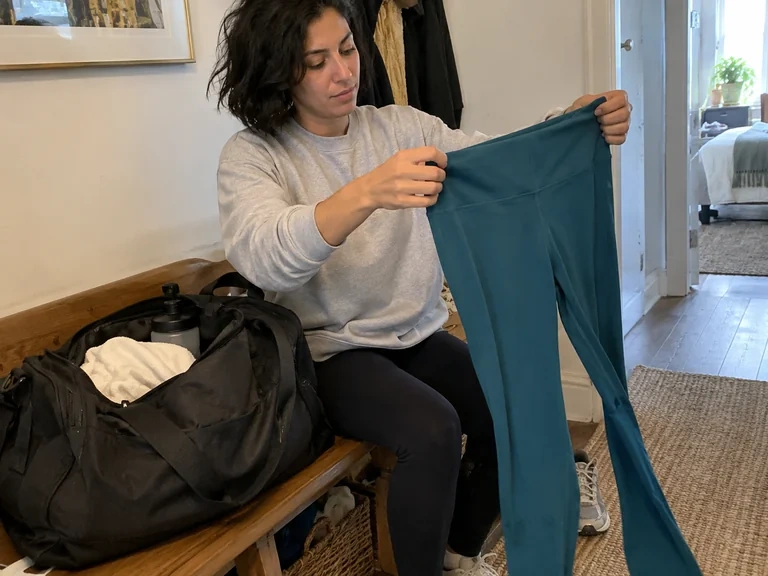
After an activity that makes you sweat, take your clothes out of the bag as soon as you can. Separate damp pieces from the rest and care for them according to their instructions. If you can't wash them right away, don't leave them compressed in a closed container. The goal is to avoid leaving a worn garment damp for a long time.
This precaution doesn't mean you need to wash something after every brief try-on. Pants worn for a quiet day out and a top worn after an intense workout aren't equally dirty. Check the areas that touch your skin and adjust your routine. Scented sprays don't remove dirt; they can simply make it harder to tell what the garment really smells like.
Prepare a wash that’s suitable for the whole garment
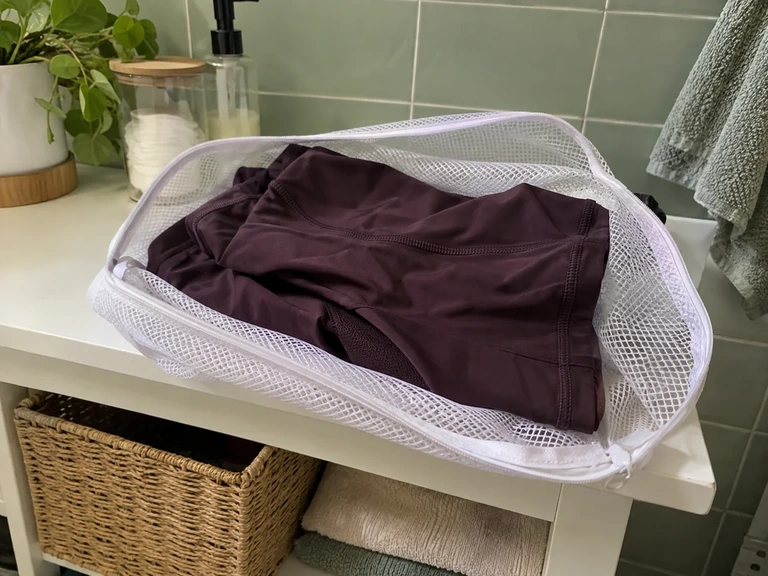
Empty the pockets and check the seams before washing. Fasten or protect anything that could snag other clothes, following its care instructions. Don't mix fine stretch knits with rough accessories or open zippers. A mesh laundry bag can help when it's suitable, but it can't make a prohibited method safe.
Choose an approved cycle and follow its load limit. Measure detergent according to the product and machine instructions. For technical garments, also check the guidance on fabric softener and special treatments: they may not be compatible with the performance you want. Don't pour in several household products to cover up a lingering odor without first figuring out what's going wrong with washing or drying.
Treat stains without rubbing the area until it wears out
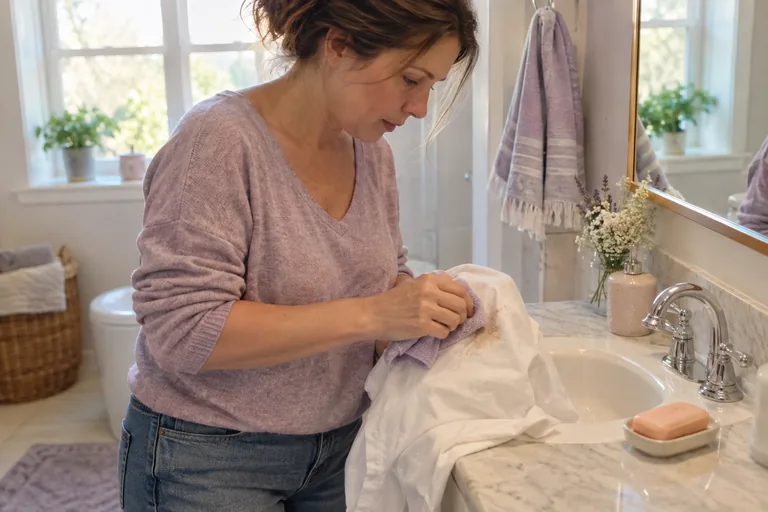
A localized mark calls for a method suited to its type, the fabric, and its colors. Repeatedly scrubbing hard in the same spot can alter the surface or weaken a fine knit. See our guide to remove a stain from clothing and test any compatible treatment on an inconspicuous area.
Pay special attention to prints, bonded strips, and patterns. They’re part of the garment and may have different limits than the base fabric. Don’t iron a stain to try to remove it. If the mark remains after proper care, ask the brand or a professional for advice instead of trying more products and temperatures.
 Read alsoHow to wash a wool or cashmere sweater without felting it
Dry without using heat as a shortcut
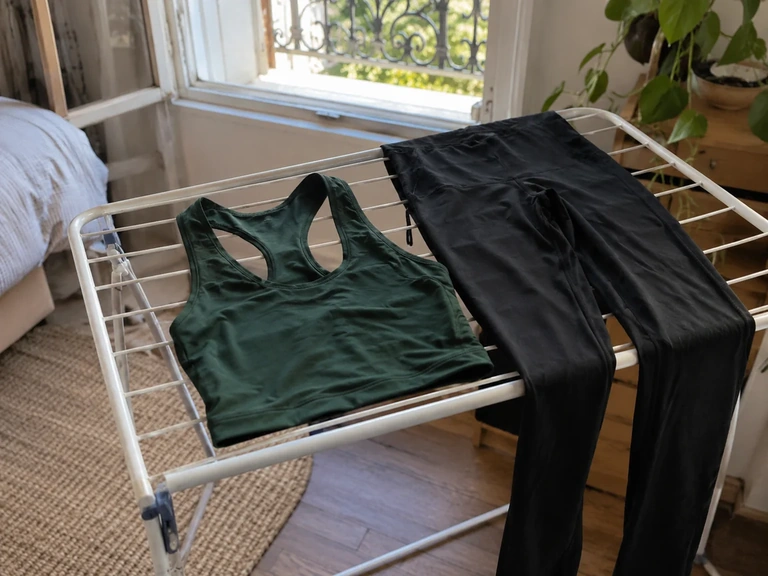
After washing, gently reshape the seams and edges. Support damp garments instead of lifting them by a thin elastic band or strap. Follow the drying instructions from the manufacturer. If air-drying, spread the garment out to avoid constant strain on a small area, and let air circulate around it.
Whether to use a dryer depends on the garment and its care instructions. Don’t choose a high temperature to make “a pair of pants bounce back” after stretching out. LYCRA’s recommendations for swimsuits, in particular, highlight how heat and chlorine can damage elasticity; that doesn’t mean there’s one universal setting for all stretch garments. In an emergency, changing into another dry outfit is the simplest option.
Spot the difference between temporary stretching and wear
Examine the garment once it’s completely dry, without pulling on it. Check the knees, seat, elbows, and edges, depending on the garment. A slight change after several hours of wear isn’t the same as an area that stays misshapen or visibly damaged elastic threads. Compare it with how it usually wears rather than with a catalog photo.
If only the waistband no longer holds, it may be a separate elastic band that can be replaced. If the entire fabric has lost its shape, the solution is different. A tailor can examine the construction and tell you what can be repaired. Don’t cut off small loose threads before you know whether they’re part of the structure. A localized repair doesn’t always restore the properties of the entire fabric.
Check the size and fit, too
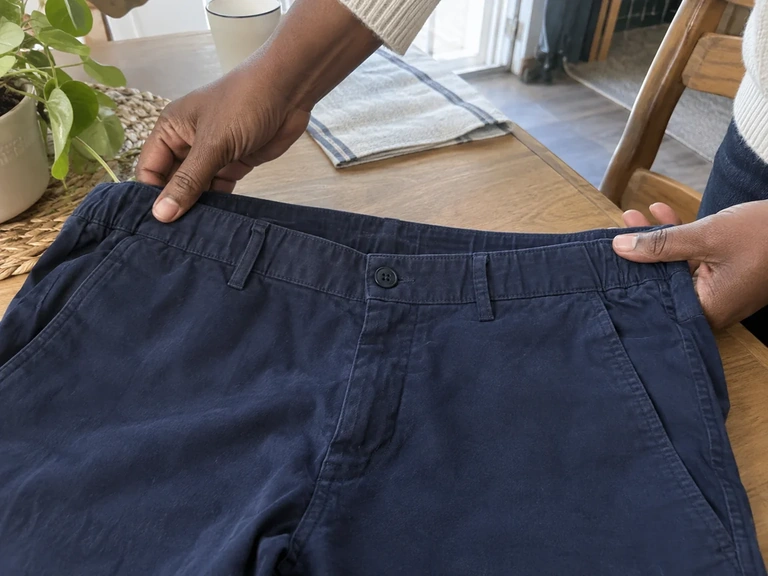
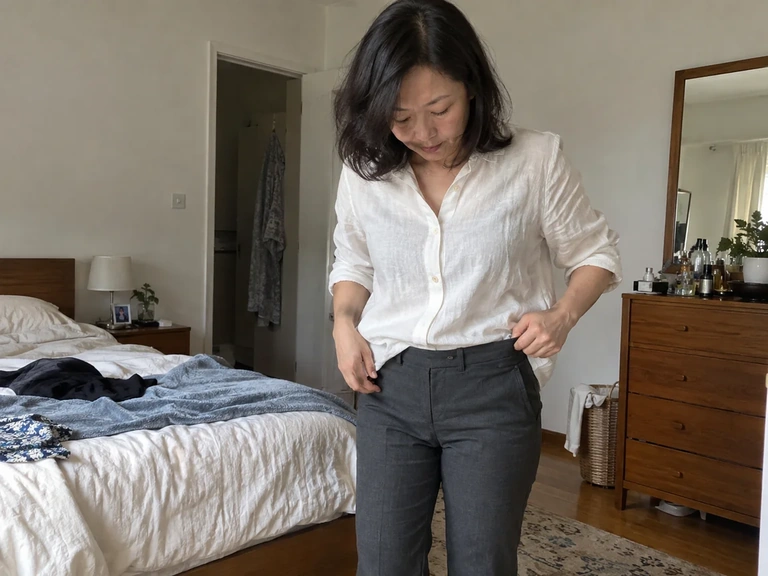
A garment may slip because it’s too big, pull because it’s too small, or feel restrictive because its cut doesn’t suit your movements. Care won’t fix every issue. Try the garment on clean and dry, then sit, walk, and move as you normally would. Notice whether you have to keep pulling the waist up or adjusting a seam.
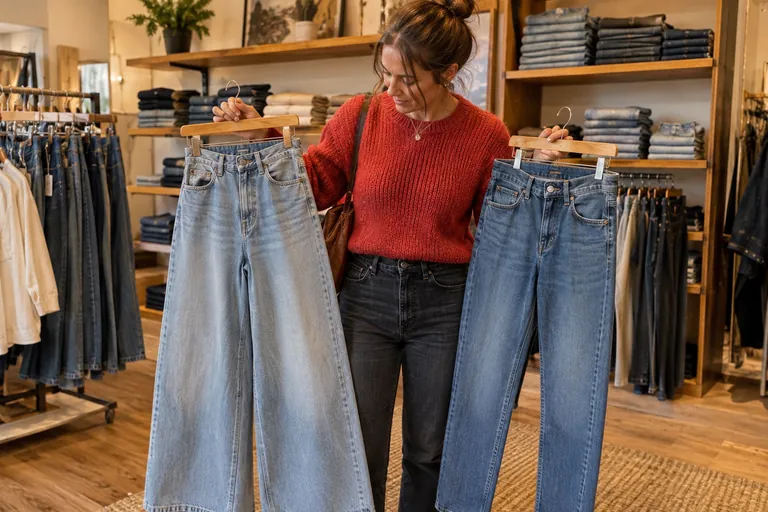
For stretch jeans, our guide to choosing jeans for your body shape helps you consider other cuts without prescribing a silhouette. For an athletic garment, also follow the brand’s instructions and consider the activity it’s designed for. Don’t aim for extreme support by always choosing a smaller size; that may simply make the garment uncomfortable and put more strain on its seams.
Stick to a routine that's easy to repeat
Identify the pieces that truly share the same care instructions and needs. This makes sorting easier without putting every stretchy garment in one basket. Plan how to dry them when you do the laundry, and keep a backup option for clothes that aren’t ready.
In Vestly, your digital wardrobe and outfit ideas help you vary combinations with the pieces you have. You can build a look around another pair of pants or a top that’s already dry instead of rushing through care. A useful routine is one you can stick to in a normal week, not just one that looks perfect on paper.
Check off
My stretchy garment is ready for care
0 / 6
Preparation takes both the stretchy fabric and the garment’s construction into account.
Watch a practical example
A visual example from Studio SWEAT to compare with the steps in this guide.
Video in English
Frequently asked questions
Can a hot wash fix stretched-out leggings?
It doesn’t guarantee that and may not be suitable for the garment. First, look for the cause: the fit, a sewn-in elastic, or worn fabric. Follow the care instructions instead of trying to shrink it.
Should you avoid the washing machine for all elastane garments?
No. Some garments are machine washable, while others need a different method. Check the full garment and its care label; the fiber name alone doesn’t tell you what to do.
Can you replace just the waistband elastic?
It depends on how it’s constructed and whether the casing or seams are accessible. A repair shop can assess the repair, which is different from restoring the fabric’s elasticity.
Sources and references
- The LYCRA Company, questions about the fiber and care, accessed September 30, 2026.
- LYCRA, swimwear care and durability, accessed September 30, 2026: specific context on chlorine and heat.