Contents
- Read the style’s care instructions before choosing a method
- Check the underwires, cups, and closures
- Prepare the garments and supplies before you begin
- If hand washing is allowed
- If machine washing is allowed, prepare a compatible load
- Prepare for drying and keep the cups supported
- Plan a rotation without imposing a one-size-fits-all schedule
- See the steps in French, then check your own style
- Frequently asked questions
- Sources and verified references
To wash a bra, start with its care instructions and condition, then prepare for drying before you wet it. Molded cups, underwires, and lace shouldn’t be treated like an everyday T-shirt. There’s no single setting that works for every style, though. The exact style number is your best starting point.
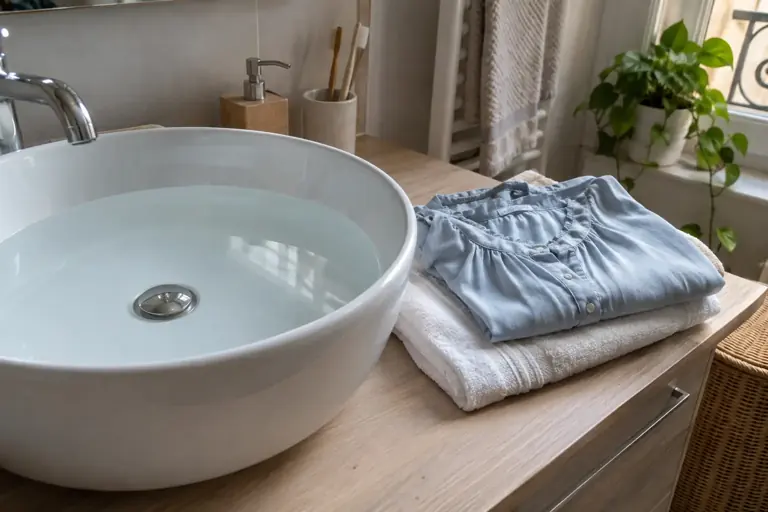
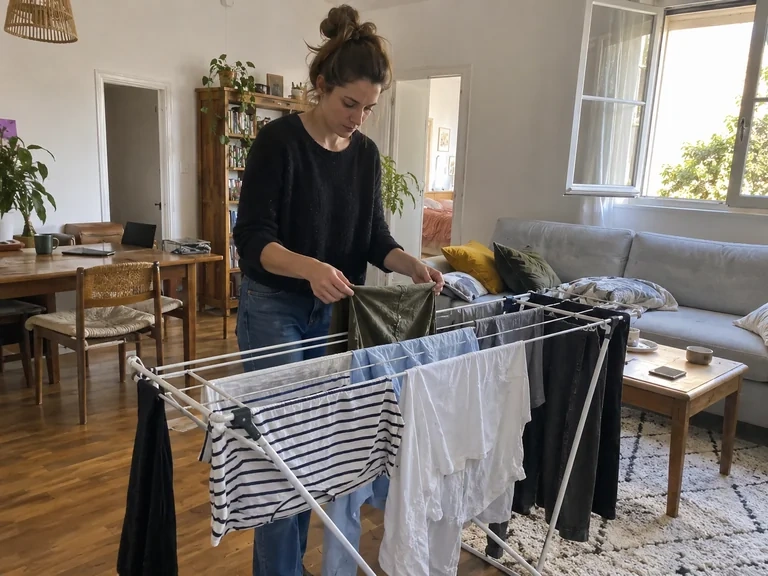
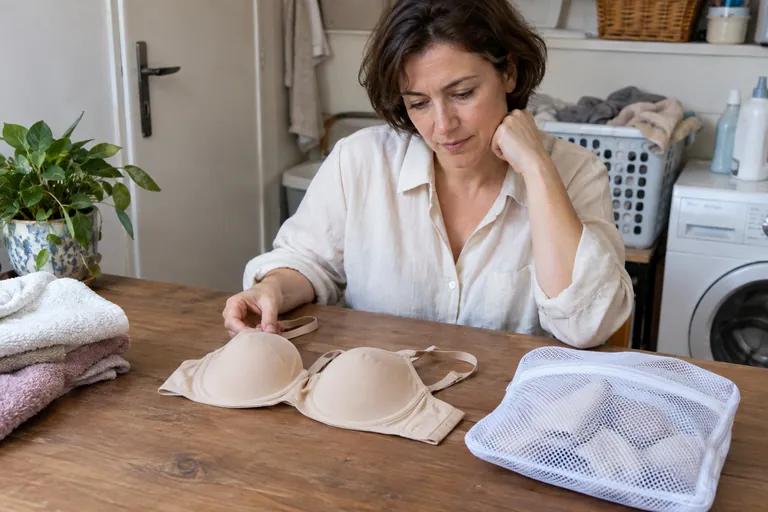
This guide covers everyday lingerie. Post-surgery garments, medical accessories, prostheses, and compression garments have their own instructions; don’t automatically apply the guidance below to them. Our four workshops help you organize your observations. They don’t identify a care label from a photo or certify any washing method.
Read the style’s care instructions before choosing a method
Look for the sewn-in care label and the bra’s style number. A product page can supplement a label that’s become hard to read, as long as it matches the style you own. Two beige pieces from the same brand may have different constructions. Taking a photo of the style number for your own records can help; mixing up their instructions in a shared note is much less helpful.
GINETEX explains care symbols : the number in the tub represents a maximum temperature, while the lines beneath the tub indicate a gentler mechanical action. The hand and the crossed-out tub describe other situations. A temperature alone doesn’t tell the whole story. We haven’t reproduced the symbols here: compare your care label with the official reference guide.
To see why a general rule could be misleading, the care page for the Anita Jill model mentions a delicate cycle at 40 °C, while the Chantelle lingerie guide includes care advice at 30 °C, among other things. These are specific instructions, not interchangeable answers. Find the one that applies to your own piece, and contact the brand when the information conflicts.
What information do you actually have?
The four paths, also available on paper
Missing or conflicting care instructions: Find the reference and ask the brand before getting the piece wet.
Hand washing allowed: Prepare the temperature and detergent instructions, the rinse, and a surface for drying. This information alone doesn’t mean machine washing is allowed.
Machine washing allowed: Check the cycle and its limits, the closures, and the right protection. Prepare the drying method indicated for this model.
Water washing prohibited: Don’t use a basin or a machine. Ask which care method is intended for the exact reference.
Your choice only helps you prepare; no model is identified or certified.
Check the underwires, cups, and closures
Lay the piece flat without pulling on its straps. Check the ends of the underwires, the support seams, the hooks, and the lace edges. The goal is to spot any existing issue so you don’t later attribute it to washing. You can simply note “seam open on the left” or “deformed hook,” without trying to diagnose the material.
An underwire poking out of its casing isn’t a flaw you can hide in a mesh bag to finish the wash. Set the piece aside and ask whether it can be repaired. Avoid pulling on the metal, bending it back, or handling it repeatedly to push the end back in. A piece that causes discomfort won’t become comfortable to wear just because it’s been cleaned.
For molded cups, observe the shape of both cups without turning one inside the other. A surface mark and a construction deformity don’t necessarily call for the same solution. The Chantelle repair workshop is an example of a service to ask about for an eligible piece; it doesn’t guarantee that every bra can be repaired.
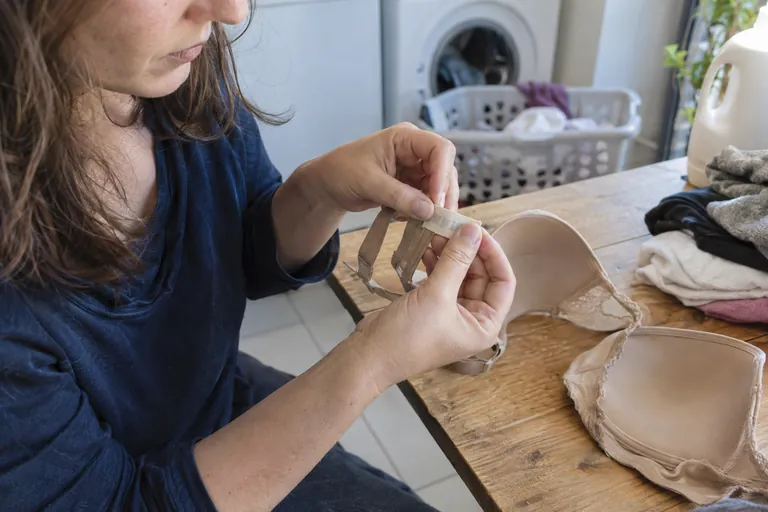
Four observations, four possible next steps
Care label missing
Look up the reference or ask for the care instructions. Don’t infer the method from color or material alone.
Underwire poking out
Set the piece aside and ask whether it can be repaired. Washing won’t close its casing.
Molded cup marked
Observe without turning the cup inside out or crushing it; ask for advice specific to the model.
Deformed closure
Set the piece aside to inspect or have the closure repaired before preparing the load.
 Read alsoWomen’s capsule wardrobe: a list of essentials and how to choose yours
Prepare the garments and supplies before you begin
Gather only what you’ll actually need: the bra, the product you plan to use, a container or mesh bag if the method calls for one, and then a drying rack. The detergent bottle lists its dose for different conditions. “A little” isn’t a repeatable measure, and adding another product to boost the effect won’t automatically improve the results.
Separate pieces with incompatible care instructions. If you’re doing a shared load, don’t let delicate lingerie disappear into a load you’re preparing for towels. Also check what’s in the container you’ll use for hand washing: it should be clean and free of household cleaner residue. Don’t turn the bathroom into a mix of products just to save a step.
A mesh bag protects against some contact; it doesn’t change what the care label allows. Choose one with enough room for the piece and a working closure. A bra crammed into a small bag with several accessories isn’t better prepared just because the bag is closed. Also make sure the drying rack won’t compress the cups as they dry.
If hand washing is allowed
The Chantelle’s US guide to washing bras covers hand washing and the delicate cycle as two methods to consider depending on the piece. For your style, first check the temperature and product instructions, then prepare for rinsing. The more general guide to hand-washing a garment details how to set up a small work area.
Handle the piece gently instead of trying to scrub it. If a particular stain won’t come out, reread the brand’s advice before scrubbing harder or applying a stain remover. A bra is made up of several assembled components: what seems safe for one piece of fabric may not suit the whole garment. Cloudy water alone doesn’t mean you need to extend the treatment.
Follow the instructions for rinsing and removing excess water. Chantelle’s French guide advises against twisting, particularly to protect the fabrics and structural elements. Have a clean towel ready when this method of removing excess water is suitable for the style. Pressing gently and twisting a piece until it forms a rope are two different actions; also watch what happens to the cups as you handle it.
If machine washing is allowed, prepare a compatible load
Choose the requested cycle and follow its limits instead of relying on a button with a reassuring name. A washing machine may offer several “delicate” cycles with different settings. Check the appliance manual and the selected settings. A low temperature doesn’t automatically make up for unsuitable agitation or spin settings.
Fasten the hooks if the instructions call for it, then place the piece in its mesh bag. Chantelle’s French guide recommends both steps to reduce snags on nearby fabrics. Check the items and closures in the load: the mesh bag isn’t a reason to add everything waiting in the hamper. Also avoid forcing the cups to fit the bra into the bag.
A setting shown in a video doesn’t replace these checks. If the care label doesn’t clearly specify the spin cycle and the brand gives specific instructions, keep that information with the item’s reference. Don’t assume “delicate” means one universal spin speed. You can do your laundry later; uncertainty doesn’t mean you have to guess now.
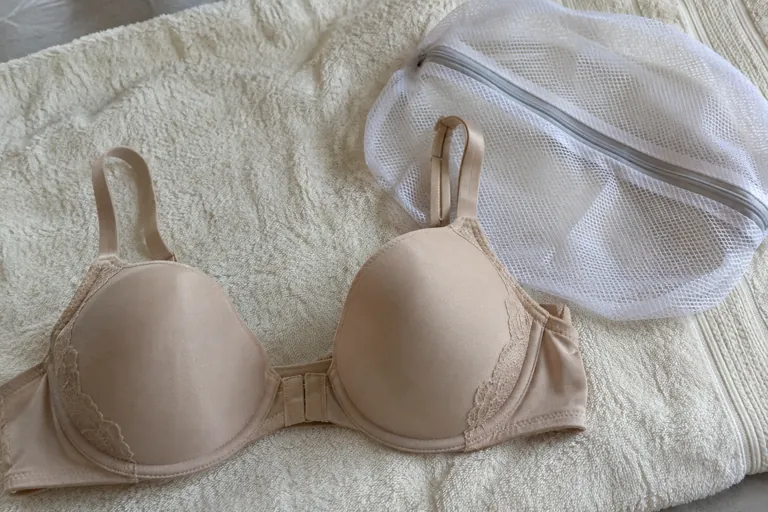
The full preparation, through drying
The checkboxes are organizational reminders; you can leave a step to verify.
0 / 6 items checked
The checkboxes work without JavaScript. Nothing is sent or saved when you reload.
Prepare for drying and keep the cups supported
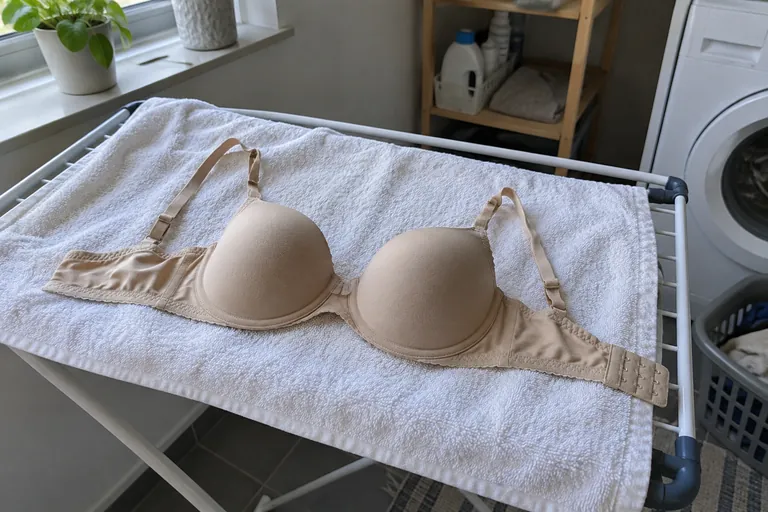
Check the drying instructions before washing. “Air dry” doesn’t necessarily mean hanging the item any old way on the first hook you find. For molded-cup bras, the Chantelle guide suggests using a towel to absorb excess water and help the cups keep their shape. Then check the method recommended for your model: support, position, and whether it needs protection from light.
Choose a spot where the item can stay without getting crushed or moved by other things. The edge of a basin isn’t necessarily a stable place to dry it. In a small room, keep a walkway clear and avoid stacking clothes just to make it look like you’ve saved space. The guide to drying laundry in an apartment covers how to organize this space.
Before putting it away, check the thicker areas: the cups, band, and seams may not dry at the same rate. A date in your calendar isn’t proof that it’s dry. If you need to leave, get another item ready and let this one finish drying properly. The guide to clothes you’ve already worn covers a different situation; don’t confuse the labels clean, worn, and still damp.
Plan a rotation without imposing a one-size-fits-all schedule
Your habits, wearing conditions, and the brand’s instructions shape your routine. A bra worn during a sweaty activity isn’t automatically handled the same way as one worn briefly. A brand’s frequency recommendations apply to its own context; don’t turn them into medical advice or a lifespan guarantee for all lingerie.
Set up a simple practical reminder: ready to wear, to be cared for, drying, or to be checked. These statuses mainly help prevent mix-ups. You don’t need a big chart for every item or another purchase just to fill an ideal number. A bra you no longer like wearing may also need a comfort, size, or condition check; washing it more won’t necessarily solve the problem.
In Vestly, the “In the Wash” feature lets you temporarily remove clothes from suggestions and choose when they return after a set number of days. It doesn’t read care labels, set your washing machine, or measure moisture. So check the garment in person when it becomes available again. You can discover the app on iPhone or on Google Play or Android and review the store terms before confirming.
See the steps in French, then check your own style
A visual example from thelittlebracom to compare with the steps in this guide.
Video in English
Three things to check
0 / 3 answers checked
This quiz checks your understanding of this page; it doesn’t assess your lingerie.
Frequently asked questions
Can all bras be washed at 30 °C?
No. A commonly recommended temperature doesn’t replace the care label for your specific style. Also check the permitted method, mechanical action, detergent, and drying instructions. If the instructions are missing, look up the style number or ask the brand before choosing.
Does a mesh bag make it okay to machine-wash a bra that’s labeled hand-wash only?
No. A mesh bag adds protection when machine washing is allowed. It doesn’t change the washing instructions. A delicate cycle doesn’t turn a prohibition into permission, either.
Can you dry a molded-cup bra like a T-shirt?
Follow its instructions and support its shape. Check the care label before washing, don’t compress the cups to save space, and make sure the bra is completely dry before storing it. Drying time varies depending on the garment and actual conditions.
What should you do if an underwire pokes through?
Set the garment aside and ask whether it can be repaired. Washing won’t fix the underwire casing. Don’t keep wearing a garment that hurts, and don’t assume a mesh bag will solve the problem.
Can Vestly choose your washing settings?
The “In the Wash” feature manages clothing availability. It doesn’t certify a wash cycle, temperature, or that an item is fully dry. You still need to follow the model’s instructions and check the item yourself.
Sources and verified references
- GINETEX: what care symbols mean.
- Chantelle France: lingerie care tips.
- Chantelle: hand-washing and machine-washing bras.
- Anita: care instructions for the Jill model, an example of model-specific instructions, not a universal setting.
- Chantelle: repair workshop, check the brand for terms and eligible items.
References checked on October 10, 2026. Our editorial guides help you stay organized; they don’t replace the manufacturer’s instructions.