Contents
- Drying rack or electric dryer: What’s the difference?
- Choose a spot before laundry day
- Match the laundry load to the space available
- Use the spin cycle as allowed, without stressing the fabric
- Space out the laundry to let air circulate
- Choose the right support for each garment
- Check the parts that take longer to dry
- Keep an eye on indoor humidity
- Make drying part of a simple routine
- Frequently asked questions
- Sources and references
To dry your clothes in an apartment, combine three things: a permitted spin cycle, a suitable rack, and real airflow. Adding heat without considering humidity or fabric isn’t a universal solution.
In an apartment, laundry often has to share space with a table, a window, and the path to the kitchen. You end up cramming clothes onto the drying rack, then moving a still-damp sleeve when it’s time to get dressed. A little planning helps avoid these hassles while preserving each garment’s shape.
To help molded cups keep their shape while drying, this guide to washing a bra helps you prepare a support before wetting the garment.
Drying rack or electric dryer: What’s the difference?
The term “dryer” can refer to either a folding drying rack or an electric appliance. With an electric dryer, humidity becomes a key consideration: a vented model sends moist air outside through a duct, so it requires a suitable installation. A condenser model collects water in a tank and mainly releases heat into the room. In either case, check the manual and your home’s ventilation options before using it in a closed room.
With a drying rack, drying takes longer, but you have more control: you choose the spot, airflow, and load size. When the weather allows, drying laundry outside is still the simplest way to limit indoor humidity.
Choose a spot before laundry day
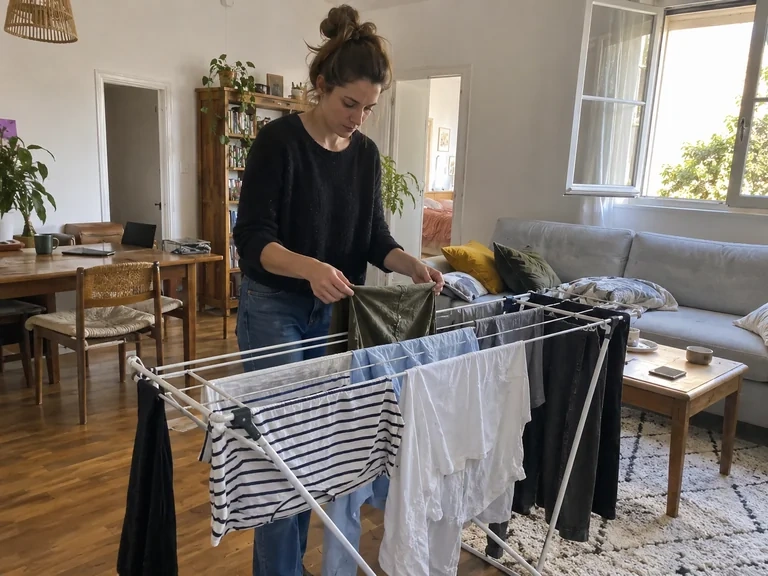
Find a spot where the drying rack can stay without blocking a door, an exit, or your everyday path through the room. Measure how much space it takes up with the wings open. A rack that fits against the wall when folded can get in the way as soon as two pairs of pants hang past the edges. It’s worth sorting out this practical constraint before starting a full load.
ADEME recommends drying clothes indoors in a large, well-aired room or a space with suitable extraction. Don’t block an air vent to stop a draft near your laundry. If humidity or condensation persists at home, check the ventilation instead of simply moving the drying rack from one corner to another. Follow the instructions for your home and its equipment.
Match the laundry load to the space available
Your washing machine’s capacity isn’t necessarily the same as your drying rack’s. A machine that’s technically full can produce more clothes than you can space out properly. Before starting a cycle, picture where the larger pieces and items that need to dry flat will go. If everything needs the same rack, it’s better to split up the laundry than to pile on more layers.
Keep your schedule in mind: a shirt you need the next day calls for a realistic time slot, especially during a humid spell. Avoid relying on one big, late load of laundry to get you through the whole week. Our guide to plan your outfits for the week helps you see which pieces actually need to be available, without requiring you to wash your whole wardrobe at once. For tips on sorting loads by drying method, also see our guide to sorting your laundry.
Use the spin cycle as allowed, without stressing the fabric
The spin cycle removes some water before you hang clothes to dry, but not every piece can handle the same mechanical action. Check the garment’s care instructions and the cycle settings. A delicate knit, a flowy blouse, and a thick towel shouldn’t all get the same setting just to save time.
When you take items out, support heavier, waterlogged pieces and unfold them. Don’t twist a sleeve hard to speed up drying. If a towel-rolling method is suitable for the piece, use it to gently absorb excess water. Our guide to clothing care labels helps you tell different drying instructions apart, which matter just as much as the washing temperature.
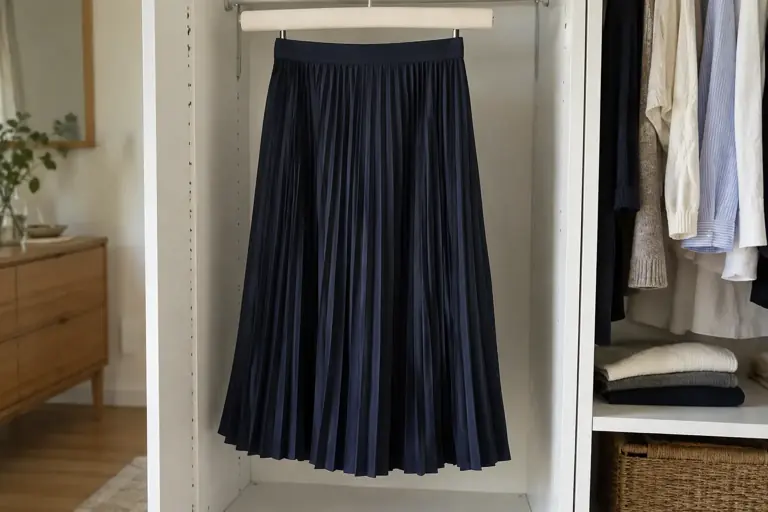 Read alsoCare for pleated clothing without guessing about washing, steaming, or storage
Space out the laundry to let air circulate
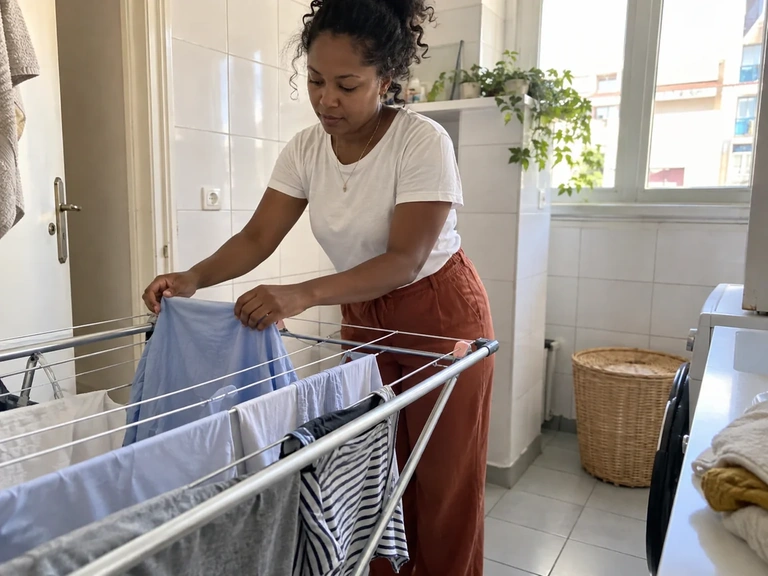
Spread clothes out instead of starting by filling one side completely. Leave space between pieces and don’t let a pair of pants wrap around a shirt. Open up large items as much as the rack allows. Sleeves shouldn’t be tucked inside a garment’s body, and pockets bunched up inside out need to be set back in place.
The rack itself should be clean and in good condition. A rough bar can snag delicate fabric; a damaged metal part can leave a mark. Also check that the rack is stable when you add a heavy item. A rack with an even load is easier to handle, but don’t move it over a slippery floor when the laundry blocks your view.
Choose the right support for each garment
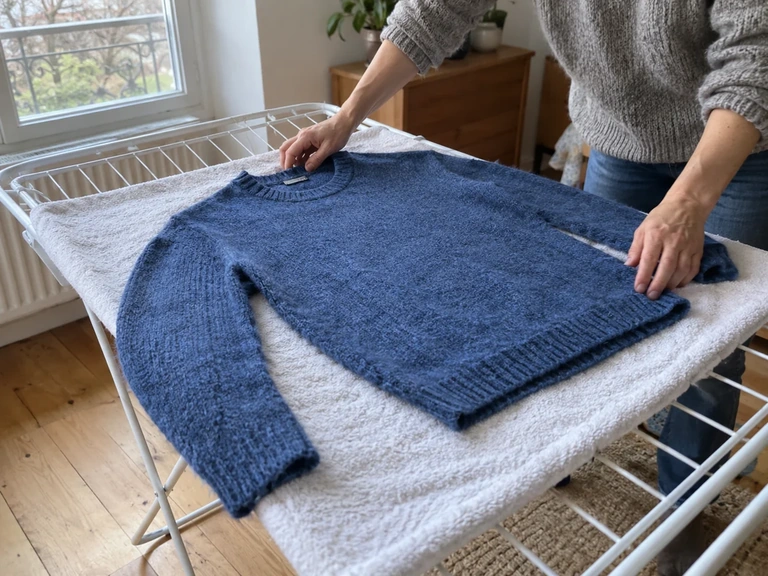
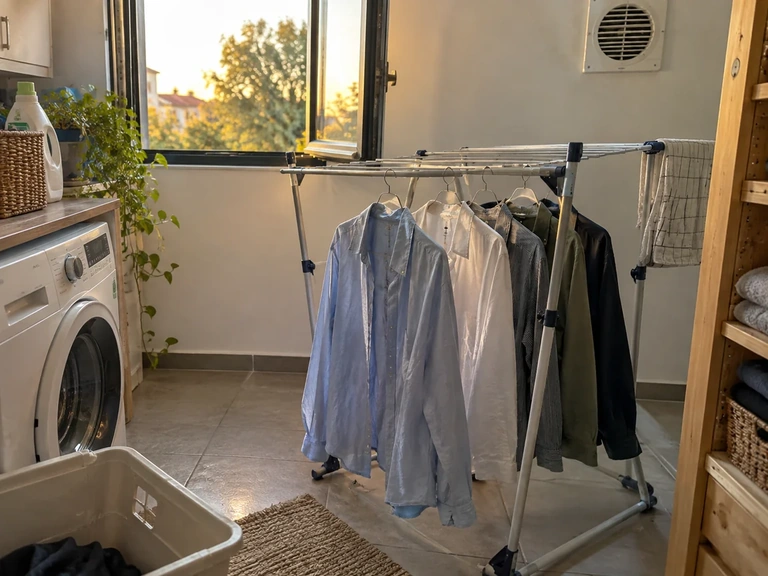
A shirt that can be hung to dry may do well on a hanger that fits its shoulders. Viscose pieces, which can easily lose their shape when wet, need special care: see our guide to washing and drying viscose. A very thin hanger can leave marks on some fabrics. For an item that needs to dry flat, set aside a clean surface that’s large enough. The entire length should be supported: a sleeve or hem left hanging is still weighed down by moisture.
A towel under a knit can absorb water, but it shouldn’t stay soaked throughout the process. Check it and change it if needed, moving the piece carefully. For a wool knit, see our guide to wash a wool or cashmere sweater. For an item that needs to be hand-washed, the guide to hand-washing a garment also covers rinsing and drying. Drying is part of caring for a garment’s shape, not just the wait after washing.
Check the parts that take longer to dry
A lightweight sleeve may feel dry while the waistband of the pants next to it is still damp. Check thick seams, pocket linings, lined cuffs, and elastic edges by touch. Don’t rely only on how the fabric looks or how much time has passed since the cycle. Conditions vary with the weather, your home, and the size of the load.
If you turn a piece over or move it, do so without stretching it out of shape. Unfold the area that’s still damp and give it more space. Don’t put a garment away just because the rest of the laundry is ready. If you need to wear something soon, you can wait while you choose a dry alternative. This simple choice helps you avoid turning to excessive heat at the last minute.

Keep an eye on indoor humidity
Laundry releases the water it holds into the air. So it makes sense to pay attention to what’s happening in the room while clothes dry: windows that stay fogged with condensation, a lingering damp feeling, or nearby surfaces that don’t dry. These signs are a cue to improve the conditions and, if the problem persists, have a qualified person check your home or ventilation.
Follow the guidelines for your mechanical ventilation system and airing out your home. For clothes stored off-season, the guide storing clothes out of season also covers moisture during storage. Don’t pile laundry right against an exhaust vent or on a radiator. If you use a dehumidifier, follow its instructions and place it somewhere that’s safe for its electrical requirements. It won’t fix a ventilation problem or a leak. The goal is to address the situation you actually have, without reflexively buying an appliance.
Make drying part of a simple routine
After a few loads, you’ll know which pieces slow down your routine. Group the ones that dry at a similar pace, and keep a dedicated spot for items that need to dry flat. In Vestly, plan other combinations with the clothes already in your digital wardrobe. You won’t have to rely on a single shirt that’s still damp for your day.
Check off
My drying rack is ready
0 / 6
The main conditions are in place: check when the clothes are dry instead of relying on a set amount of time.
Watch a practical example
A visual example from Tor from Organizing TV to compare with the steps in this guide.
Video in English
Frequently asked questions
How much time should I allow?
There’s no reliable drying time for every home. Fabric thickness, the spin cycle you can use, airflow, and ambient humidity all matter. Check the garment itself, especially its thicker areas.
Can I hang all tops on hangers?
No. Some knits and damp fabrics need support while laid flat. Follow the garment’s care instructions and choose a suitable hanger when hanging is allowed.
Should I leave a window open all night?
Adjust ventilation to your home’s guidelines, the weather, and safety. Effective air exchange doesn’t mean leaving a window open all the time.
Can I dry laundry in the bedroom?
It’s not the most suitable room. You often sleep in the bedroom, and moisture released by laundry can build up there. Choose a well-ventilated living area or a room with an exhaust fan, and watch for condensation on windows and walls.
Can I use an electric dryer in an apartment?
It depends on the type of appliance and your home’s ventilation. A vented dryer needs a duct to the outdoors, which isn’t always possible in an apartment. A condenser dryer doesn’t need that duct, but it releases heat into the room. Check the manual and your building’s requirements before buying or installing one.
Sources and references
- ADEME, indoor air quality and laundry drying, accessed September 30, 2026: choosing a ventilated space or one with extraction.