Contents
- Check that hand washing is the recommended method
- Set up a complete washing area
- Choose a product that’s truly compatible
- Set the washing conditions before adding the garment
- Handle it gently; don’t twist it to save time
- Rinse according to the product and garment instructions
- Remove the water and prepare for suitable drying
- Use a demonstration without forgetting the model
- Frequently asked questions
Hand washing a garment seems simple: water, detergent, and a few steps. But mistakes often happen before or after the wash itself. Misunderstood instructions, an improvised dose, or no drying surface can make caring for a garment more complicated—even when you’re trying to treat it with care.
To hand wash a garment, first check that this method is allowed, then prepare for washing, rinsing, and drying as one complete process. Adjust the settings to the garment and the product. There’s no single temperature, soaking time, or motion that works for every fabric.
For a garment with cups or underwires, this guide for washing a bra explains what to check, how to protect it, and how to prepare it for drying.
Check that hand washing is the recommended method
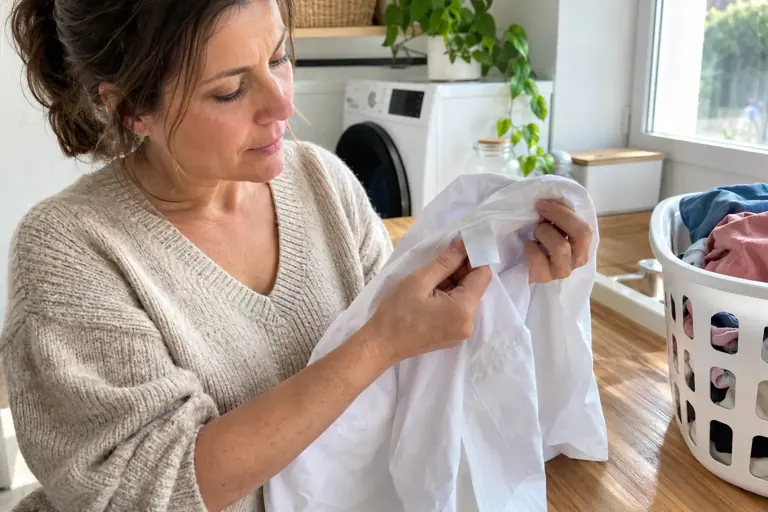
Read the fiber content and care label. The presence of a delicate material alone doesn’t mean a basin is suitable. A garment may have a lining, finish, or construction that affects which methods are allowed. If water washing is prohibited, hand washing doesn’t get around that instruction.
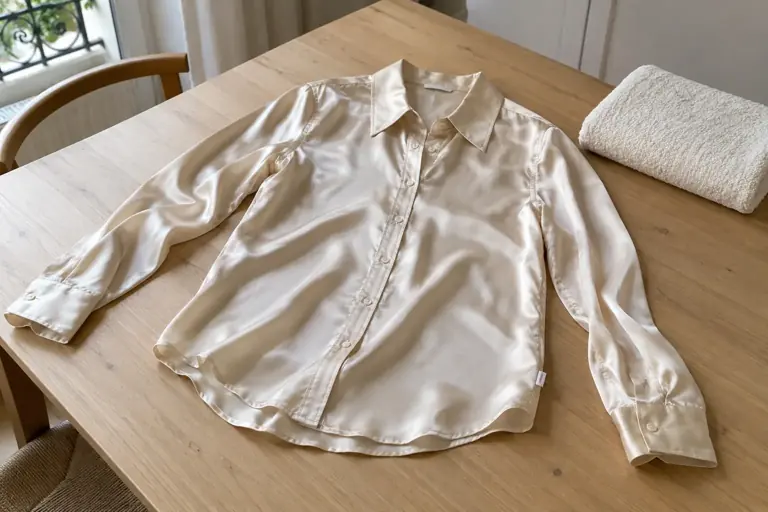
The symbols presented by GINETEX help distinguish the main care steps and their limits. If the label is missing, look up the garment reference and the brand’s care guide. If you’re still unsure about an important garment, ask for advice before wetting the fabric. Our guide to washing silk shows why the fiber content alone doesn’t give you the whole answer.
Set up a complete washing area
Choose a clean basin that’s large enough to handle the garment without cramming it in, and make sure it’s free of household cleaner residue. Clear a nearby surface for the items you’ll need. Keep anything that might snag, dangling jewelry, and delicate accessories away from the fabric as you handle it.
Also get ready for what comes next: water for rinsing according to the method you’ve chosen, a clean towel if suitable, and the recommended drying surface. In a small home, preparing ahead saves you from carrying a wet garment from room to room looking for a free spot. If you’ll need to interrupt garment care, wait for a quieter moment rather than starting a soak when you can’t keep track of how long it lasts.
Choose a product that’s truly compatible
Read the detergent label, especially which fabrics it’s made for and whether it includes hand-washing instructions. A product for everyday laundry isn’t automatically suitable for every delicate garment. Don’t skip the check and reach for shampoo, dish soap, or a household cleaner just because it’s already nearby.
For wool, Woolmark recommends a suitable mild detergent and remember to follow its use instructions. Keep this recommendation in the context of wool. For another material, check its own compatibility. Measure according to the amount of water and the product instructions rather than guessing: lots of suds are not a sign of extra care and can make rinsing unnecessarily difficult.
Set the washing conditions before adding the garment
Prepare the water at a temperature allowed for the garment and the product method. If a specific temperature is required, use a reliable guide rather than a vague estimate by touch. Dissolve or distribute the product as its instructions require before adding the garment, so you don’t improvise by applying a concentrated amount to a visible area.
Also check whether soaking is recommended and for how long. Don’t turn a short wash into an overnight soak unless the instructions say to. If you’re caring for several garments, don’t automatically wash them together: their colors and care instructions may not be compatible. Give extra attention to a new item whose behavior you don’t know; our guide to caring for new clothes for the first time can help you prepare for this step.
 Read alsoCare for velvet clothing without confusing fabric, texture, and washing
Handle it gently; don’t twist it to save time
Follow the recommended steps for the garment. When the method calls for gentle handling, avoid vigorous rubbing, stretching the item, or applying all the pressure to one small area. Support the garment’s shape as you move it instead of lifting it only by a strap, sleeve, or delicate corner.
A localized stain doesn’t necessarily call for harder rubbing. If your usual cleaning method doesn’t seem right for the problem, pause and check for a compatible stain removal method. Keep track of what you’ve already applied and where. If you’re unsure, a clear description of the stain and the steps you’ve tried will help a professional more than a series of attempts whose order you can’t remember.
Rinse according to the product and garment instructions
Follow the rinsing instructions for the product you chose. Some uses call for several changes of water; other products have a specific method that you should read in full. Don’t add another product at the end to mask a scent or residue without understanding the cause. If you used too much at first, allow enough time for a proper rinse.
Always handle the garment while supporting it. Avoid letting a strong stream run over one delicate area while the rest hangs down. If you need to empty the basin, plan the movement so the fabric doesn’t get caught against the drain or an edge. A calm, prepared routine is easier to repeat than a rushed method that leaves you trying to catch a slippery garment over the sink.
Remove the water and prepare for suitable drying
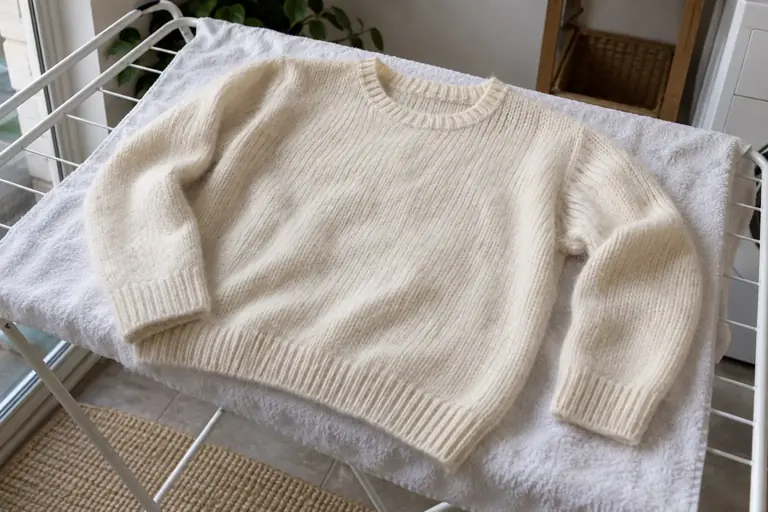
Check the garment’s care instructions for removing excess water. Don’t wring it like a mop just to speed up drying. If the instructions recommend using a towel, choose a clean, compatible one and avoid pulling hard. Support the shape especially well when moving a heavy knit.
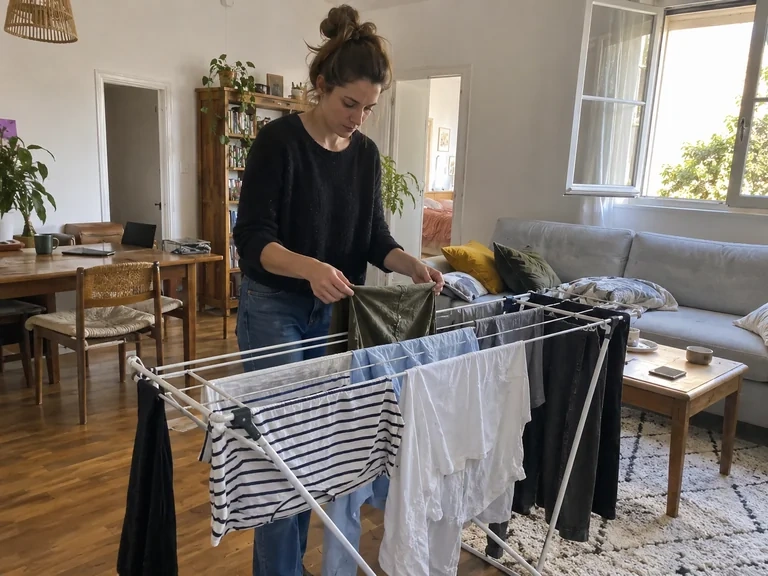
Woolmark explains how to wash and dry wool, with special attention to drying the sweaters concerned flat. This recommendation doesn’t automatically apply to every fabric or construction. Follow the care instructions for your item, and see our guide to drying clothes in an apartment to plan for space, airflow, and access to drying racks in your home.
Use a demonstration without forgetting the model
A video can help you picture how to prepare a basin, support a knit, or set up a drying rack. The demonstration below is for a wool sweater. Treat it as an example of the steps, then compare each one with your garment’s care label and the product instructions. Don’t copy its settings for a silk blouse or pleated garment without checking first.
Once it’s completely dry, check its appearance, drape, and thicker areas before putting it away. Keep a photo of the care label and any useful notes for next time. In Vestly, find outfits with the garment and plan its care early if it’s part of a suitcase or a planned look. The goal is to fit this care into a realistic routine, not to have to do it again in a rush.
A visual example from Andrea Jean Co to compare with the steps in this guide.
Video in English
Check off
I’m ready to hand wash
0 / 5
You’ve planned the whole process, from checking the label to putting the dry garment away.
Flip cards
Unsure during washing?
The care label says not to use waterFlip
Don’t use a basin to get around the instructions; ask how the garment should be cared for.
You’ve used far too much productFlip
Follow the rinsing method and allow enough time instead of adding another product.
The garment feels heavy once wetFlip
Support its shape; don’t let it hang from one small, delicate area.
A stain won’t come out with your usual washFlip
Check that a method is suitable before scrubbing harder or adding a stain remover.
Frequently asked questions
Is hand washing always gentler than machine washing?
No. Your technique, the temperature, and the time all matter. Follow the approved method and the instructions for the item instead of relying on a general preference.
Can you wash several garments together in a basin?
Only if their care instructions, colors, and the product you choose are compatible. If you’re unsure, keep the items separate.
Should you leave it to soak overnight?
Only if the instructions say to. The time depends on the garment and the product; a longer soak isn’t automatically more effective or gentler.