Contents
A shirt you wore for a few hours doesn’t always belong in the laundry basket. But you don’t want to mix it in with clean clothes right away, either. So it ends up on a chair, joined by jeans, a cardigan, and an outfit you can’t remember rewearing. This in-between spot deserves a clear place of its own, instead of a different decision every night.
To store clothes you’ve already worn, create a temporary spot separate from clean clothes and laundry, reserved for dry items you’ve decided to wear again. Choose storage that suits the garment’s shape, keep items within reach, and reassess them before wearing them again. This setup helps you manage your decision; it doesn’t replace any cleaning the garment needs.
To separate what’s ready to wear, what needs care, and what needs to dry for lingerie, this guide to washing a bra offers tips specific to cups and underwires.
Decide what to do when you change
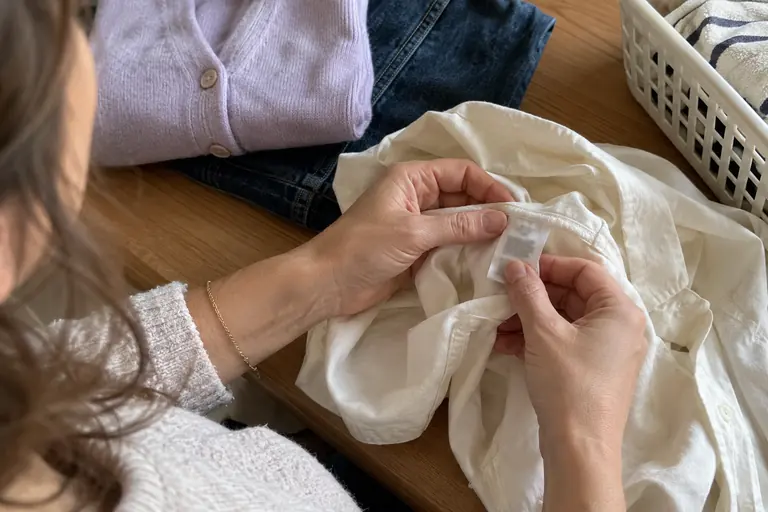
Before putting a garment down, check its condition and think about how you just wore it. A stained or damp item, or one that needs care, doesn’t belong in the wear-again spot. Underwear, activewear, and garments worn directly against your skin may need different handling depending on how you used them; don’t automatically follow the same routine you would for a jacket.
For a shirt, pants, or cardigan you’re considering wearing again, check the areas that matter for that item: collar, cuffs, underarms, knees, or hem. The absence of an odor doesn’t by itself guarantee that a garment is clean. This check only helps you decide how to use it next in your situation.
If the garment needs care, follow its instructions. The guide to understanding care labels helps you choose the right care method without guessing to save time.
Give the in-between spot a proper place
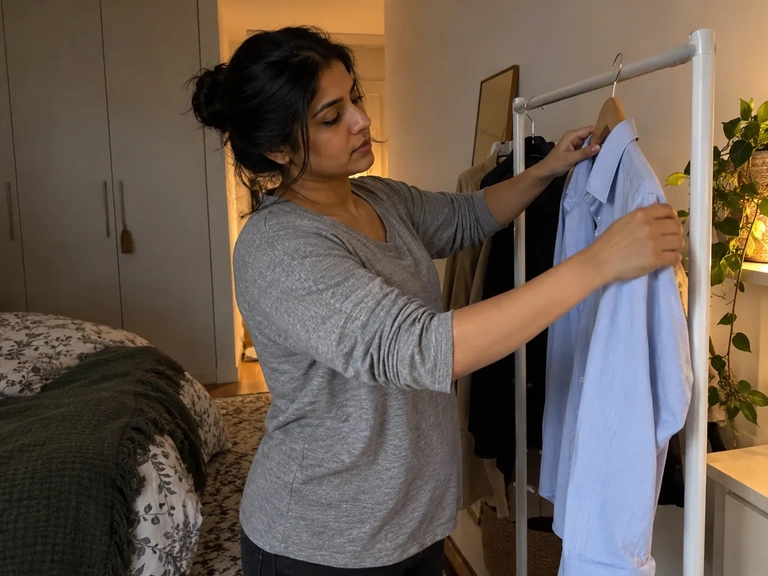
Choose a spot near where you get changed, but out of the way. A few hangers on a small rack, a dedicated hook, or an open shelf could work. The area should be visible enough to remind you what’s there before you automatically reach for another clean piece.
A chair can work now and then, but a deep pile makes clothes hard to tell apart. If you use something you already have, keep each piece easy to recognize and avoid wedging it under other items. The setup should still let the room serve its usual purpose: you need to be able to sit down, open doors, and move around.

Start by trying what you already own. You may find that two dedicated hangers are enough, or that an accessible shelf works better than a new piece of furniture. The principles for organizing your closet are still useful, but this small area serves a specific, temporary purpose.
Keep laundry to wash separate
The laundry hamper should have a clear purpose. If clothes you plan to wear again are placed on or in it “just for now,” you may confuse them with items to wash. Put the two spots a little apart or choose containers that look clearly different.
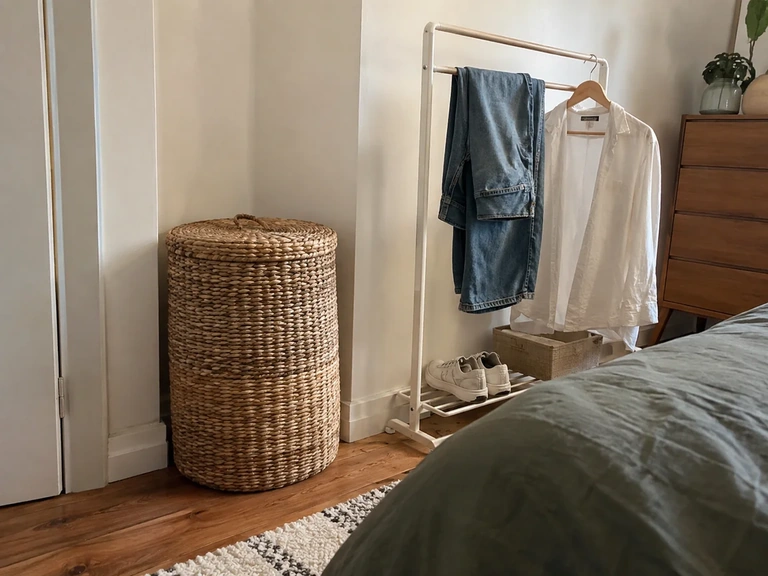
In a shared space, everyone should understand what the area is for. The person doing the laundry shouldn’t have to guess whether a pair of pants is ready to wash. Simply decide what goes in the hamper and what stays on the temporary rack; you can keep separate areas for each person if that makes things easier.
Don’t pack a wet or very damp garment in with the rest of the laundry waiting to be washed. Let it dry under suitable conditions before storing or caring for it, following the garment’s instructions. The in-between area isn’t an improvised drying rack inside a closed closet.
Choose storage based on the garment
A shirt or jacket may be easier to find on a suitable hanger. The shoulders should be supported properly without stretching the garment out of shape. A heavy knit may not be suited to hanging by the shoulders; laying it flat in a way that suits the garment is often a safer choice.
Depending on its fabric and construction, you can lay or hang pants in a way that avoids unwanted creases. Avoid very thin hooks that concentrate all the weight in one small spot. Check how the garment looks the next day to see if your setup works.
The goal isn’t to recreate a store. A simple, sturdy, easy-to-use setup may be enough. If you have to fold every piece carefully when you’re changing late at night, you may give up the routine. Choose a step you can realistically keep up.
 Read alsoWomen’s capsule wardrobe: a list of essentials and how to choose yours
Reassess the garment before wearing it again
Before wearing it again, pick up the garment and check its condition. You may have missed a small stain the night before, or the garment may have developed an uncomfortable crease on its hanger. Decide again whether it’s ready to wear or needs to be cleaned.

If you find a stain, avoid applying several products at random. Identify the fabric and the type of stain, then check the care tips for remove a stain from clothing. Airing it out or using a fabric spray won’t replace proper cleaning when it’s needed.
There’s no one-size-fits-all length of time that every garment can stay in this area. Fabric, activity, garment condition, and your needs all vary. A regular check-in is more useful than a set number of days presented as a guarantee.
Limit buildup to the space available
Set a small capacity you can see at a glance, such as a few hangers or one shelf. When the area fills up, go through the clothes one by one and decide what to do next. You can set a piece aside, send it for care, or put it away only when it’s in suitable condition.
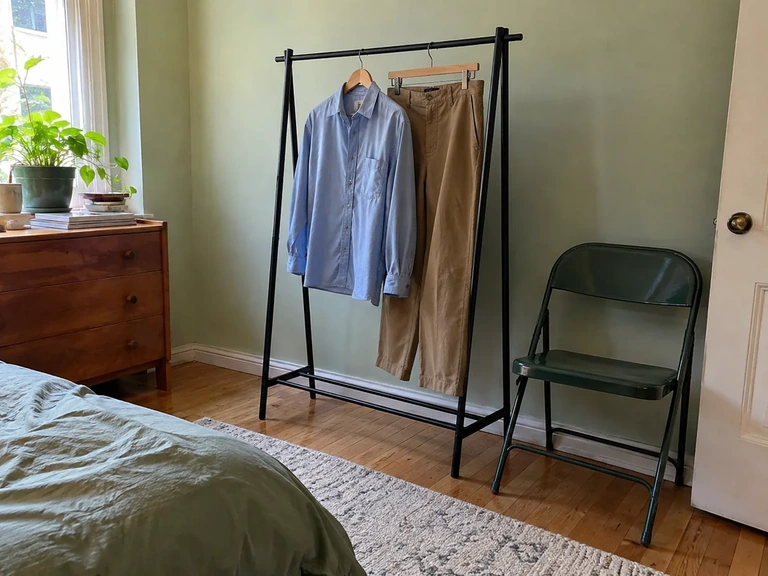
Avoid moving the pile somewhere else just to make the rack look clear. If it often fills up without being used, the area may be too hidden, or you may be keeping pieces you don’t really want to wear again. If so, adjust your decision when you change clothes.
You can also start choosing tomorrow’s outfit with this area. A piece you’ve already decided to wear again gives you a practical starting point. That doesn’t mean wearing something that needs washing just to avoid doing laundry: garment care comes first.
Check off
My area for clothes to wear again
0 / 6
Your temporary area has a clear purpose. Before wearing a piece again, check its condition and keep care items separate.
Plan your next outfit combinations
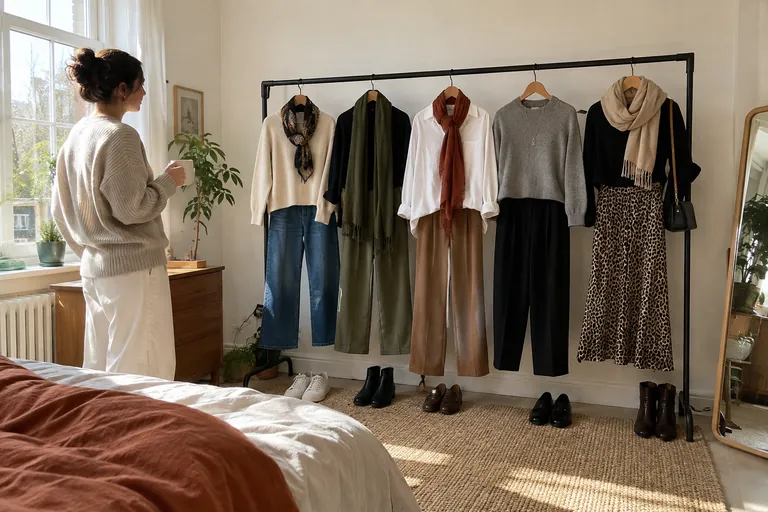
Once the area is set up, use it to make choosing easier. Pants ready to wear again can go with a different top; a jacket can complement another look. The guide to planning your outfits for the week can help you make that connection without turning your wardrobe into a rigid schedule.
In Vestly, keep your outfit combinations and use the wardrobe and planning features. The “In the wash” feature lets you temporarily remove a piece from suggestions. It doesn’t check the garment’s physical condition: use your own cues to know what’s truly available, dry, and ready to wear.
Watch a practical example
A visual example from Dana K White to compare with the steps in this guide.
Video in English
Frequently asked questions
Can you put a worn piece of clothing back in your wardrobe?
It depends on its condition and how you organize your wardrobe. A separate spot can help avoid mixing it up with clean laundry. Don’t put away an item that’s damp or needs cleaning as if it were ready to wear.
Do you need to hang everything on hangers?
No. The right storage depends on the garment. A shirt and a heavy knit don’t have the same needs. Check the care instructions and choose a way to store it that keeps its shape.
How do you get rid of the clothes chair?
Give each item a clear destination when you change, then set aside a small, easy-to-identify temporary spot. If it fills up, reassess what’s there instead of starting a second pile.
Sources and references
- Vestly, wardrobe, planning, and the In the wash feature, accessed September 30, 2026.
- Editorial organizing tips; care needs depend on the garment and how you use it.