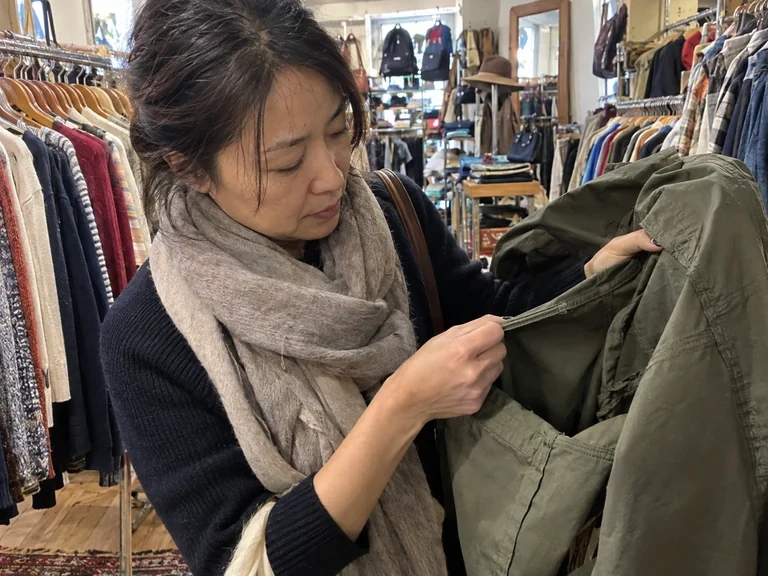
Contents
- Identify the jacket’s intended style
- First, observe your arms at rest
- Compare it with the sleeve worn underneath
- Try moving without expecting the fabric to stay perfectly still
- Check the construction before asking for alterations
- Have it pinned before cutting
- Rolling up the sleeves: a styling choice to try
- Keep a reference for your next try-ons
- Frequently asked questions
- Sources and references
A jacket can fit your shoulders well and still feel off because its sleeves cover your hands. On the other hand, an intentionally short sleeve can look too small if you try it on with a top that extends well past it. The right reference point depends on the style and the full outfit.
To choose the sleeve length for a jacket, start with your arms relaxed, then try the movements you usually make while wearing the top you plan to layer underneath. Next, decide whether you want a classic sleeve that hits near the wrist, an intentionally cropped length, or a roomy fit. Consider alterations after trying it on, once the overall cut already feels right.
Identify the jacket’s intended style
A fitted blazer, a cropped jacket with three-quarter sleeves, and an oversized shacket are designed to create different effects. Look at photos of the style and how its proportions are put together: shoulder fit, body length, sleeve width, and pocket placement. If the whole garment is intentionally roomy, shortening the sleeves a lot can throw off its visual balance.
So don’t automatically apply the same measurement to all your jackets. Instead, choose the look you want: polished for a meeting, relaxed for everyday wear, or with your arms more exposed with a dress. The guide how to wear a blazer can help you explore these combinations. Once you know what you’re going for, trying it on gets easier: you can compare the result with your outfit instead of an abstract rule.
First, observe your arms at rest
Put on the top you plan to wear under the jacket, gently adjust the seams, then let your arms hang naturally. Don’t raise your shoulders or pull the jacket down to make it look more flattering. Check where the hem falls in relation to your wrist and hand, from the front and side.
For a classic look, you can start with a sleeve that leaves your hand clear near the wrist, then adjust based on the style. This starting point isn’t a required measurement. A cropped jacket can show more of your forearm; a roomy cut can fall a little lower. But if you have to push up the sleeve to grab your keys or check your watch, note that specific annoyance before settling on the length.
Compare it with the sleeve worn underneath
Try on the jacket over the shirt, sweater, or T-shirt you actually plan to wear. A bulky sleeve can catch on the lining and make the jacket feel shorter. A shirt cuff that’s too wide can fall over your hand and throw off your judgment. Adjust those layers first instead of tailoring the jacket around a top that isn’t sitting right.
With a classic shirt combination, letting a little cuff show can be a polished choice. The maker Proper Cloth rightly points out that jacket length should be considered alongside shirt length. Its guidelines apply to its tailored clothing; they aren’t a requirement for every women’s jacket. Simply compare one version where the layer underneath shows and another where it stays subtle.
Try moving without expecting the fabric to stay perfectly still
Reach your arms forward, bend your elbows, and rest your hands on a table. A sleeve naturally rides up when your arm bends. That movement alone doesn’t mean it’s too short. Instead, check whether it falls back into place easily and whether the fabric restricts your elbow, shoulder, or upper back.
Also try on your coat if you’ll wear it over the jacket. A tight layer can pull up the sleeves and create extra wrinkles. Our guide to layering lengths and proportions can help you check the full outfit. If the jacket feels restrictive mainly when you reach your arms forward, simply shortening it may not solve an issue with the width or armhole.
 Read alsoHow to put together a harmonious outfit with what you have
Check the construction before asking for alterations
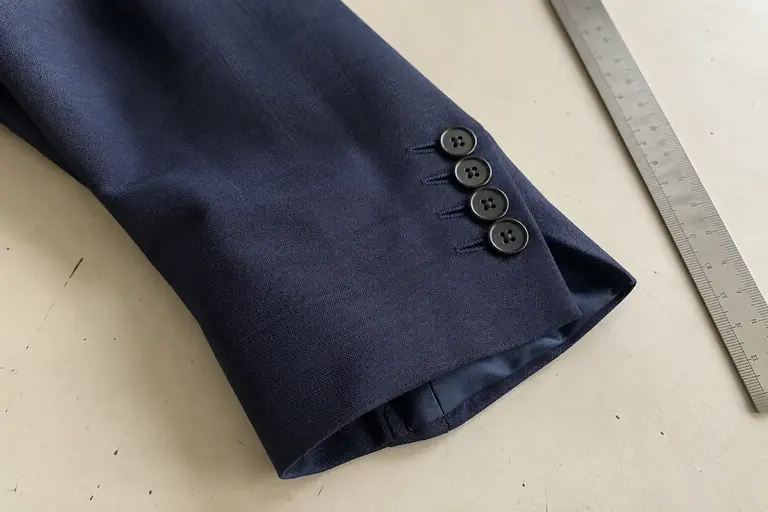
Look at the sleeve hem without taking anything apart. Is there a lining, a slit, decorative buttons, or real buttonholes? The answer matters for the method and cost. Shortening a simple hem is different from moving an opening that has already been cut.
Proper Cloth explains that functional buttonholes on its jackets limit how much the sleeves can be shortened. Check this construction detail on your own piece instead of relying on measurements from another style. Ask the tailor what will stay in place and what will need to move. A photo can help you start the conversation, but the garment needs to be examined for an accurate assessment.
Have it pinned before cutting
Bring the jacket clean and dry, along with the top you plan to wear under it. First show the length that bothers you, then let the tailor check the fit. Don’t assume both arms are identical without trying the jacket on: your posture and the way it drapes may call for different marks on each sleeve. Don’t simply copy a measurement taken from a hanger.
Review the proposed length from the front and side, with your arms relaxed. Then move as the tailor directs, without putting pressure on the pins. Ask whether the lining will be adjusted too and whether the spacing between the buttons and the edge will still look balanced. Get the price before the alteration. If the jacket is new, decide whether you’re keeping it before making a change that could complicate a return.
Rolling up the sleeves: a styling choice to try
A cuff can work on a soft jacket with a lining and seams that look good when turned up. Make an even fold without squeezing your forearm, then wear the jacket for a few minutes. Does the cuff stay in place when you move? Does it come undone as soon as you pick up a bag? Does it bunch up at the elbow? Those questions are enough to tell you whether this trick works for you.
Don’t assume you need to roll up every long sleeve. On a structured jacket, the slit and buttons can make the fold look messy. A hidden elastic can also squeeze or leave marks on the fabric. If you keep pushing up your sleeves just to free your hands, a better sleeve length will probably be easier for everyday wear.
Quiz
Before shortening a sleeve
The jacket rides up when you bend your elbow. What should you check?
See the answer
Whether the movement feels comfortable and the sleeve falls back into place. The fabric moves with you; the goal is comfortable wear.
Can an existing buttonhole make an alteration more complicated?
See the answer
Yes, its placement is part of the garment’s construction. The slit, buttons, and lining need to be examined before choosing a method.
Keep a reference for your next try-ons
Photograph the jacket once you’ve chosen the length, with a relaxed posture and your full outfit on. Note what you like: an exposed wrist, a little shirt showing, a soft cuff, or a shorter sleeve. This description will be more useful than a number of centimeters on its own, since future cuts won’t be identical.
Also check the overall condition before investing in an alteration. A well-fitted sleeve won’t fix an uncomfortable shoulder or a lining that’s already damaged throughout the jacket. Our guide to recognizing garment quality rounds out this check. The best result combines a fit you like, easy movement, and a finish you can care for without hassle.
A useful comparison is to try on two jackets you own: the one you wear with ease and the one whose sleeves you’re always pushing up. Look at the difference at the wrist, but also at the width of the elbow and the lining’s flexibility. You may find that the discomfort comes from the inner volume rather than just the sleeve edge. This reference will help you explain the issue clearly at your next shopping trip or alteration appointment.
Check off
I’ve finished trying on the jacket
0 / 5
You checked the length in context, with your real movements and layers.
Watch a practical example
A visual example from Justine Leconte officiel to compare with the steps in this guide.
Video in English
Frequently asked questions
Should you always see the shirt under a blazer?
It’s a classic choice, but not a must for every outfit. Compare how it looks with your shirt, sweater, or T-shirt, and go with a transition you like.
Can a sleeve that’s too short be lengthened?
Only if the construction and extra fabric allow it. The tailor should also check the lining and any marks left by the old fold.
Is a three-quarter sleeve a sign of the wrong size?
Not if that length is part of the design. Look at the overall proportions and the jacket’s intended style before comparing it with a classic long sleeve.
Sources and references
- Proper Cloth, suit jacket fit, accessed October 1, 2026.
- Proper Cloth, alteration options and limitations, recommendations specific to its styles, accessed October 1, 2026.