
Contents
- Build a base that works on its own
- Check the lengths before trying on the full look
- Wear a long shirt under a shorter layer
- Check your arms and shoulders
- Try an open long layer
- Add a third piece only if it serves a purpose
- Bring back a combination that’s worked before
- Frequently asked questions
- Sources and references
A shirt under a sweater, a cardigan over a dress, a jacket on top—layering often starts simply. Then a hem sticks out in a way you don’t like, the sleeves bunch up, or the collar won’t sit right. The issue isn’t necessarily the number of pieces. It may be how their lengths and volume come together.
To layer clothes, start with a comfortable base, add one layer at a time, and check how the pieces meet at the collar, cuffs, and hems. The lengths can be close together or clearly different. A good guide is a combination you like and can move in without constantly readjusting your clothes.
Build a base that works on its own
Choose the piece closest to your body and the bottom half of your look. Wear them for a few moments before adding anything else. If the shirt already pulls, the top rides up, or the waistband feels uncomfortable, a jacket won’t fix it. You’ll save time by getting the base right first.
Also ask yourself whether this base works for you when you remove a layer. On an ordinary day, you might take off a jacket, open a cardigan, or roll up a sleeve. A practical layered outfit accounts for these in-between states instead of working only when fully closed.
The guide to putting together an outfit that reflects your personal style gives you a general framework. Here, focus on where the clothes meet rather than on the weather or a shopping list.
Check the lengths before trying on the full look
Look at your clothes on hangers or laid flat. A long shirt, a cropped sweater, and a mid-length jacket will create several visible lines. Two pieces with almost the same length may blend together or leave a strip showing that you don’t like. This observation doesn’t tell you what to choose yet, but it sets you up to try things on.
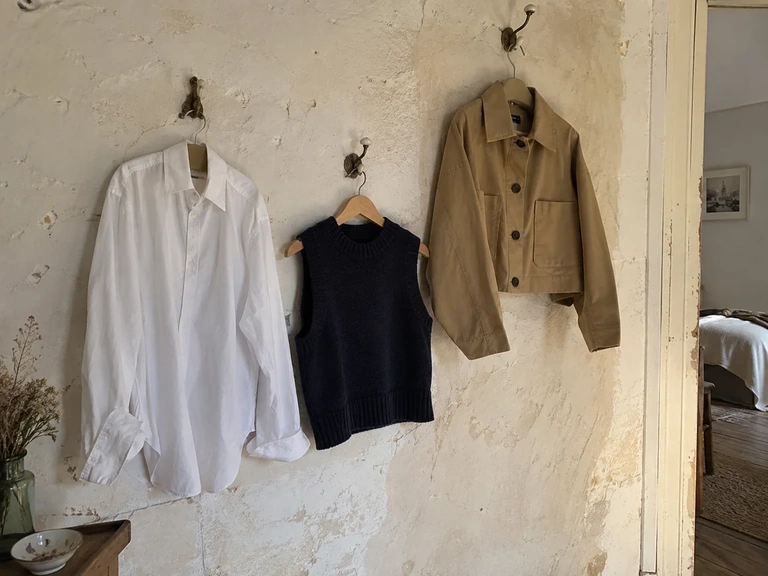
Then try on two pieces. If you don’t like a small bit of fabric showing, try either reducing it or making it more pronounced. A shirt clearly extending below a sweater may look more intentional to you than an uneven edge showing by a few millimeters. The reverse may also suit you if you like a very simple line.
Avoid ratios presented as universal rules. Clothes, postures, and preferences vary. You can compare two versions using the same pieces without calculating an ideal proportion for your body.
Wear a long shirt under a shorter layer
A shirt longer than the sweater lets its hem—and sometimes its cuffs—show. Start by looking at the front and sides: some shirts have rounded hems or a longer back. This construction changes the visible line, especially when you move.
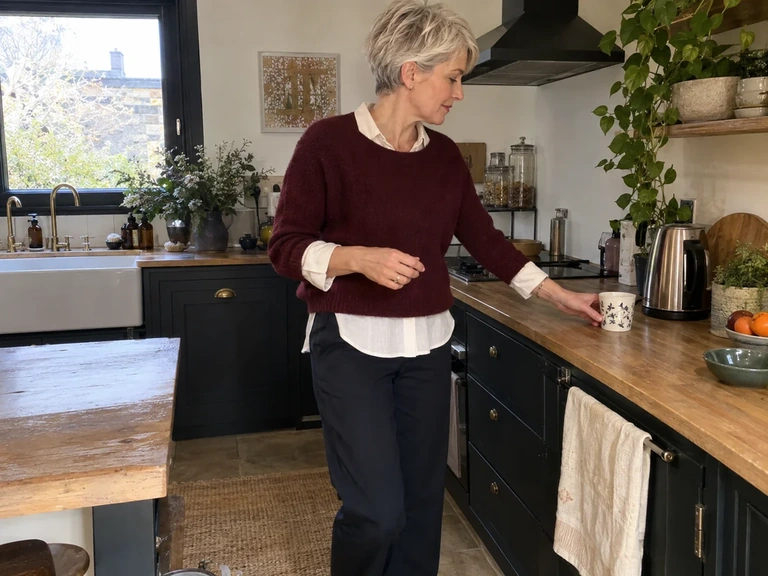
Check how bulky it feels under the sweater. Sturdy cotton and roomy sleeves can create folds that feel restrictive, even if you like the hem. Try a softer shirt or a looser knit if you feel squeezed. Don’t keep tugging at the hem to get a result the pieces won’t hold on their own.
Choose a collar position that feels comfortable and stays in place. You can leave the collar visible or keep the neckline more open, depending on how the clothes are made. If a button or seam already irritates you while trying the outfit on, change the combination instead of counting on getting used to it.
Check your arms and shoulders
You can judge the volume best in motion. Reach your arms forward as if you were grabbing something on a table, then raise them slightly. Do the sleeves slide over each other? Does the outer layer pull across your back? Does the garment underneath ride up enough to bother you?

If the sleeves catch, try a lighter layer or a roomier armhole. Sizing up at random isn’t always the answer: the sleeve shape and fabric matter too. Compare what you already own before looking for a new piece.
Think about the cuffs. Three thick edges in the same spot can feel uncomfortable under a jacket. You can remove a layer, choose a simpler sleeve, or roll up a garment if its construction allows it and it stays in place. The goal is to avoid spending the day tugging at every sleeve.
 Read alsoFind your personal style in 5 steps
Try an open long layer
An open long cardigan shows off the main outfit while adding an outer layer of length. It can go with a shorter dress, pants, or a skirt. Watch how the hem moves: the cardigan should follow your steps without getting caught in your bag or underneath you when you sit down.
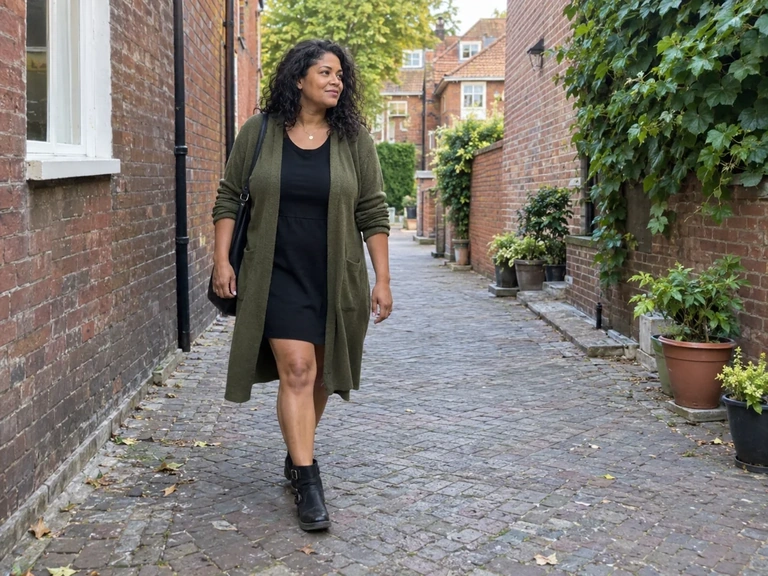
Try it open and then closed, if the garment allows. Each way gives a different feel and may call for a different top underneath. You can stick with the version you like; you don’t have to button every button to justify wearing it.
If you add a jacket later, check where the cardigan hem falls. Letting it show can be intentional, but it should still feel practical. Check the back, too: fabric caught in the jacket can feel uncomfortable in a way the front mirror view won’t show.
Add a third piece only if it serves a purpose
A third layer can add texture, color, or another function. Before adding it, ask yourself what it changes. If you already like the outfit and don’t need another layer, you can stop at two.
When you add a jacket, check the closure, pockets, and bag. A crossbody strap over several layers can shift the collar or sleeve. Try it with your bag packed as usual, not just with the clothes on in front of the mirror.
For a structured jacket, the tips for wearing a blazer can complement your try-on. Still, check how much you can move in your own jacket: a visual idea doesn’t tell you how much room its sleeves have.
Check off
My layers are easy to wear
0 / 6
Your layers passed the length and movement checks. Keep this combination and the version you’ll wear without the jacket in mind.
Bring back a combination that’s worked before
After a day of wear, remember what worked well: a soft shirt under knitwear, a jacket with enough room in the arms, a cardigan that doesn’t get caught when you sit down. If only one area feels uncomfortable, you can adjust it without giving up the whole formula.
In Vestly, build around the piece you want to layer and keep the looks you like. Photos help you find your clothes again, and virtual try-on lets you explore how they look together. For thickness and freedom of movement, an in-person try-on is still essential. You can then add a combination you’ve approved to your outfit planner.
To apply these comparisons to a roomy garment, our guide to wearing a poncho with clothes you already own separates construction, lengths and movement.
Watch a practical example
A visual example from beepworld to compare with the steps in this guide.
Video in English
Frequently asked questions
Can a shirt peek out from under a sweater?
Yes. See if you like how much of it shows and if the shirt feels comfortable under the knit. A more pronounced hem or a different shirt-tail shape can change the look without changing the whole outfit.
Can you wear a long layer under a short jacket?
Yes, if you like the two lines and the clothes move freely. Check the sides, the back, and how everything feels when you sit. The extra length is a style choice, not automatically a mistake.
How can you avoid too much bulk?
Add one layer at a time, paying special attention to your arms, shoulders, and wrists. Swap a thick fabric for a softer one or remove a piece that isn’t doing anything for you. There’s no required number of layers.
Sources and references
- Vestly, outfit building, and planning, accessed September 30, 2026.
- Editorial suggestions focused on clothing, preferences, and movement.