Contents
- Figure out what’s really happening
- Try three movements
- Compare the waistband shape, not just its width
- When a belt is a good solution
- What an alteration can really change
- Tell fabric stretch from an ill-fitting waist
- Prepare for your next purchase with useful reference points
- Decide whether an alteration is worth it
- Frequently asked questions
- Sources and references
The pants fasten easily and fit well over the hips, but leave a gap in the back. A belt holds them up, but creates bulky folds, while the next size down feels tight as soon as you sit. This calls for a closer try-on than simply changing sizes.
If your pants gap at the waist, first check where the waistband is meant to sit, then compare the room through the hips and how it feels when you sit. If only the waistband is too wide, a targeted alteration may help. If the whole upper section slips or pulls, look for a different cut instead.
Figure out what’s really happening
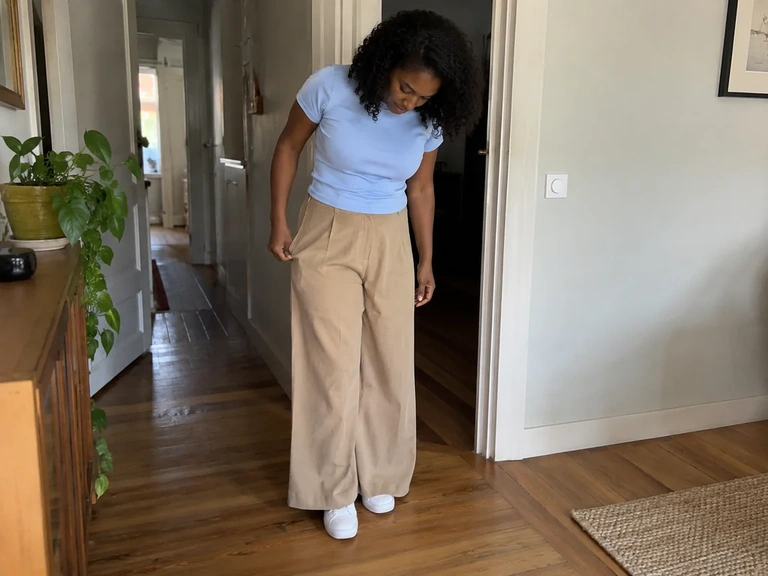
Try on the pants with a thin top and no belt. Fasten the button and zipper without holding your breath, then let the garment settle naturally. A style designed to sit low won’t fit like a high-rise pair: pulling it above its intended position can create a gap or cause pulling elsewhere.
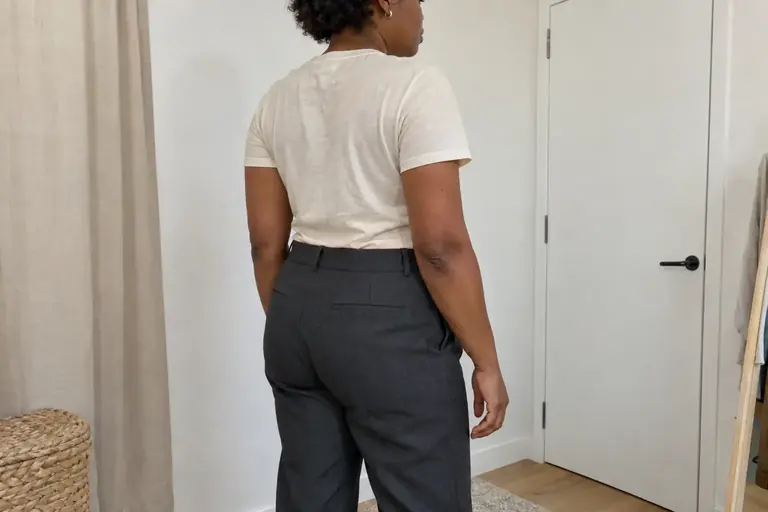
Look at the front, sides, and back. Is the problem limited to the back of the waistband? Is there also extra room at the stomach, pockets that gape, or an uncomfortable rise? These observations help you describe the issue to a salesperson or tailor without trying to sum up the whole fit with a size letter. The guide to choosing jeans covers the rest of this comparison.
Try three movements
Sit for a few moments, walk, then bend as if picking up a bag. See whether the waistband stays in place, slips down, or presses into your abdomen. A pair of pants can feel perfect standing up and become uncomfortable in a chair. On the other hand, a slight gap while standing still may not be a problem throughout the day: what matters is how you’ll wear them and how well they stay up.
Then try them on with the top you plan to wear, tucked in the way you like. The extra layer can change the fit, but it shouldn’t be used to artificially fill out pants that are much too loose. Finally, try a regular belt without over-tightening it. If it bunches a lot of fabric into an accordion shape or makes the button tilt, it probably isn’t solving the problem well.
Flip cards
Read the fitting clues
A gap at the back, comfortable at the hipsFlip
A more curved waistband or a targeted alteration may be worth considering.
Loose all over and slipping downFlip
Compare another size, while checking how it feels when you sit and move.
A tight waist but a gap that stays open at the backFlip
The waistband shape may not suit your figure; tightening it more may not help.
Pants that loosen only after several hoursFlip
Observe the fabric and how it behaves between washes before deciding on a major alteration.
Compare the waistband shape, not just its width
Two pairs of pants with similar waist measurements can fit differently. The rise, waistband shape, room built in for the hips, and back construction all affect the result. Some brands offer several cuts in the same size; try them if you already like the fabric and length.
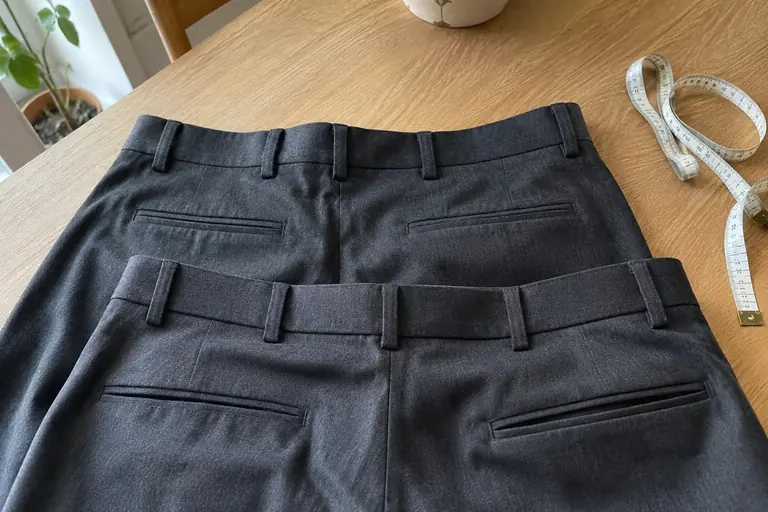
Lay the pants that cause the problem next to a pair that fits you well. Place them without stretching the fabric and compare the waistband curve, the front and back rise, and the pocket placement. One measurement alone isn’t enough to order an equivalent pair online. Look for the style’s measurements, fabric content, and fit details, then check the return policy before committing to alterations.
 Read alsoChoosing a belt width for your garment and how you’ll wear it
When a belt is a good solution
A belt works when the pants are comfortable and just need a little extra support. Choose a width that fits the belt loops, and check that the buckle doesn’t dig in when you sit. Look all the way around: the fabric should sit smoothly, without a large bunch at the back or folds that pull up to the pockets.
If you have to tighten it to the last hole and readjust it every time you move, take that as a fitting clue. Buying a heavier buckle or a stiffer style won’t change how the pants are constructed. An adjustable tab built into the garment may help; an add-on system must be compatible with the seams and fabric. Avoid setups that concentrate all the pulling on a single, fragile belt loop.
What an alteration can really change
A tailor may be able to take in the waistband and adjust the upper back. What’s possible depends on the seams, lining, pockets, belt loops, and how much needs to be taken in. There’s no guaranteed number of inches that applies to every pair of pants. A significant adjustment can make the pockets look off-center or change how the garment sits on your hips.
Bring the pants clean and dry, along with the shoes you usually wear and the top you plan to pair them with. Ask for a fitting with pins, then sit down gently as the tailor advises. Have them explain the alteration, its price, and what results are possible. The goal isn’t a waistband that feels tight against your body in every position, but a garment that stays in place and feels comfortable. For the hem, also use the tips in our guide to pant length with shoes.
Tell fabric stretch from an ill-fitting waist
Pants with stretch fabric can change their fit as you wear them. Compare how they fit after care according to the label and after a typical day, without deliberately pulling on them. If the waistband itself fits but the fabric sags everywhere, adjusting the back may not solve the overall problem.
Don’t try washing them in very hot water to shrink only the waist. The effect could change the length, seams, and other areas without solving what you need. Follow the manufacturer’s instructions. Our article on caring for clothes with elastane helps you distinguish garment care from trying to change the fit. The fiber content tells you about the materials, but it doesn’t replace trying the garment on or following its care instructions.
Prepare for your next purchase with useful reference points
Write down the exact name of the comfortable fit, its size, and any measurements you know how to repeat. A photo of you wearing the pants can help you remember how they fall; just avoid comparing a catalog pose with your usual posture. Your shoes, a tucked-in top, and the camera angle all affect the overall impression.
Also keep body measurements separate from the garment’s flat measurements. Simply doubling a width measured with the garment laid on a table doesn’t always show how much room there is along a curved waistband. If a brand provides its own measuring method, follow it. In Vestlyyou can keep the garment and outfits that work as references, instead of starting from scratch every time you look for something.
Decide whether an alteration is worth it
Consider how often you’ll wear the pants once they’re altered. A garment you love for its fabric, color, and length deserves more attention than a purchase you’re keeping only because it was on sale. Check the pockets, closure, and areas that rub before asking for an estimate: a good waistband adjustment won’t renew fabric that’s worn elsewhere.
To compare two options, simply add the purchase price and alteration estimate without assuming the tailor can always fix the style. If you already own the pants, their original price isn’t the only thing to consider: focus on what you’ll be able to wear again after the alteration. You can also put off the decision, set the garment aside, and come back for a second fitting with the clothes you usually wear. That can help you avoid making an irreversible change in a rush.
Check off
My choice after trying them on
0 / 5
You can compare a support solution, an alteration, and a different cut using specific criteria.
Watch a practical example
A visual example from Fashion Wizardry to compare with the steps in this guide.
Video in English
Frequently asked questions
Should you always go down a size?
No. If your hips or thighs feel uncomfortable, a different cut may work better than a smaller size. Try sitting down before you decide.
Can you add elastic to the waistband?
It depends on the construction. A planned casing makes this option easier; a structured waistband with lining or topstitching requires a different alteration. Have someone check whether it’s possible rather than cutting the lining blindly.
Does a gap at the back mean poor quality?
Not necessarily. A well-made garment may still have a shape that doesn’t suit you. Seam quality and fit are two separate things.
Sources and references
- DGCCRF, clothing labels, for composition information, accessed October 1, 2026.
- ADEME, choosing and repairing clothes, for extending their use, accessed October 1, 2026.