Contents
- Which kind of label are you looking at?
- Why is there a brand label on the sleeve?
- Can an outer label be part of the design?
- Which case have you confirmed?
- What should you check before removing temporary stitches?
- Which inside labels should you keep?
- How can you ask for a useful confirmation?
- What should you check next in the outfit?
- Frequently asked questions
- Sources
Which kind of label are you looking at?
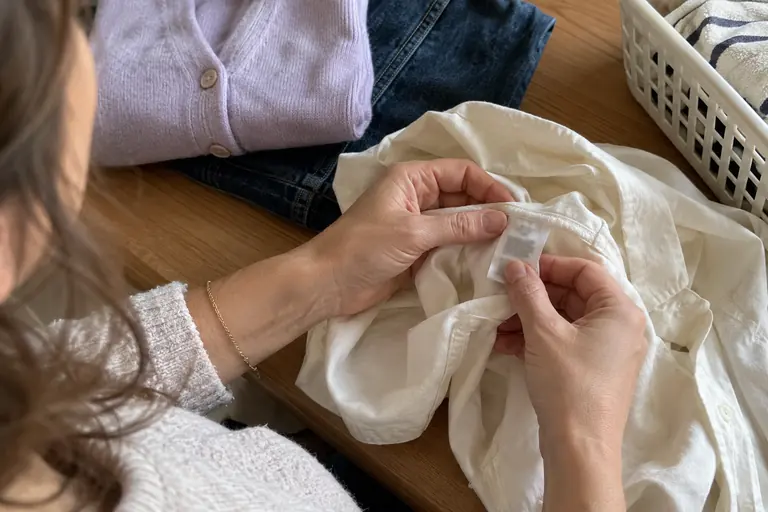
The word “label” covers several different objects. An outer brand patch is not a washing instruction; a tag hanging from a cord is not a construction seam. Locate the part first, then look at how it meets the garment without tugging on it.
| Observed element | Function to confirm | What to keep |
|---|---|---|
| Small outer sleeve brand patch | Temporary display or intended decoration | The answer for the exact model |
| Inside fabric-content or care label | Information about the garment | Complete, readable instructions |
| Card or hanging tag | Product reference or price | Relevant purchase terms |
| Glued part or unknown attachment | A different construction to identify | The area intact during the check |
Our fabric-content and care-label guide explains the information inside. That is a different question from removing a brand name near the cuff.
Why is there a brand label on the sleeve?
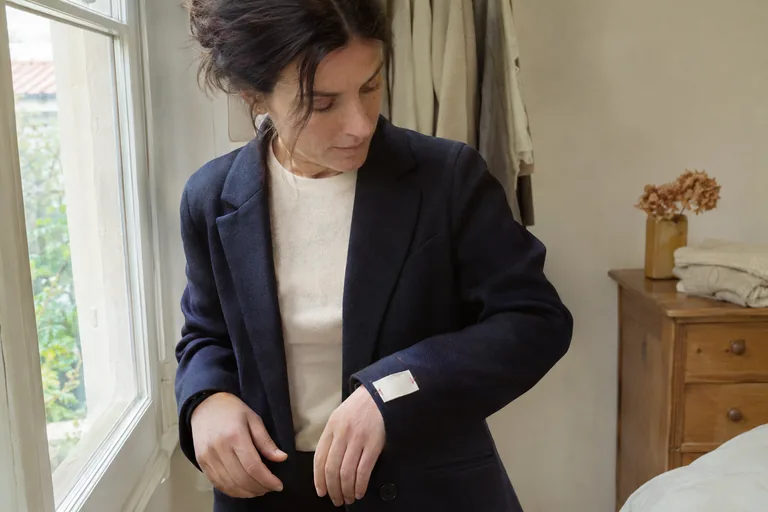
A conventional temporary display label helps identify the maker while the jacket is on a rack. Morts & More explains that use. It describes a retail convention, not a reason to judge the person wearing the coat.
Can an outer label be part of the design?
An outer position does not prove that a part is temporary. GQ Spain’s April 19, 2018 report shows an example of intentional Dior Homme branding. That dated example does not establish the construction of your current purchase.
Compare the exact model’s product information and ask for a clear answer. Contrasting thread, a few stitches or a familiar logo alone is not permission to cut. The well-made garment check also considers condition and intended use.
Which case have you confirmed?
Find your approach
Choose the next step
Select what you actually know about this garment.
Choose the closest match: the corresponding guidance will appear here.
The maker confirms a temporary attachment
Prepare removal
Identify thread holding only that label and check access before making a cut.
The maker confirms permanent decoration
Styling choice
Keep the intended construction or request a specific alteration; this is not basting removal.
I can see inside care instructions
Keep the information
Retain readable instructions linked to the right garment.
The part appears glued
Different method
Do not apply an unpicking method to adhesive.
I may return the purchase
Check the terms
Ask what the seller accepts before changing the garment.
Its purpose remains unknown
Ask a specific question
Provide the reference and front-and-back views without dismantling anything.
 Read alsoHow to wash a wool or cashmere sweater without felting it
What should you check before removing temporary stitches?
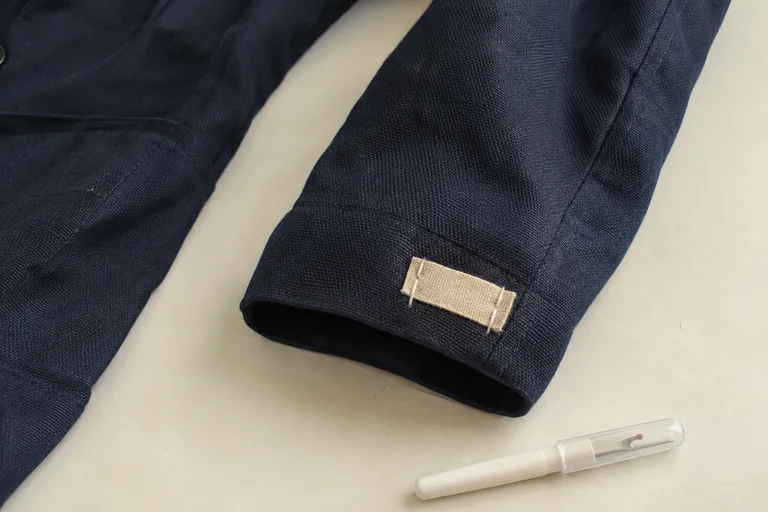
Confirm the purpose before choosing the motion. Lay the garment flat in good light and inspect access to the threads holding only the label. Westwood Hart mentions a small cutting tool for those attachments; that does not make neighboring construction seams removable.
Do not slide a blade blindly under fabric or pull on the label to break the stitches. If you can identify and safely access only its holding thread, work on that thread without cutting the cloth, then lift away loose remnants without force. Stop if the fabric follows the thread, the attachment enters a seam or access remains poor. A shop or alterations professional can inspect the area.
Video in English
Which inside labels should you keep?
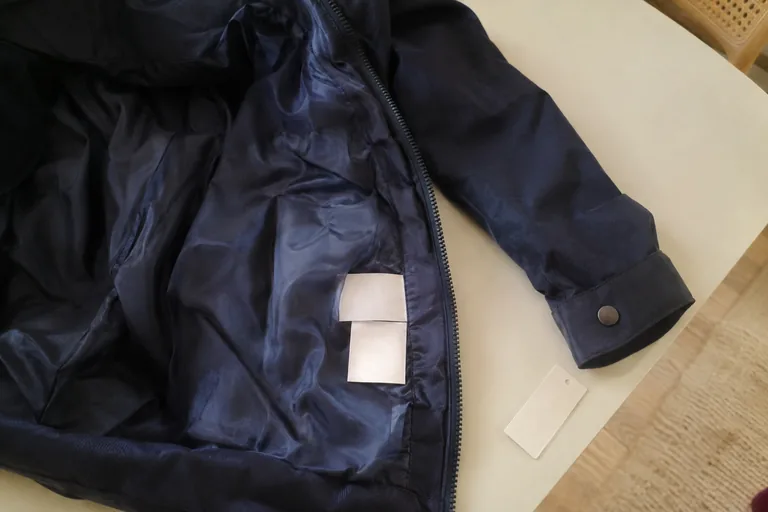
Keep the information relevant to this garment, including fabric content and care. GINETEX explains that care instructions concern the treatment permitted for the article, including its finishing. An outer brand name cannot supply those instructions. A complete photograph can supplement the garment’s record, provided it stays linked to the right model.
How can you ask for a useful confirmation?
Give the exact reference and ask about the garment, not just the brand: “Is this outer label meant to stay? If it is temporary, which threads hold it without joining the garment itself?” Include an overall view and a close view of the accessible attachment. The message assumes neither a defect nor a right to return a changed garment.
Quiz
Check the reasoning
Do a few contrasting stitches prove the whole label comes off?
See the answer
They are a clue, but its purpose still needs confirmation. The attachment’s appearance does not establish the intended design.
Does the outer brand replace inside instructions?
See the answer
The purposes are different. Keep the information specific to the garment.
What if fabric begins following the thread?
See the answer
Stop and have the area inspected. Continuing without clear access can damage the garment.
What should you check next in the outfit?
Once the label question is settled, return to use: can you move comfortably, and does the jacket work with the clothes you plan to wear? Our wearing a blazer offers combinations. You can organize the garment and outfits in Vestly; the app is not identifying stitches or label types for you here.
Check off
Before changing the sleeve
0 / 5
This list prepares a decision; it does not certify the stitching or an alteration result.
Frequently asked questions
Does every sleeve brand label need removing?
Remove an attachment confirmed as temporary. A part intended to remain is a different decision; its position alone cannot settle the question.
Can I rely on the stitches alone?
A few visible stitches can be a clue. Confirm the purpose and thread path on the actual model before cutting.
Does removal guarantee unmarked fabric?
A photograph cannot guarantee that. Condition, fabric and attachment matter; have the area checked if you are concerned about holes or marks.
Is the method the same for a glued label?
Adhesive is not holding thread. Do not transfer unpicking steps or a heat or solvent recipe without checking the attachment and the garment’s instructions.
Should I keep the inside labels?
Keep fabric-content, care and reference information. It remains useful for the next cleaning, a professional or a later resale.
Can I return the jacket after removing the label?
Check the seller’s terms before making a change. This guide does not guarantee a return after removing a label or altering the garment.
Sources
- Morts & More, sleeve labels, February 29, 2020.
- Westwood Hart, temporary stitches and labels.
- GQ Spain, an intentional branding example, April 19, 2018.
- GINETEX, care-labelling principles.
Pages opened and checked November 4, 2026. No garment was physically tested for this guide.