Contents
Identify what actually moves upward
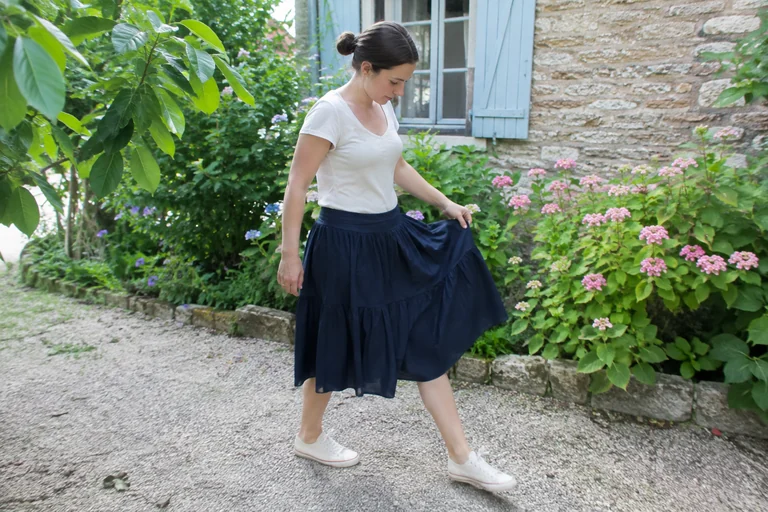
Return the skirt to its usual position without pulling it toward an ideal length. Look at the waistband, side seams, and hem after a few ordinary steps. If the waistband changes position, record that separately from fabric bunching farther down. A skirt that twists is another observation again.
These clues do not establish a single cause. They prepare a useful comparison: “the waistband stays put, but the front catches with these tights” describes the situation better than “this skirt is bad.” A midi length does not guarantee stability either; the midi skirts and shoes also considers where the hem meets the footwear.
Try a short comparison without restricting yourself
Start with the intended shoes and layer underneath. Walk at your normal pace, sit on a chair, and stand again. Notice whether you shorten your stride, hold the skirt, or keep adjusting the hem. Stop if the outfit feels uncomfortable; extending the trial proves nothing.
Then change just one available element, such as the tights or tucked-in top. Repeat the same movements. The result applies to that combination under those conditions, not to every material. Do not seek a number of steps that “certifies” the outfit; the aim is to choose something practical for your day.
Separate fit from layers interacting
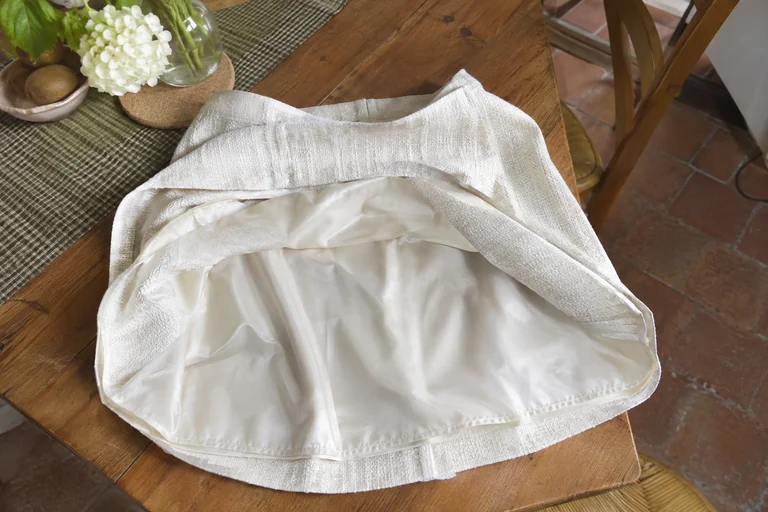
If the waistband moves with the whole skirt, check its intended position and comfort at both waist and hips. One size number does not describe both areas. Tilly and the Buttons’ Ness and Ramona pattern guides treat their measurements separately and also recommend checking comfort while seated. That advice concerns their patterns; it does not prescribe sizing up for every store-bought skirt.
If the waistband stays stable, look instead at where fabric gathers and how it falls after movement. Another layer underneath may change the result without guaranteeing a fix. We have no evidence here for declaring every smooth lining, matte pair of tights, or fiber composition responsible for the problem.
Do not ask an accessory belt to repair the cut
An accessory belt can change the visual effect, but it cannot create room at the hips or an opening at the hem. If you tighten it to hold the skirt and can no longer sit comfortably, the combination does not meet your needs. Check the belt width guide before forcing a loop.
You may also prefer to remove that accessory. Matching a belt and shoes comes afterward, once the pieces feel good to wear. A color match never establishes a good physical fit.
 Read alsoHow to put together a harmonious outfit with what you have
Prepare for an alteration with a precise observation
If discomfort continues, keep a description of the movement and affected area. A competent alterations professional can examine seams, room to move, lining, and the garment’s actual possibilities. Widening, lengthening, or changing a slit is not always possible; ask for an assessment before cutting.
Meanwhile, choose another combination if it works better for you. Avoid glue, pins worn against skin, hairspray, or improvised heat to hold fabric down. This guide offers reversible observation rather than a universal home repair or an obligation to keep wearing an uncomfortable skirt.
Return to styling after comfort
Video in English
The video offers a viewpoint on visual combinations rather than a mechanical explanation of a skirt riding up. Keep the styling ideas you enjoy without making them rules about your body. Vestly can help compare combinations in your wardrobe; a photograph or virtual try-on tests neither fabric friction nor your comfort while walking.
Find your approach
What happens during movement?
Choose an observation.
Choose the closest match: the corresponding guidance will appear here.
The whole skirt moves up
Observe waist and hips
Note its position without tightening.
Only the fabric catches
Compare one layer
Change one available element.
The skirt twists
Describe the movement
Note seam positions after walking.
The belt feels uncomfortable
Remove that accessory
Try again comfortably.
I am considering alterations
Ask for an assessment
Do not cut before suitable advice.
The outfit works for me
Keep that choice
No body rule must be satisfied.
Quiz
Three useful distinctions
Does a tight belt create room?
See the answer
No, it does not change the cut. Comfort must remain while seated.
Should you change several things together?
See the answer
No, one change helps observation. The result remains specific to that combination.
Does a photo prove stability?
See the answer
No, observe real movement. An image does not measure friction.
Check off
Before deciding
0 / 5
An observation aid, without an automatic diagnosis.
Frequently asked questions
Should I size up?
Not automatically. Compare waist, hips, and movement with the actual garment.
Can a long skirt ride up?
Yes. Length alone describes neither fit nor interacting layers.
Does a slip always fix it?
No. Compare its effect and comfort without a required purchase.
Should I avoid every smooth fabric?
No. Observe your combination instead of rejecting an entire category.
When should I ask about alterations?
If discomfort persists and you want to keep the piece, ask for an assessment before cutting.
Can Vestly check friction?
No. A visual comparison does not replace wearing the garment in motion.
Sources and scope
Checked November 15, 2026. Pattern-maker guidance, not evidence about your skirt. Original observation method; our team performed no physical garment trial.