Contents
- What exactly is coming apart?
- Does the snap hold when the garment is flat?
- Why does it open only when the garment is worn?
- Is it a sewn-on or riveted snap?
- Can every snap be tightened with pliers?
- What should you prepare before a repair?
- When can the garment return to your wardrobe?
- Frequently asked questions
- Sources
What exactly is coming apart?
The fastening is the connection between the two halves. The mounting holds each half on the garment. A snap can stay closed while its mounting comes away: making the halves grip harder will not repair that mounting. Look at both sides in good light without pushing a tool inside the mechanism.
| Observation | Record | Next step |
|---|---|---|
| Halves separate while flat | Mounting stays stable | Identify the model and compatibility |
| A half moves on the fabric | Thread, hole or backing involved | Have the mounting checked |
| Problem appears when worn | Position and fabric tension | Observe ease and movement |
| Mechanism remains unknown | No reliable conclusion | Photograph both sides |
Does the snap hold when the garment is flat?
Lay the garment down without stretching its edges. Bring the halves into their normal position and use the usual closing motion only. Record whether they engage and stay together without added pulling. A clicking sound alone does not guarantee holding strength or a sound mounting. Stop this check if the part resists unusually.
Find your approach
What can you observe?
Choose what actually happens without creating a failure.
Choose the closest match: the corresponding guidance will appear here.
Halves separate while flat
Uncertain engagement
Identify the reference and both parts before choosing a repair.
The mounting moves
Check the support
Loose thread and a moving rivet call for different work.
It happens only when worn
Observe tension
Compare the resting position with the relevant movement without pulling harder.
A part is missing
Incomplete set
Keep the remaining part and look for a compatible reference.
The fabric is damaged
Weakened support
Have the fabric checked before setting a new snap.
I cannot identify the mounting
Identify it first
Photograph both sides and ask for advice with the garment.
Why does it open only when the garment is worn?
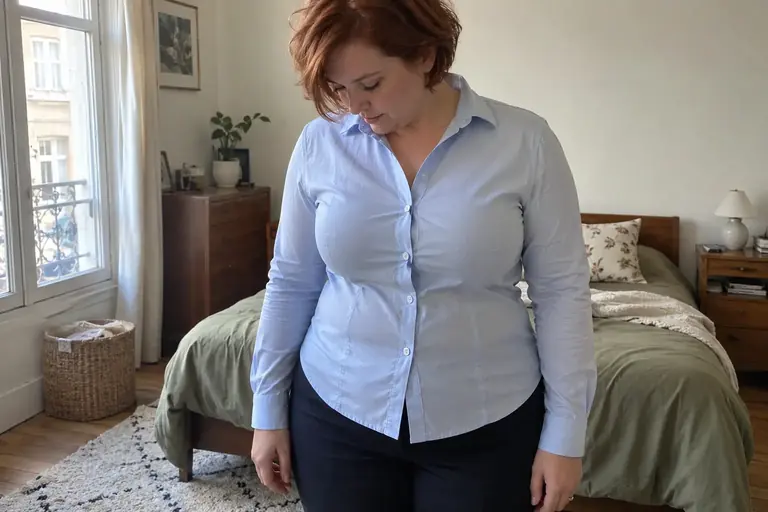
Opening during wear adds information about position and movement, not a judgment about your body. Check whether the edges meet naturally before fastening. Then compare resting with the movement that causes trouble. A closure on a stretched area calls for a fit check; a deformed part calls for a hardware check. Both issues can exist together.
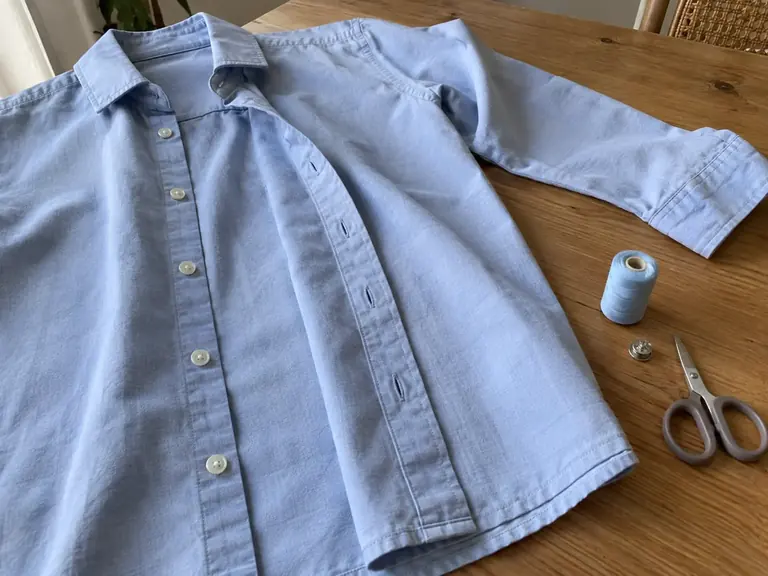
To compare garments without forcing them, use our flat garment measurement guide. On a shirt with ordinary buttons, a gap between buttons is a different issue from the halves of a snap separating.
 Read alsoHow to wash a wool or cashmere sweater without felting it
Is it a sewn-on or riveted snap?
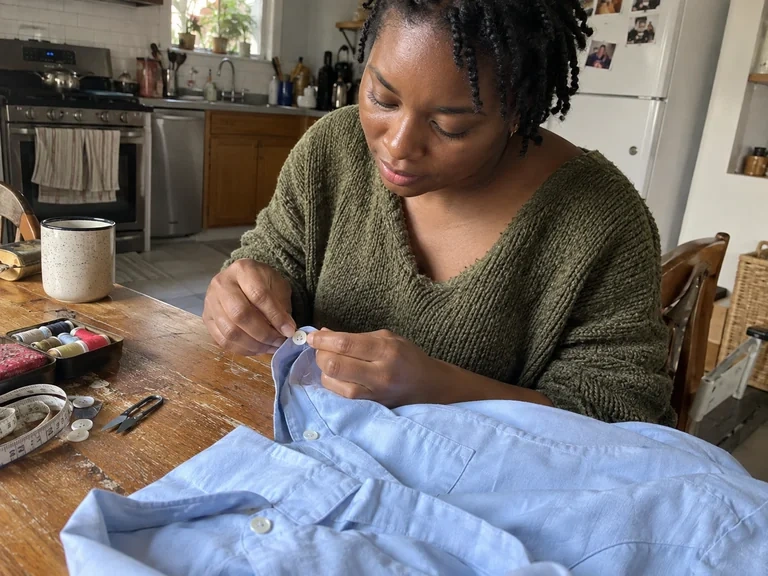
A sew-on snap has thread openings around its center. BOHIN describes sewing notches on its brass models. A non-sew mounting uses different components and suitable setting tools. The visible diameter alone cannot identify a compatible set. Keep a picture of the reverse, which can reveal more than the decorative cap.
Flip cards
Identify before working
Ordinary buttonFlip
It passes through a buttonhole; it is not a snap.
Sew-on snapFlip
Thread passes through the intended notches or holes around the part.
Non-sew snapFlip
Identify its components and suitable setting tool first.
Unknown mountingFlip
The answer remains unidentified even if both parts have the same color.
The guide to sewing on a button covers ordinary buttons. Do not transfer that method to a rivet. The following video shows one particular operation; it cannot remotely diagnose your garment’s condition.
Video in English
Can every snap be tightened with pliers?
Generic pliers are not a universal repair method. Prym distinguishes several snap families and their setting tools: instructions for one family do not apply to every other model. Do not crush a part to see whether it grips better. Photograph its reference, backing and both halves so a repairer can distinguish a mounting repair from mechanism replacement.
Quiz
Which check helps?
One half moves with its thread, but the halves stay connected. What needs checking?
See the answer
The mounting of that half on the fabric. Engagement can work while the support comes away.
Two halves have the same diameter. Must they be compatible?
See the answer
Their reference and family still need checking. Visual similarity does not prove a compatible assembly.
What should you prepare before a repair?
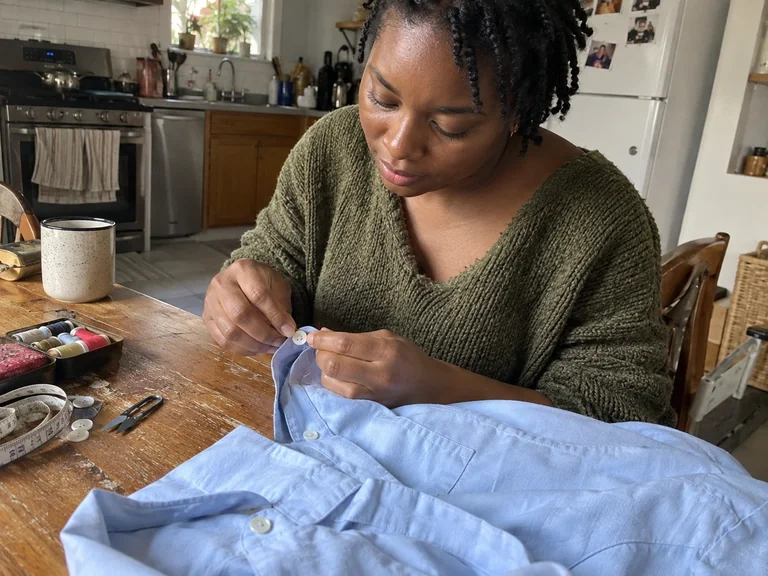
Bring the garment, not just one detached half. The area around the hole, the thread and access to the reverse can change the work needed. Explain whether the problem occurs flat, during wear or only with a particular movement. For a used purchase, our secondhand clothing inspection guide helps you request useful pictures before paying.
Check off
Your repair note
0 / 5
Your observation prepares the conversation; it does not certify a repair.
When can the garment return to your wardrobe?
After a repair, check the closure and its mounting for their intended use following the repairer’s guidance. A garment that still opens needs another check. In Vestly, keep a photo of the garment and plan outfits with the pieces available. The app organizes a wardrobe; it does not test snap strength. Explore more guidance in our clothing care section.
Frequently asked questions
Will a larger snap always hold better?
Size alone does not answer the problem. The backing, family and compatible components matter too. Identify what is failing before replacing a part.
Must both halves be replaced?
The reference and condition determine the replacement. Do not assume a half from another model will fit just because its diameter matches.
Can a moving snap be glued down?
Do not add an arbitrary adhesive. Examine the sewn or mechanical mounting with its fabric. Glue can hide the issue and complicate the repair.
Does a click prove the snap is sound?
A click indicates perceptible engagement, not guaranteed holding strength. Also check whether the halves stay together and their mounting remains stable.
Why avoid a hard pulling test?
Extra force can damage the fabric or mounting. Observe the usual movement without causing a break to confirm a theory.
What should you show a secondhand seller?
Request front, reverse and normally fastened views. Specify the area involved; a picture of the cap alone does not show the mounting.