Contents
- Before you start, check what the retailer measures
- Position the tape without changing your posture
- Bust, waist, and hips: find the right reference points
- Measure a garment flat when shopping secondhand
- Inseam and garment length make a difference
- Read a size chart without looking for a magic size
- Try it on and move around, then keep what works for you
- Frequently asked questions
- Sources for checking reference points
To take your measurements before choosing a garment, use a soft tape measure, stand comfortably, and record your bust, waist, and hip measurements without pulling the tape tight. Then compare those numbers with the size guide for the style you’re looking at. If the retailer lists the garment’s flat measurements, compare them with a similar piece that already fits you.
That’s often where the confusion starts: a body measurement, a width measured across a pair of pants, and the number on a label don’t describe the same thing. This guide helps you tell them apart and prepare for a purchase or try-on. It won’t turn a few centimeters into a universal size: fit, fabric, and comfort still need to be checked.
Before you start, check what the retailer measures
Open the product’s size guide before taking out your tape measure. Does the chart show body measurements or garment dimensions? Does it list full circumferences, flat widths, or lengths? A section simply labeled “size” is worth checking: the word may refer to waist measurement, height, or retail size.
For example, H&M links to a size guide from each product page. This helps you avoid reusing a chart you found elsewhere that applies to a different line. Keep the style name and date with your notes; a measurement on its own, without saying what it describes, quickly becomes useless.
Don’t start by looking for an automatic conversion between a 38, an M, and a size from another country. Start with the requested measurements in centimeters. If the chart doesn’t explain its method, ask the retailer where to place the tape. A clear answer is better than an approximate conversion from a general chart.
Flip cards
Four numbers you can’t compare directly
Body circumferenceFlip
The tape goes around the indicated area without adding ease. Compare this measurement with a body measurement chart.
Garment width laid flatFlip
The garment lies flat on a surface. Compare its width with that of a similar garment measured the same way.
Garment lengthFlip
It connects two specific points, such as the inseam and the hem. You need to know where both points are.
Size on the labelFlip
This is the manufacturer’s size designation. It can guide you, but it doesn’t replace the size chart or a try-on.
Position the tape without changing your posture
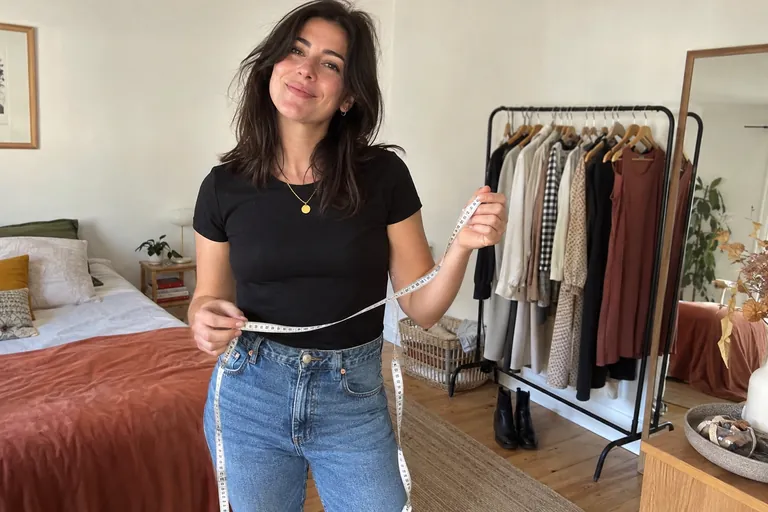
Have a flexible sewing tape measure, a mirror, and something to write with. The tape should be intact and long enough for the measurement you want to take. Avoid one that has stretched, has a damaged end, or has unreadable units. Make sure you’re reading centimeters: some tapes show inches on the other side.
Remove thick layers. Measure yourself in underwear or very lightweight clothing, as the manufacturer recommends. For a top, wear the bra you plan to wear underneath. Stand straight without stiffening, distribute your weight evenly across your feet, and breathe normally. There’s no need to suck in your stomach to get a different number: it won’t make the garment more comfortable.
The tape should rest against your body without squeezing or hanging loose. For a circumference, check that it stays level across your back. If you have to twist to read the measurement, ask for help. Write down the result, reposition the tape, and measure again. If the results differ, look for a change in placement instead of choosing the number you like best.
Bust, waist, and hips: find the right reference points
Bust circumference
Place the tape around the fullest part of your bust and check that it stays level across your back. Lower your arms before reading the measurement if possible. Don’t confuse this with your underbust measurement, used especially for lingerie: it sits lower and answers a different question.
For a shirt, take the requested measurement, then check the garment buttoned up. A good match on the size chart doesn’t guarantee that the buttons will stay comfortable in every position. If this area often gives you trouble, our guide to the gaping shirt helps you assess the fit instead of randomly trying more sizes.
Waist circumference
Find your natural waist, at the narrowest part of your torso, and place the tape according to the method in the guide you’re using. Your current pants’ waistband doesn’t necessarily sit there. Low-rise jeans can sit much lower, so measuring their waistband isn’t the same as measuring your natural waist.
Write down the reference point along with the number. If a brand explicitly asks you to measure at a different height, follow its diagram for that style and keep the two measurements separate. Don’t add a few inches to your body measurement “for comfort”: you won’t be able to compare it properly with the chart.
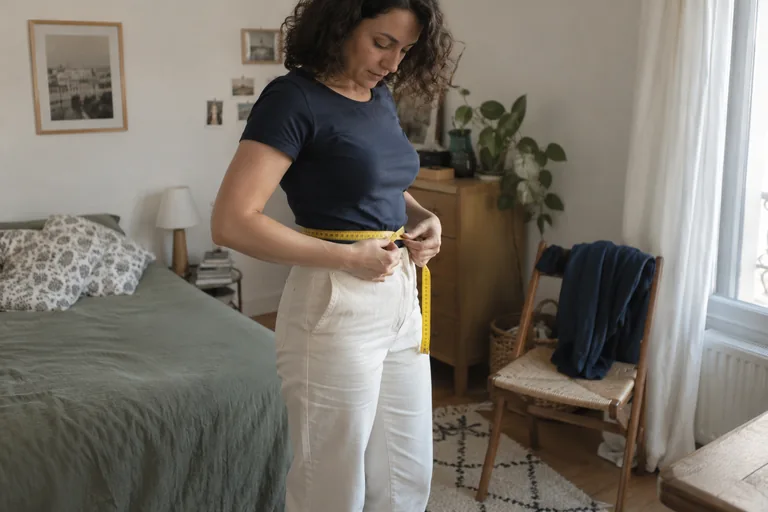
Hip or seat circumference
Measure around the fullest part of your hips and buttocks, checking that the tape passes evenly along your sides and across your back. This isn’t simply a measurement around your hip bones. The La Redoute guide clearly separates bust, waist, and hips: keep those three measurements in separate lines in your notes.
These numbers can help you choose a size; they don’t mean you have to fit into a body shape category. To explore proportions and cuts, you can then check out how to find your body shape. This other approach doesn’t replace the size chart for the garment you want to buy.
A visual example from Sew Addicts to compare with the steps in this guide.
Video in English
 Read alsoA-shaped body: how to dress to balance your silhouette
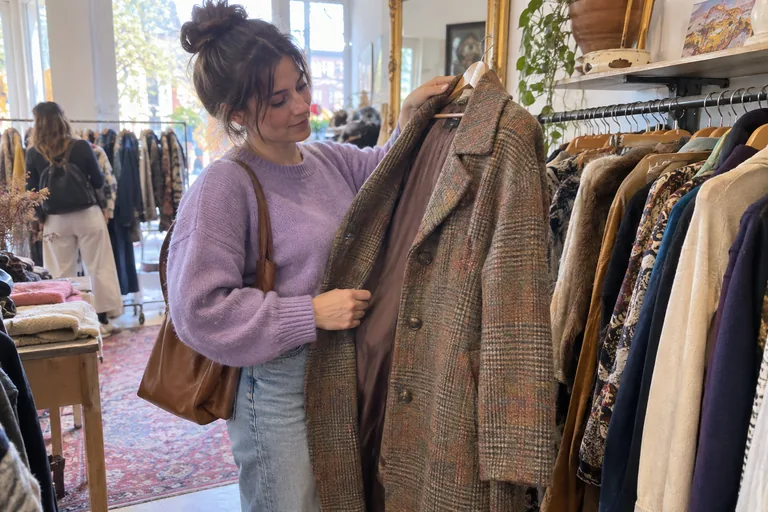
Measure a garment flat when shopping secondhand
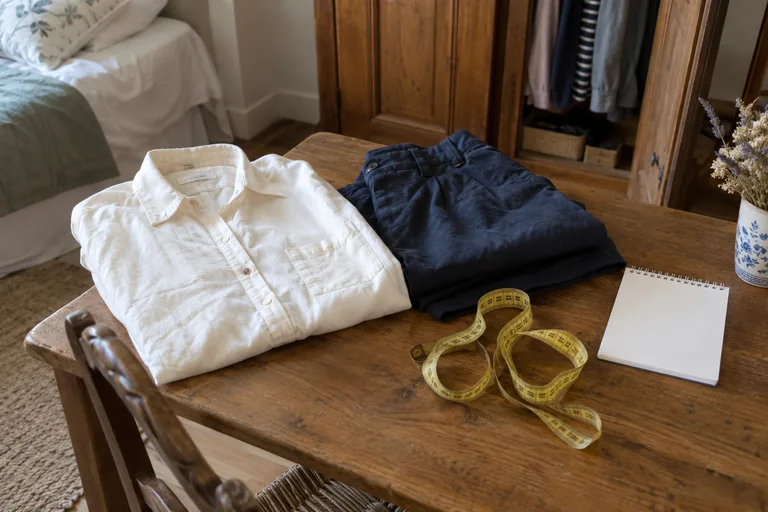
Choose a reference piece you find comfortable, in a similar cut and fabric to the item you’re considering. Comparing stretchy, fitted pants with loose, rigid pants won’t tell you much. Lay the reference piece flat, fasten it as usual, and smooth out wrinkles without pulling the fabric.
For a top, the seller may provide the width from armpit to armpit, the length from the shoulder, or the sleeve length. Ask where they start and end each measurement, then use the same points. For pants, check the waistband width, rise, and inseam if they affect your comfort. Listings don’t all use the same reference points.
A width of 40 cm isn’t a 40 cm waist measurement. Doubling a width can give you a rough idea of the circumference of a simple garment laid flat correctly, but it doesn’t turn that measurement into a body measurement. A curved waistband, pleats, or stretchy fabric make this estimate even less reliable. The most useful comparison is between two garments measured the same way.
When you message the seller, be specific: “Could you measure the waistband closed, laid flat, and without stretching it, then measure the inseam from the point where the seams meet to the hem?” A photo of the tape also helps clarify the reference point. Find more tips in our guide to buying secondhand clothes.
Inseam and garment length make a difference
To measure the inseam on a pair of reference pants, follow the inner seam from the crotch to the bottom of the leg. Don’t start at the top of the waistband. UNIQLO notes that its method may vary by cut and seam type: if the manufacturer provides a diagram, follow the one for the specific product.
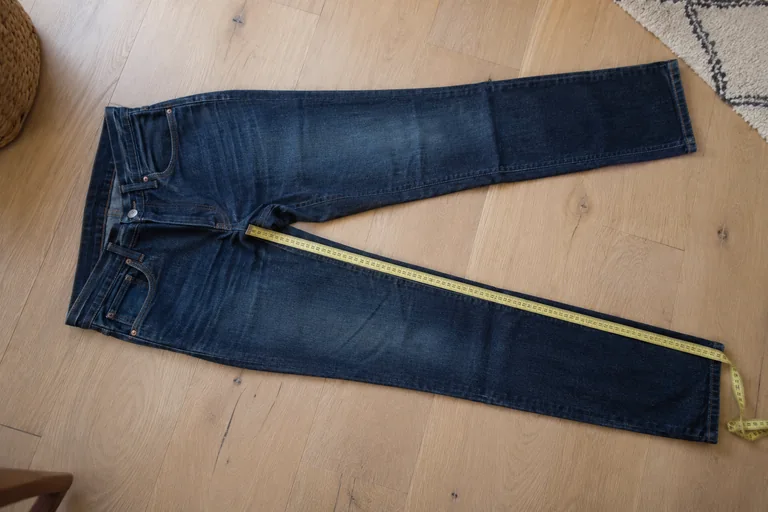
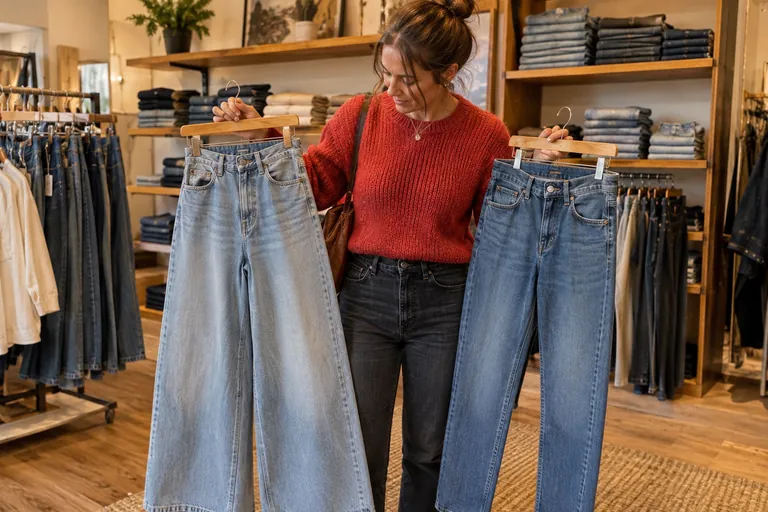
Length isn’t chosen independently of your shoes and the look you want. A deliberately cropped pair, a hem that grazes your shoes, and a longer leg suit different looks. Try on the reference pair with the shoes you plan to wear, then check our tips on wide-leg pants length if you’re unsure about the hem.
For sleeves, also check the starting point. A length measured from the middle of the back can’t be compared directly with a length measured from the shoulder seam. The sleeve length of a jacket should also be assessed when you move your arms, with the layers you’ll wear underneath.
Read a size chart without looking for a magic size
Imagine a made-up dress size chart: one column lists a bust of 90 to 94 cm and hips of 98 to 102 cm; the next lists a bust of 94 to 98 cm and hips of 102 to 106 cm. If your measurements are 92 and 104 cm, they fall into two different columns. You can’t resolve this by averaging the sizes.
Check where the dress is fitted, what it’s made of, and the manufacturer’s guidance. A loose fit through the hips raises a different question than a body-hugging dress. If the chart doesn’t help you decide, ask for the garment’s finished measurements or try it on. Always sizing down or up doesn’t work for every style.
Ease is the space between your body and the garment; the cut may also be designed for a loose fit. That’s why sewing distinguishes body measurements from finished garment measurements. Stretch fabrics add another variable. Their fiber content alone can’t predict exactly how comfortable they’ll feel: pay attention to how the garment behaves and to the guidance for that style.
Quiz
Compare the right measurements
A listing gives a flat bust width of 50 cm. What should you compare it with first?
See the answer
The same width on a similar top that fits me. A flat width should be compared with a width measured at the same points on a reference garment. It isn’t directly comparable to a body measurement.
Two waist measurements don’t match. What should you do?
See the answer
Reposition the tape and check your posture, the height, and the tension. Before using the number, look for what changed. One consistent new measurement is more useful than averaging two measurements taken in different places.
Your bust and hips fall into two different columns on the chart. What’s the right approach?
See the answer
Check the style and its guidance, then ask or try it on if needed. The fitted areas, fabric, and intended ease determine what to do next. No size number alone can guarantee comfort.
Try it on and move around, then keep what works for you
When your order arrives or you’re in the fitting room, fasten the garment as usual. Sit down, take a few steps, and move your arms as you would during the day. Check the issues you’ve had with other pieces: a waistband that digs in when you sit, a sleeve that restricts movement, buttons under strain, or a hem that’s hard to wear.
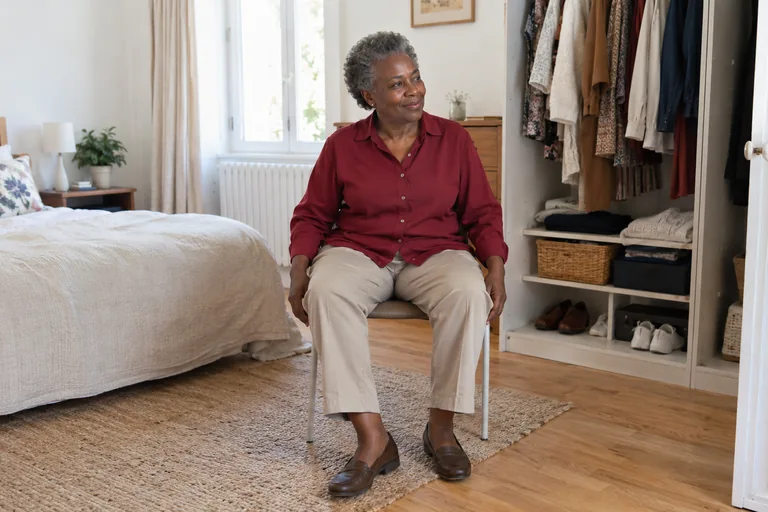
A fit can be your size and still not feel right to you. You don’t need to explain it away as a body-shape issue. Come back to what you want to wear and the ways you could style it. Our guide to choosing jeans for your body shape offers some cuts to try, without replacing this comfort check.
Keep a short personal record of useful measurements, reference points, and the date. You might also add the dimensions of two go-to pieces. Take your measurements again when those pieces no longer fit the same way, or before buying something that requires a precise fit. There’s no need to take measurements repeatedly without a specific plan.
Check off
Before confirming my choice
0 / 6
Your reference points are ready: now choose a piece you’ll want to wear with your wardrobe.
In Vestly, you can photograph your clothes to organize your digital wardrobe and plan outfits. Use pieces that already fit you as the starting point for a look. Style suggestions and virtual try-on can help you explore an idea; they’re not a tape measure or a guarantee of the size of an item sold elsewhere.
After taking your measurements, you may still have two possible columns or a mismatch between top and bottom. Our guide to deciding between sizes without relying on the label covers that situation: chart type, cut, movement and questions for the seller. It does not replace measurements with an average.
To shorten the garment after this fitting, measure around each leg opening separately. The guide to iron-on hem tape distinguishes tape length, fold depth and iron compatibility: three checks that body measurements cannot replace.
A measurement cannot describe everything about wearing a garment. For a jacket tight at the shoulders or back, specify the measurement path, then compare the same layer and movement; a number alone cannot establish comfortable ease.
Frequently asked questions
Can you take your measurements by yourself?
Yes, for several circumferences, using a mirror to check the measuring tape. For a back length or a measurement that requires you to change position, it’s easier to have someone help. Read the result without leaning over as much as possible.
Should you add a few centimeters for comfort?
Not the kind of body measurement used for a measurement chart. Record it as it is, without pulling the tape tight, then read the manufacturer’s ease and fit notes. Finished garment measurements use a different method.
Do you always measure your waist at your navel?
No. For the natural waist, the guides we consulted point to the narrowest part of the waist. A manufacturer may specify a particular reference point for its style. Follow its diagram, and don’t substitute the waistband of your usual pants.
Can you find your size using only your height and weight?
Height and weight don’t tell you all the girths and lengths that matter for clothing. Any automatic recommendation based on those details still needs to be checked against the style’s size chart and a try-on. Measuring the requested areas gives you a more concrete comparison.
Why do two garments in the same size fit differently?
Their cuts, fabrics, and measurements may differ. Compare similar pieces, check each one’s size guide, and see how comfortable they feel. The number on the label alone doesn’t describe the garment’s shape.
Sources for checking reference points
- La Redoute: size guide and where to take measurements.
- Mondial Tissus: taking measurements, posture, and choosing a pattern.
- UNIQLO: measuring a pair of pants’ inseam.
- H&M: finding the size guide on a product page.
Sources consulted on October 8, 2026. The guide’s numbered examples are fictional and don’t correspond to any brand’s size chart.