Contents
- Choose the storage space before buying boxes
- Prepare each garment before storing it
- Keep ready-to-store pieces separate from clothes that still need attention
- Choose a clean, suitable container
- Distribute the weight and avoid forcing creases
- Use compression only when the garment can handle it
- Keep containers labeled and accessible
- Plan to check on them during storage
- Frequently asked questions
- Sources and references
Putting away seasonal clothes frees up space, but a tightly closed box won’t solve a moisture problem. If the clothes aren’t completely dry or the storage space isn’t suitable, storing them can create new problems instead of protecting them.
To store out-of-season clothes, start with their actual condition and the space available: clean, dry pieces; a suitable support; a stable environment; and a way to check on them. Then choose a container. An accessible setup that you can check is more useful than a box forgotten somewhere with uncertain conditions.
Choose the storage space before buying boxes
Check the space you have in mind: a closet, under the bed, a shelf, or another indoor storage area. Look for signs of moisture, unusual odors, or significant changes due to its location. A basement, garage, or wall prone to condensation isn’t automatically suitable just because it has room.
Textile conservation principles from the Canadian Conservation Institute highlight the potential damage caused by moisture and poor ventilation. These resources also cover heritage objects; for an everyday wardrobe, focus on choosing a healthy environment and avoiding extreme conditions, without trying to recreate a full museum setup.
Prepare each garment before storing it
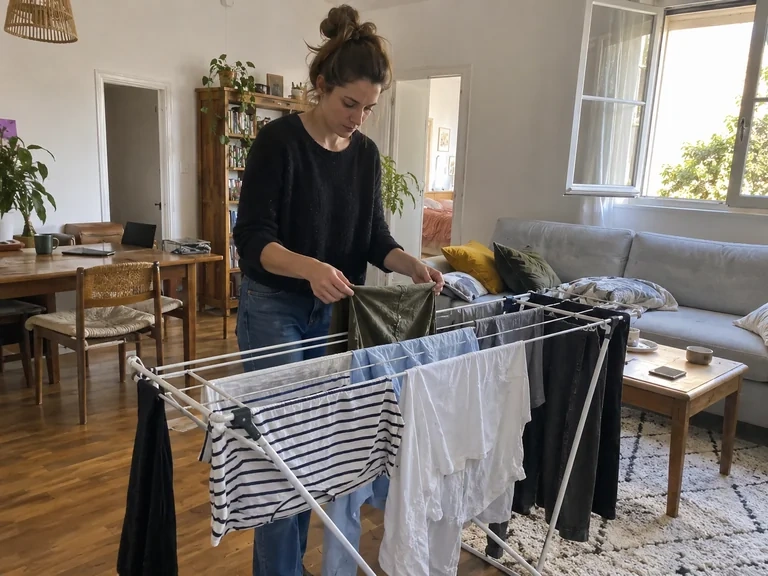
Check for stains, areas of friction, and small repairs that may be needed. Clean each piece as appropriate, then let it dry completely. Don’t store a garment just because the surface feels dry if thicker areas, pockets, or seams are still damp.
To plan this step, our guide to drying clothes in an apartment can help you prepare drying racks and make room around your laundry. If a piece has just come back from professional care, follow the instructions you received before storing it for several months. Seasonal storage is also a good time to fix a loose button or open seam, so the piece is truly ready for the next change of season.
Keep ready-to-store pieces separate from clothes that still need attention
Don’t mix clothes that are ready to store with those that still need care or a closer look in the same container. A separate holding area lets you close up the ready boxes without forgetting the rest. Note the next step, such as “dry completely,” “request an estimate,” or “check the stain.”
This separation keeps you from reopening every box to find a piece left in the middle of a batch. It also helps you avoid confusing storage with solving the problem. A garment that smells musty calls for checking the room and its surroundings; adding a scented sachet won’t tell you whether the cause is gone. Keep the garment accessible until you’ve clarified the situation.
Choose a clean, suitable container
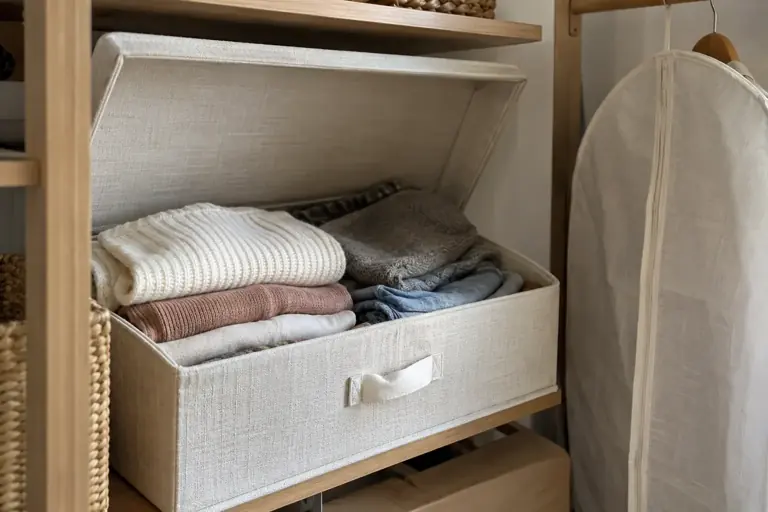
Check the inside of the box or garment bag: it should be clean, dry, and free of anything that could snag. The right choice depends on the garment materials, how long they’ll be stored, and where. A lightweight garment bag used to transport clothing isn’t automatically a solution for long-term storage.
The Canadian Conservation Institute specifically warns about dry-cleaning plastic covers, which limit airflow. That doesn’t mean you can sort all containers by one simple rule: consider how you’ll use them as a whole. A closed box is useful only if the clothes and its interior are dry to begin with and the storage environment is suitable. The container won’t fix a leak or ongoing dampness in your home.
 Read alsoWomen’s capsule wardrobe: a list of essentials and how to choose yours
Distribute the weight and avoid forcing creases
Fold clothes to preserve their shape and avoid putting a lot of weight on a small area. A heavy knit can stretch on an unsuitable hanger; a structured jacket can lose its drape if it stays crushed under a stack. Follow the brand’s recommendations for the garment when available.
Keep folds loose and don’t fill the box so much that you have to force the lid shut. Embellished, delicate, or easily marked items need more room and protection. The guidelines from textile conservation highlight the importance of support and physical stress. For everyday clothes, the simplest check is to make sure nothing is stretched, wedged in, or heavily compressed.
Use compression only when the garment can handle it
A compression bag may seem handy for saving space, but it significantly changes the volume and pressure on clothes. Check the recommendations for the items and the container. Some structures, finishes, or bulky pieces may become creased or temporarily lose their shape when kept compressed.
Never put a garment that’s still damp in a sealed bag to “finish putting it away.” If you use a compatible compression solution, make sure you can check on the contents and allow enough time to reshape the clothes before wearing them again. Saving space shouldn’t make you overlook the condition of the contents. If a garment is important or delicate, looser storage may be easier to monitor.
Keep containers labeled and accessible
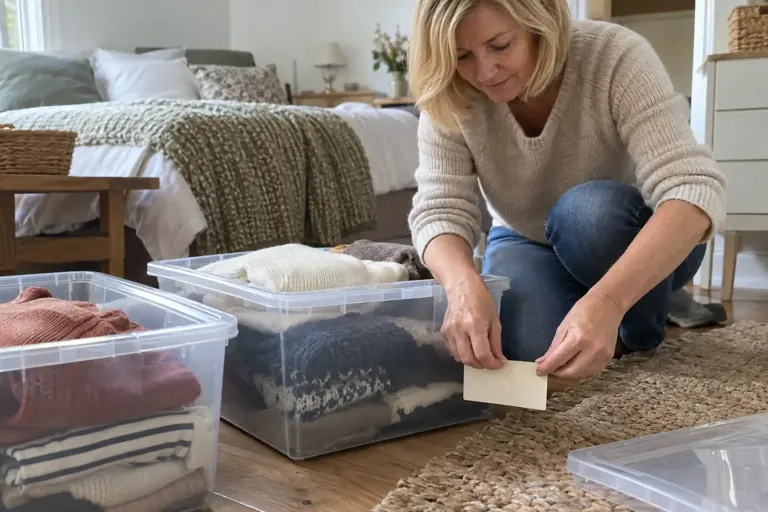
Label boxes with a clear category and a note about what’s inside. Our guide to labeling seasonal clothes offers a method that’s easy to update. Put labels on the visible side once the containers are stored, so you don’t have to move everything to find a sweater or accessory.
Keep pieces you may need sooner in an easy-to-reach spot. A drop in temperature or a trip may lead you to reopen a box before the full change of season. If getting to it means emptying an entire closet, you may put off checking your clothes and look for a replacement unnecessarily. Storage should protect your pieces while still working for your everyday routine.
Plan to check on them during storage
When a storage spot is new or your home conditions change, check what’s inside after a reasonable amount of time instead of waiting several months. Look at the clothes, the bottom of the container, and the surrounding area. An unusual smell, visible moisture, or new marks call for finding the cause before you close it again.
If you spot mold or an ongoing problem in the area, have it addressed appropriately and ask for advice about the textiles involved. Avoid shaking the pieces in your living space or using lots of scented sprays. When the season returns, check each garment before putting it back with the clothes you can wear. In Vestly, then find the saved combinations that match the clothes’ actual condition.
Flip cards
Before closing the box
A thick seam still feels dampFlip
Let it dry longer according to the room’s care instructions before storing it in a closed container.
The area has marks or an unusual smellFlip
Check the area and identify the cause before storing clothes there for several months.
The lid only closes if you force itFlip
Reduce the contents or choose storage that limits compression.
A piece still needs a repairFlip
Keep it in a separate place for items needing attention, with a clear next step.
Check off
My off-season clothes are ready
0 / 5
Storage is set up to protect your pieces and make them easy to find.
Watch a practical example
A visual example from Justine Leconte officiel to compare with the steps in this guide.
Video in English
Frequently asked questions
Does an airtight box protect against all moisture?
It won’t remove moisture already in the clothes or container, or fix a problem with the storage space. Check everything before closing it.
Can you store clothes in a basement?
Check the actual conditions in the space. If the humidity, temperature changes, or condition of the walls are uncertain, find a more suitable spot before leaving textiles there for several months.
Should you scent clothes before storing them?
Fragrance doesn’t replace care or drying, and it can make an unusual odor harder to identify. First, prepare each piece according to its care instructions.
Sources and references
- Canadian Conservation Institute, basic textile care, accessed October 1, 2026.
- Canadian Conservation Institute, textiles and costumes, support and storage principles, accessed October 1, 2026.