Contents
- Understand what you’re working with
- Check sensitive areas before washing
- Choose a gentle method that’s actually allowed
- Support the garment as you take it out
- Reshape without trying to stretch it
- Tell wrinkles, shrinkage, and distortion apart
- Plan care around how you wear it
- Frequently asked questions
- Sources and references
A viscose blouse can drape perfectly when you take it from the closet, then feel stiffer, heavier, or shorter when wet. This change can be surprising. Still, don’t immediately pull on the sleeves or run another wash to try to restore its original shape. The garment is especially delicate when wet, so careful handling matters.
To wash and dry viscose, check that washing is allowed, support the garment when it’s wet, and reshape it without pulling. The fiber content alone doesn’t tell you what temperature, spin cycle, or drying method to use.
Understand what you’re working with
Viscose is a fiber made from transformed cellulose. The name describes the fiber, not the garment’s entire construction. The weave, cut, blends, seams, and finishes all affect how the garment behaves. A fluid fabric may be lightweight, but a complete dress can become quite heavy when wet.
Don’t confuse all cellulosic fibers, either. Modal and lyocell have their own characteristics; a routine that works for one tells you nothing about an ordinary viscose blouse. Lenzing highlights, in particular, differences in their strength when wet. In practice, the most useful information is still the care instructions for your specific garment, not a general comparison of materials.
Check sensitive areas before washing
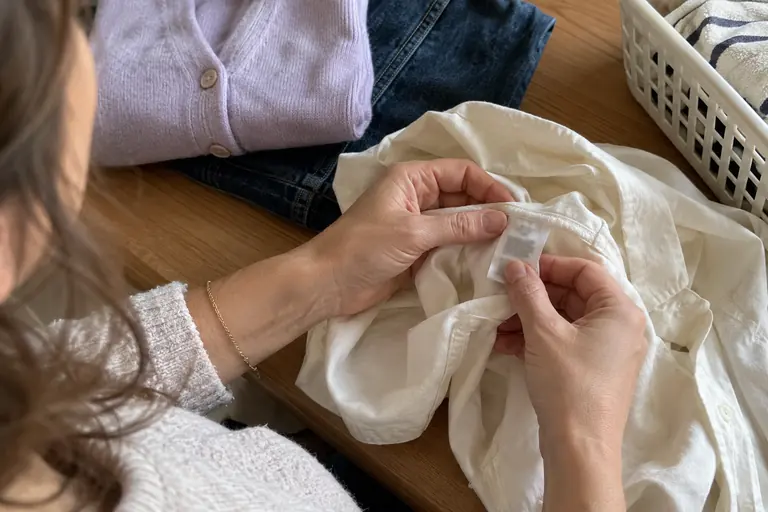
Check the label first, then the details: lining, contrast panels, pleats, embroidery, delicate buttons. Check the seams at the underarms and closures. Any seam that has already come undone should be repaired before it gets more wear. You might take a photo of the garment laid flat to keep a reference of its shape, without trying to measure every inch.
If washing with water is prohibited, don’t treat a “delicate” cycle as an exception. For a secondhand piece with an unreadable care label, look up the style with the brand or ask a professional for advice. Our guide to clothing care labels can help you understand the symbols before you start. This step saves you from having to improvise a repair after using the wrong cycle.
Choose a gentle method that’s actually allowed
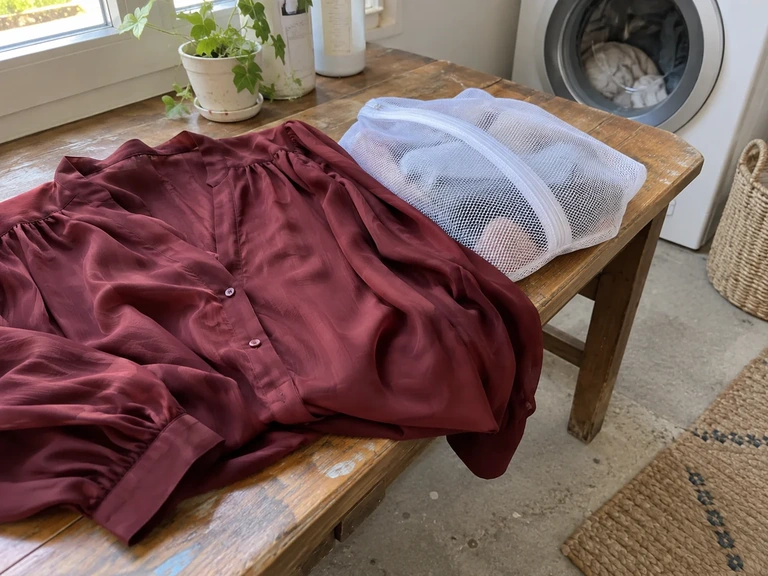
When machine washing is allowed, follow the stated limits for temperature and agitation. A suitable mesh bag can help prevent some snags, but it doesn’t make a garment suitable for a prohibited cycle. Don’t pack several garments tightly into it. Give the fabric room and avoid washing it with zippers or accessories that could snag it.
If hand washing is allowed, prepare a clean basin that’s large enough. Measure the detergent according to its directions, then handle the garment without scrubbing hard or wringing it. Rinse carefully according to the applicable instructions. “Hand wash” doesn’t mean you can leave it soaking indefinitely or massage the fabric until it feels softer.
Support the garment as you take it out
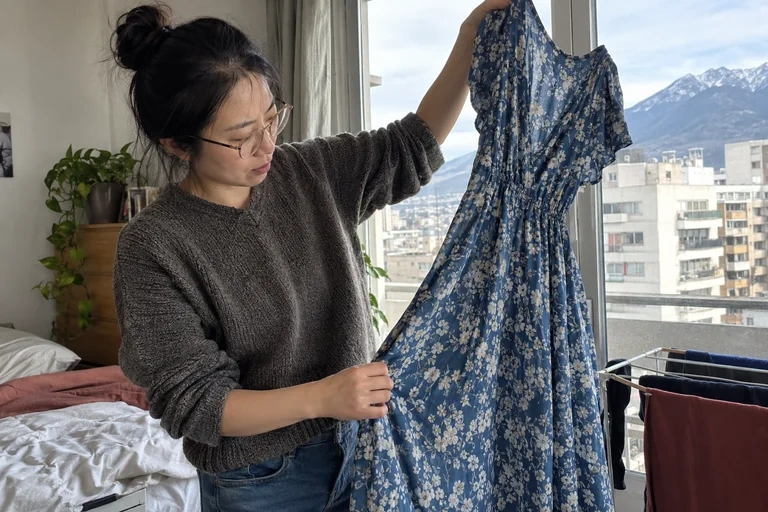
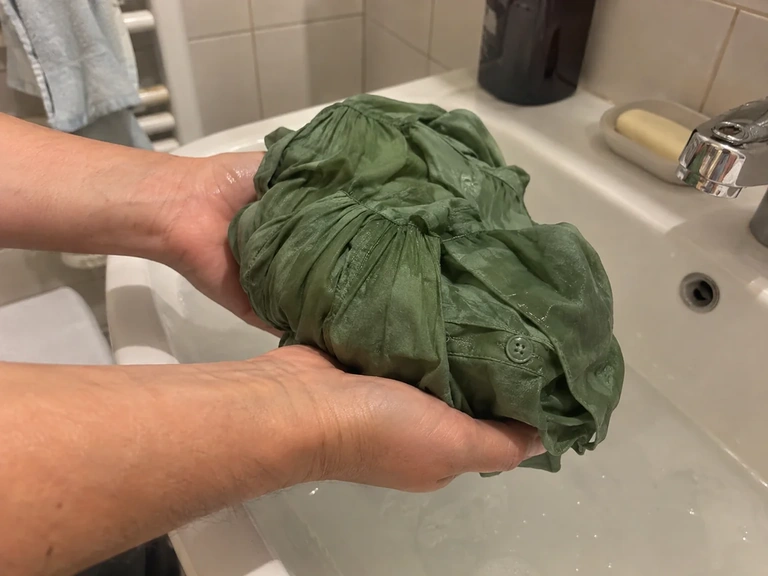
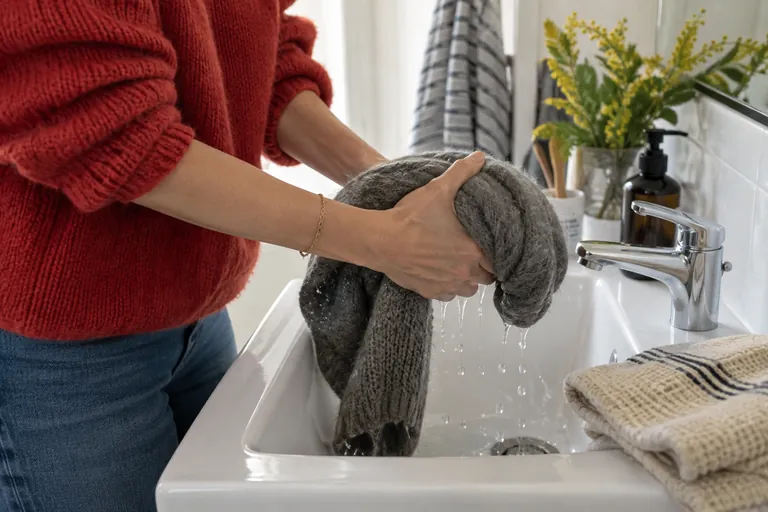
This small habit makes a big difference when handling a garment: gather it gently without squeezing it, and support its weight with both hands. Don’t lift a dress out of the basin by its straps. And don’t let a long, wet section hang while you hold only the collar. That concentrates the weight on a narrow area.
If the instructions allow you to remove excess water with a towel, lay the garment on it and press gently without twisting. The towel is there to absorb water, not to wring the garment out like a rope. Get a second dry surface ready if the first one gets saturated quickly. The goal is to move the garment to its drying surface while preserving its usual shape as much as possible.
 Read alsoHow to wash a wool or cashmere sweater without felting it
Reshape without trying to stretch it
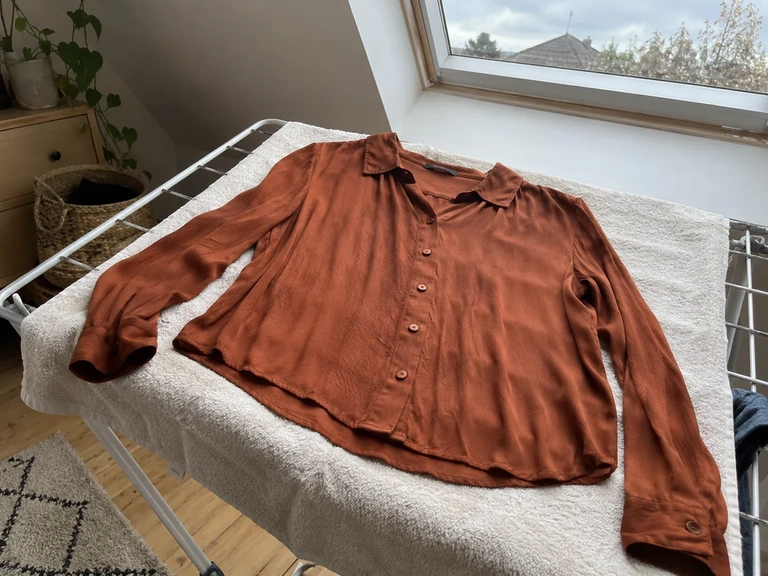
Lay the garment out according to the approved drying method. Gently align the sides, sleeves, and button placket. Smooth out tight creases with your fingertips without stretching the corners. If you’re drying it flat, make sure its full length rests on the surface: a sleeve that hangs over the edge is still being pulled down by its own weight.
Choose a well-ventilated area and keep the garment away from direct heat. If hanging it to dry is allowed, use a hanger that won’t leave marks on the shoulders or concentrate the weight on narrow clips. Leave space around the garment. A piece pressed against another damp layer or folded over itself may dry unevenly.
Tell wrinkles, shrinkage, and distortion apart
A wrinkled garment can look shorter because its fabric is folded over itself. That’s different from a piece that has actually shrunk or become misshapen. Wait until it’s dry, then follow only the finishing instructions allowed by its care label. If ironing is permitted, choose a compatible setting, work carefully, and test an inconspicuous area if you’re concerned about the finish.
Don’t use an iron to forcefully stretch a blouse that won’t return to its original shape. A longer sleeve won’t make up for shifted seams. If the problem persists, stop trying one fix after another and consult the manufacturer or a professional. A remedy involving conditioner, heat, or pulling doesn’t guarantee that a constructed garment can be restored.
Plan care around how you wear it
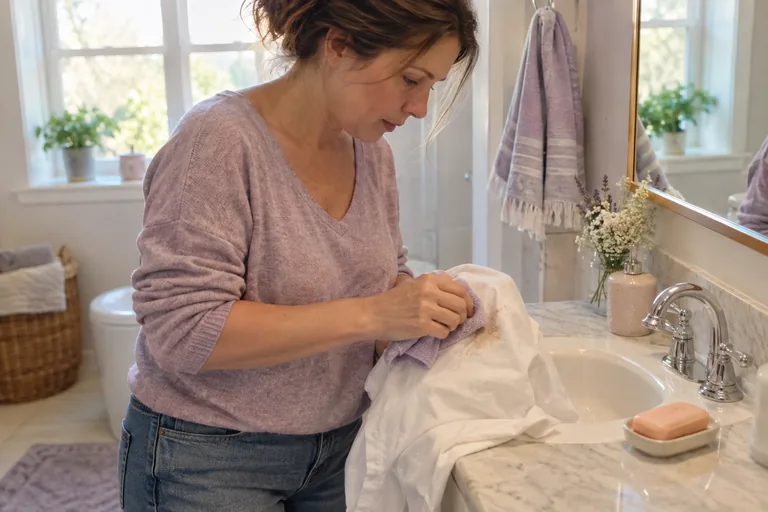
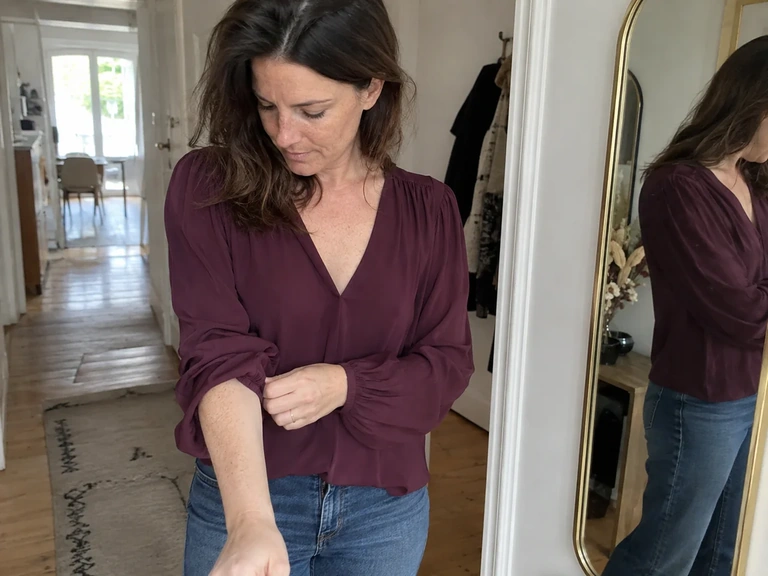
A blouse worn under a jacket all day doesn’t need the same care as a dress worn for two hours. Check the areas that touch your skin and look for visible marks, then decide on the right cleaning method. Treat a stain according to its type and the fabric; our guide to removing a stain can help you avoid trying one unsuitable method after another.
Plan for enough time, too. Washing a delicate dress at night to wear it early the next morning can tempt you to take shortcuts: a radiator, hair dryer, or iron that’s too hot. Choose another outfit if it hasn’t finished drying. In Vestly , the digital wardrobe and outfit ideas help you put together looks with other pieces you already have, so you don’t have to rely on just one garment at the last minute.
Check off
I can care for my viscose with confidence
0 / 6
Being prepared helps you avoid improvised handling while the garment is damp.
Watch a practical example
A visual example from Sarah Liller to compare with the steps in this guide.
Video in English
Frequently asked questions
Does a mesh bag prevent shrinkage?
No. It can protect against some mechanical friction, but it won’t correct an unsuitable temperature or a prohibited washing method. The care label is the place to start.
Should viscose always be dried flat?
There’s no rule that applies to every garment. Follow the symbol and the instructions for that item. A long, heavy garment deserves extra support while wet.
Should a viscose-polyester blend be cared for like polyester?
Not necessarily. The manufacturer assesses the blend and construction together. Don’t automatically apply the care habits you’ve picked up from another top that looks similar.
Sources and references
- Lenzing, an overview of fibers and their properties, technical document consulted on September 30, 2026: distinction between viscose and modal when wet.
- GINETEX, textile care instructions, accessed September 30, 2026.