Contents
- Choosing an actual shade and a starting point
- The denim-and-white base: an easy first try
- Navy: pairing a bright color with a deep base
- Gray and soft tones: letting the accent stand out
- Choosing where to place it: near your face, in your hand, or at your feet
- Showing a small area of red clothing
- Adding another touch only if it adds something
- Putting together a repeatable outfit instead of a one-off effect
- Frequently asked questions
You love red, but a large, bright piece feels hard to work into your wardrobe. An accessory or a small visible area is another way to try it. The choice comes down to the shade, the amount, and where you want to draw the eye, paired with an outfit you already know.
To wear red in small doses, keep your usual base and add just one item: a bag, shoes, scarf, or partially visible knit. Then look at the whole outfit on you. It’ll be easier to tell whether you want to keep that single accent or add a subtle repeat.
Choosing an actual shade and a starting point
Tomato red, bluer red, and burgundy don’t give the same impression. Place the accessory next to two pieces from your wardrobe to see its true shade. The product name and seller’s photo don’t always capture how the color will look in your everyday light.
Start with a piece you want to use for what it does: a practical bag, comfortable shoes, or a soft scarf. That way, you won’t buy something just for its color and then leave it aside because it doesn’t suit your day. Red becomes a practical choice for your look. Once you’ve found that starting point, you can compare combinations without changing your whole wardrobe.
The denim-and-white base: an easy first try
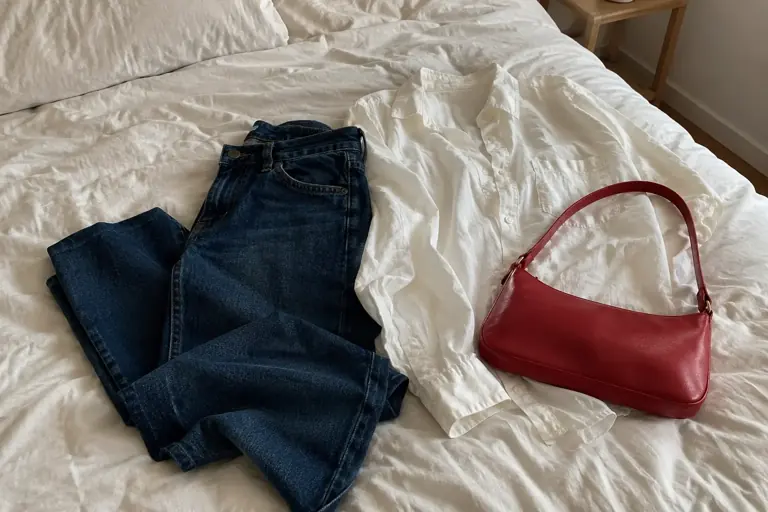
Your go-to jeans and a white or ivory top make a simple base for trying a red accent. Add the bag or shoes, then look at yourself from a normal distance in the mirror. You’ll immediately see how much space the color takes up. If you like the result, keep the other details simple so you can remember this first combination.
Next, compare the same accent with lighter or darker denim if you have both. The difference in contrast can change the effect without requiring a new accessory. You can also try a shirt instead of a T-shirt to dress up the look. The idea is to change one element at a time so you can see what makes the whole look feel more like your style.
Navy: pairing a bright color with a deep base
Navy can pair with bright red or a darker shade. Try navy pants with a neutral top and the red accessory you chose. See if the color stands out enough or if it might work better elsewhere in your look. A small bag looks different from shoes, even when the shade is similar.
If you already wear a lot of navy, this combination lets you refresh familiar looks without changing their silhouettes. Our guide what to wear with navy blue offers more ideas. Still, keep the comparison simple at first: adding stripes, several pieces of jewelry, and another bright color at the same time would make it harder to judge the role of red.
Gray and soft tones: letting the accent stand out
A gray, beige, or ivory look can provide a calm backdrop for a red detail. Look at the shades of those pieces: warm beige won’t have exactly the same effect as cooler gray. You don’t need to classify every color precisely; just lay the pieces together and choose the combination you like.
With a very soft-looking outfit, a small, bright accessory can stand out a lot. If that feels too bold, compare it with a darker shade or a smaller piece. If you want a detail that really shows, keep the contrast. There’s no universal percentage for the right amount: it depends on the look, the size of the piece, and the effect you want.
 Read alsoColor analysis: find the colors that truly suit you
Choosing where to place it: near your face, in your hand, or at your feet
A red scarf near your face stands out even when your outfit is framed in a close-up. A bag moves with you and comes off when you sit down. Red shoes stay a detail at the bottom of your silhouette. Try the placement that suits your mood without assuming one spot works for everyone.
Also think about how long the accent will be visible. If your bag stays in the coat check, you should like your outfit without it. If you take off your scarf indoors, consider the top on its own. This check keeps you from building the whole combination around a detail that will be missing for most of the occasion. You might prefer a knit or jewelry if you want the color to stay visible all day.
Showing a small area of red clothing
An open cardigan, a sweater under a jacket, or the edge of a top can bring in red without making it a dominant block of color. Try the outer layer open, then closed. The amount of visible color changes, and your outfit should still feel cohesive in both positions if you wear it both ways during the day.
Also consider thickness and comfort. A knit chosen only for its red color shouldn’t make the jacket too tight in the arms. You can get a similar effect with a thinner top or an accessory you already own. The method for building an outfit around one piece helps you keep one piece at the center while still considering how you’ll use the rest of your clothes.
Adding another touch only if it adds something
Once you’ve chosen your first accent, try a small echo of red: a scarf detail, a blouse print, or the shade of a piece of jewelry. See whether it ties the outfit together or feels too busy for your taste. You can keep just one touch of red; you don’t need to justify it by adding several matching items.
If the reds are different, compare them side by side. Two very similar shades can look mismatched by accident, while a more noticeable difference can feel intentional. The easiest way is to take a photo of the version with the red echo and one without, in the same light. This comparison helps you decide without getting lost in the search for an exact match.
Outfit ideas
Basics for your red accent
Blue jeans, an ivory shirt, and a small red bag: keep your shoes in a shade that’s already easy to wear.
See all ideas
Denim
- Blue jeans, an ivory shirt, and a small red bag: keep your shoes in a shade that’s already easy to wear.
- A plain T-shirt, dark jeans, and a red cardigan under an open jacket: look at the outfit without the jacket, too.
Navy
- Navy pants, a light top, and red shoes: check the hem with this exact pair.
- A navy dress and a burgundy bag: let this deeper shade provide the main detail.
Soft
- A gray outfit and a red scarf: compare a narrow strip with a wider fold.
- Ecru pants, a beige knit, and a small pop of red at the collar: check that the layers feel comfortable.
Putting together a repeatable outfit instead of a one-off effect
Wear the outfit for a few minutes with your coat, a loaded bag, and the shoes you plan to wear. Check that your chosen accent is still easy to wear and doesn’t force an uncomfortable compromise. A pair of red shoes you love but that don’t work for your commute can be swapped for another colorful detail that day.
Save the combination that works in Vestly and note what you actually changed from your usual outfit. Then you can vary the shade or placement of the red while keeping this base. To explore more options, check out the tips in our guide to color combinations. The best first result is an outfit you’ll want to wear again, with a practical accent you chose yourself.
Check off
My red accent is in the right place
0 / 5
Keep this version as a starting point for your next color combinations.
Watch a practical example
A visual example from What To Wear to compare with the steps in this guide.
Video in English
Frequently asked questions
Can you wear just one red piece without repeating the color?
Yes. A standalone accent can be the outfit’s main detail. Compare the look with and without another red touch to choose the result you like.
Does burgundy count as a pop of red?
You can wear it this way. Its depth usually creates a different effect than a vivid red; check how the actual shade looks with your clothes.
Should you save red for evenings?
No. A bag, scarf, or knit can work with an everyday outfit. Focus on choosing a practical piece and an amount of color you enjoy wearing.