Contents
Fall is the perfect time to rethink your wardrobe. The days get shorter, temperatures shift from one day to the next, and in just a few weeks you go from a light sweater to a heavy coat. Without a plan, you end up layering at random and feeling like you always wear the same thing.
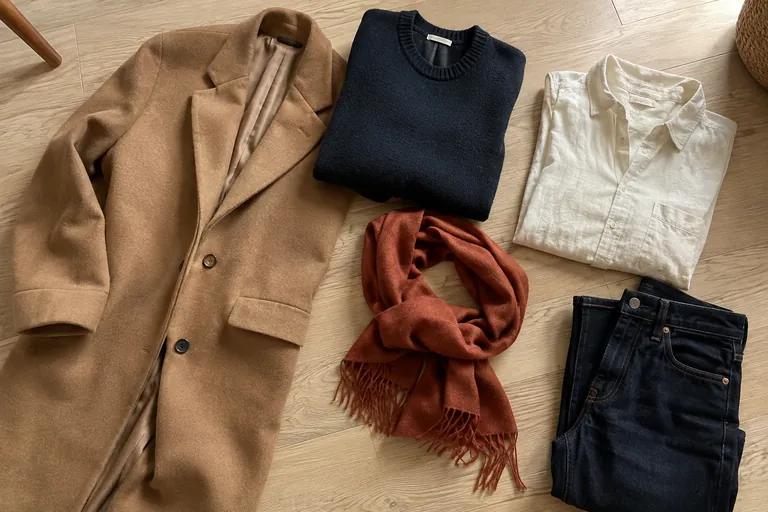
A fall-winter capsule wardrobe is the answer: a limited number of warm pieces, chosen in one palette, that layer well and all work together. Here’s the essentials list, a seasonal palette, and outfit ideas.
Choosing the season’s palette
Fall shades are naturally easy to mix and match: camel, chocolate, cream, heather gray, navy, khaki, burgundy, rust, and mustard. Choose two neutrals as your base, such as camel and navy or chocolate and cream, then add one or two accent colors. Navy and camel are also a reliable pairing: see what to wear with navy blue.
If you know your Color analysis, choose shades that flatter you near your face: sweaters and scarves are the pieces closest to your complexion in winter.
The essentials list
In a cohesive color palette, these pieces create dozens of combinations. To build a year-round core capsule, our guide to the capsule wardrobe explains the full method.
The video below shows one person’s wardrobe and her layers for cold weather. Adapt the number of pieces to your own routine.
A visual example from Malama Life to compare with the steps in this guide.
Video in English
The art of layering
In fall and winter, layering is key to comfort and style. The idea: no more than three layers, from thinnest to thickest. A shirt under a V-neck sweater, a T-shirt under a cardigan, a turtleneck under a pinafore dress—each layer adds warmth and visual depth.
Play with textures: a chunky knit over a cotton shirt, a wool coat over a cashmere sweater, a velvet skirt with opaque tights. Contrasting textures make winter outfits feel much richer.
Warm fabrics to prioritize
- Merino wool : fine, warm, breathable, and less prone to odors; ideal as a base layer.
- Cashmere : exceptionally soft and warm for its weight, perfect for sweaters worn close to your face.
- Alpaca and mohair : lightweight and warm, ideal for winter sweaters and cardigans.
- Corduroy : cozy and durable, ideal for trousers and skirts.
- Tweed and flannel : for structured jackets, skirts, and trousers.
- Leather and suede : for ankle boots, belts, and some jackets.
Quality knitwear made from natural fibers often keeps you warmer than a thick acrylic sweater while letting your skin breathe. Check the fabric label: a high percentage of natural fibers is a good sign of comfort and durability.
 Read alsoCare for a coat between professional cleanings
Caring for your winter pieces
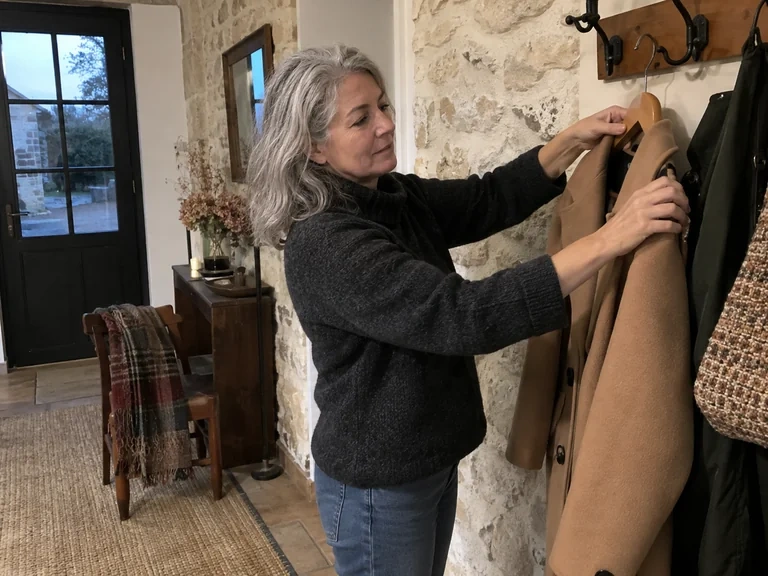
Wool knitwear and coats are often the season’s most expensive pieces. With proper care, they last for years. Our guide to wash a wool or cashmere sweater explains how to prevent felting. Air out your coats after wearing them, brush them regularly, and store them on sturdy hangers.
How do you choose a layer for a trip to colder weather?
Start with a base layer that feels comfortable indoors, then add a layer you can remove without changing the whole outfit. Try the sleeves together: a bulky knit that does not fit under your coat is not a practical layer. Match your outer protection to the actual weather at your destination instead of following a fixed piece count.
On a plane, plan where to put a layer when you are not wearing it and follow the crew’s instructions. Our guide to outfit for a long-haul flight explains the seated fit check and cabin considerations; your capsule can contain more clothes if your season requires them.
Getting ready for the seasonal transition
In early fall, keep a few summer pieces that layer well within reach, like lightweight dresses you can wear with a sweater and tights. In late winter, gradually bring out your transitional pieces. When the seasons change, take the opportunity to do a quick closet edit and note what you missed before buying anything new.
For milder days, our guide to dressing for 15 degrees helps you choose layers you can easily take off.
If your capsule includes a wraparound garment, compare two bases with our poncho outfit ideaswithout buying an extra set of clothes.
Frequently asked questions
How many pieces should an winter capsule have?
About thirty pieces, including shoes and coats, are usually enough. The exact number matters less than how well everything works together.
What colors should you choose for fall?
Warm, rich shades like camel, chocolate, burgundy, khaki, mustard, and rust, paired with neutrals like cream, gray, and navy.
How can you stay warm without looking bulky?
Choose thin but warm layers, like merino wool, instead of one very thick sweater, and keep one fitted piece to define your silhouette.
What coat should you choose for a winter capsule?
A long or mid-length wool coat in a neutral that goes with your whole palette, like camel, navy, gray, or black. A straight, slightly relaxed fit leaves room to layer a thick sweater without feeling constricted. If winters are very cold where you live, a lightweight puffer can round out your capsule for especially cold days.
How can you adapt your winter capsule for rain?
Add a trench coat or raincoat in one of your neutral shades, along with a pair of waterproof ankle boots with lug soles. At the start of the season, treat your leather or suede shoes with a protective spray so they hold up better against water and salt.