Contents
Your outfit won’t make the interview, but it plays a part. In the first few seconds of a meeting, your appearance sends signals: professionalism, fit with the company, and attention to detail. The goal isn’t to impress, but to look like you belong, so the conversation stays focused on your skills rather than your clothes.
The right level of polish depends on the industry, role, and company culture. Here’s how to gauge it, choose an outfit for each setting, and get the details right.
Finding the right level of polish
Before choosing, do your research: look for team photos on the company website or professional networks, company videos, and employee reviews. You’ll get a sense of whether people wear suits, business casual, or jeans day to day. The simplest rule: dress one step above the usual dress code.
When in doubt, it’s better to be slightly overdressed than underdressed. A blazer is easy to take off ; you can’t fix an outfit that’s too casual.
Outfits by industry
Finance, law, consulting, luxury
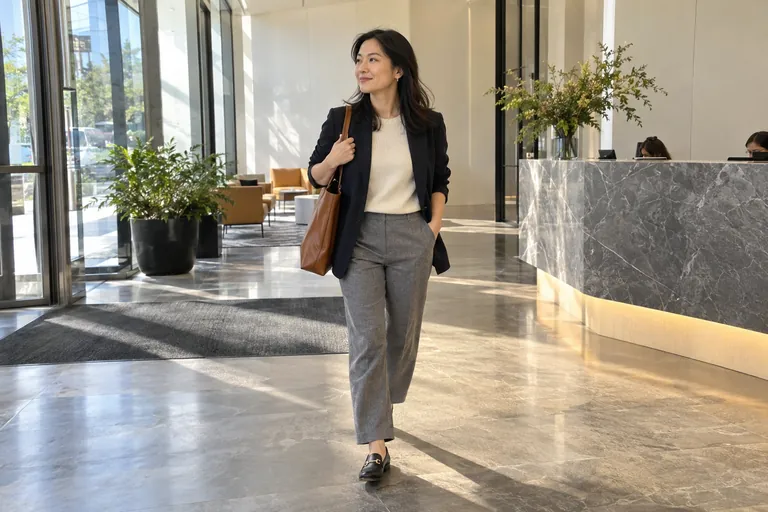
The dress code is still formal: a pantsuit or skirt suit, or a structured blazer with matching pants, a blouse or silk top, and polished pumps or loafers. Colors: navy, gray, black, beige. Keep accessories understated.
Traditional companies and government
A polished business casual look works: a blazer, straight-leg pants or a midi skirt, a fine-knit sweater or shirt, loafers or low heels.
Startups, tech, agencies
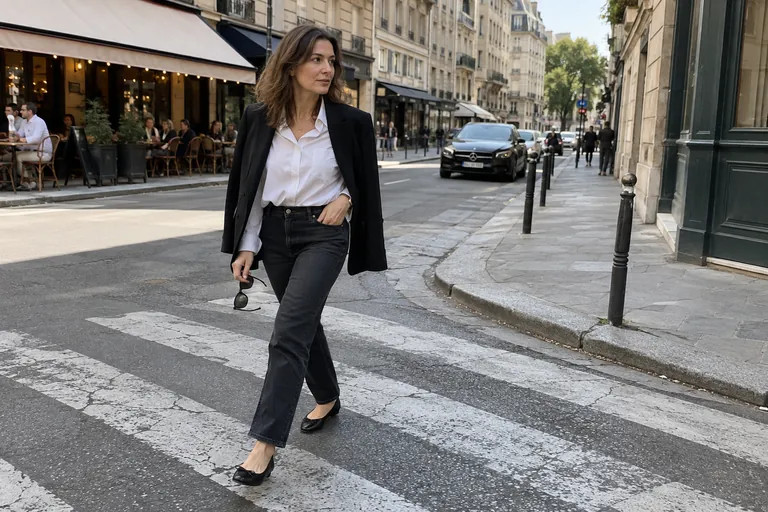
An outfit casual chic is often a better fit than a suit, which could feel out of place: dark-wash jeans or straight-leg pants, a nice shirt or fine-knit sweater, an unstructured jacket, minimalist leather sneakers or loafers.
Retail, fashion, creative fields
You can show more of your personality in a way that fits the brand’s world: a statement piece, a pop of color, an accessory. For a retail job, taking inspiration from the store’s style without copying it is a good rule of thumb.
Hands-on, field, and food service jobs
A clean, simple, polished outfit—pants and a low-key top—is usually enough. Looking neat matters more than dressing elegantly.
A visual example from Emily Durham to compare with the steps in this guide.
Video in English
Colors
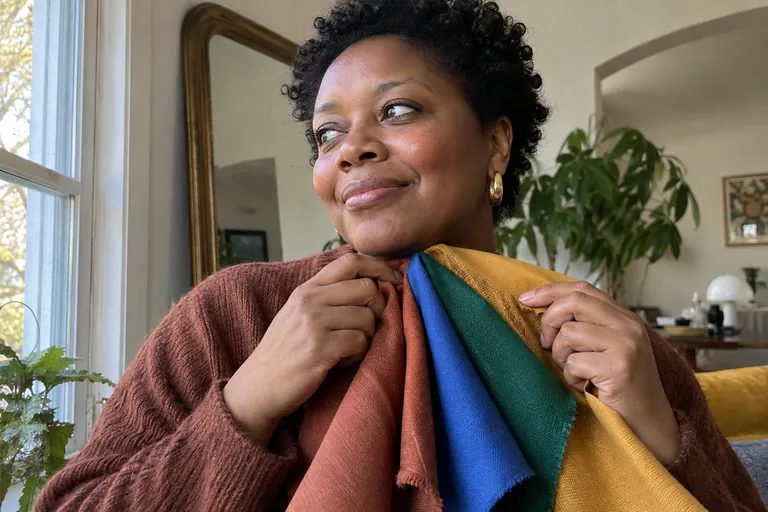
Neutral colors—navy, gray, black, beige, white, and sky blue—are the safest choices: they convey professionalism and reliability without distracting. A touch of color in a top or accessory adds personality. If you know your colors thanks to Color analysis, choose a top that brightens your complexion: it’s what your interviewer will notice most.
The details that make a difference
- Clothes that are freshly pressed and free of pilling.
- Clean shoes that are comfortable: you may need to walk, stand and wait, or tour the workplace.
- A skirt length that feels comfortable when you’re seated.
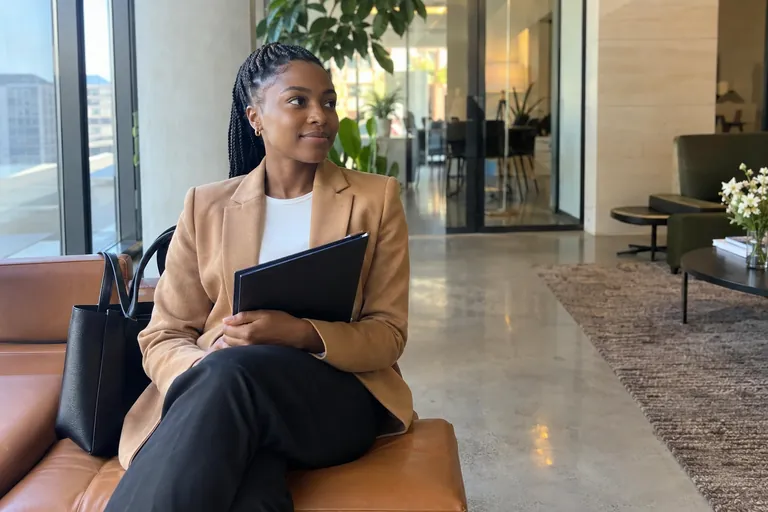
- A structured baglarge enough for a résumé and a notebook.
- Subtle accessories : delicate jewelry, a watch, a light fragrance.
- Neat hair and hands, without overdoing it.
 Read alsoVideo call outfit: look polished and stay comfortable
Comfort: an underrated advantage
An outfit you feel comfortable in helps you feel more relaxed and natural. Avoid breaking in new shoes or wearing a jacket that restricts your movement. If you buy something for the occasion, wear it once or twice beforehand. The same goes for a first date : be yourself, at your best.
Interview nerves are physical, too: an outfit that’s too warm, too tight, or keeps slipping adds needless discomfort. Choose breathable fabrics and layers that are easy to take off.
The most common mistakes
- Wearing a new outfit you haven’t tried on : it may feel restrictive, itchy, or fit poorly once you sit down.
- Dressing up as someone else : an outfit that’s too far from your usual style is easy to spot, and can make you feel uncomfortable.
- Overlooking your shoes : worn-out or uncomfortable shoes stand out, especially during a tour of the workplace.
- Too many accessories : clinking bracelets, strong perfume, and oversized jewelry can distract people.
- Ignoring the weather : a suitable coat and an umbrella help you avoid showing up soaked or freezing.
The goal is the same: after thirty seconds, your outfit should fade into the background so your words can take center stage.
Video interviews
On video calls, only the top half matters—but it matters a lot. Choose a solid-colored top in a medium shade that stands out from the background without looking too bright. Avoid small, tightly packed patterns, which can create a moiré effect on screen. And get fully dressed: you’ll feel more in character.
Frequently asked questions
Do you always need to wear a suit?
No. In many industries, a suit would feel out of place. Match the company’s dress code while dressing one step up.
Can you wear jeans to an interview?
At start-ups or agencies, well-fitting dark jeans with a blazer can work. In more formal industries, it’s best to skip them.
What color should you avoid for an interview?
No color is off-limits, but very bold or busy outfits can be distracting. A pop of color is enough.
What should you wear to a job interview in summer?
Choose lightweight fabrics that resist wrinkles, like linen blends, heavyweight cotton, or crepe, in polished cuts just as you would in winter. A simple dress with a light blazer or flowy pants with a blouse work well. Avoid very open-toe sandals, bare shoulders, and sheer fabrics, and give yourself a few minutes to freshen up before you go in.
How can you find out the company’s dress code?
Look at team photos on the company website, LinkedIn page, or social media, and don’t hesitate to ask the person coordinating the interview. It’s a common question and usually well received. When in doubt, dress one step above what the team typically wears.