Contents
- Start with the restaurant and the whole evening
- Try the outfit on while seated
- Choose an outer layer that’s part of the look
- Check your sleeves at the table
- Choose shoes for the journey and the ground
- Put together a version that works in two temperatures
- Keep your bag to the essentials
- Do a quick check just before you leave
- Frequently asked questions
You have a patio reservation and picture yourself in a light outfit for the start of the evening. A few hours later, the temperature may have changed, and the trip home may matter as much as dinner. For this setting, a successful outfit is one you try while seated, with your actual outer layer and shoes.
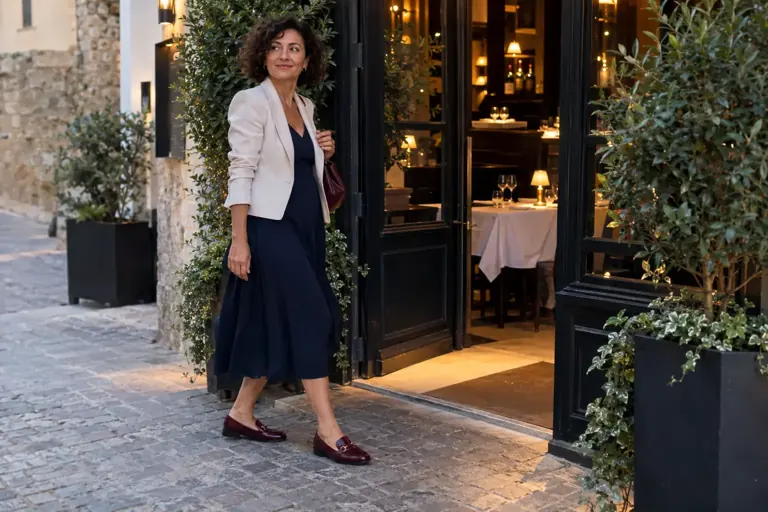
For a restaurant patio at night, choose a comfortable base for sitting at the table and a layer you’ll want to keep on when the air gets cooler. Check the sleeves, hem, and bag, too. These practical details help you look polished without having to adjust your clothes throughout the meal.
Start with the restaurant and the whole evening
Consider the setting for your reservation: a neighborhood terrace, a more formal dinner, a sheltered courtyard, or a wide-open space. If the restaurant mentions a dress code, take it into account. Otherwise, go by what you know about the place and your plans instead of assuming a terrace always calls for a very casual look.
Think about what happens around the meal: walking from transit, a possible wait, going out after dinner, and getting home. Check the weather around the time you plan to be there. An outfit that works for lunch may not feel right several hours later. Then you can choose a base you like and add only what you’ll actually need, without carrying a bag full of just-in-case changes.
Try the outfit on while seated
Sit down in the pants, skirt, or dress you’re planning to wear. Check for pressure at the waist, how the closures sit, and how much fabric falls around your legs. You’ll probably spend much of the occasion sitting, so this deserves as much attention as how the outfit looks when you’re standing in front of the mirror.
Lean forward slightly to reach for a glass on the table, then sit back normally. See if the neckline stays the way you want and whether you need to adjust the garment. If a belt or seam feels uncomfortable during the try-on, adjust it or choose another piece. An outfit you love but that makes you sit perfectly still may not be the most comfortable way to enjoy dinner.
Choose an outer layer that’s part of the look
A cardigan, soft jacket, or light coat can complement your base depending on the conditions. Try it on before you leave, both open and closed. Check the sleeves, shoulders, and room for the top underneath. The extra layer should feel like a deliberate part of your look, not just something you grabbed in a rush at the door.
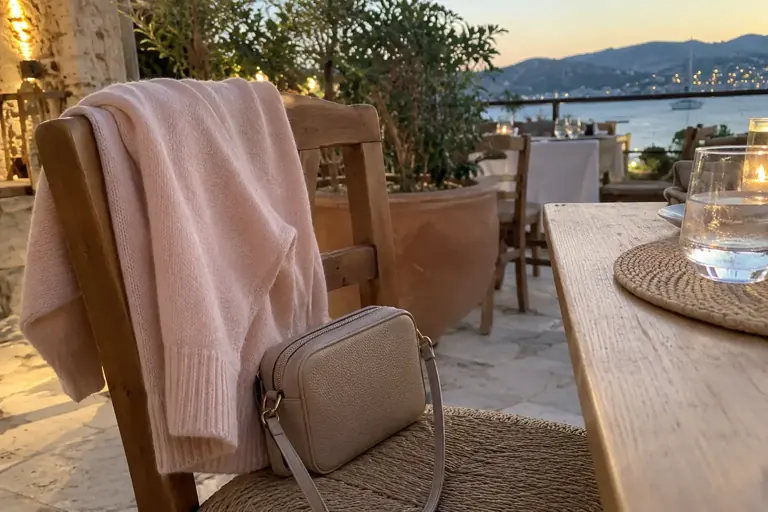
Think about where you’ll put it when you take it off. A reasonable amount of bulk makes it easier to keep on the back of your chair or in your bag, depending on the space available. Avoid leaving a garment on the floor or hanging it where it could block the way. Our guide to layering clothes helps you compare lengths without piling on layers that compete with each other.
Check your sleeves at the table
Very wide or long sleeves can brush against plates and glasses when you serve yourself. Try a normal movement without exaggerating it. If the cuff gets in the way, see whether you can roll it comfortably or choose another piece. The goal is to keep your hands free without having to watch every move.
Check your bracelets and long necklaces, too. A piece of jewelry can feel lovely when you’re standing, then tap against the table during the meal. You can keep one statement detail near your face and simplify the accessories on your wrists. Sometimes a small adjustment makes your outfit easier to wear while keeping the dressed-up effect you chose.
 Read alsoWhat to wear to an outdoor concert: plan for the whole evening
Choose shoes for the journey and the ground
Choose the pair you’ll arrive in, wait in, and leave in. Check that they’re comfortable and in good condition, and consider the terrain if you know it. Cobblestones, a courtyard, or a long walk can change your choice. A polished flat can work with a dressy outfit; our guide flats and dressy outfits offers tips for putting that pairing together.
Put your shoes on before checking the hem. Pants that are too long can drag on the ground as you walk or get caught underfoot when you stand up. With a dress or skirt, check how the lengths meet and how the fabric falls when you’re seated. The right pair is the one that works for the whole evening, not just for a photo right before you leave.
Put together a version that works in two temperatures
First put together the outfit without the outer layer, then try the full look. You should like both, since you may switch between them during dinner. A very light top under a jacket you never want to button leaves little room if it gets chilly. On the other hand, a base layer that’s too warm can feel uncomfortable at the start of the evening.
Choose an easy layer: a cardigan that’s simple to put on, a jacket with sleeves roomy enough for your top, or a lightweight scarf if you like wearing one. What you need depends on your preferences and the conditions; bring what you’ll actually use. If you’re coming straight from work, the guide from the office to the evening helps you choose one small change instead of a whole second outfit.
Keep your bag to the essentials
A small bag can make it easier to settle in at the table, but it should hold what you need for the evening. Make sure you can reach your phone, payment methods, and keys without adding lots of little pouches. Also check the closure and how you’ll keep the bag close during the meal.
If you’re bringing a light layer, decide whether it needs to fit in the bag or stay on. Don’t choose a bag that’s so small you have to carry several things in your hands. On the other hand, a very large bag can feel cumbersome on a small patio. Try it with the things you’ll actually pack: the weight and strap length can affect comfort and how your outfit falls.
Outfit ideas
Three dinner-out basics
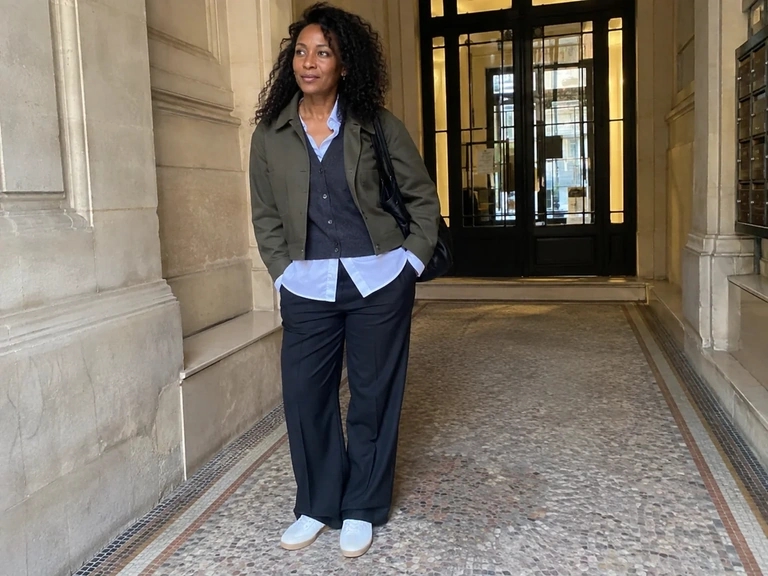
Straight-leg pants, a solid blouse, a cardigan, and polished flats: check the fit and sleeves while seated.
See all ideas
Simple
- Straight-leg pants, a solid blouse, a cardigan, and polished flats: check the fit and sleeves while seated.
- Dark jeans, a shirt, and a light jacket: choose a sleeve length that’s practical at the table.
Dressy
- A simple dress, a soft jacket, and a familiar pair of shoes: check the look with the jacket open and closed.
- A midi skirt, fine knit, and small bag: test the hem and how the knit sits when you sit down.
After work
- Keep the same bottoms from the day, add a crisp top and a chosen accessory: bring a layer for the trip home.
- Flowy pants, a simple top, and a matching cardigan: change just the detail that makes the look dressier.
Do a quick check just before you leave
Check the forecast one last time, then check closures, shoes, and any last-minute additions. Keep the useful layer within reach when you arrive, especially if you’re not sure how long you’ll be waiting outside. This simple prep saves you from having to improvise once you’re seated.
You can save the outfit in Vestly to wear it again on a future night out. Note what you actually used: cardigan worn, comfortable shoes, practical bag, or accessory left behind. These observations give you a reliable starting point for other dinners on the terrace. Then your outfit becomes an easy choice to adapt instead of a whole new search for every invitation.
Check off
My terrace outfit is ready
0 / 5
You’ve prepared for the whole evening, with only the adjustments that really help.
Watch a practical example
A visual example from Lydia Tomlinson to compare with the steps in this guide.
Video in English
Frequently asked questions
Should you always bring a jacket for a terrace dinner?
Choose based on the forecast, time, venue, and what you usually find comfortable. An easy-to-add layer can help if the evening runs late, but make sure it’s the right weight.
Can you wear jeans to a restaurant?
It depends on the setting and the venue’s guidance. Well-kept jeans with a polished top and neat shoes can be a good starting point if they suit the occasion.
How can you avoid bringing too much?
Give each item a specific purpose: a layer for the ride home, a bag for essentials, shoes for the trip. Remove duplicates that don’t meet a real need.