Contents
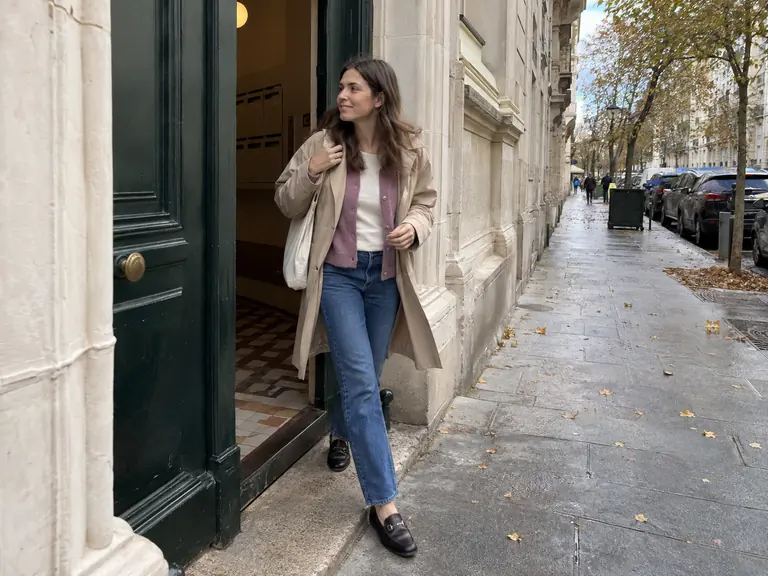
You can sometimes tell it’s going to be a windy day before you even step outside: the trees are swaying, doors are slamming, and the scarf you had planned suddenly seems less practical. Still, you don’t have to give up all the clothes you love. Start by identifying the pieces that stay in place and the ones you’ll have to keep holding onto.
When dressing for wind, choose an outer layer that closes, layers you can manage, and accessories that are easy to secure. Then adjust the layers to the weather and how you feel. Wind doesn’t automatically call for a winter outfit; it mainly changes how your clothes behave on the way.
Know the difference between everyday discomfort and risky weather
The route between two buildings, an open platform, and a tree-lined avenue don’t expose you to the same conditions. Notice where you’ll be waiting for a long time and how long you’ll be out in the open. That helps you choose a practical outfit without applying one blanket rule to your whole schedule.
Météo-France explains that how the weather feels depends on several factors, including wind, activity, and the clothes you’re wearing. That doesn’t let you determine your exact personal temperature or automatically choose how many layers to wear. Use the forecast and what you know about your own comfort.
When an official wind advisory is in effect, follow official recommendations first. A good jacket doesn’t eliminate the risks of traveling. This guide is for ordinary days when you can keep up your usual activities and make your outfit less of a hassle.
Zip up your jacket before judging how it looks
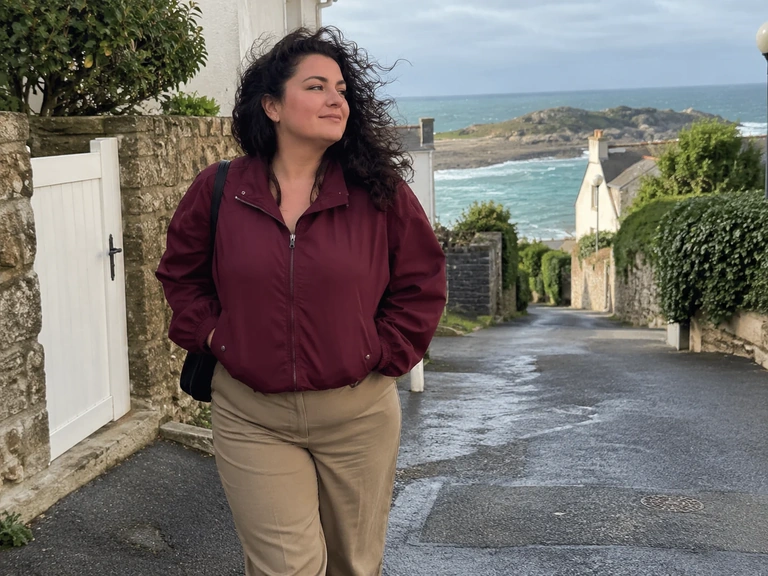
A jacket can feel comfortable open and restrictive as soon as you zip it up. Put on the layers you plan to wear underneath, zip it up, then reach your arms forward. The collar should feel comfortable and your shoulders should have enough room to move. Try it with your bag, too: some straps pull the jacket backward or make the pockets hard to reach.
A cropped jacket, straight-cut coat, or parka can work depending on the season and its features. A garment’s volume alone doesn’t tell you how well it blocks the wind. Check the manufacturer’s information and draw on your own experience with the garment instead of relying on a style category.
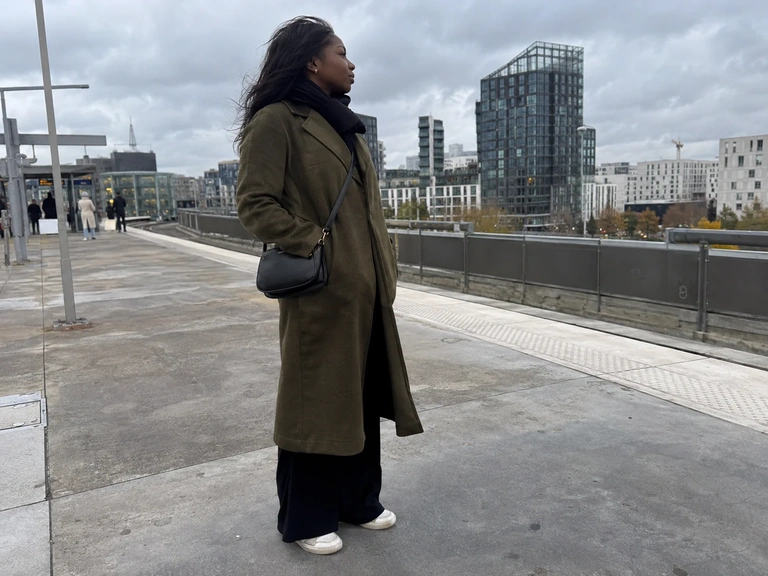
If the garment has a belt, fasten it as intended, without leaving long ends loose. If you need to open your jacket indoors, your outfit underneath should still feel complete. For in-between-season days, tips for dressing for 15 degrees offer more examples of easy-to-remove layers.
Choose layers that keep your hands free
Straight-leg or tapered pants are often easy to manage, but you don’t have to wear a slim fit. Wide-leg pants can work just as well if the length is right and you feel comfortable in them. Pay particular attention on stairs and anywhere the hem might catch under your shoe.
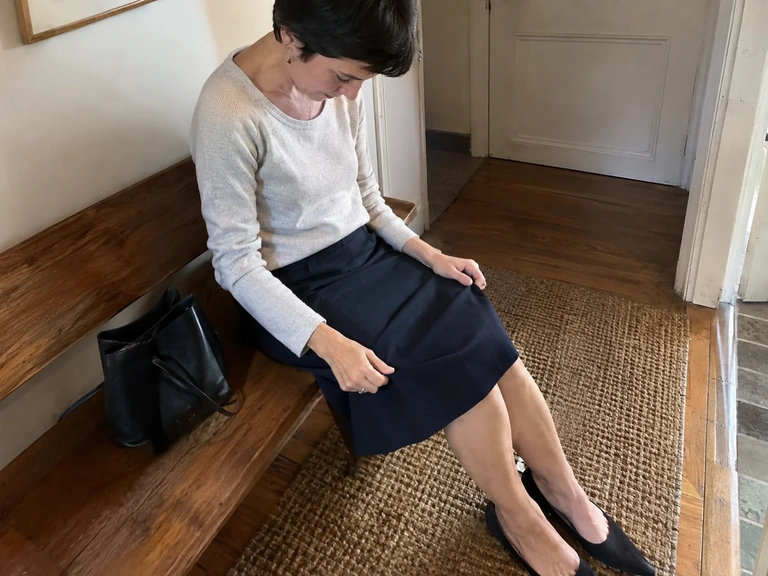
A skirt or dress mostly calls for a real-world tryout. Walk, sit down, and stand up to see whether you end up holding onto the garment the whole time. A straighter cut, a different length, or a piece you already know may solve the problem without giving up your style.
Avoid tricks that promise universal results without taking the garment’s construction into account. Adding heavy items, makeshift fasteners, or poorly secured accessories can create new hassles. Start by choosing a garment suited to your commute, then use the adjustments its manufacturer provides.
Keep exposed accessories simple
A very long scarf, a hat that barely stays on, or a large bag buckle can keep you busy all the time. Before you leave, pick up everything you plan to carry and picture yourself doing a simple task: taking out a transit pass, opening a door, or holding a handrail. If every action means first having to adjust an accessory, simplify.
A short scarf or one tucked inside your jacket may be more practical than a loose scarf. Still, make sure your neck feels comfortable and nothing restricts your movement. Accessories shouldn’t get in the way of your vision, your ability to hear what’s around you, or using your bag.
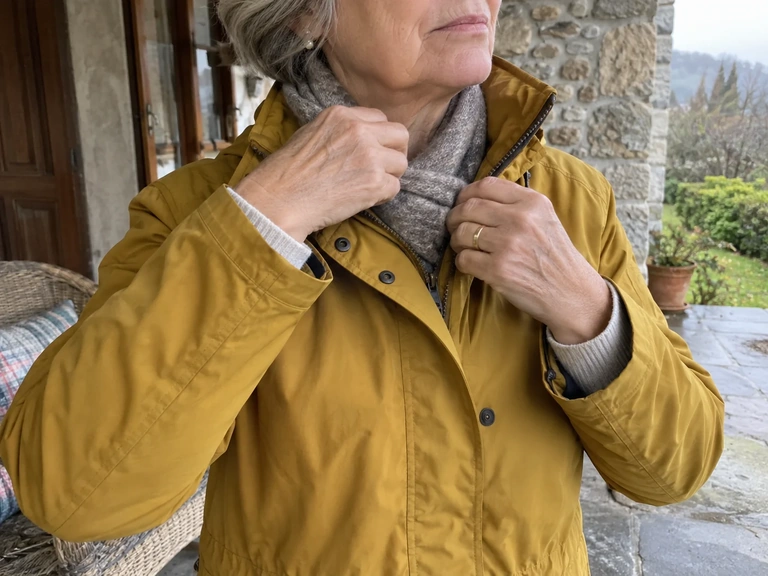
For your hair, use a solution you know and that stays in place without pulling. The goal isn’t to find a style that won’t move at all, but to be able to see around you without pushing a strand back every few seconds. If you wear a hood, test it by turning your head while standing still.
 Read alsoWhat to wear for a weekend by the sea: pack easy-to-pair layers
Plan your outfit around the day’s schedule
For a commute to the office, straight-leg pants, a simple top, and a jacket that closes work in many settings. Keep your bag close to your body and accessories to a minimum. If your workplace calls for more formal attire, you can keep a suitable jacket indoors, as long as you have a place for your commuting layer.
For errands, focus on keeping your hands free. A bag that’s easy to carry and accessible pockets can matter more than a very elaborate outfit. Check your outfit with a loaded bag: a strap that feels secure when empty may behave differently on the way back.
For lunch or a visit, keep one expressive piece you love: a color, a shirt, or a pair of shoes. Simplify the other pieces around it. The guide to find your personal style reminds you that a personal outfit doesn’t depend on piling on details.
Plan for the trip home too
The trip home may be cooler or more exposed than the trip out. Check where you’ll wait for your ride and whether you can put away the layer you take off during the day. A useful layer in the morning can become cumbersome if you have no way to carry it afterward.
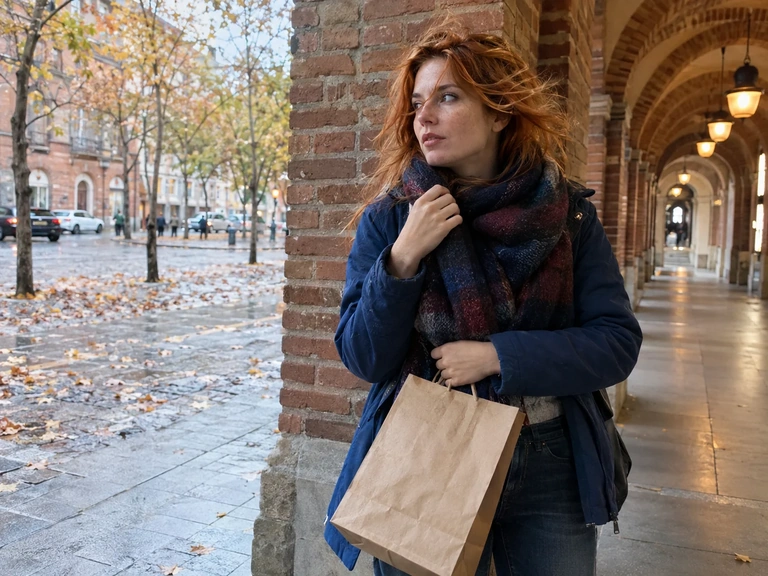
In VestlyUse your own clothes to compare different combinations around a jacket you know. Ideas based on the weather and your plans can give you a starting point; trying them on in your photos helps you judge how they look. Then try the closure, proportions, and accessories with the actual pieces. You can save your chosen combination to your looks to find it again on another similar day.
Check off
My outfit stays practical when the wind picks up
0 / 6
The outfit and small adjustments are checked. Make further changes based on the conditions you encounter.
Watch a practical example
A visual example from Emma Hill to compare with the steps in this guide.
Video in English
Frequently asked questions
Should you avoid all dresses?
No. Some cuts are easy to wear, while others may need more attention. The best test is to check how your dress feels as you move through your commute, then choose another option if you don’t feel at ease.
Can a thick sweater replace an outer layer?
Not necessarily. A garment’s properties depend on the piece and how it’s made. Thickness alone doesn’t tell you how well it blocks the wind. Check the garment’s details and go by how it feels to you.
How can you keep your look polished with a jacket zipped up?
Check the visible lengths and how your bottoms work with your shoes, then keep accessories simple. An outfit with balanced proportions doesn’t need every layer to stay open to work.
Sources and references
- Météo-France, what is the feels-like temperature?, accessed September 30, 2026.
- Météo-France weather advisories, accessed September 30, 2026.
- Vestly, app features, accessed September 30, 2026.