Contents
- Describe your trip before choosing your clothes
- Choose a comfortable base for walking and sitting
- Pack layers that work together
- Choose outerwear for the conditions you expect
- How the seaside affects your clothing choices
- Limit your shoes to pairs with genuinely different uses
- Plan an easy transition for the evening
- Organize your bag by when you’ll need each item
- A sample packing list to adapt to your trip
- Try everything on one last time before closing your bag
- Frequently asked questions
For a weekend by the sea, build your looks around your plans: a walk along the waterfront, lunch on a terrace, a city visit, and a cooler evening. A comfortable base, a warm layer, and suitable outerwear cover most of these moments. The outfit you picture for a beach photo may not suit all those plans, and a few compatible layers can make the trip easier than packing a succession of complete looks.
To plan your looks for a weekend by the sea, start with your planned activities and the forecast close to your departure date. Make sure these pieces work together before you close your bag, along with the shoes you’ll actually wear.
Describe your trip before choosing your clothes
Write down the main parts of your trip: the journey, a walk, a possible beach visit, dinner out, sightseeing, and the return trip. Separate what’s confirmed from what’s still a possibility. You don’t need to pack a complete outfit for every idea, but a specific activity may require special gear that you should pack separately.
Also consider how long you’ll be out and how far you’ll be from your lodging. A short walk with an easy return doesn’t call for the same planning as a full day outdoors. For a day of walking around a city, see the guide what to wear for walking around a city details the points that matter. Check the forecast for your destination as your departure approaches, then adjust your choices if it changes. Don’t assume what the temperature will be based on the word “sea” alone: the month, wind, rain, and time spent outdoors all affect how comfortable your outfit will be.
Choose a comfortable base for walking and sitting
Start with pants, a skirt, or a dress you already enjoy wearing for several hours. Try it on while sitting, especially if you have a long journey ahead, then walk in the shoes you plan to wear. A simple, comfortable base can work for several occasions during your stay, as long as you can easily change the top or outer layer.
If you choose pants, check the hem with the actual pair of shoes. A hem that drags can get dirty quickly on walks. If you prefer a dress or skirt, see how it moves in the wind and how easy it is to walk in. Our guide to dressing for windy weather can help you assess the volume, fastenings, and accessories before you leave. If you’re bringing linen, which wrinkles easily, our guide to caring for linen clothes shares the right steps to take before and after your stay.
Pack layers that work together
Choose a base layer, a knit or cardigan, and an outer jacket. Try all three on before packing them. Check the sleeves, fastenings, and room across the shoulders. A jacket that fits over a T-shirt may feel too tight over the sweater you planned to wear in the evening.
Also think about what you’ll do with the layer you take off. A knit you can wear over your shoulders or put in your bag is easier to manage than a very bulky garment. Choose a combination that works both open and closed. The idea is to adapt your outfit throughout the day without having to head back to your accommodation every time the temperature changes.
Choose outerwear for the conditions you expect
Check the jacket’s actual features and care instructions. A fabric that blocks some wind isn’t necessarily made for prolonged rain. If the forecast calls for showers, choose protection suited to your plans instead of relying on a garment that only looks like a rain jacket.
Check the hood, cuffs, pockets, and fastenings. Can you use your bag without unzipping everything? Does the hood feel comfortable when you turn your head? Our article on dressing for rainy weather offers practical things to try. For a guided or exposed activity, follow the organizer’s instructions and bring the required gear instead of making do with an approximate city outfit.
 Read alsoWhat to wear to an outdoor concert: plan for the whole evening
How the seaside affects your clothing choices
Sand, salt, and dampness cause different problems than a day in the city. Shake out clothing that’s wet with seawater or covered in sand, then rinse it with fresh water before putting it back in your bag; otherwise, salt and sand can settle into the seams and pockets. Pack damp or sandy items in a separate pouch or bag, and keep them away from clean clothes.
When you get back, read the care label before washing. Linen, fine knits, and swimsuits often need different care from the rest of your luggage. To sort laundry into compatible loads as soon as you return, our method for sorting your laundry applies directly.
Limit your shoes to pairs with genuinely different uses
Choose your main pair first for the trip and planned walks. Check its condition, support, and comfort before you leave. If you bring a second pair, decide what it’s for: the beach, a dressier meal, or a specific activity. Two pairs for exactly the same purpose often take up space without giving you another option.
Think about how you’ll carry your shoes after wearing them. A separate bag keeps a dirty sole from touching clean clothes. If a pair gets wet, let it dry according to its care instructions before packing it away for a long time. Don’t use makeshift high heat to save time. Planning this storage from the start is easier than looking for a solution while repacking.
Plan an easy transition for the evening
You can keep the same bottoms and change just the top, knit, or accessories for dinner. Try this second version at home. See whether your main shoes still fit the level of dress you want; if they do, you can avoid packing a pair just for a short outing.
If dinner is outdoors or involves a walk, keep your extra layer within reach. For an outdoor meal, the guide what to wear to a restaurant terrace in the evening covers the same tips. An outfit that feels comfortable indoors may not be enough while you wait or walk back. It helps to plan for the whole evening, from door to door, not just the time spent sitting at the table. Choose pieces you can layer without giving up comfort or needing to carry several bags.
Organize your bag by when you’ll need each item
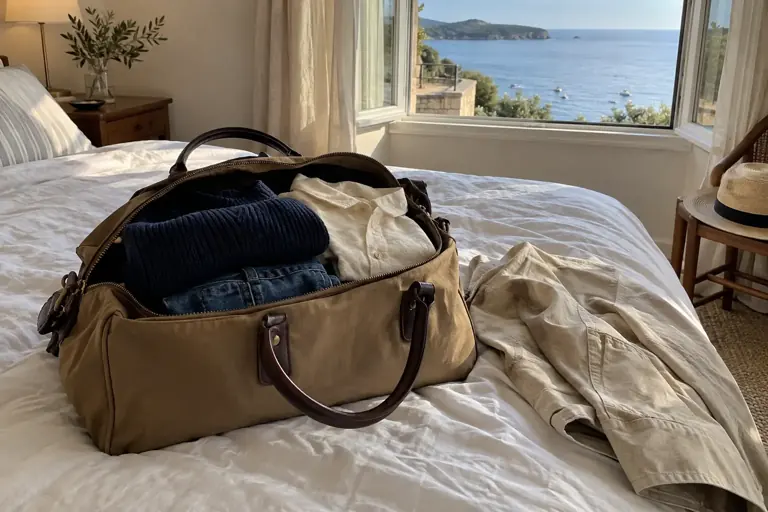
Place what you might need during the trip or as soon as you arrive near the opening: a jacket, light knit, or essentials. Clothes for a later occasion can go lower down. If you can’t get into your lodging until after a walk or lunch, you shouldn’t have to unpack everything to find a layer.
Also set aside a spot for clothes that need care and pieces that are still clean. A small, suitable bag is enough; there’s no need for lots of pouches. Keep damp items separate and arrange to dry them as soon as you can. Our method for capsule suitcase helps you check combinations, but the number of pieces should suit your trip and the care options you actually have.
Outfit ideas
Three moments by the sea
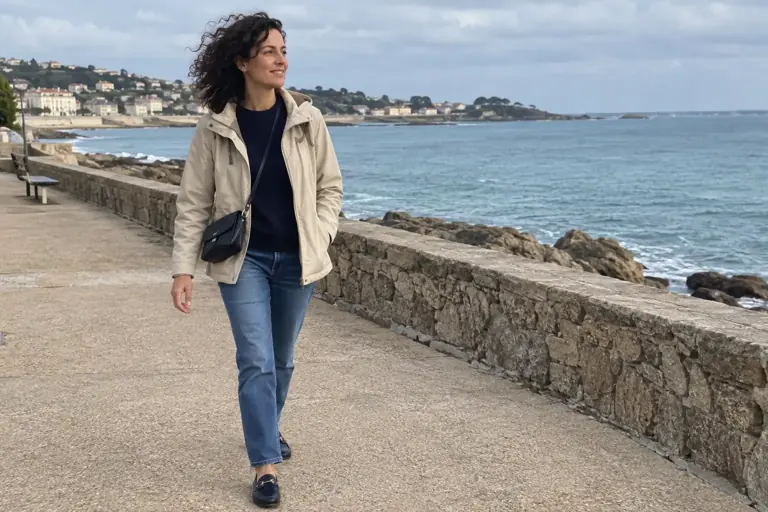
Comfortable pants, a simple top, a knit, and a jacket suited to the forecast: check the proportions with all your layers on.
See all ideas
Walk
- Comfortable pants, a simple top, a knit, and a jacket suited to the forecast: check the proportions with all your layers on.
- Jeans with a clear hem, familiar shoes, and a handy small bag: keep your hands free for everyday tasks.
Terrace
- A light base and a cardigan within reach: plan where to put your jacket when you take it off.
- A dress or skirt you’ve tested in the wind, comfortable shoes, and a soft knit: check how it feels sitting down before you leave.
Evening
- Same bottoms, a sharper top, and a compatible outer layer: choose shoes for the journey as well as the restaurant.
- Straight-leg pants, a shirt, and a light jacket: pack only the accessories you’ll really use.
A sample packing list to adapt to your trip
Use this list as a starting point. Remove anything your plans don’t call for, then make sure each piece works with the others:
- a comfortable base for walking: pants, a skirt, or a dress you’ve tried sitting down in;
- a simple top, with a lightweight knit or cardigan;
- a jacket suited to the forecast: a windbreaker or waterproof layer, depending on the weather;
- your main pair for getting around and walking, plus a second pair only if it has a specific purpose;
- a swimsuit or beachwear, if you plan to swim;
- accessories that help with sun and wind, such as a cap, scarf, or sunglasses;
- a separate bag for wet or sandy items.
An evening piece is useful only if you can wear it with the same bottoms as during the day. Otherwise, opt for an extra layer that works for every occasion.
Try everything on one last time before closing your bag
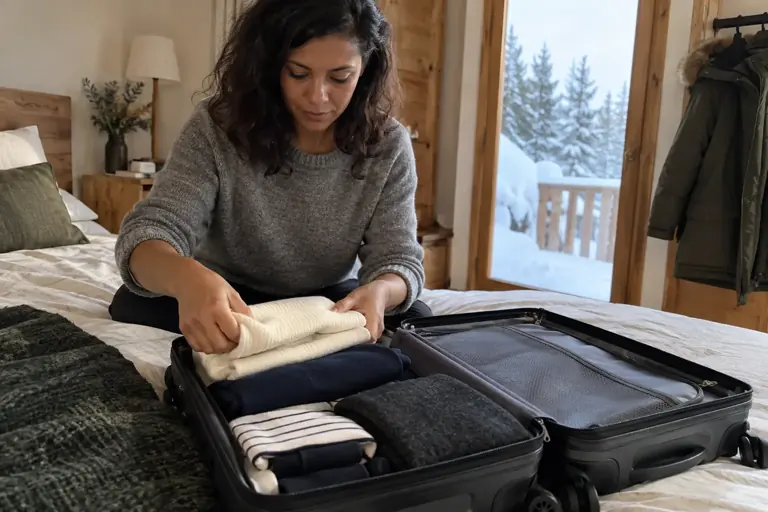
Lay the pieces side by side and put together your main outfits. Each garment should have a clear purpose, and several pieces can serve the same role in different combinations. Check the closures, pockets, and condition of your clothes well ahead of time to avoid last-minute repairs.
Save the combinations in Vestly if it helps you find them during your trip. Leave room for the unexpected with a relevant extra layer or top instead of packing duplicates of every outfit. When you get back, note what you used and what stayed in your bag. That insight will make your next weekend easier to plan, with luggage better suited to the way you travel.
Check off
My seaside weekend is ready
0 / 5
My luggage has practical options for the trip, with few duplicates.
Watch a practical example
A visual example from Erin Elizabeth to compare with the steps in this guide.
Video in English
Frequently asked questions
Should you always pack a heavy sweater for a seaside trip?
Choose your warm layer based on the forecast, the season, and how much time you’ll spend outside. A lighter knit with a jacket can sometimes be more practical than one very bulky piece.
Can you travel with just one pair of shoes?
Yes, if they really work for all the activities you have planned. A specific activity or a different occasion may call for a second pair with a clear purpose.
Should a weekend suitcase have three complete outfits?
Instead, you can put together several combinations from a few pieces that work well together. Check your laundry needs, the weather, and your plans before deciding how many clothes to pack.
How can you pack for a seaside trip without overpacking?
Start with your planned activities, then choose pieces that work together. Limit your shoes to the uses you actually need, and keep a separate bag for wet or sandy items. Trying on your looks before you leave helps you spot duplicates.
Should you bring a windbreaker for a seaside weekend?
It depends on the wind and your planned outings. A windbreaker protects you from the wind, but it may not be designed for prolonged rain. Check its features and the forecast before you leave.