Contents
- Tell the fabric’s appearance apart from its composition
- Check the construction before looking at the washing machine
- Check the surface under steady light
- Check whether water washing is allowed
- Prepare a compatible load if machine washing is allowed
- Treat a stain without trying one method after another
- Prepare for drying and read the ironing instructions
- Store it without creating unnecessary pressure
- Frequently asked questions
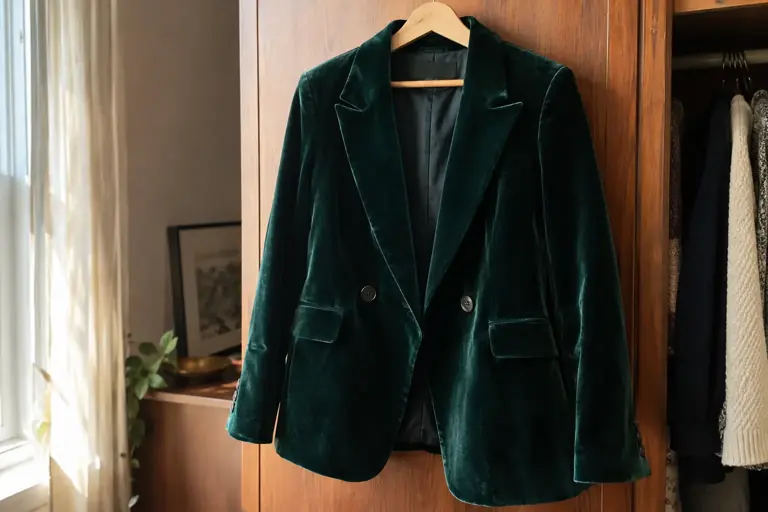
Corduroy pants and a smooth velvet evening jacket don’t necessarily need the same care. The surface texture catches the eye, but it doesn’t reveal the full composition or construction of the garment. So before looking up how to “wash velvet,” identify the exact garment you have in front of you.
To care for velvet clothing, start with its care label, finishes, and actual condition. Prepare to wash only if washing is permitted, then check drying and ironing separately. A method that works for soft trousers may not suit a lined jacket or delicate dress.
Tell the fabric’s appearance apart from its composition
The word velvet doesn’t tell you what fibers the garment contains. Read the fiber content on the label and see whether it lists the main fabric, lining, or other parts separately. Also check for elastane, mixed materials, or decorative details. This information helps you ask a specific question if the care instructions are incomplete or hard to understand.
The DGCCRF explains the role of labeling information, particularly for textile composition. In practice, don’t rely only on the garment’s brand name in an old shopping cart. Find the exact item reference and the care instructions sewn into the garment. For a secondhand item with no label, look for its original product page or ask for advice before choosing a method based on how it looks.
Check the construction before looking at the washing machine
A structured jacket may have a lining, interfacings, and several layers. A dress may combine a soft fabric, a closure, and embellishments. Corduroy trousers may seem simpler, but they can also have reinforced areas or special finishes. Take a moment to look over the whole garment, including the inside, seams, and pockets.
This inspection can also help you spot small repairs to make before care. An open seam, a loose button, or a separating lining calls for a separate fix. Don’t expect washing to solve these kinds of problems. If you’re taking the garment to a professional, point out the areas of concern and explain what you want to preserve: its shape, texture, color, or existing fit.
Check the surface under steady light
Velvet can look different depending on the direction of the fabric and the light. Before deciding something is a stain, gently turn the garment and change your viewing angle. Check whether it’s a mark on the surface, a compressed area, or a change in appearance caused by the direction of the pile. A photo can help you compare, but it can’t diagnose the issue on its own.
Don’t immediately try a stiff brush, very sticky tape, or vigorous rubbing to make the whole surface look even. These actions put stress on the fabric before you’ve identified the problem. If the care label recommends a specific accessory, use it as directed. Otherwise, ask for a method that suits your garment, especially if the affected area is large and visible or you plan to wear the piece for an important occasion.
Check whether water washing is allowed
Read the symbols and any written instructions. Check the GINETEX guide to care symbols if an instruction seems unclear. Washing permission, mechanical action, drying, and finishing all need to be understood together. A temperature instruction doesn’t replace the need to read the rest.
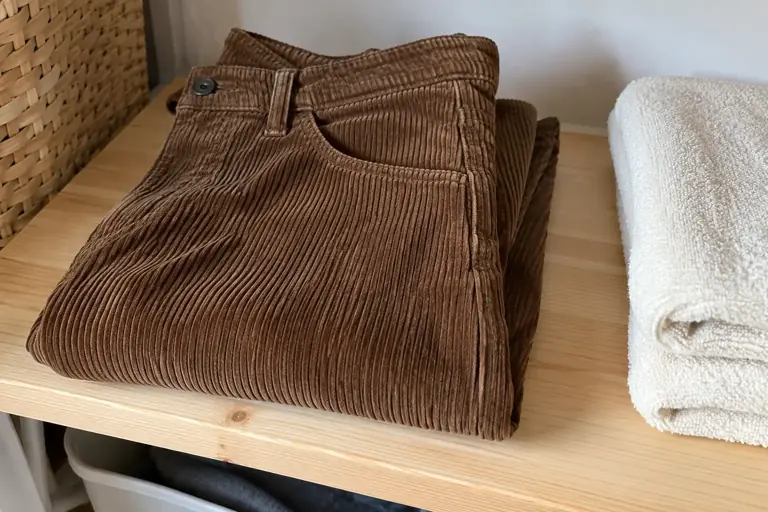
A specific example shows why generalizing can be risky: the care page for these UNIQLO corduroy trousers gives machine-washing instructions specific to its fiber content and construction. That doesn’t mean you can use the same settings for a velvet jacket or another pair of trousers. Always check the exact item you own rather than relying on a page for a similar-looking piece.
 Read alsoHow to wash a wool or cashmere sweater without felting it
Prepare a compatible load if machine washing is allowed
Don’t add the garment to a load that’s already ready to wash until you’ve checked that the items are compatible. Colors, the cycle, and the other pieces all matter. Pay particular attention to zippers and anything that could snag. Empty the pockets, check the fastenings, and follow the prep instructions for your item.
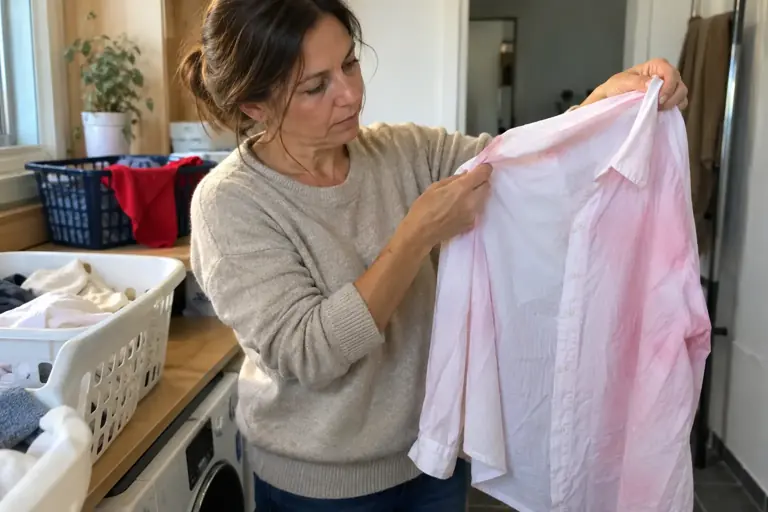
Set aside any item whose colorfastness is unknown. Our guide to color bleeding helps you decide what to isolate and what to check, without promising that a color catcher or additive will eliminate every risk. If the approved method calls for special treatment, plan a suitable cycle instead of making rough adjustments to a load of towels or very different clothes. Sorting the load is part of the preparation.
Treat a stain without trying one method after another
Identify the type of mark, if possible, and note what you’ve already tried. A food stain, a makeup mark, and a compressed area may not call for the same response. If you ask for advice, note which products you used so the professional doesn’t assume the item is untouched.
Don’t apply a household mixture to a visible area just because it’s described as natural. It still needs to be compatible with the fiber and color. If the label requires professional care or you’re unsure about a delicate item, have the garment assessed before adding water, solvent, or heat. A discreet spot test also doesn’t guarantee the result on the whole item, especially when it has multiple materials or finishes.
Prepare for drying and read the ironing instructions
Plan how you’ll take the garment out after washing before you start the cycle. Choose the recommended support and leave enough room so the garment won’t stay compressed. Distribute its weight without pulling on one specific area. If tumble drying is prohibited, don’t use the dryer briefly to get an outfit ready faster: a short cycle doesn’t make a prohibited method compatible.
Then check the ironing instructions. Don’t place the iron directly on a velvety surface to “flatten a mark” unless you have an approved method. The steamer also needs to be checked. If you can’t find clear instructions, contact the brand or a professional. Describe the type of item and the area in question rather than asking only whether “velvet can handle steam.”
Store it without creating unnecessary pressure
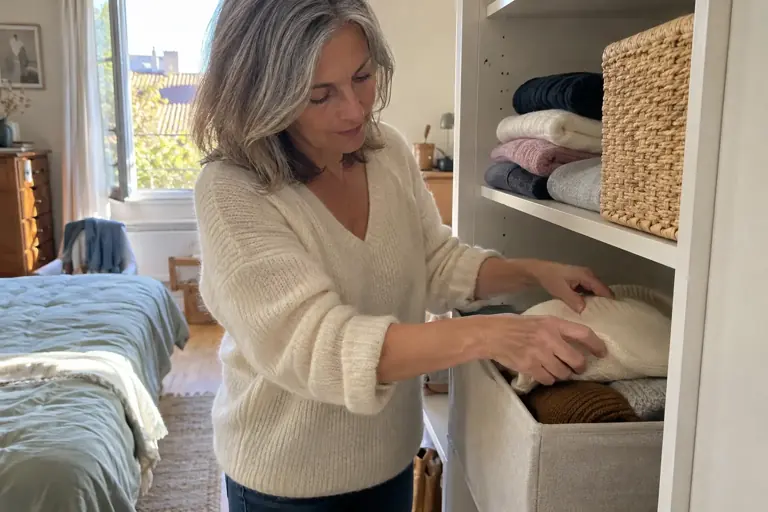
Once the item is completely dry, choose a support suited to its shape. A structured jacket may need a suitable hanger; trousers or a soft item may call for different recommendations. Avoid wedging the garment between rigid objects or under a very heavy pile, especially if its surface marks easily under pressure.
For long-term storage, also check the environment. Our guide to storing clothes out of season covers how to check the space, the container, and that items are dry. Keep the garment somewhere accessible so you can check it before wearing it again. In Vestly, save the pairings you like with this texture and plan ahead for their care. That way, you can avoid a last-minute fix on the evening you want to wear a velvet jacket or dress again.
Flip cards
What should you check?
Two pairs of pants have the same ribbed textureFlip
Compare their fiber content and care instructions; appearance alone isn’t enough to choose the same cycle.
An area looks lighter from certain anglesFlip
Check the lighting and texture before treating it like a stain.
The jacket has a lining and reinforcementsFlip
Consider the entire garment and ask for advice if the care instructions aren’t clear.
A mark won’t come out, and you’re considering steamFlip
First, check that it’s compatible with the garment and the recommended method.
Check off
Preparing to care for velvet
0 / 5
You can follow the method suited to your item without assuming it applies just because the surface looks velvety.
Watch a practical example
A visual example from Svarelle to compare with the steps in this guide.
Video in English
Frequently asked questions
Can all corduroy pants go in the washing machine?
No. Check the garment’s care label and finishes. Permission to wash one style doesn’t apply to all corduroy pants.
Can you brush any kind of velvet?
Don’t choose a brush at random. Follow the brand’s method or ask for advice based on the surface, fiber, and type of mark.
Can a crushed area always be fixed with steam?
No. The result and whether it’s suitable depend on the garment. Check the care instructions before adding heat or moisture.