Contents
- Read the care label for the entire garment
- Look for details that can complicate care
- Choose between at-home and professional care
- Gather supplies only if washing is allowed
- Follow the approved method without adding extra steps
- Treat a stain as a separate issue
- Plan a drying method that preserves the shape
- Check ironing instructions and plan for the next wear
- Frequently asked questions
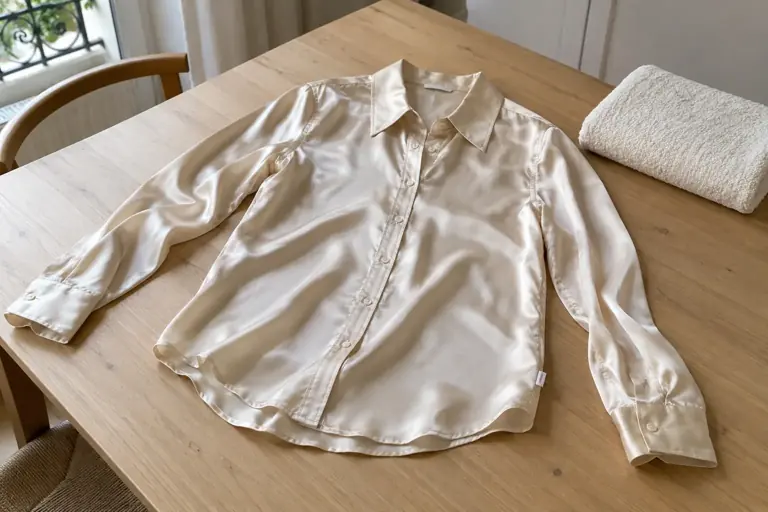
A lightweight silk blouse, a lined dress, and a printed scarf may need different care. “Silk” describes a material, but on its own it doesn’t tell you whether the whole garment can handle water, a machine cycle, or ironing. Before you get a basin ready, identify the item and check its care instructions.
To wash a silk garment, first follow its care label and the brand’s recommendations for that specific style. If washing with water isn’t allowed, don’t substitute a soak described as gentler. If washing is allowed, prepare for rinsing and drying before you start, too.
Read the care label for the entire garment
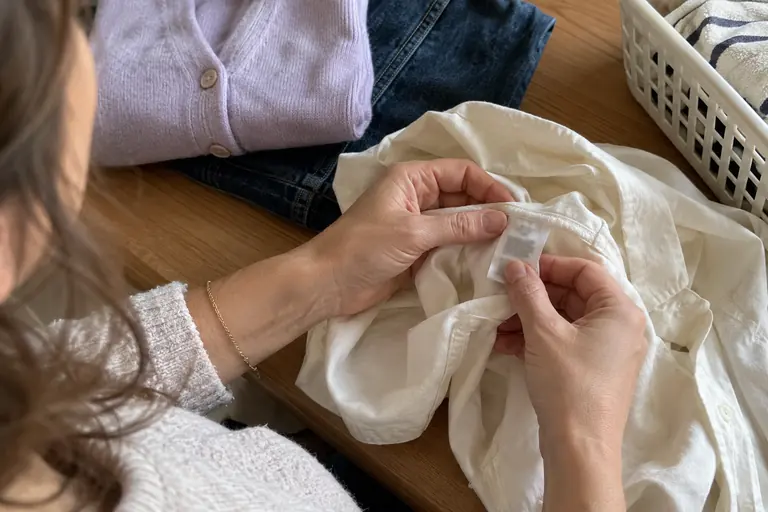
Look for the instructions sewn into the side seam or near the collar. Distinguish the fiber content from the care instructions: they answer two different questions. Take a photo of the label if the text is small, then read it again when you have time. Our guide to clothing care symbols helps you find the main types of care instructions.
The UNIQLO’s silk guide itself distinguishes items that should be taken to a professional cleaner from those that can be hand-washed. This distinction applies to the brand’s products, but it illustrates a useful precaution: don’t assume you can wash another blouse the same way, even if its fiber content seems identical to yours.
Look for details that can complicate care
Check the lining, covered buttons, embellishments, panels, and any reinforcements. A garment is made of multiple parts, so you’re caring for more than just the visible fabric. A structured dress or lined jacket shouldn’t be treated like a loose piece of fabric, even if both contain silk.
Also look for contrasting colors, prints, and existing marks. Take an overall photo and a close-up of the area that concerns you. This will come in handy if you ask the brand or a professional for advice. For a vintage garment or one without a label, look for the original style information if you can. If you can’t find it, don’t take the lack of instructions as permission to try several methods one after another.
Choose between at-home and professional care
Professional care makes sense when the garment calls for it, has a complex construction, or you can’t identify a compatible method. Bring the garment and point out any stains and products you’ve already applied. That way, the professional has all the information needed to assess the situation.
For one specific example, the instructions for an Hermès silk scarf recommend taking it to a specialist and also provide storage advice. They aren’t the rule for every silk garment. Their value lies in reminding you that specific instructions for your item are more useful than a general tip for “silk.”
Gather supplies only if washing is allowed
Before wetting the garment, clear a clean surface, prepare the container, and check the washing product’s instructions. It should be compatible with the garment and used at the recommended dosage. Also prepare the towels or drying surface required. Don’t start if you’ll have to look for somewhere to put a wet blouse while holding your phone or clearing a chair.
Keep the garment separate from others during this preparation, especially if you don’t know whether its color will run. A contrasting accessory or colored towel can add unnecessary uncertainty. Check that the container has no residue from another household product. This simple setup can’t guarantee the result of an unsuitable wash, but it helps prevent practical mistakes when a home washing method is allowed.
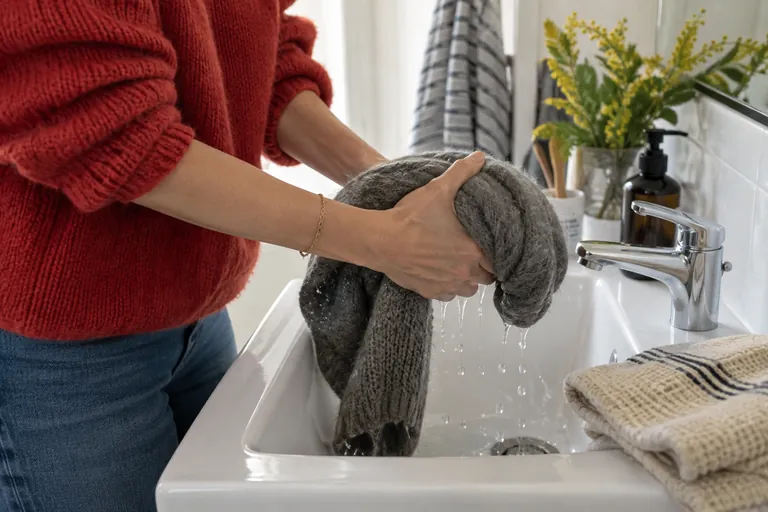 Read alsoHow to wash a wool or cashmere sweater without felting it
Follow the approved method without adding extra steps
Follow the garment’s specified settings: temperature, mechanical action, and any time limits. Hand washing isn’t automatically gentler than a suitable machine cycle; it depends on how you handle the garment. So avoid persistent rubbing and improvised twisting if the instructions call for gentle handling.
Don’t pour in several products “just to be safe.” A vinegar, baking soda, or shampoo recipe doesn’t replace compatibility instructions. If anything in the care label isn’t clear, get clarification before continuing. For a general overview of the steps, see our guide to hand washing clothes, then use only the steps that actually apply to your silk garment.
Treat a stain as a separate issue
A lightly worn garment and a blouse stained with makeup aren’t exactly the same problem. Identify the type of mark if you can, roughly when it appeared, and any steps you’ve already tried. Don’t apply a spot treatment before checking that it’s compatible with the fabric, color, and care instructions.
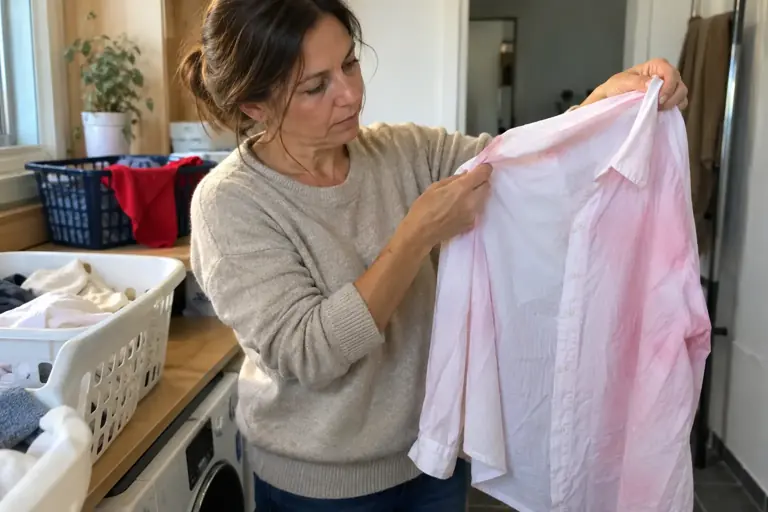
If you’re concerned about a color change, a water mark, or damage to the fabric’s surface, ask for advice instead of trying multiple treatments on a visible area. Our guide to color bleeding helps you separate observation, isolation, and care decisions. Don’t assume that another soak will remove color transfer: the result depends on the fabric and what actually happened.
Plan a drying method that preserves the shape
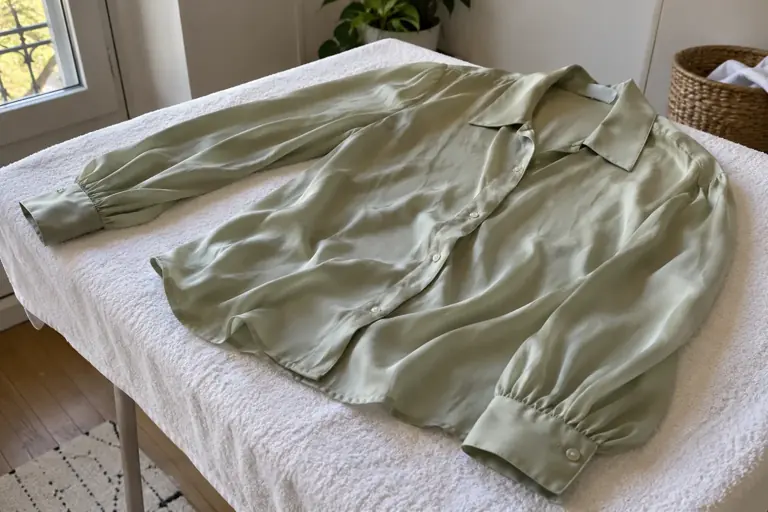
Check the drying instructions as carefully as the washing instructions. Choose a spot where the garment won’t be moved around or squeezed between other clothes. Don’t leave a blouse in a heap while you finish the rest of the laundry. Handle it while supporting its shape, then put it in place according to the instructions.
The UNIQLO guide mentioned above recommends drying the relevant garments away from direct sunlight and advises against clothespins that can leave marks. Keep this recommendation in the context of the garments it covers. If your garment needs to dry flat, prepare a suitable surface; if the brand specifies another method, follow it. Don’t use a dryer or direct heat just to save time before going out.
Check ironing instructions and plan for the next wear
Check the ironing instructions before reaching for the iron or steamer. Steam isn’t automatically harmless: it may be prohibited or require precautions specific to the item. Don’t copy the setting you used for another garment or test it on the front of an important blouse.
Once care is complete and the item is completely dry, check the seams, drape, and overall appearance. Store it on the recommended hanger or support, without compressing it too much. Keep the product reference or a photo of the care label with your wardrobe notes. In Vestly, you can then find outfit combinations for this item, keeping in mind that it needs special care—especially when packing a suitcase or planning several outfits for the same week.
Flip cards
Before you start
The label says not to wash in waterFlip
Follow the recommended professional care; hand washing doesn’t get around this restriction.
The blouse has a lining and embellishmentsFlip
Check the instructions for the whole garment, not just its main fiber.
A stain has already been treated with a productFlip
Make a note of which one and mention it if you ask a professional for advice.
You haven’t prepared for dryingFlip
Set up a suitable support before starting an approved wash.
Check off
Is my silk item ready for care?
0 / 5
You’re all set: follow the instructions for this item without adding any improvised treatment.
Watch a practical example
A visual example from Marie-Anne Lecoeur - The French Chic Expert to compare with the steps in this guide.
Video in English
Frequently asked questions
Can you hand wash all silk?
No. Construction, dyes, and finishes matter too. Check the garment’s care instructions: some items need professional care.
Is the delicate cycle enough for a silk blouse?
The name doesn’t guarantee compatibility. Machine washing must be allowed, and the cycle settings must match the garment’s care instructions.
Can you use a steamer on all silk?
No. Check the brand’s instructions and the appliance instructions before doing anything. Steam isn’t automatically suitable for every finish or construction.