Contents
- Separate the clothes before doing anything else
- Check that it really is color transfer
- Read the care instructions for the affected pieces again
- Choose a suitable method instead of a universal remedy
- Take extra care with multicolored pieces and delicate fabrics
- Understand what color-catcher sheets can and can’t do
- Plan the next washes for the affected item
- Keep a useful record of the result
- Frequently asked questions
- Sources and references
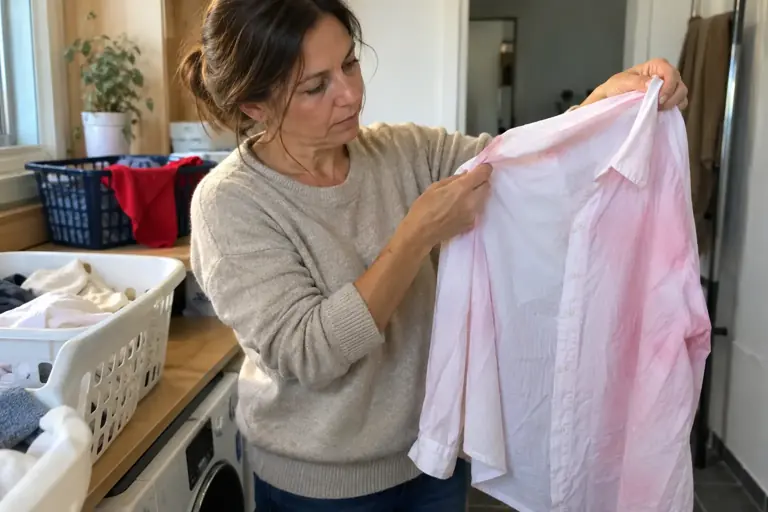
A light-colored shirt comes out of the wash with a pink tint, or a top leaves a mark on another item. The usual impulse is to run another, hotter cycle right away or add several products. It’s better to first identify what changed and check which treatments the clothes can handle.
If a garment bleeds color, separate the affected items, reread their care instructions, and avoid improvised treatments. Whether the color can be restored depends on the fabric, the transferred dye, and the finishes. A product marketed as a color-run remover or laundry color restorer isn’t automatically suitable for every garment.
Separate the clothes before doing anything else
Take the items out and identify which ones look different. Set aside the garment that may have transferred its color, and don’t put it back with the rest right away. Check the affected areas and where the fabrics touched: a localized mark and an overall color change don’t look the same.
Before ironing or choosing a drying method, figure out whether any treatment is appropriate. Don’t apply heat to a spot in an attempt to make the color disappear. If you need to set the clothes aside, don’t leave them packed together and damp in a closed hamper for long. For a delicate or valuable item, ask the brand or a garment-care professional for advice promptly instead of trying one treatment after another.
Check that it really is color transfer
Compare the garment with how you know it looked, under ordinary lighting. Some differences in appearance may come from damp fabric, wrinkles, residue, or lighting. Don’t draw conclusions based only on a photo taken in another room. Also check whether the new color matches another item in the load.
This check won’t always identify the cause with certainty, but it can prevent an unnecessary treatment. Note the cycle, the product used, and the clothes in the washer. If you contact a professional or the seller, this information will be more useful than a string of remedies you’ve already tried. Keep a simple record of what happened and the visible changes, without assuming the problem must come from a single fiber or temperature.
Read the care instructions for the affected pieces again
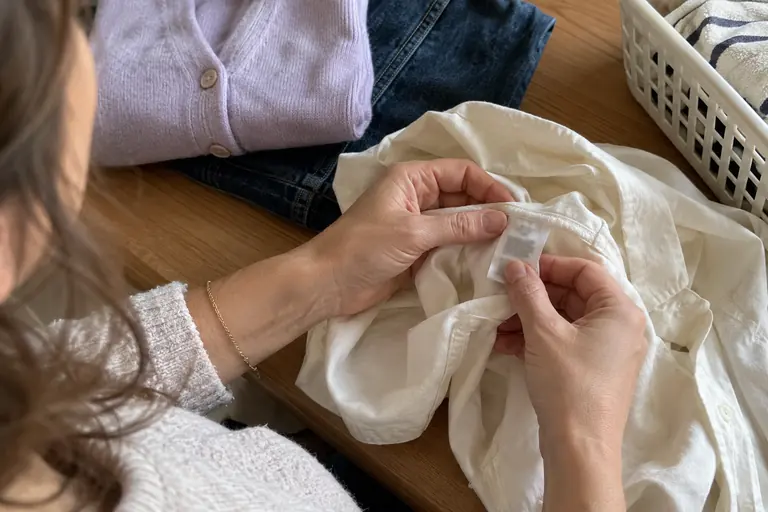
Check the permitted wash method, maximum temperature, drying instructions, and bleaching instructions. A white garment may have a print, embroidery, or finish that limits which products you can use. So the garment’s apparent color alone isn’t enough to choose a stain remover or color-restoration treatment.
The guide to understanding clothing labels helps you tell these instructions apart. GINETEX also highlights the importance of additional labels such as “wash separately” or “wash with similar colors.” If the label is missing, look up the care instructions for the item with the brand. Copying the instructions from another garment with a similar fabric composition doesn’t guarantee that the finishes and dyes will react the same way.
Choose a suitable method instead of a universal remedy
If you’re considering a product made for color-run laundry, read the full instructions before use. Check which fabrics and colors it’s suitable for, any exclusions, the required temperature, and the rinsing method. The garment’s instructions and the product instructions must be compatible; following one doesn’t mean you can ignore the other.
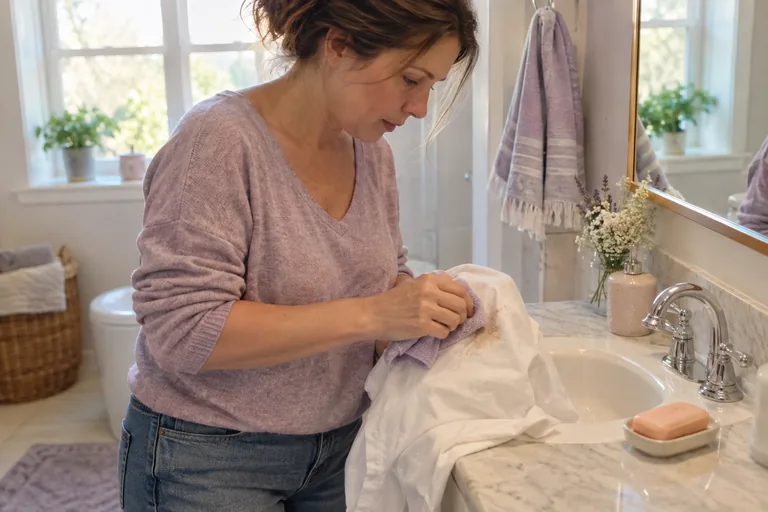
Also follow the machine’s instructions if the treatment needs to be done in it. Some appliances and processes have their own limitations. Don’t mix stain removers, bleaching products, or household ingredients to make them supposedly more effective. If the instructions call for a discreet spot test, it can help check compatibility, but it doesn’t guarantee the whole garment can be restored. When in doubt, a professional assessment is better than a series of harsh attempts.
 Read alsoHow to wash a wool or cashmere sweater without felting it
Take extra care with multicolored pieces and delicate fabrics
A printed dress or a color-blocked shirt may contain several dyes in the same garment. A treatment that removes an unwanted color may also alter the original pattern. Look over the entire garment before deciding, including the lining, fabric-covered buttons, and embellishments.
Wool, silk, some types of viscose, and certain finishes may have different limitations from everyday fabrics. Don’t apply a method you found for durable white laundry without checking first. Our guide to remove a stain from clothing reminds you why it’s important to identify the material and the nature of the problem. Dye transfer isn’t just an ordinary stain you can remove by scrubbing harder.
Understand what color-catcher sheets can and can’t do
Products designed to capture some of the colors in wash water should be used according to their own instructions. They don’t replace reading the garment’s care label or following an explicit instruction to wash it separately. Having one in the machine doesn’t mean you can mix a new, brightly colored item with white laundry without thinking it through.
If you already use this type of product, check the amount recommended, its limitations, and the precautions listed by the manufacturer. Don’t treat the lack of problems in a previous wash as a guarantee for every load that follows. Sorting also depends on the garments actually in the load, their condition, and their care instructions. It’s often easier to keep at-risk items in a separate group than to try to compensate for an uncertain mix.
Plan the next washes for the affected item
Review any special instructions and keep track of the garment that transferred its color. You can wash it separately in the future according to the manufacturer’s instructions, then observe how it behaves. Don’t put it straight back in with light-colored laundry just because an incident has already happened once.
For recent purchases, our guide to washing new clothes for the first time can help you plan how to sort them. Also consider contact outside the washing machine: a damp garment or a fabric that rubs off color may require specific precautions when worn, as indicated by the brand. If color transfer keeps happening despite proper use, contact the seller with the details of what you observed instead of searching endlessly for a home treatment.
Keep a useful record of the result
After an approved treatment, follow the prescribed rinsing and drying steps, then inspect the garment once it’s completely dry. Compare the color and finishes without pulling on the fabric. If you’re still unhappy with the result, don’t automatically apply the treatment again and again: check the instructions for limitations and ask for advice before continuing.
Keep a record of what you did and what changed. This information can help you avoid repeating an unnecessary or incompatible method later. In Vestly, a piece that has been restored to use can go back with your usual outfits; a piece still being treated should stay separate from ready-to-wear clothes in your wardrobe. The goal is to restore possible use while avoiding further damage to the original problem.
Flip cards
Before choosing a treatment
The garment is white with a colored patternFlip
Check that the product is safe for every part of the garment, not just the white background.
The care label says to wash separatelyFlip
Keep following that instruction for future washes, even when using a color-catcher sheet.
The garment is delicate and the method is uncertainFlip
Ask for advice before trying different products or temperatures.
The result looks different only when the fabric is wetFlip
Check it under good lighting before deciding what happened and treating it.
Check off
I know my next step
0 / 5
My decision is based on the actual garment and its care limits.
Watch a practical example
A visual example from Larissa - Criteria Vintage to compare with the steps in this guide.
Video in English
Frequently asked questions
Do vinegar or salt set all colors?
Don’t rely on a universal remedy to make dye colorfast. Follow the manufacturer’s instructions and the directions for products intended for the specific use.
Can you always rescue a garment that has bled?
The result depends on the fabric, dyes, and treatments already used. Full recovery isn’t guaranteed; have delicate or important pieces assessed before trying multiple treatments.
Should you wash it again at a higher temperature?
Don’t exceed the garment’s limits. A higher temperature may not be suitable and isn’t a universal fix for color transfer.
Sources and references
- GINETEX, technical guidance on additional care instructions, guidance on separate-wash labels, accessed October 1, 2026.
- GINETEX, care symbols, accessed October 1, 2026.