Contents
- Look at the entire garment, not just its fiber content
- Decide whether a wash is really needed
- Prepare a suitable wash cycle
- Plan the drying before starting the cycle
- Iron the areas that really change the look
- Adapt the routine to three common garments
- Make a favorite piece last
- Frequently asked questions
- Sources and references
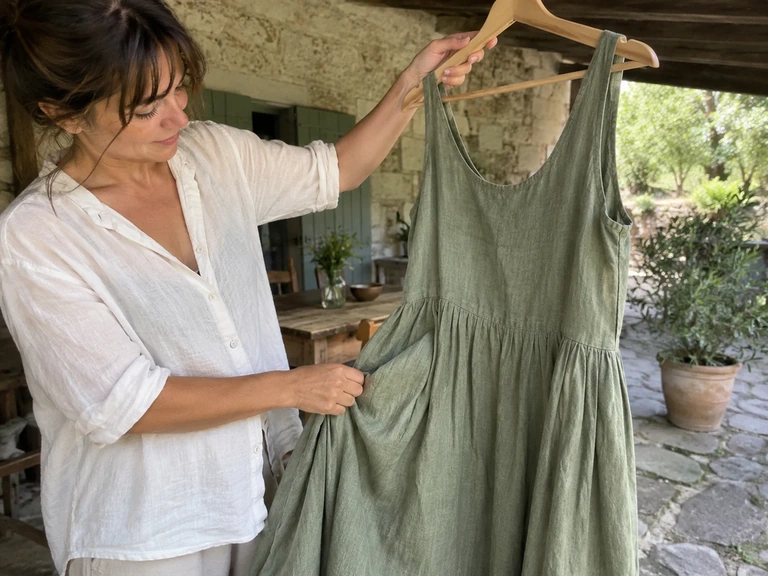
Linen has its own way of moving through the day. A shirt creases at the elbow, trousers show the mark of a seated commute, and a dress falls back into motion as soon as you start walking. These marks don’t automatically mean the garment is dirty or poorly cared for. The challenge is telling what’s part of the fabric from what actually needs attention.
To care for a linen garment, start with its care instructions, plan how you’ll dry it before washing, and decide which areas really need ironing. You can keep your look polished without turning every wear into a full ironing session.
Look at the entire garment, not just its fiber content
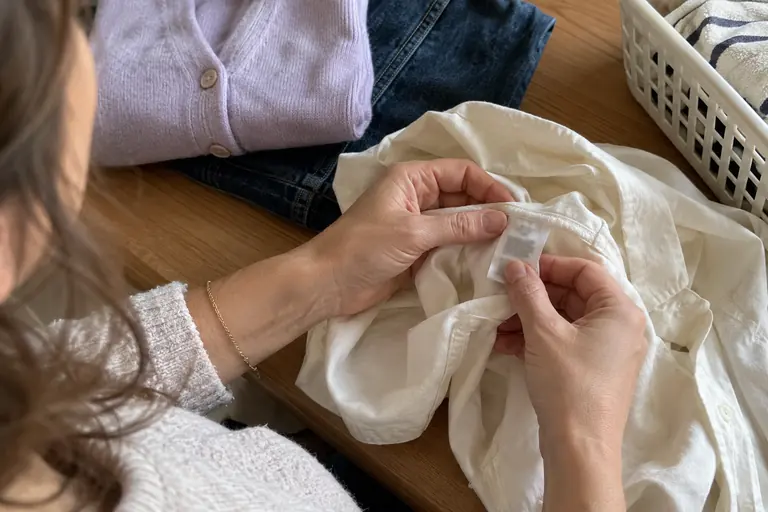
Two shirts with the same linen content may need different care. One is soft and unlined; the other has a reinforced collar, embroidery, or delicate buttons. Check the areas that differ from the main fabric. A structured jacket shouldn’t be treated like a beach shirt, even if both are labeled linen.
Check the care instructions before the first wash. Our guide to understanding clothing labels explains how to read the symbols without choosing a cycle based only on the fiber name. If the label has faded, look up the style number or ask the manufacturer for advice. Avoid an improvised first try on a piece you really care about.
Decide whether a wash is really needed
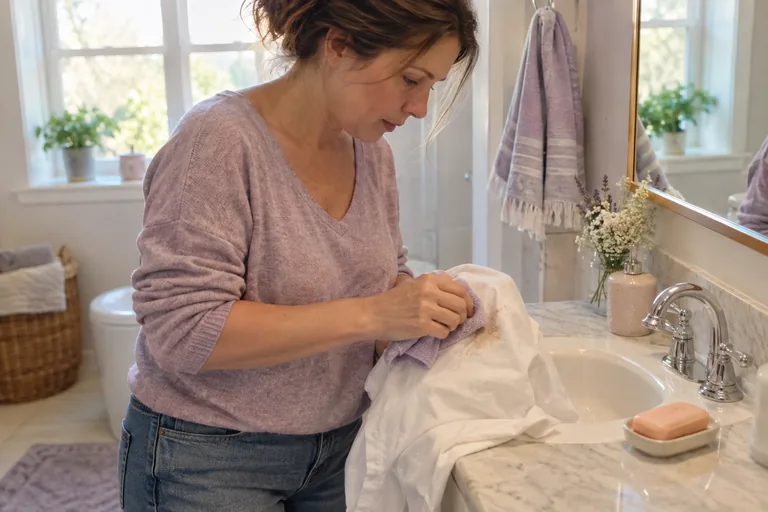
After wearing it, check the collar, cuffs, and areas that touched your skin. A shirt worn all day in hot weather has different needs from an overshirt worn briefly over a clean T-shirt. Sweat, a lingering odor, or a stain call for an appropriate response; a simple crease across the stomach doesn’t automatically mean it belongs in the washer.
If the garment is clean and dry, let it air out before putting it back in your closet. Choose a spot away from strong, direct sunlight and a hanger suited to its shape. Don’t spray perfume to cover an odor: it adds product to the fabric without addressing the cause. If there’s a specific stain, check our method for remove a stain from clothing before applying heat.
Prepare a suitable wash cycle
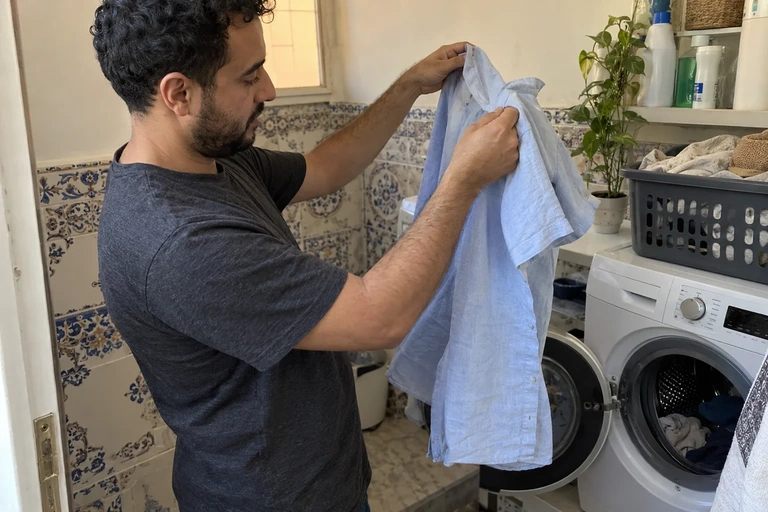
When machine washing is allowed, group garments that are compatible in color, cycle, and soil level. A light, delicate blouse doesn’t need to be washed with a new dark garment that might bleed. Empty the pockets and check for small snags before they catch during the cycle.
Follow the load size recommended for your chosen cycle. An overfilled drum limits movement and can create deeper creases. Measure detergent according to its packaging, the load size, and your household’s water; adding more isn’t a shortcut to cleaner laundry. Choose the cycle and spin settings within the limits on the care label instead of following one supposed recipe for all linen.
Plan the drying before starting the cycle
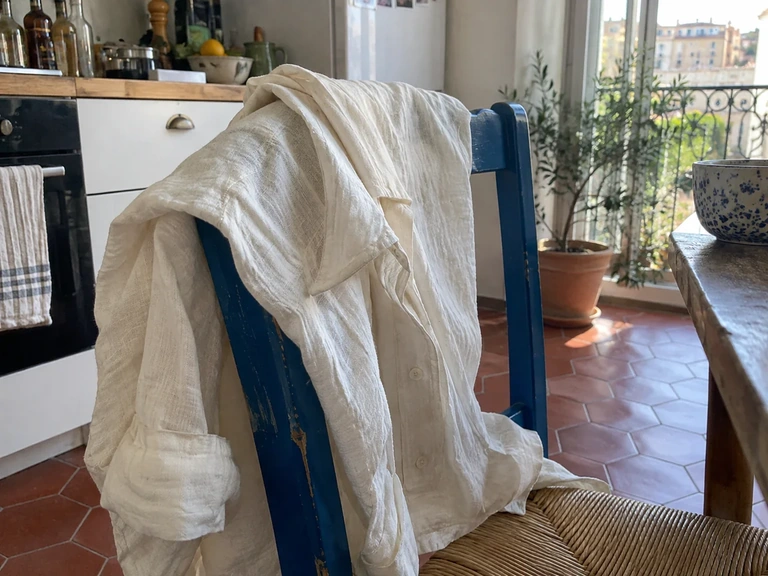
The right time to wash a maxi dress isn’t necessarily when the hamper is overflowing. You also need a suitable place to hang it and enough room to dry it without squeezing it against other pieces. Get a hanger or drying rack ready ahead of time. That way, you won’t have to leave damp laundry bunched up in the machine while you look for space.
Take the garment out after the cycle and gently straighten the seams without pulling to add length. Smooth out the larger wrinkles with your hands. Follow the recommended drying method: some pieces can be hung, while others need more support. The care label also determines whether a dryer can be used. Don’t assume sturdy linen can handle every temperature.
 Read alsoHow to iron your clothes without damaging them: a zone-by-zone approach
Iron the areas that really change the look
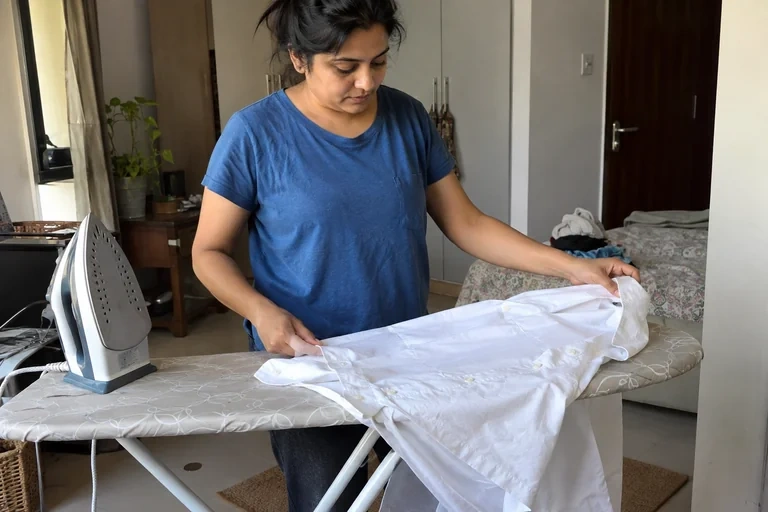
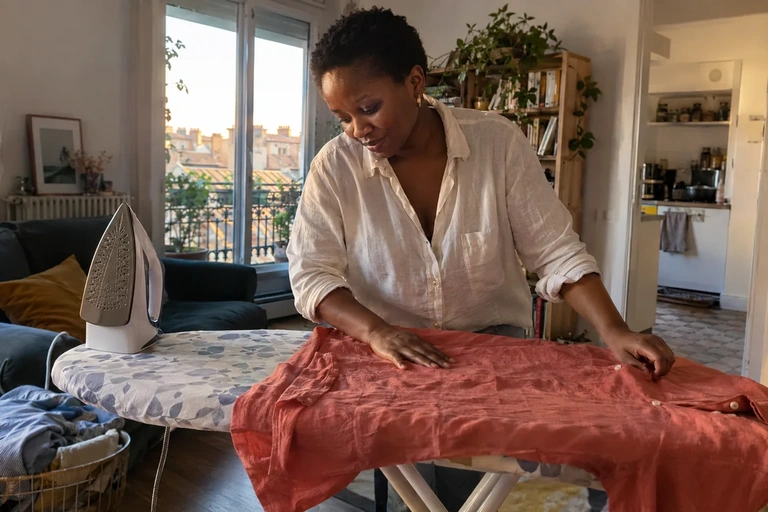
Ask yourself a simple question: where does the garment look messy when you wear it? On a casual shirt, the collar, cuffs, and button placket may be all that need attention. For pants you’re wearing to a meeting, you may want a more polished finish. How crisp you want them depends on the occasion and your taste, not on any rule that every wrinkle must go.
Set the iron according to the garment’s care instructions, and test it on an inconspicuous area if needed. Don’t decide to dampen the fabric or use steam just because it contains linen: finishes and other components matter too. Avoid buttons, protect delicate areas, and work in small sections. Then let the garment cool and dry completely before folding or wearing it.
Adapt the routine to three common garments
For a loose everyday shirt, aim for a relaxed finish: seams back in place, a neat collar, and even cuffs. You don’t need to iron the whole shirt again just because it wrinkled after lunch. The main thing is that it still feels comfortable and looks clean the next time you wear it.
For pants, check the pockets, waistband, and leg seams. These thicker areas may take longer to dry than the rest. Before putting them away, feel these spots to make sure they aren’t still damp. For a lined jacket, think of it as a structured garment: a professional may be the better choice when home care isn’t allowed or could affect the shape of the lapels.
Make a favorite piece last
A loose button, a seam coming undone at the hem, or a weakening pocket is easier to fix before something goes wrong. Take a minute to check these areas while the garment is clean. Keep spare buttons in a labeled envelope. If it needs an alteration, bring the garment in and describe the problem clearly instead of waiting until you can no longer wear it.
You can find outfit ideas for your shirt or pants in Vestly, using the clothes in your digital wardrobe. This planning gives the pieces you care for a place in your outfits. To explore this approach further, read our guide to the cost per wear helps you think about how much you wear a garment beyond its purchase price.
Check off
My linen routine is ready
0 / 6
Everything’s ready: you can care for this garment without unnecessary steps.
Watch a practical example
A visual example from Addie Helms to compare with the steps in this guide.
Video in English
Frequently asked questions
Does linen always have to be perfectly smooth?
No. Its texture is part of the look of many garments. A neat collar, a good fit, and well-placed seams can create a polished look with natural wrinkles. This is especially true for a casual outfit.
Can you apply the care tips for a shirt to a jacket?
Not automatically. The lining, shoulder construction, and reinforcements make a jacket different. Its care instructions take precedence over the habits you’ve developed with a simple shirt.
Can a shrunken garment always be restored?
No. Avoid promises of a one-size-fits-all fix and forceful stretching. Ask for advice about the actual garment before handling it again in a way that could distort its seams.
Sources and references
- GINETEX, care expertise and instructions, accessed September 30, 2026: choosing care steps based on the garment’s instructions.
- Vestly, app overview, accessed September 30, 2026.