
Contents
You’re eyeing a beautiful €250 wool coat, then buy three €15 tops instead “because it’s more sensible.” Six months later, two of those tops have only been worn once, and the third has pilled. The coat, on the other hand, could have kept you warm all winter for years.
That’s the whole point of cost per wear : a simple calculation that divides the price of a garment by how many times you actually wear it. It shifts the question from “How much does it cost?” to “How much does it cost me each time I wear it?” And the answer is often surprising.
The calculation in one line
The basic formula is intentionally simple: price ÷ number of wears. Jeans that cost €80 and are worn 100 times come to €0.80 per wear. An evening dress that costs €120 and is worn twice comes to €60 per wear.
To be more accurate, let’s add care costs: dry cleaning, specialty products, alterations. A €300 suit dry-cleaned four times a year at €15 each has a different true cost than a machine-washable sweater.
Calculator
How much does each wear really cost you?
Formula: (price + care costs over the period) ÷ total number of wears.
Play with the numbers: increase the wears per month or the length of use, and watch the cost drop. That’s exactly what happens with a piece you truly love.
Three examples that change your perspective
Flip cards
Guess the cost per wear
The €180 trench coatFlip
Worn 3 times a week, 5 months a year, for 5 years: about 300 wears. Less than €0.60 per wear.
The €12 trendy topFlip
Worn twice before it goes with nothing else: €6 per wear, ten times more than the trench coat.
The €90 white sneakersFlip
Worn 3 times a week for 2 years: more than 300 wears, or about €0.30 per wear.
The €140 wedding guest dressFlip
Worn to two weddings: €70 per wear… unless you reinvent it with a blazer for other occasions.
 Read alsoHow to wash a wool or cashmere sweater without felting it
How to estimate your wears before you buy
Cost per wear is especially useful before buying. When you’re considering a piece, ask yourself three questions:
- When would I wear it in my real life? Work, weekends, evenings out: think about the plans in your calendar, not the occasions you wish you had.
- What in my wardrobe would I pair it with? If you can’t come up with at least three outfits using what you already own, be cautious.
- How many seasons will it last? Fabric quality, seams, ease of care.
An honest estimate, even a rough one, is enough to avoid most purchases you’ll regret. For wardrobe staples, the guide to capsule wardrobe helps you focus on the pieces you’ll wear most. Buying secondhand also lowers the cost per wear of quality fabrics.
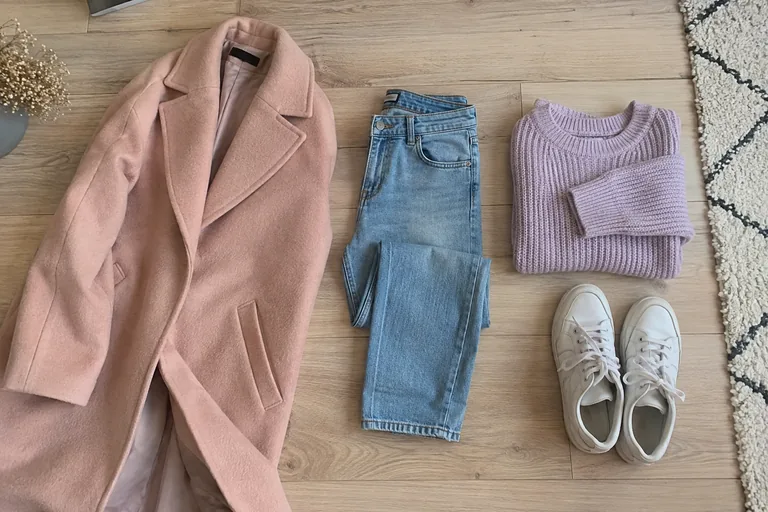
Using cost per wear with your current wardrobe
This exercise is just as useful for what you already own. For a month, keep track of what you actually wear. Many people discover they use only a small part of their wardrobe, and that some expensive pieces have been sitting unworn for months.
A piece with a high cost per wear isn’t necessarily one to get rid of. Often, it’s a piece that’s hard to style : it’s missing the bottoms, shoes, or jacket that would make it easy to wear. A wardrobe edit can help you decide what deserves a second chance.
Check off
Bring a forgotten piece back into rotation
0 / 5
Well done: every piece you bring back into rotation lowers its cost per wear and lightens your mental wardrobe load.
The limits of the calculation
Cost per wear isn’t a hard-and-fast rule. A wedding dress or formal suit will always have a high cost per wear, and that’s okay—their value lies elsewhere. Likewise, an inexpensive garment that lasts and gets worn often is a great buy. The calculation is there to inform a decision, not make you feel guilty.
It also says nothing about manufacturing conditions or environmental impact. To explore this further, read our article on sustainable fashion.
Quiz
Do you think about cost per wear?
A €90 sweater worn 60 times and a €30 sweater worn 5 times: which one costs less per wear?
See the answer
The €90 sweater. 90 ÷ 60 = €1.50 per wear, compared with 30 ÷ 5 = €6 per wear. The more expensive sweater is four times more cost-effective.
When’s the best time to think about cost per wear?
See the answer
Before buying, by estimating how often you’ll really wear it. Estimating how often you’ll wear something before buying helps you avoid impulse purchases that end up at the back of the closet.
Should you get rid of a piece you rarely wear?
See the answer
Not necessarily: it may just need new pairings. Many “forgotten” pieces come back to life with a new pair of bottoms, a jacket, or a pair of shoes.
In the Vestly app
Vestly’s wardrobe stats automatically calculate cost per wear based on the outfits you mark as worn, and flag pieces you haven’t worn in a while. Everything is calculated on your iPhone. It’s an easy way to see what’s really earning its place in your wardrobe, without a spreadsheet.
Watch a practical example
A visual example from Gentleman's Gazette to compare with the steps in this guide.
Video in English
Frequently asked questions
How can you track wears without spending time on it?
Just jot down what you wear each day in an app or a notebook. After a month, you’ll already have a reliable picture of your habits.
Should you include alterations in the calculation?
Yes, along with dry cleaning and repairs. An alteration that finally makes a piece wearable often lowers its cost per wear instead of raising it.
What cost per wear should you aim for?
There’s no magic number. For everyday pieces, under €2 per wear is great. For secondhand pieces, what matters most is wearing them more than once.