Contents
- Read the care instructions before removing all tags
- Understand the benefits without expecting total protection
- Finish trying on the garment before its first wash
- Separate colors and delicate items
- Choose the cycle and product without overdoing it
- Get ready for drying before you start
- Check the dry garment before wearing it for the first time
- Add the garment to a familiar routine
- Frequently asked questions
- Sources and references
A new garment may look ready to wear, but its first care deserves a little preparation. It may have undergone various treatments during manufacturing, and its care instructions may differ from those for similar pieces in your wardrobe. So putting it straight into your usual laundry isn’t always the best place to start.
Before wearing it for the first time, plan to care for your new garment as recommended: read the label, then sort and prepare it for drying. Anses recommends washing clothing textiles intended to touch the skin before first use, following the manufacturer’s instructions. This recommendation doesn’t authorize a treatment that’s prohibited for a particular garment.
Read the care instructions before removing all tags
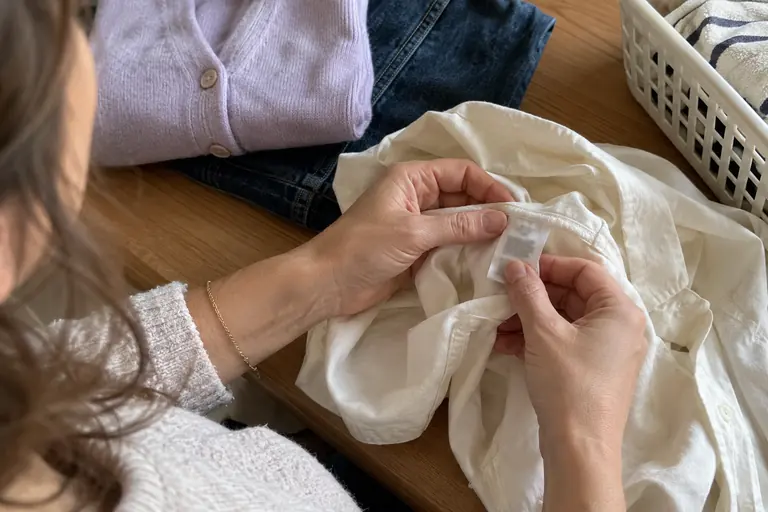
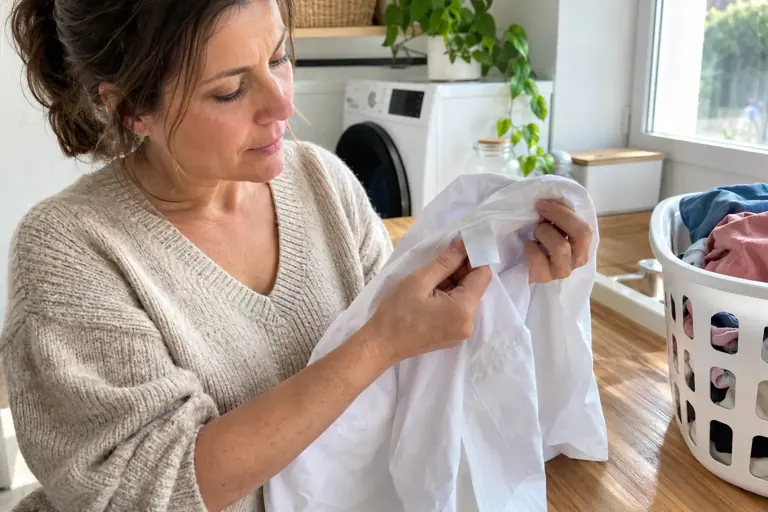
Check the fabric composition and care label, along with any specific instructions from the brand. Check washing, drying, and ironing separately. A garment may be suitable for a gentle cycle while requiring a specific drying method. Embellishments, lining, prints, and bonded parts are also part of the garment.
Take a clear photo of the care instructions if the label is hard to find once the garment is put away. Our guide to understanding clothing labels helps you tell the information apart. Don’t choose a cycle based only on the word “cotton,” “wool,” or “polyester.” Two garments made from the same fiber may have different construction and finishes that call for different care.
Understand the benefits without expecting total protection
In its report on clothing textiles, Anses examines substances that may contribute to skin irritation or sensitization and highlights the value of washing garments before first wear. This is a preparation step to carry out according to the garment’s care instructions, not a guarantee that every garment will suit every skin type.
Don’t infer a garment’s composition or safety from its smell alone. If it has an unusually strong odor or you have concerns about the product, ask the seller or manufacturer instead of trying one household treatment after another. You don’t need to add a disinfectant, fragrance, or several products to make the garment “cleaner” without specific instructions. The first priority is appropriate care and a thorough rinse.
Finish trying on the garment before its first wash
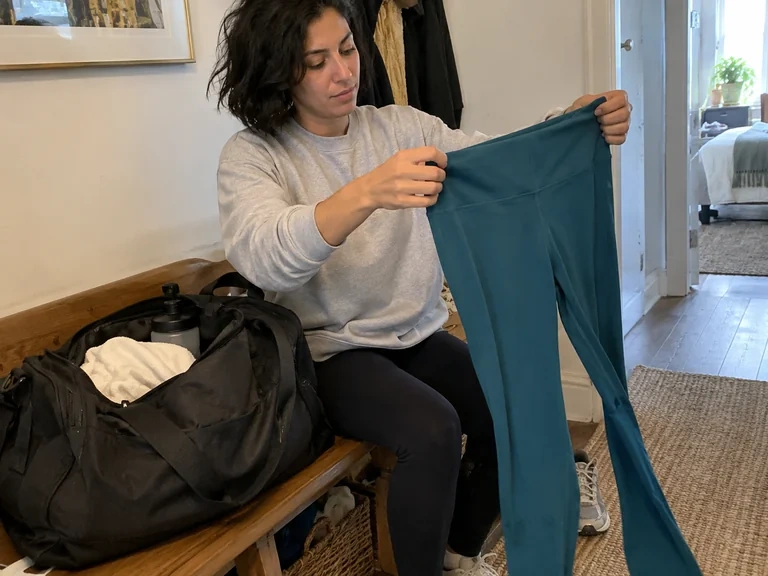
Make sure the size, fit, and intended use work for you before starting the wash. Sit down, walk around, and check the fastenings with the outfit you plan to wear. If the garment already has a defect or you’re unsure about keeping it, sort things out with the seller before making any changes or giving it additional treatment.
This step also helps you remember the garment’s original shape. Check the seams, length, and drape without measuring every detail excessively. If anything changes after care, you’ll be able to describe more precisely what you observed and which instructions you followed. Keep the useful details about the style instead of relying only on a catalog photo that may show a different size or pose.
Separate colors and delicate items
Sort the laundry by color and follow the manufacturer’s recommendations, especially if they say to wash the garment separately. Don’t add a new, brightly colored garment to a load of light-colored laundry without thinking it through. The first care cycle is a good time to see how it behaves, without washing it alongside pieces you particularly care about.
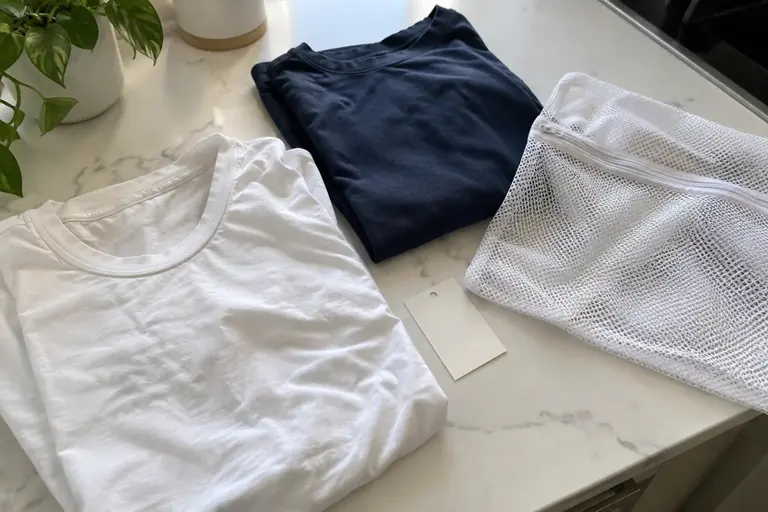
Also check for anything that could snag: zippers, hooks, embellishments, or rough fabrics. Fasten or protect them according to the garment’s care instructions. A mesh bag can limit some contact when appropriate, but it doesn’t make a prohibited cycle safe. Keep together only pieces with genuinely compatible care instructions instead of making one load just because they were bought on the same day.
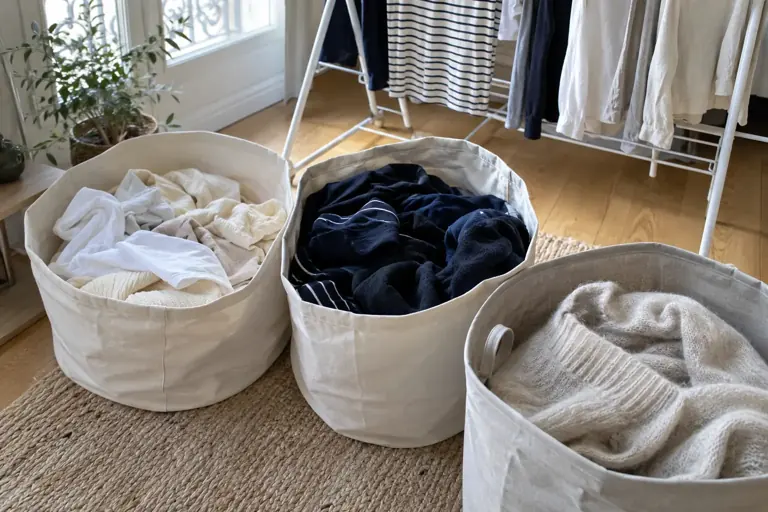 Read alsoHow to sort laundry: make loads with compatible care needs
Choose the cycle and product without overdoing it
Choose an allowed cycle and follow the machine’s recommended load for that cycle. GINETEX explains that care instructions set limits, including temperature and mechanical action. A hotter or more vigorous setting isn’t automatically better for a new garment.
Measure the detergent according to its instructions, the load, and the settings listed on the product. Don’t add several homemade remedies to “neutralize” anything that might remain in the fabric. Improvised mixtures may be incompatible with the materials or products used. For a technical or stretchy piece, also check the guidance on additives; our guide to caring for clothes with elastane highlights the importance of considering the entire garment.
Get ready for drying before you start
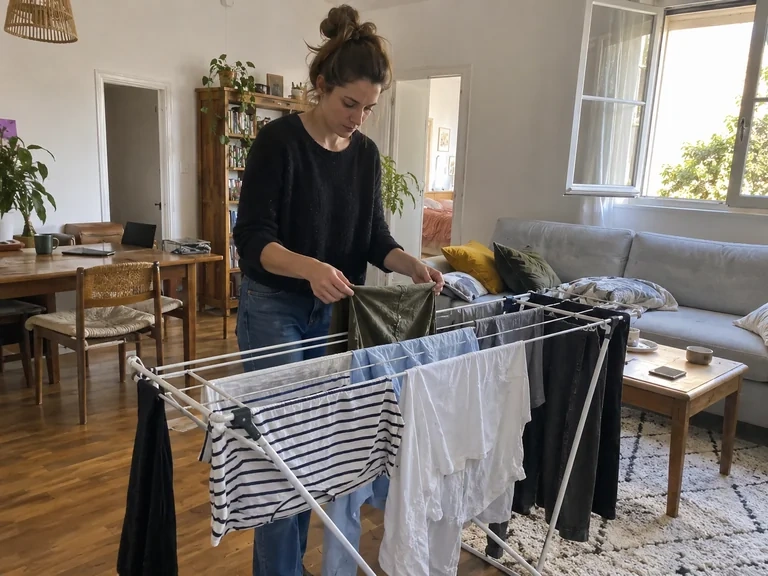
Set aside the support and space you’ll need: a drying rack, a flat surface, or another recommended method. Even a first wash done properly can be followed by stretching or distortion if a damp garment hangs from a narrow area or is compressed in a basket. Planning ahead avoids having to improvise when the cycle ends.
Gently straighten the seams and edges as appropriate for the garment, then let it dry according to its care instructions. Don’t try to speed things up with an unauthorized heat source. The guide to drying clothes in an apartment helps you plan the drying surface and airflow. Wait until the garment is completely dry before assessing its shape or putting it away in your wardrobe.
Check the dry garment before wearing it for the first time
Check the color, seams, edges, and any embellishments. Try the garment on without pulling it to artificially restore its shape. If you notice an unexpected change despite following the care instructions, keep a record of the cycle, product, and instructions you followed so you can contact the seller or brand.
Don’t immediately follow up with a hotter wash, bleach, or stretching while damp. These attempts can cause another problem and make it harder to understand what caused the change. A garment that looks clean but still has an unusual odor also warrants checking with the manufacturer, especially if you don’t know what treatment it received. The cautious approach here is to get clarity before adding more products.
Add the garment to a familiar routine
Once you’ve finished the first wash, note the useful care instructions and where the garment belongs in your future sorting. You can then group it with compatible clothes without rereading the entire label each time. Still, keep any specific instructions for a garment that needs a different method, especially for drying or finishes.
If irritation appears while wearing the garment, take it off and avoid drawing your own conclusions about the specific cause. A health professional can help if the reaction persists or concerns you. For help organizing your wardrobe, Vestly makes it possible to find the new piece in your outfit combinations; getting it ready to wear still depends on its actual condition and care instructions.
Quiz
Getting ready for the first wash
Two new tops have the same main fiber. Can you automatically choose the same wash cycle?
See the answer
No, check the care instructions for the whole garment. Finishes, lining, and construction can affect which treatments are allowed.
Can a mesh laundry bag make it okay to use a cycle that isn’t allowed?
See the answer
No, it doesn’t replace the care instructions. A mesh bag can limit some contact, but the temperature and mechanical action are still there.
Check off
My new garment is ready for its first care
0 / 5
The garment’s first care can be done using a method suited to it.
Watch a practical example
A visual example from The Wall Street Journal to compare with the steps in this guide.
Video in English
Frequently asked questions
Should you wash a garment at a very high temperature the first time?
Follow the approved temperature and cycle. A garment being new doesn’t mean you can exceed its care instructions or use a harsher treatment.
Can you put all your new purchases in the same load?
Only if their care instructions, colors, and construction are compatible. Sort them as separate garments, even if they’re from the same store.
Does the first wash guarantee there won’t be any irritation?
No. It can’t guarantee that a garment will suit every skin type. If a reaction occurs, take the garment off and seek professional advice if it persists or concerns you.
Sources and references
- Anses, opinions, and report on clothing textiles, opinion dated April 27, 2018, accessed October 1, 2026.
- GINETEX, care symbols, accessed October 1, 2026.