Contents
Locate the contact before changing the knitwear
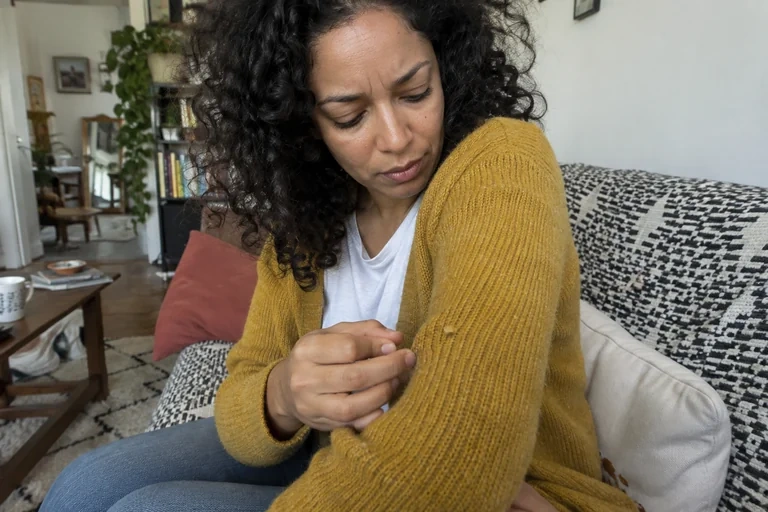
Put the sweater down and describe what bothered you: the neckline edge, an inside seam, a cuff, the whole surface, or a loose label. That description is more useful than treating every knit as identical. This is not a way to establish a medical cause. If discomfort continues after removal, seek appropriate advice instead of repeatedly testing clothes or products.
Inspect the garment inside and out without pulling its yarns. A catching detail may be local even when the rest of the sweater works for you. Do not immediately cut off a label: it may carry fiber content or care information. Record those instructions and identify its attachment before considering a change. Structural stitching cannot be treated like a loose thread.
Why a fiber name is not enough
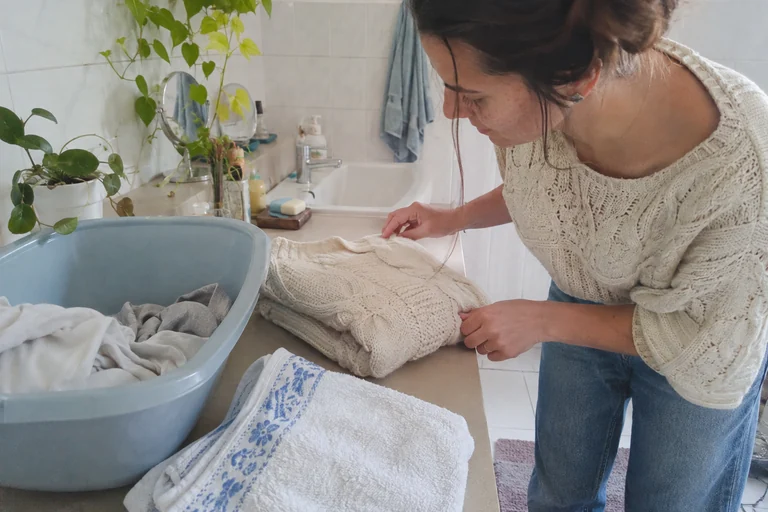
Woolmark explains that fiber diameter and flexibility contribute to how fabric feels against skin. That does not guarantee your comfort from the word wool, merino, or cashmere alone. A composition label identifies materials; it does not necessarily reveal diameter distribution, yarn behavior, or the feel of the finished garment. Treat those as separate kinds of information.
Two sweaters with the same fiber content can have different necklines, textures, and armholes. Avoid declaring an entire material good or bad for everyone based on one garment. If you are considering a purchase, check manufacturer information and fitting or return conditions. Do not alter an item you may return merely to try a supposed fix. Keeping that option open may be more useful.
Choose a layer that actually covers the area
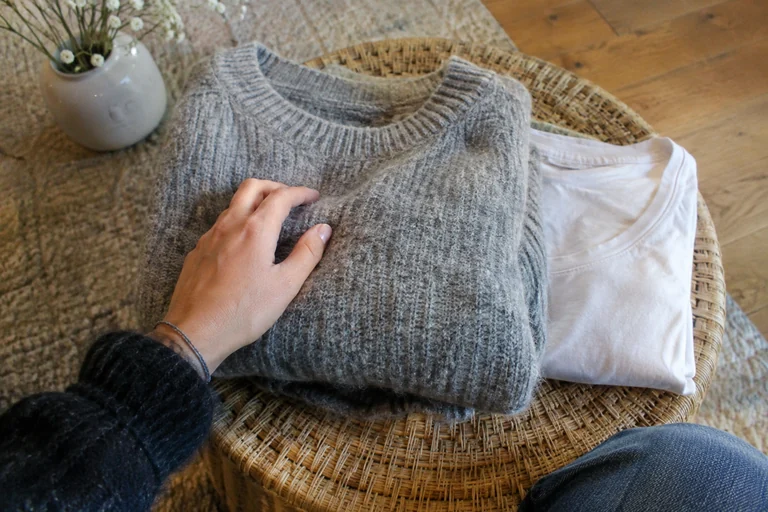
Start with a garment that already feels comfortable on its own. A tank top leaves the neck and forearms exposed; a long-sleeved shirt does not automatically cover an area above its neckline. Consider where the sweater edge moves as you use your arms. The layer should stay in place without needing adjustment after every ordinary movement. Coverage matters more than simply adding another garment.
Then add the knit without forcing the sleeves. If the combination pulls under your arms or across your back, it has introduced another problem. A roomy shirt is not always the best separator under a close-fitting sweater. Our layering separates visible lines from actual space. You can also decide that this sweater is not the right choice for today.

Compare one change without pushing through discomfort
Set up a simple comparison: the same sweater, the same ordinary activity, and one different base layer. You are choosing an outfit, not seeing how long you can endure contact. Remove the garment if discomfort returns. There is no required trial duration or target score here. Stopping after the first observation and choosing something else is a complete decision. You do not owe the sweater another attempt.
Record appearance separately from how the clothes feel. A photo can preserve the visible neckline or sleeve volume. It cannot establish freedom from rubbing, softness, or comfort several hours later. Your Vestly digital wardrobe can help you find garments and plan a combination. A virtual try-on image cannot replace your own wearing experience, and you can keep practical observations separately from the visual comparison.
| Reference | What it helps compare | What it does not establish |
|---|---|---|
| Fiber content | Declared fibers | Contact comfort |
| Photo | Visible neckline and bulk | Actual softness |
| Care label | Permitted treatments | A cure for discomfort |
Find your approach
Which point do you want to clarify?
Choose an observation, not a diagnosis.
Choose the closest match: the corresponding guidance will appear here.
The neckline bothers you
Check coverage
Does the base layer cover the entire area? Remove the sweater if discomfort returns.
A seam catches
Inspect without cutting
Identify the attachment and retain care information before considering changes.
The sleeves pull
Reduce bulk
Remove a layer or choose another combination without forcing your arms through.
You want to wash it
Read the complete label
The need for cleaning and contact comfort are separate decisions.
You see pilling
Separate surface and comfort
A neater surface does not guarantee a more comfortable feel against skin.
Discomfort continues
Stop trials
Remove the garment and seek appropriate advice instead of repeating treatments.
 Read alsoSustainable fashion: buy less but better, without going without
Keep care in its proper role
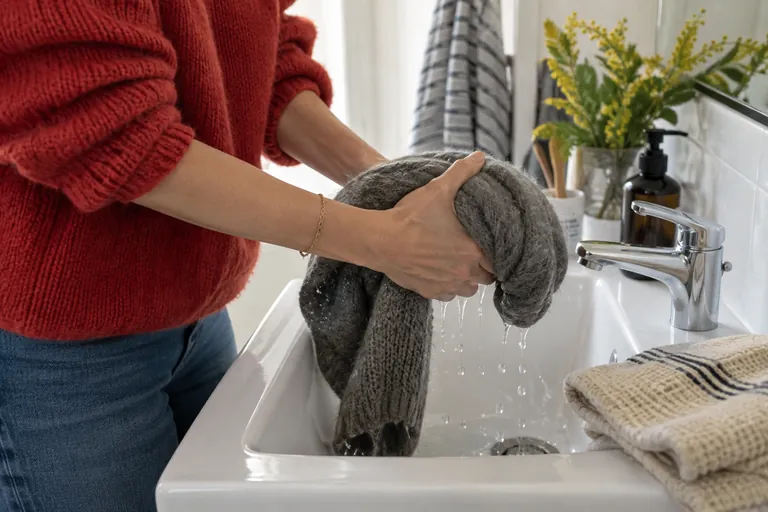
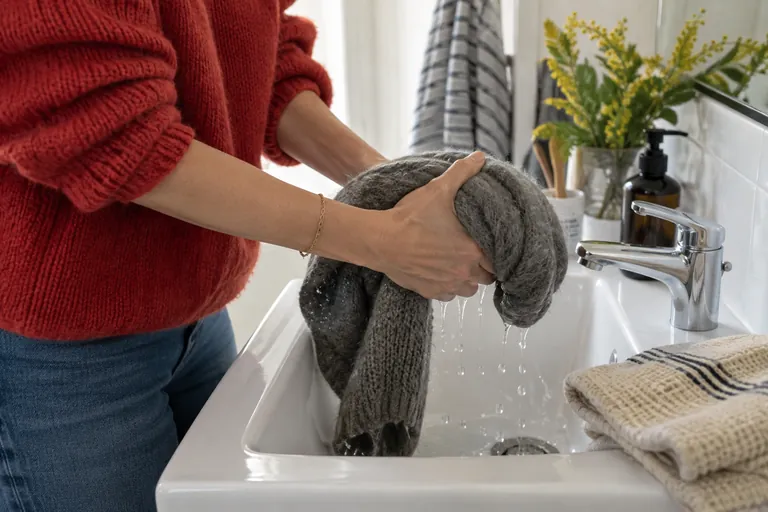
Choose care using the complete garment’s instructions. GINETEX explains that care symbols describe permitted treatments and their limits. Wool content therefore does not authorize any wash you consider gentle. Our wool and cashmere care guide helps with that separate decision. Cleaning is not a promise to eliminate uncomfortable contact, and an item can be clean yet still unsuitable for wearing next to your skin.
Do not turn a freezer, vinegar, hair conditioner, or fabric-softener tip into a universal procedure. Before applying an unlisted product or treatment, look for manufacturer guidance for that garment and finish. We do not promise that a home recipe will permanently change fiber diameter or make your sweater tolerable. Leaving the item unchanged is a valid choice while you seek the information needed to decide.
Video in English
These resources show knitwear or cashmere care, not skin treatment or proof that your sweater will become soft. Any featured products are optional and must be compatible with your garment.
Separate pilling from how clothes feel
Removing pilling addresses the surface. It does not establish why your neck or arms respond to the garment. If you choose to remove pills, do it for that specific purpose, using a compatible tool and a small hidden trial. Do not shave more knitwear away in pursuit of a comfort result. Removing material can weaken the garment while leaving the original question unanswered.
Quiz
Three decision checks
Does fiber content guarantee comfort?
See the answer
No, the garment and your observation matter. Fiber content does not measure your sensation.
Does a photo prove softness?
See the answer
No, it records appearance. An image does not reproduce contact.
What if discomfort returns?
See the answer
Remove the garment. There is no required duration to achieve.
Check off
Before keeping this combination
0 / 5
These five checks prepare a decision; they do not guarantee tolerance.
Frequently asked questions
Can a merino sweater feel itchy?
A fiber name does not guarantee comfort. Consider construction, actual contact, and manufacturer information without pushing through discomfort.
Does freezing solve the problem?
We do not recommend it as a universal treatment. It replaces neither care instructions nor a reversible outfit comparison.
Must I buy a new base layer?
No. Start with something already comfortable. If no combination works, choose another outfit instead of forcing contact.
Is a tank top enough?
It depends on the area: the neck and arms remain exposed. Another layer is useful only when it actually works for you.
Will removing pills make a sweater soft?
It may improve surface appearance without guaranteeing contact comfort. Avoid weakening knitwear with repeated passes.
Can Vestly verify comfort?
The wardrobe and virtual try-on help plan visual combinations. They do not measure fabric contact against your skin.
Sources and scope
Sources checked November 13, 2026. Original outfit-comparison method; our team performed no physical garment test or medical diagnosis.