Contents
- Choose a color family instead of a theoretical color
- Decide whether you want subtle or noticeable contrast
- Give textures a place
- Build a lighter version without buying a matching set
- Choose accessories that work for your actual day
- Settle on a formula you can wear again easily
- Frequently asked questions
- Sources and references
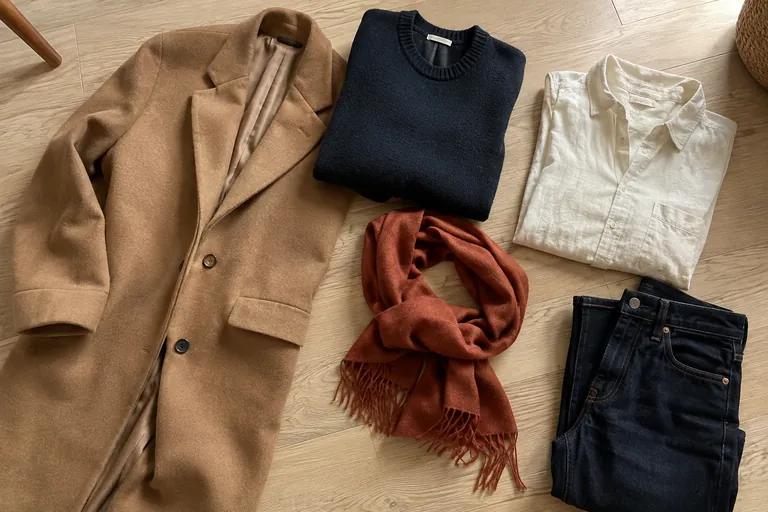
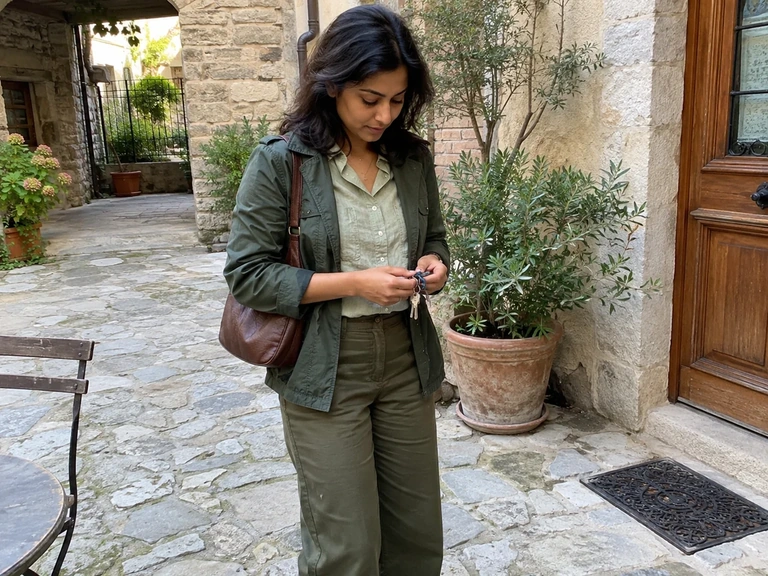
A monochrome outfit can bring to mind a matching set bought all at once, with a top and pants in exactly the same shade. But your wardrobe is more likely to hold several blues, grays in different depths, or a beige sweater that doesn’t quite match your sand-colored pants. That variety can be the starting point for your outfit instead of a problem to solve.
To build a monochrome outfit, choose a color family, then vary the shades and textures within it. You can keep shoes or a bag in another color. The idea is to create a sense of flow you like, without trying to match every piece perfectly.
Choose a color family instead of a theoretical color
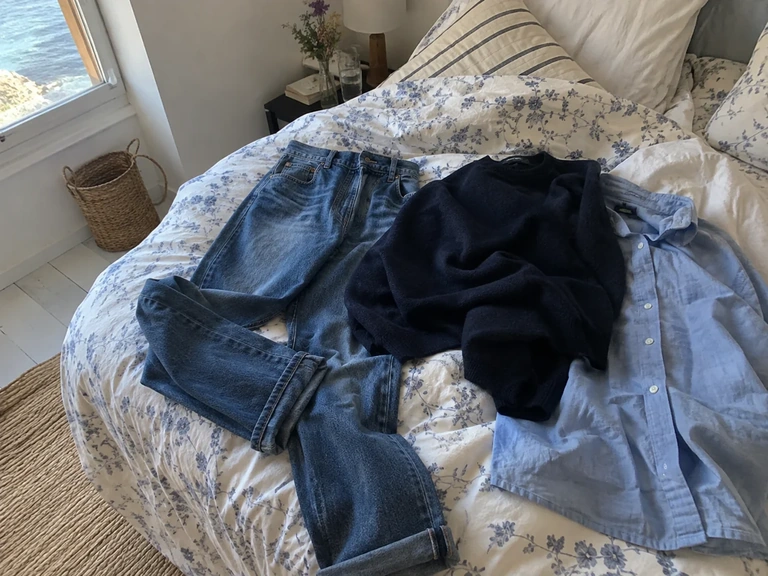
Open your wardrobe and look for a color family represented by several pieces you actually wear. Blue is often an easy choice if you have jeans, a shirt, and a knit. Gray, green, or burgundy can work too. There’s no one best choice for everyone: start with a color you already enjoy wearing day to day.
Pull out just two or three pieces. If you spread ten variations across the bed, you may end up focusing all your attention on tiny differences. Lay the pieces side by side and ask yourself if you like how they look together. Denim can serve as a middle shade between a light blue top and a navy jacket, even when their textures are very different.
The guide to find your personal style can help you identify the combinations that feel like you. Monochrome is one way to put a look together, not a style you need to adopt all the time.
Decide whether you want subtle or noticeable contrast
A pale blue shirt with navy pants creates an immediately noticeable difference. Two medium grays create a subtler effect. In both cases, you stay within the same color family; you’re simply choosing how much contrast you want.
Start by comparing two versions, changing just one piece. With your gray pants, try a light gray top, then a charcoal one. You’ll see what changes more clearly than if you also switch your shoes, jacket, and jewelry. These try-ons aren’t meant to correct your body. They’re a way to compare clothes and the overall impression.
If two neighboring colors don’t seem to work well together, put more distance between them. A beige that’s very similar but slightly different may bother you; you might prefer a cream and a clearly distinct sand brown. On the other hand, if you want a very soft transition, keep the differences subtle and let the fabrics add variation.
Give textures a place
Texture can keep a single-color look from feeling too uniform. A chunky knit with smooth pants, a soft shirt with jeans, or a pleated skirt under a fine sweater creates different surfaces. Notice how they move with you: folds, drape, and shine all contribute to the result.
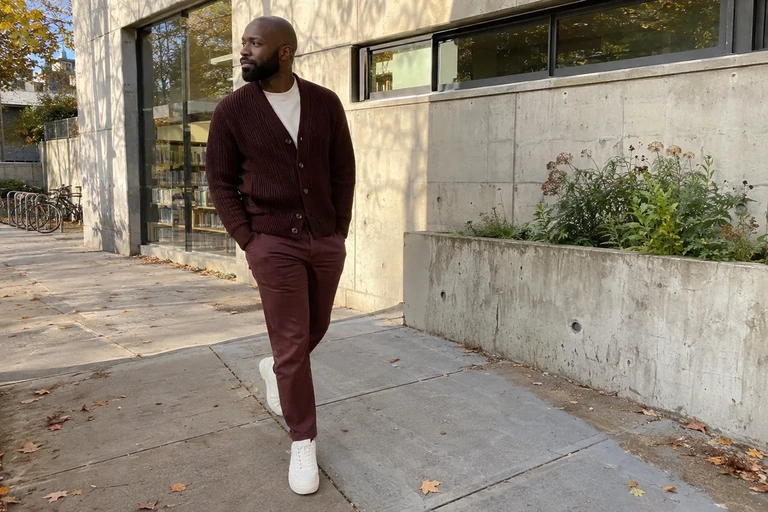
There’s no need to pile on every texture you can find. One key contrast may be enough. If you’re already pairing a standout knit with a shiny piece, start with simple accessories to see the overall look more clearly. Then you can add anything you genuinely feel is missing.
Think about thickness too. Two pieces that feel comfortable on their own may feel awkward when layered. Try moving around in a thick sleeve under a fitted jacket. A monochrome choice is about the palette; it doesn’t replace checking the fit and how you’ll wear it.
Build a lighter version without buying a matching set
Beige, cream, or sand outfits are often shown in perfectly matched shades. But you can use pieces from different brands. Lay the sweater and pants near a window, then try them on together. Store lighting, bedroom lighting, and daylight can change how close the shades look.

If you like the result, keep it, even if the labels describe the colors differently. If one piece looks yellowish or grayish next to the other and you don’t like it, swap it out without overthinking your reasons. Your preference is enough. You can also try that shade in a less prominent accessory.
For light-colored clothes, check how see-through they are in the conditions you’ll wear them in. A fabric that looks opaque on the bed may reveal more when stretched or backlit. This practical check helps you avoid feeling uncomfortable once you’re out the door.
 Read alsoPairing black and brown: create an easy-to-wear combination
Choose accessories that work for your actual day
Black, brown, or white shoes don’t cancel out your monochrome outfit. They can simply add a punctuation mark to a dominant palette. Wear the shoes you need for walking, working, or standing, then see if you like how they transition with your bottoms.
The same goes for your bag. If your everyday bag carries your things well and looks right to you, you don’t need to buy one in every color. The guide to putting together an outfit that reflects your personal style invites you to start with how you use your clothes, which is still useful even when you’re exploring a palette.
Outfit ideas
Explore a color family
Medium-wash blue jeans, a pale blue shirt, and an open navy jacket. Keep your usual shoes on for a simple first try.
See all ideas
Blues
- Medium-wash blue jeans, a pale blue shirt, and an open navy jacket. Keep your usual shoes on for a simple first try.
- Navy pants and a rich blue knit. Compare two textures before adding a scarf or a piece of jewelry.
Greens
- Olive pants and a sage shirt. A darker green cardigan can add a third depth if you need it.
- Deep green skirt and a soft green sweater. Check the shades in daylight, then try the outfit sitting down and walking.
Grays
- Charcoal pants and a light gray top. A medium gray jacket creates a connection without matching exactly.
- Gray skirt, textured gray knit, and familiar dark shoes. Keep the version whose simplicity you like.
Settle on a formula you can wear again easily
After trying it on, notice what you liked: the two shades, the contrast between surfaces, or the addition of a lighter layer. That observation is more useful than a list of supposedly ideal colors. It’ll help you recreate a similar outfit with other pieces in your wardrobe.

In Vestly, find your pieces by color and save the combinations you like. You can try several outfits around one garment, then plan a look for the week. Still, check the shades with the actual clothes: a photo or virtual try-on rendering can’t replace seeing the fabric under your own lighting.
Watch a practical example
A visual example from Julianna Lee to compare with the steps in this guide.
Video in English
Frequently asked questions
Does a monochrome outfit need to be exactly the same shade everywhere?
No. You can bring together several shades from the same color family. Differences in brightness and texture give you more ways to put a look together. If you prefer a perfectly matched set, that’s an option too, but it isn’t necessary.
Can you mix different blacks?
Yes. Look at the clothes together: washed black, deep black, and a satin finish can create visible differences. If the shades feel too close for your liking, try a sharper contrast or a different texture.
Should you buy shoes in the same color?
No. Start with a comfortable pair you already own. Shoes in a different color can work beautifully with the main palette. Above all, make sure the outfit suits your day.
Sources and references
- Vestly, wardrobe and styling features, accessed September 30, 2026.
- The combinations shown are editorial suggestions, with no body rules or color analysis.