Contents
- Does it cling while you wear it or after tumble drying?
- Why avoid overdrying?
- What can you try before leaving home?
- How can you compare without changing everything?
- Do you need softener or a whole new outfit?
- How can you remember a combination that works for you?
- Frequently asked questions
- Which sources support these checks?
Reduce static cling by avoiding overdrying and comparing the layers that rub together. Separate an outfit problem from an appliance problem. Before adding water or a product, check the garment’s care instructions. A fix that works on one skirt may leave marks on another, so start with a reversible change.
Does it cling while you wear it or after tumble drying?
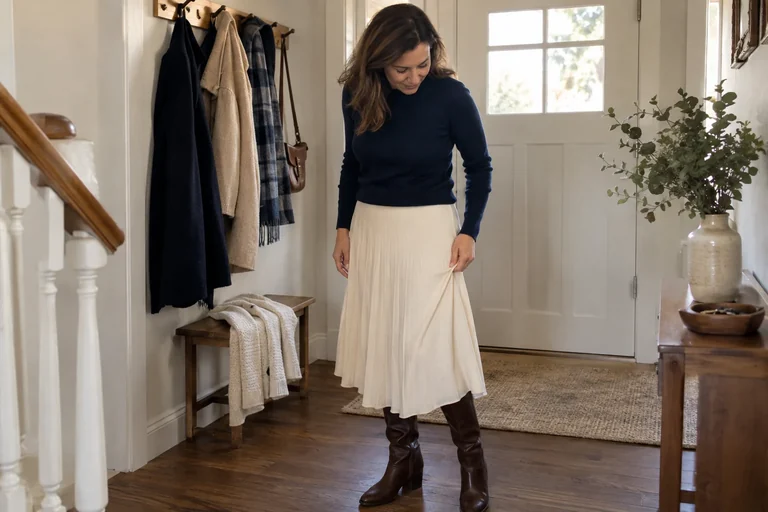
Start with when the problem appears. A skirt sticking to tights during a fitting calls for a closer look at that combination. Several pieces clinging together straight from the drum suggest reviewing the drying process instead.
| What you notice | First comparison | What this does not establish |
|---|---|---|
| One combination clings | Change the layer underneath | That an entire fiber type must go |
| The load comes out overdry | Review the permitted cycle | That you need more product |
| A lining stays bunched up | Check cut and length too | That static is the only cause |
Our guide to sorting laundry covers compatible loads. The goal here is to isolate one useful change.
Why avoid overdrying?
Repeated rubbing can create a static charge. The Drycleaning & Laundry Institute also identifies extended drying and fabrics that dry at different rates as contributing factors. Fiber content alone is not a certain diagnosis: check the actual garment.
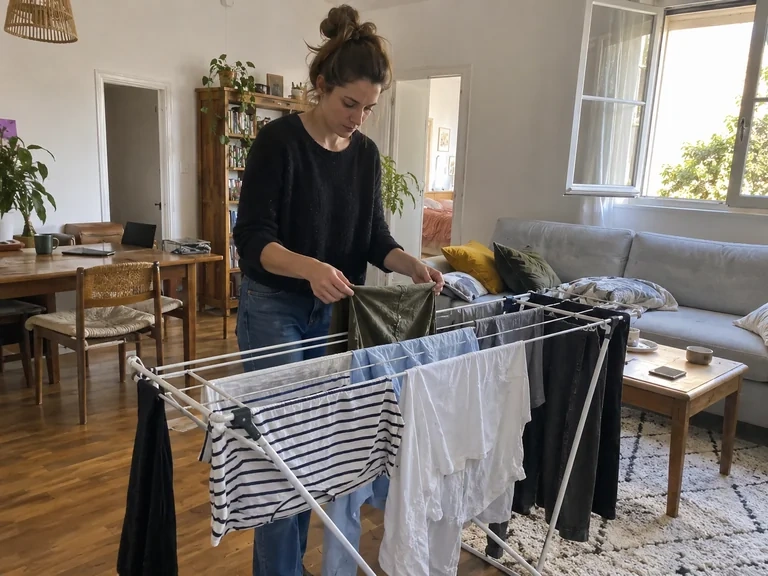
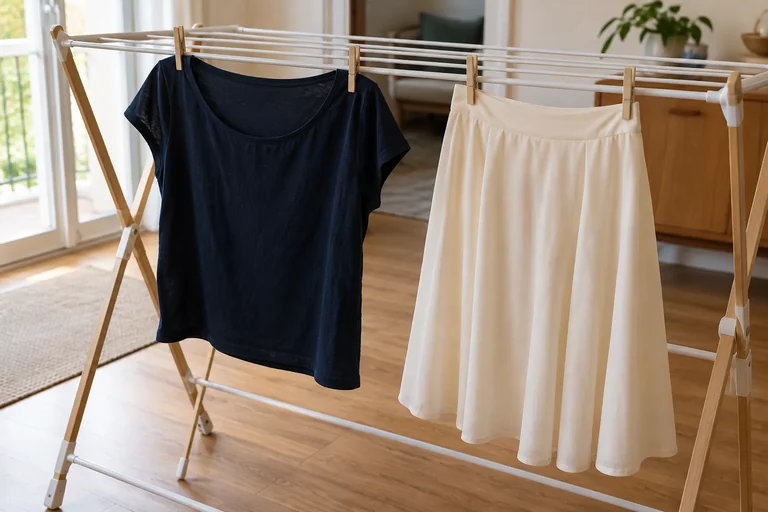
If tumble drying is allowed, choose a cycle consistent with both the care label and the appliance manual. Do not automatically run another complete cycle because one seam still feels damp. Our indoor drying guide offers other supports when they suit the garment.
What can you try before leaving home?
Take the garment off to check its lining, then try a layer you already own. A different slip, tights, or top lets you compare combinations without treating the fabric. No particular material guarantees that all static will disappear.
Do not spray hairspray, perfume, or a homemade cleaning mixture onto clothing. Water can leave rings on some finishes. If considering a textile antistatic product, check its intended use, restrictions, and the maker’s instructions for a hidden-area test. The garment’s care instructions still matter.
Choose your first check
This aid suggests a check, not a guaranteed diagnosis.
Without JavaScript, use the table and steps in this guide to record the same test on paper.
 Read alsoHow to wash a wool or cashmere sweater without felting it
How can you compare without changing everything?
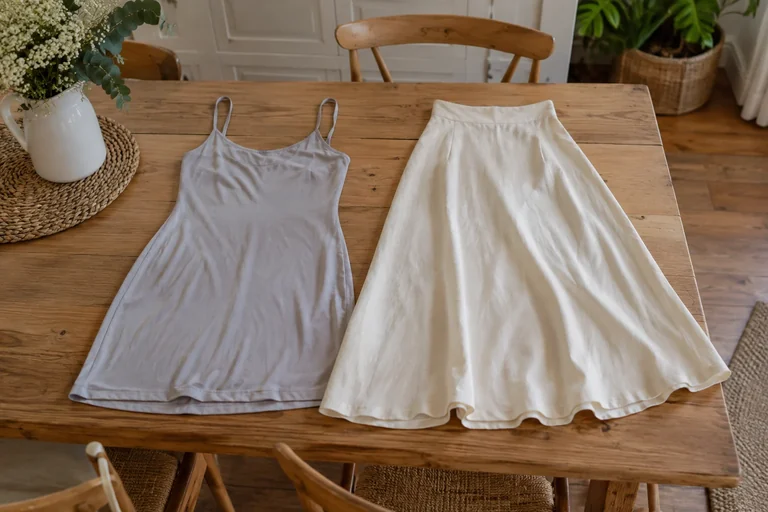
Keep the same skirt and change only the tights, then walk and sit down. Note where the fabric rides up and whether you need to reposition it. This describes your fitting; it does not measure electrical charge or a brand’s overall quality.
An example note might read: “Navy skirt, tights A, lining rides up at the knee; tights B, same movement, lining stays down.” You have identified a combination worth remembering, not a list of forbidden fibers.
Compare two layered combinations
Entries stay on this page, without automatic saving or sending. Copy the note you want to keep.
Without JavaScript, use the table and steps in this guide to record the same test on paper.
Do you need softener or a whole new outfit?
Fabric softener is not a required step. The American Cleaning Institute describes products designed to reduce static, but that does not make them suitable for every garment. Check restrictions for technical clothing and your machine in particular.
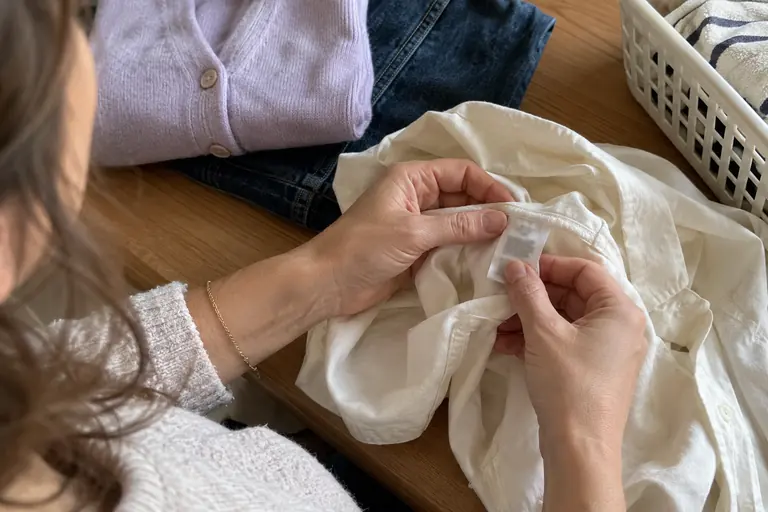
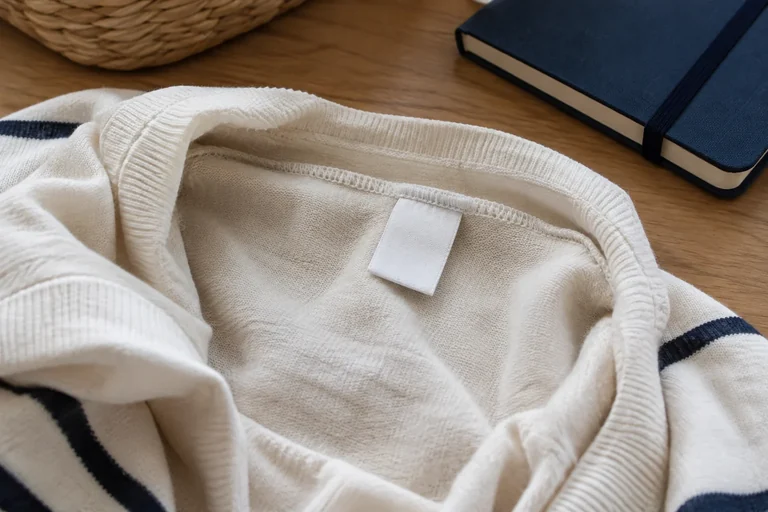
Also avoid treating fabric just because it catches: a tight cut or damaged lining needs a different response. Our guide to clothing labels helps you find the relevant instruction before deciding.
How can you remember a combination that works for you?
Keep your note with an outfit photo in the tool you prefer. In Vestly, you can find your saved clothes and prepare another combination. The app does not measure static or replace a physical fabric test.
Check off
Before keeping this test
0 / 3
These boxes record your checks; they do not rate your body or style.
Video in English
FAQ
Do all synthetic clothes cling?
The fabric, layers, and drying process all matter. Fiber content alone cannot predict an outfit’s behavior; change one layer at a time.
Can you dampen every material?
Some materials or finishes develop water marks. Check the garment’s instructions and avoid treating it while its care requirements are uncertain.
Is fabric softener essential?
A product may target static without suiting your whole load. Check compatibility with the garment, product instructions, and appliance first.
Does air drying guarantee no static?
Clothing can rub during wear too. Permitted air drying avoids overdrying in a drum but cannot guarantee how every layered outfit will behave.
Could the lining be the problem?
Look for repeated bunching, pulling, or a damaged seam. A cut or construction problem needs a separate check.
What should you record after a useful test?
Record the pieces, the single change, and the movements you tried. Keep it as a personal reference rather than a guaranteed property of the fiber.
Which sources support these checks?
Sources checked October 29, 2026. Photos illustrate situations; they do not establish garment performance.