Contents
- Why does a new pocket arrive stitched shut?
- How can you check for a bag without taking the jacket apart?
- Which stitches need to stay in place?
- Do all real pockets need to be opened?
- How should you prepare once construction is confirmed?
- What if opening the pocket still feels uncertain?
- Frequently asked questions
- Checked sources
Why does a new pocket arrive stitched shut?
Basting can hold the opening during finishing and display. It is neither an automatic defect nor a quality certificate. SuitShop describes this preparation for its jackets; tailor Roberto Revilla also distinguishes finishing from a customer’s choice to keep a pocket closed after delivery.
| Observation | Available decision | Limit |
|---|---|---|
| Real bag and basting identified | Consider opening it for use | Leave reinforcements intact |
| Unclear construction | Ask for a check | Do not cut to find out |
| Confirmed decorative detail | Keep the construction intact | Cutting will not create a pocket |
How can you check for a bag without taking the jacket apart?
The pocket bag is the enclosed container behind the opening. The garment’s overall lining has a different role: seeing or feeling it does not confirm a pocket. Inspect the access already available without opening a lining seam to hunt for an answer.
A flap, welt or visible line can also be decorative. Contrasting thread and long stitches are clues, not sufficient proof. For an item still in a store or possibly being returned, ask for confirmation before altering it; this guide does not assume one universal returns policy.
Which stitches need to stay in place?
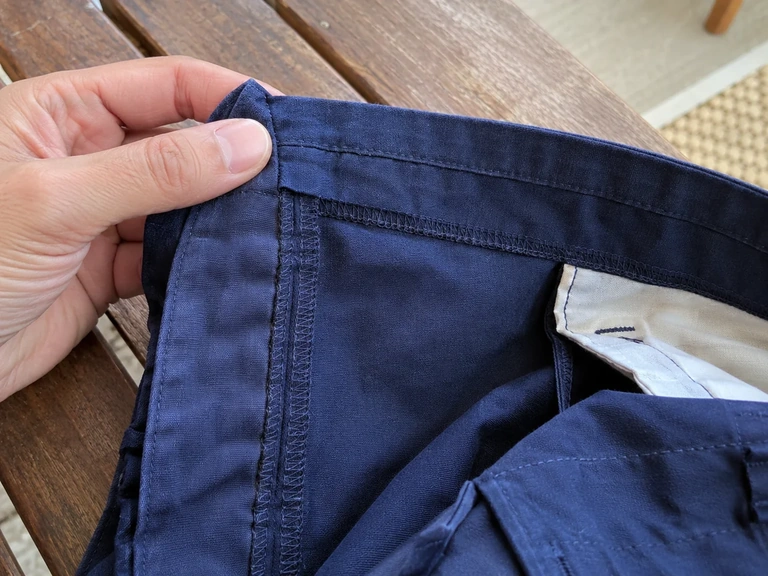
The seams assembling the bag and the reinforcements at its ends remain necessary. The University of Kentucky’s construction sheet shows these elements in a flapped welt pocket. Do not confuse them with the temporary thread across the opening. Removing every visible stitch does not make a pocket more usable.
To inspect the rest of the garment, our guide to recognizing a well-made garment separates seam condition, fit and use. Dense stitching or topstitching does not automatically call for removal.
Quiz
Which observation supports the next step?
You see a flap but cannot identify a bag.
See the answer
Ask for construction confirmation. The appearance of a pocket does not prove that a bag exists.
Basting is removed and the ends remain reinforced.
See the answer
Keep those reinforcements. Reinforcements are not leftover basting.
You have no use for a real pocket.
See the answer
You can leave it closed. How you use the garment guides this decision.
 Read alsoHow to wash a wool or cashmere sweater without felting it
Do all real pockets need to be opened?
Opening remains a practical choice. Before requesting it, decide what you intend to carry. Fabric that hangs neatly when empty can pull under a phone or keys. There is no universal weight allowance without knowing the construction. Try your blazer with the planned outfit and use a separate bag if its contents distort the line.
Flip cards
Choose the request
Confirmed decorative pocketFlip
Leave it intact and choose another place for your belongings.
Real pocket you intend to useFlip
Confirm the temporary thread, then decide whether to open it.
Damaged bag or pulling fabricFlip
Request a repair assessment rather than opening alone.
How should you prepare once construction is confirmed?
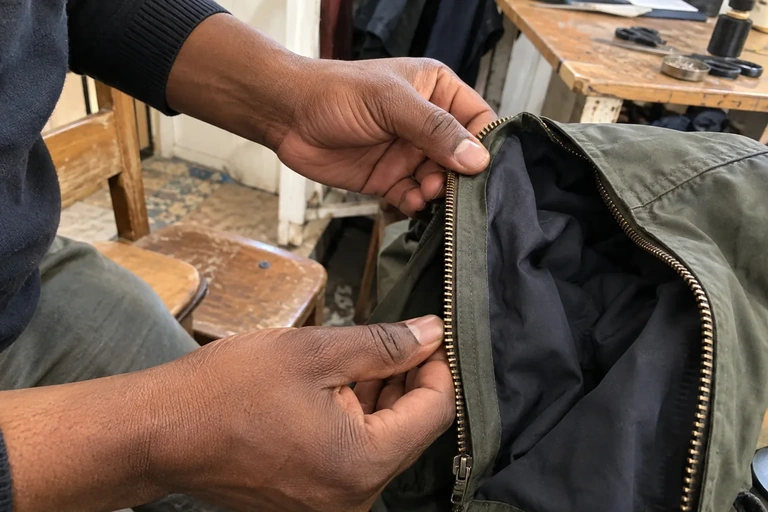
Lay the jacket down without tension and light the area. If you can control a seam ripper, isolate one basting stitch while keeping fabric and lining away from the blade. Work gradually, thread by thread; do not run the tool blindly along the pocket. Stop if stitches become hard to distinguish or the fabric resists.
Video in English
What if opening the pocket still feels uncertain?
A clear request is better than an irreversible experiment: “Can you confirm a working bag and remove only its basting?” Explain whether you intend to use the pocket and which item causes trouble. Our guide to organizing clothing repairs helps keep the request and intended result together.
In Vestly, plan outfits with the jacket in your digital wardrobe. Checking a pocket bag requires the actual garment: a photo or virtual try-on cannot reveal hidden construction. Keep the coat-care guide and clothing-care notes handy for what comes next.
Check off
Before cutting anything
0 / 4
Checking these points does not authorize forcing an unknown seam.
Frequently asked questions
Does a flap prove a pocket exists?
No. It can be decorative. Confirm the bag behind the opening without taking the lining apart.
Is basting always a different color?
Color alone does not identify it. Confirm both the construction and the thread’s role.
Should you remove reinforcement at the corners?
No. It is part of construction. Removing basting does not mean removing every visible stitch.
Can a real pocket stay closed?
You can choose not to use it. Keep that choice separate from removing temporary stitching elsewhere on a garment.
Does a stitched pocket guarantee quality?
No. Also inspect fabric, construction and comfort. Temporary thread does not predict lifespan.
Can the tool damage fabric?
Yes. A seam ripper can still cut fabric. Stop if the thread is hard to isolate or have the construction checked.
Checked sources
- SuitShop: opening pockets on its jackets.
- Roberto Revilla: why some jacket pockets stay stitched.
- University of Kentucky: flapped welt pocket construction, PDF.
Checked October 30, 2026. Brand examples describe their constructions, not every jacket.