Contents
- Identify the coat and its delicate details
- When you get home, empty it and reshape it
- Remove surface dust gently
- After the rain, let it dry without rushing
- Air it out, then decide whether it needs cleaning
- Check the lining and make small repairs
- Get ready for a visit to a professional
- Plan for the break between seasons
- Frequently asked questions
- Sources and references
A coat is often the piece you put on most quickly and pay the least attention to. At the end of the day, it lands on a hook, pockets still full, sometimes damp after a passing shower. A few steps when you get home can help preserve its appearance and help you spot cleaning needs before they become harder to address.
Between cleanings, care for a coat by checking its surface, letting it dry thoroughly, and helping it keep its shape. This guide is mainly for woven city coats, especially wool or wool blends. Down coats, leather, shearling, and technical garments require their own care instructions.
Identify the coat and its delicate details
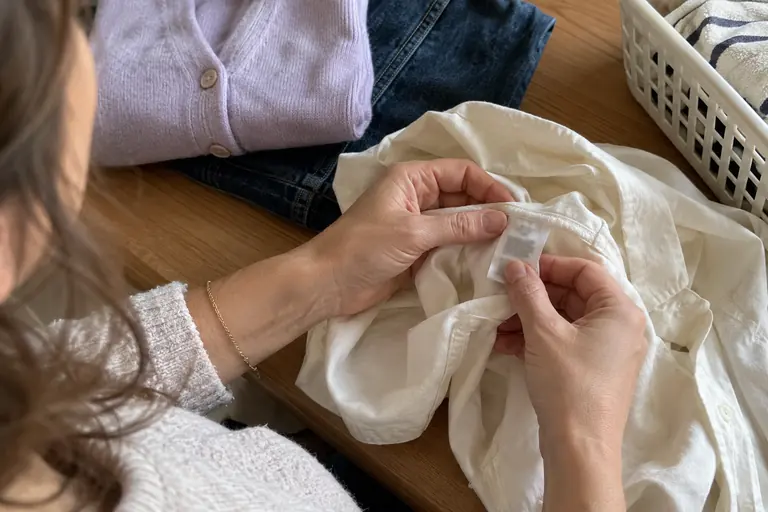
Check the fabric content and care instructions, then look at how the coat is made. Smooth wool cloth, a bouclé surface, velvet, and a coated finish don’t all respond to brushing the same way. The lining, reinforcements, buttons, and edges also play a part in caring for the whole garment. Don’t automatically use the same techniques you use on your sweater.
Our guide to understanding clothing labels helps clarify which steps are allowed. If the instructions are missing or unreadable, look up the model and ask for advice. For a secondhand piece, also check for old repairs and worn-thin areas. They may need gentler handling, even when the rest of the coat seems sturdy.
When you get home, empty it and reshape it
Remove your keys, phone, tickets, and heavy items. Full pockets can pull at their openings and make a coat hang unevenly. Check that no damp tissue or food scraps have been left behind. Depending on the coat’s construction, remove detachable accessories that put weight on one area.
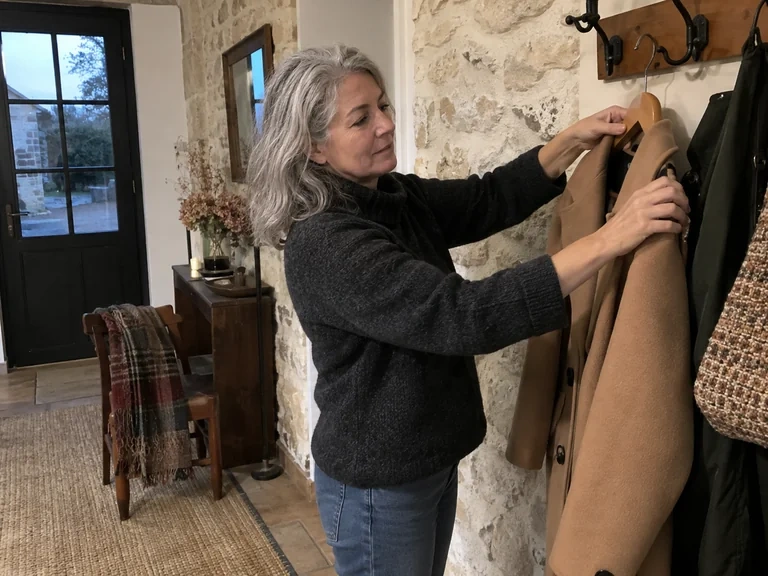
Gently reshape the lapels and sleeves without trying to stretch out a crease. Choose a wide enough hanger to support the shoulders and suit the garment’s weight. A narrow hook may be handy for a few minutes, but it puts pressure on a small area. Woolmark recommends shaped or padded hangers for woven wool garments; knits call for a different approach.
Remove surface dust gently
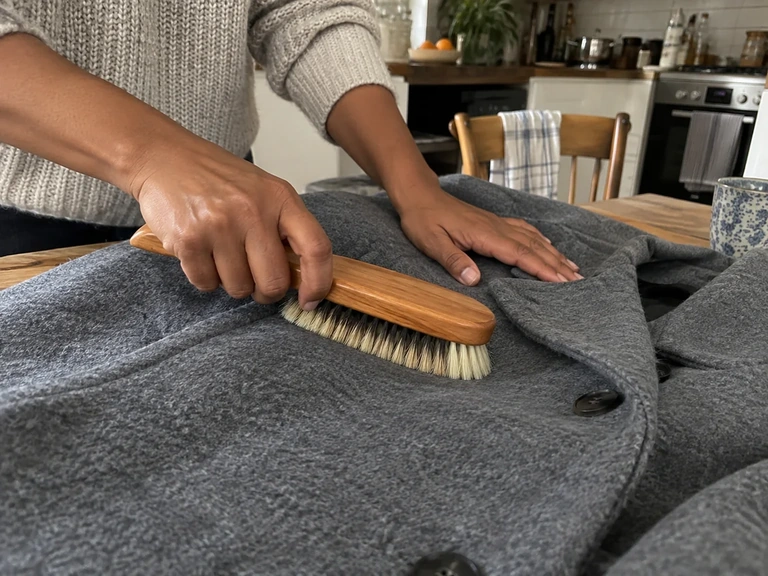
For a compatible woven coat, a soft clothes brush can help remove dust and loose fibers. Test it on an inconspicuous spot first and follow the direction of the fabric. Lay the coat down or hold it on a stable support, then use light strokes. There’s no need to press hard to prove the brushing is working.
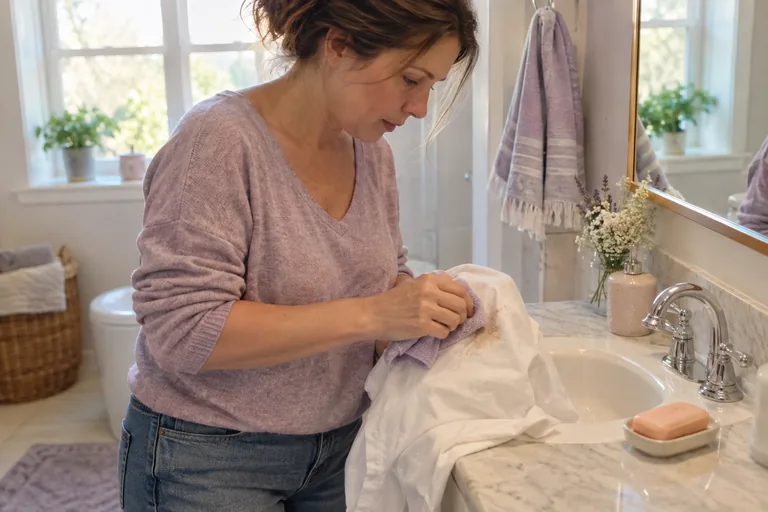
On a bouclé fabric, delicate nap or special finish, stop if the brush catches or changes the appearance. An adhesive lint roller isn’t a universal solution either: check that it’s suitable and don’t press repeatedly. Don’t scrape a dry stain with a blade. Removing dust and treating a set-in stain are two different tasks.
After the rain, let it dry without rushing
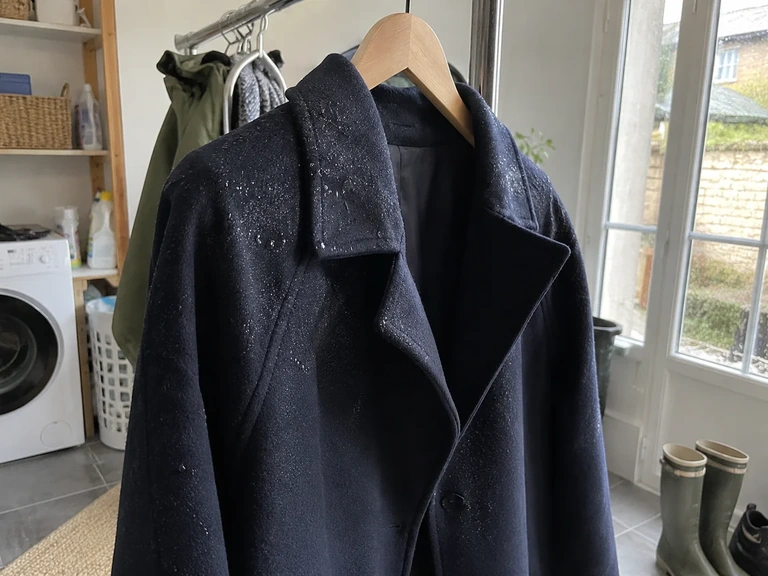
Start by checking the coat’s condition. Surface dampness after a brief shower is different from a coat that’s soaked through. Follow the manufacturer’s instructions for the drying support, distributing the weight as needed. Don’t hang a coat that’s very heavy with water from a small loop if that puts strain on its construction.
Let it dry away from direct heat, in a well-ventilated place that’s suitable for the garment. For wool, Woolmark recommends drying at room temperature, away from direct heat and sunlight. Don’t lay the coat on a radiator or try to speed up drying in one spot with a hair dryer. Before wearing it again, check the pockets, cuffs and thick areas that may stay damp longer.
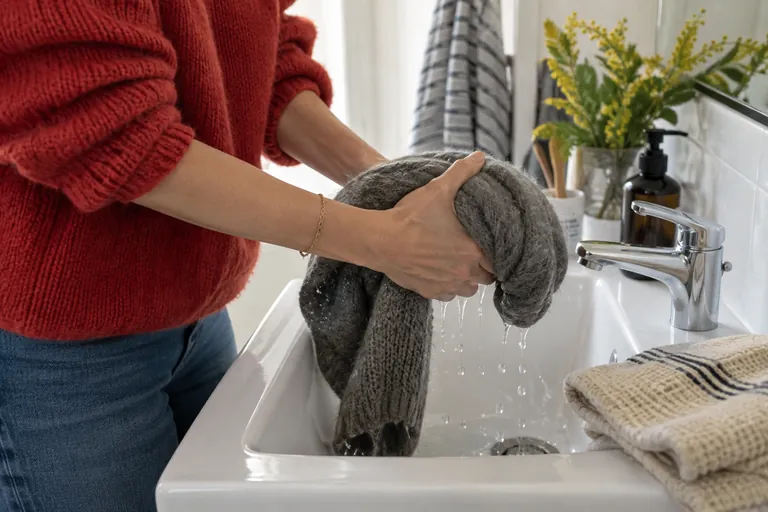 Read alsoHow to wash a wool or cashmere sweater without felting it
Air it out, then decide whether it needs cleaning
Proper ventilation can help after an outing, but it doesn’t replace cleaning when the garment is dirty. Choose a sheltered place away from rain and outdoor debris, with a suitable support. Don’t spray the lining heavily with fragrance to mask an odor: that adds a product without removing what caused it.
If the odor persists, an area that touches your skin is dirty or several marks appear, consider the cleaning method permitted by the care label. There’s no single schedule that works for every coat. Daily wear on public transit, occasional wear and messy outdoor activities don’t call for the same level of cleaning. Decide based on the coat’s actual condition rather than an arbitrary date.
Check the lining and make small repairs
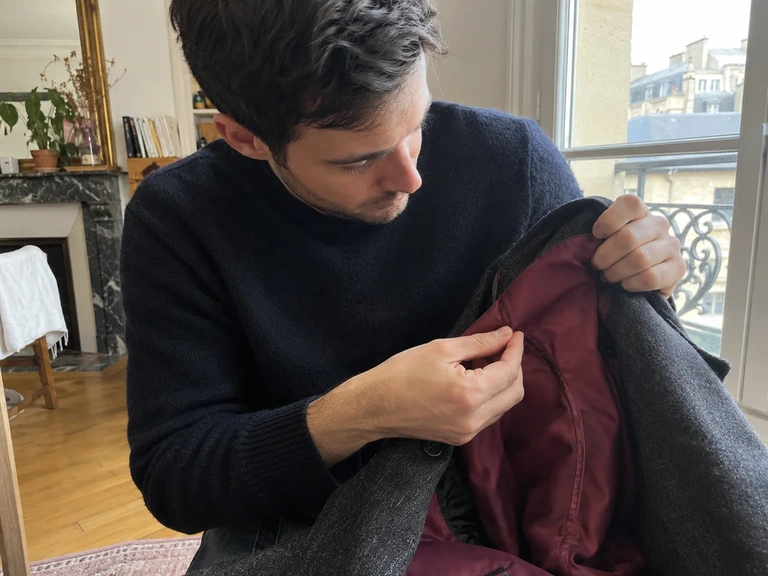
Hold the coat up to the light and check the underarms, pocket bottoms, lining seams and fastenings. A small opening can grow when you put your arm through a sleeve or tuck something away. Also check for buttons that are starting to come loose and belt loops. Don’t wait until you lose a piece to look for a replacement.
A repair should respect the garment’s construction. Sewing a lining too tightly can restrict arm movement. A very heavy button may need suitable reinforcement. A tailor can assess the fabric’s strength and suggest a repair. To find resources or a professional, Refashion offers repair solutions. Ask for an estimate for the actual garment if the repair seems substantial.
Get ready for a visit to a professional
If the care label calls for professional cleaning, bring the coat and share any useful details. Explain what caused a stain, if you know, which products you’ve already tried and which areas concern you. Don’t assume the cleaner will know whether a mark came from sauce, a cosmetic product or color transfer. Also point out any delicate trim or past repairs.
Before dropping off the garment, empty all the pockets and check the accessories. Ask what will be treated and what’s uncertain, especially when it comes to an old stain. The guide to remove a stain from clothing helps you understand why it’s best to avoid a series of poorly identified treatments. When you pick it up, inspect the garment and let it air out according to the instructions you received.
Plan for the break between seasons
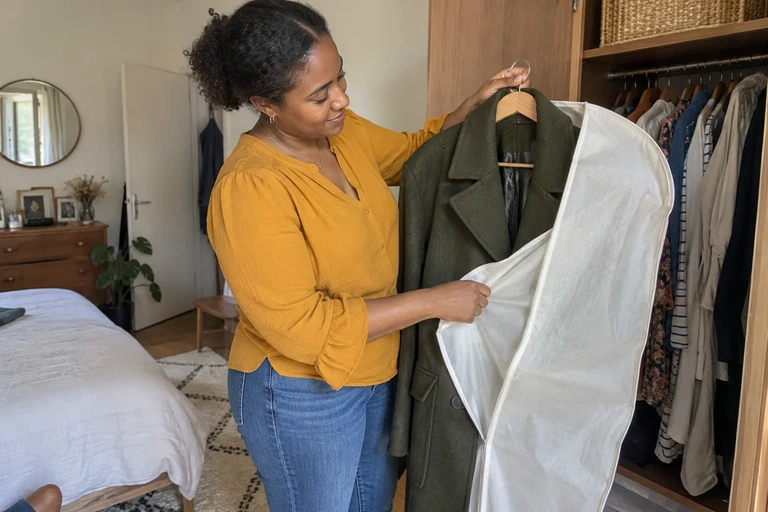
When you won’t be wearing your coat for a while, check that it’s clean, completely dry, and in good repair. Storing it with a stain and thinking you’ll deal with it later only puts off the problem. Use protection suited to the material and the manufacturer’s recommendations, without compressing the shoulders or storing a garment that’s still damp.
This step can be quick: empty pockets, inspect the surface, check the lining, choose the right hanger. You don’t need to reorganize your entire wardrobe. In Vestly, keep the outfit combinations that work with this coat and find them again when the season returns. Your digital wardrobe makes it easy to bring a familiar piece back into an outfit, instead of considering it forgotten after a few months out of sight.
Check off
My coat is ready to wait until I wear it again
0 / 6
Your coat can go back in its place without bringing along a moisture problem or a forgotten repair.
Watch a practical example
A visual example from CareOfCarl to compare with the steps in this guide.
Video in English
Frequently asked questions
Should you brush every wool coat?
No. The surface and construction matter. A soft brush may work for some woven fabrics, but delicate textures or special finishes call for the brand’s care instructions.
Can you clean only a visible stain?
It depends on the stain, the material, and the method allowed. Spot treatment can leave a ring or change the color. Test only a compatible method, and ask for advice if you’re unsure.
Does a garment bag protect a coat that’s still damp?
It won’t solve the dampness. The garment needs to dry completely before you enclose it. Pay special attention to the lining and thicker areas.
Sources and references
- Woolmark, caring for wool garments, accessed September 30, 2026: brushing woven fabrics, using suitable hangers, and drying away from direct heat.
- Refashion, repairs and finding professionals, accessed September 30, 2026.