Contents
- Is this a T-shirt neckline rather than a shirt collar?
- What should you look at before handling the dry garment?
- What does the care label actually determine?
- Why separate observation, care, and alteration?
- How can you keep a useful comparison?
- What should you ask before a possible repair?
- How can the garment stay in your wardrobe?
- Frequently asked questions
- Sources
Is this a T-shirt neckline rather than a shirt collar?
Start by identifying the garment. A jersey T-shirt and a button-front shirt collar should not be treated as the same construction. The National Cotton Council explains knitting and weaving : knitting interlocks loops of yarn, while weaving interlaces yarns. That distinction does not identify the cause of a ripple in your particular garment. It simply helps you ask a more precise question.
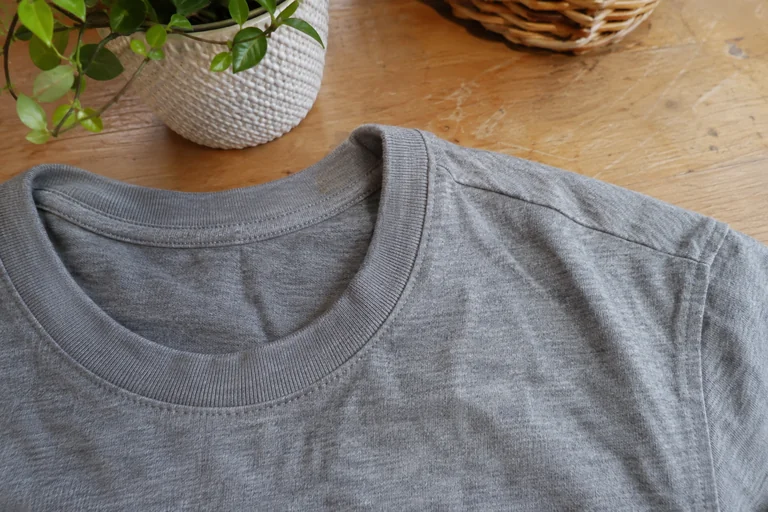
Locate the exact area: the ribbed edge, stitching line, or fabric just below it. Point to the area in a photograph without stretching the opening to make it easier to see. If your question concerns a woven collar under knitwear, our shirt under sweater collar guide covers that different fitting question. A method discussed for a shirt should not automatically become a treatment for a T-shirt.
What should you look at before handling the dry garment?
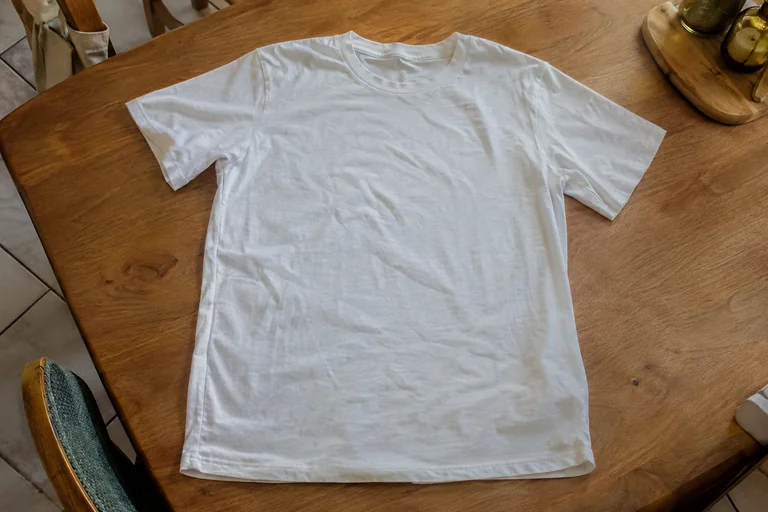
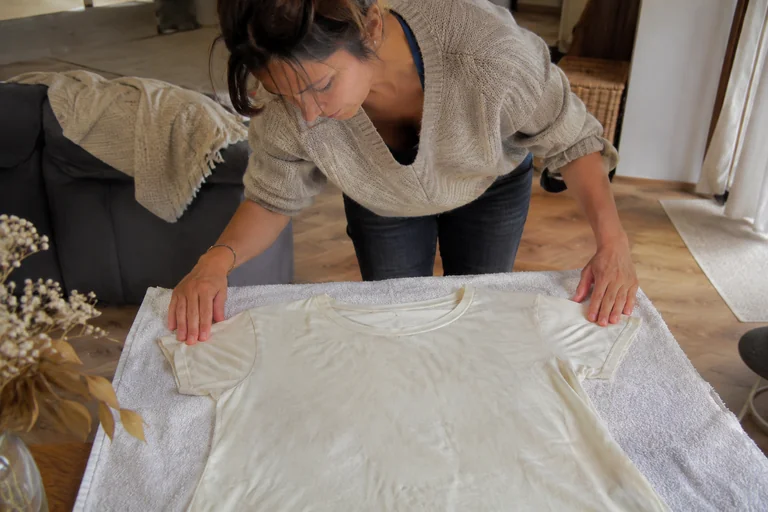
Lay the T-shirt on a clear surface with its shoulders and body unfolded. Do not try to flatten the collar by pulling opposite points. Note whether the ripple runs around the whole opening or affects a small area. Look for an open seam or a loose thread without cutting a thread to find out what it holds. Observation does not require starting a repair, buying a product, or repeatedly changing the garment.
Try it on if you want to wear it and it remains comfortable. A detail visible on a table may look different when worn. Keep both observations rather than deciding one cancels the other. If you have no earlier photograph, write “first reference today.” Inventing a before-wash measurement would make the comparison less useful. A similar T-shirt from another brand is not a substitute for this garment's original condition.
Check off
My first record
0 / 3
You have a descriptive starting point, not a diagnosis.
What does the care label actually determine?
Read this garment's label rather than a setting remembered for “cotton.” GINETEX states that the maximum ironing setting depends on the label, not solely the fiber. Permission to iron is a care instruction, not a promise to restore a distorted neckline. If the label is missing or illegible, keep that uncertainty in your record.
Name the question before trying an online trick. Are you asking how to care for the garment, whether a seam is intact, or whether an alteration is possible? Those are different questions. A demonstration on another item does not necessarily describe yours. Show the label and photographs to the brand or an alterations professional without asking them to guarantee a result remotely. You can also decide that you need more information before choosing any intervention.
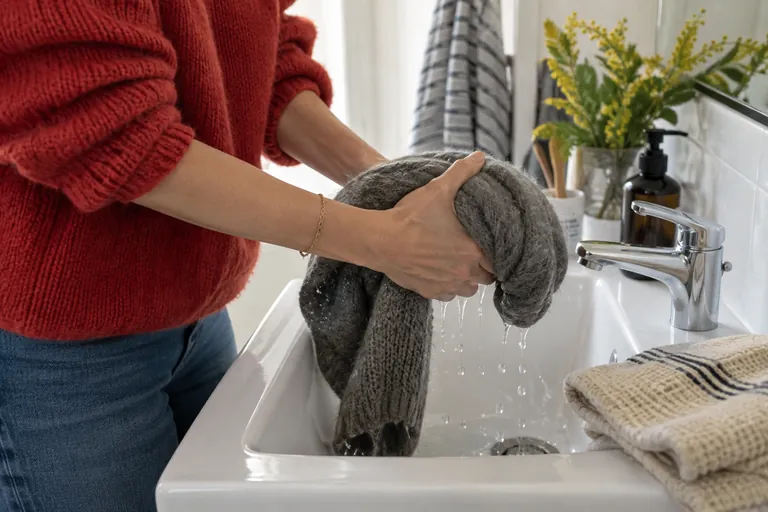 Read alsoHow to wash a wool or cashmere sweater without felting it
Why separate observation, care, and alteration?
An online trick may combine wetting, heating, pulling, and a different drying method. Combining them makes it harder to know which decision preceded a change. Our record separates the initial condition, the ordinary care specified for the item, and the later observation. It does not propose a heat experiment to see whether the collar shrinks. Keeping the garment as it is remains an option while you consider the question.
Flip cards
Which question should you ask?
Illegible labelFlip
Ask for instructions for the exact style reference.
Open seamFlip
Show the area before cutting or unpicking.
Ripple mainly visible when flatFlip
Also compare comfort when worn without pulling the edge.
How can you keep a useful comparison?
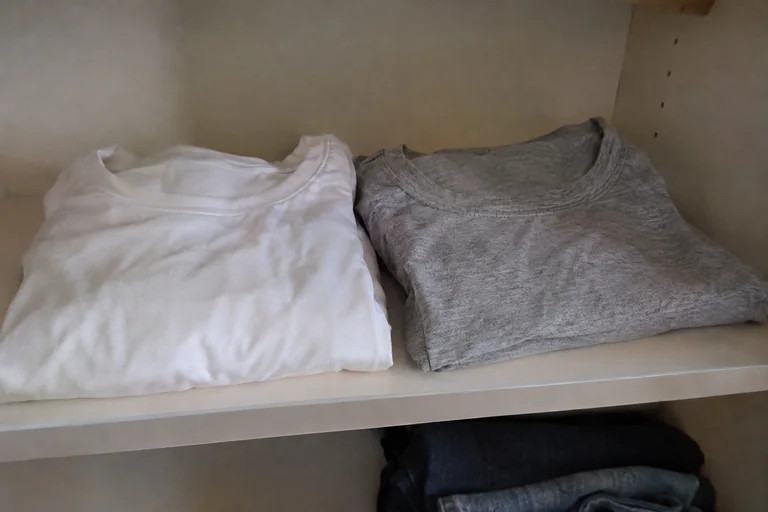
Here is a fictional example: photograph a dry gray T-shirt on the same table with its shoulder seam visible. After the next ordinary care cycle, use that viewpoint again and record “similar,” “different,” or “hard to compare.” Mention a change in lighting. This record does not prove a cause or require millimeter measurements of a curve. Its purpose is to make a later conversation more specific, not to produce a laboratory test.
| Reference | What you can record |
|---|---|
| Today | Dry, laid flat, specific area |
| Next care cycle | Instructions followed and any change |
| Remaining question | Label, seam, or alteration |
Quiz
Is permission enough?
The label permits ironing. What can you conclude?
See the answer
There is a care instruction, without a guarantee about collar shape. A care permission is not a repair promise.
What should you ask before a possible repair?
Bring the style reference, readable composition information, and your observations. Ask whether the area can be examined, what an intervention would change, and what limitations would remain. A consultation does not require choosing an alteration. Our guide to organizing clothing repairs keeps the question separate from the eventual decision. A comfortable item may remain wearable even when you like one visual detail less than before.
How can the garment stay in your wardrobe?
Keep a note with the photograph of this item, on paper or within your Vestly organization. The photo helps identify the T-shirt; it does not independently identify a fiber, construction fault, or feasible repair. Prepare another outfit for a day when the item is awaiting a decision while keeping the combinations you enjoy. You do not need to replace the garment immediately to continue observing it or to ask a more specific question.
Check off
Before deciding
0 / 3
You can choose a next step with these limitations in mind.
Video in English
FAQ
Can every stretched collar be restored?
No. Appearance alone cannot promise restoration. Observe the item and, if needed, have it examined before deciding.
Does a wavy shirt collar raise the same question?
Not necessarily. Identify the construction and affected area first. A method for a woven shirt is not automatically suitable for a T-shirt.
Should I pull the collar straight?
This record does not ask you to stretch the edge. Describe its condition first and keep the instructions for the particular garment.